
[su_spoiler title=”Please make sure these dispatches reach as many readers as possible. Share with kin, friends and workmates and ask them to do likewise. ” open=”yes” style=”fancy” icon=”arrow-circle-1″]

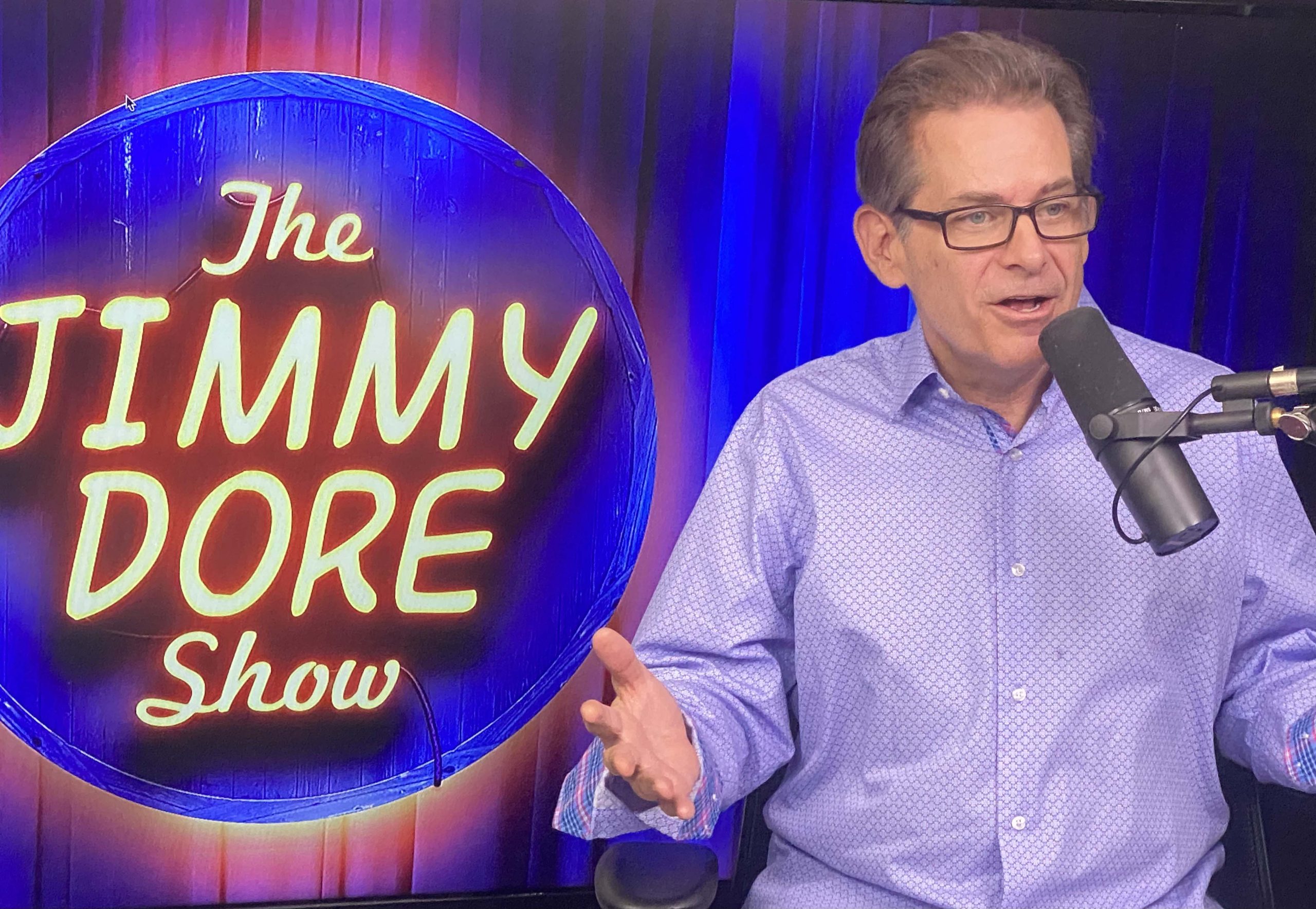
 The Jimmy Dore Show
 And Graham and Trump are par for the course in US politics, an obscenely filthy field.
| Traducir—Translate! | |
| Make fonts bigger>>> | [wpavefrsz-resizer] |


Summary
The video transcript presents a detailed discussion focusing on the escalating tensions between the United States and Iran during the Trump administration. The dialogue features Max Blumenthal, an investigative journalist and editor-in-chief of The Gray Zone, who elaborates on the complex geopolitical dynamics and the potential for military conflict in the Middle East. The conversation opens with reflections on President Trump’s initial aggressive posture toward Iran, supported vocally by Senator Lindsey Graham, who expressed enthusiasm for military intervention to overthrow the Iranian regime. However, this bellicose stance soon softened as Trump reportedly informed Iran he did not plan to attack, urging restraint amid protests within the country.
Max Blumenthal critiques the U.S. government’s role in fueling violent unrest in Iran, drawing parallels with earlier U.S.-backed conflicts such as the Syrian civil war, which was initially framed as a popular uprising but devolved into a proxy war involving extremist groups. He highlights how the U.S. and Israel used misinformation and direct encouragement to intensify protests and sabotage in Iran, with the goal of destabilizing the regime. However, after receiving intelligence reports, including Israeli input, Trump and his administration paused their plans, acknowledging that the protests had largely fizzled and that the U.S. lacked sufficient military assets in the region to launch a large-scale attack.
The discussion also explores the broader strategic motivations behind the U.S.-Israel push against Iran, particularly Israel’s desire to eliminate Iran as a regional power and secure greater influence in the Middle East. Blumenthal emphasizes that the conflict is driven primarily by Israeli interests and influential pro-Israel billionaires who have financially backed Trump’s political campaigns in exchange for regime change in Iran. The geopolitical context includes the fact that Iran possesses substantial missile capabilities and a population ready to defend its government, making any U.S. military intervention highly risky and potentially catastrophic.
Blumenthal further explains that Saudi Arabia, despite its sectarian opposition to Iran, actually opposes U.S. military action due to concerns about regional instability and economic repercussions. He argues that the manufactured crisis around the Iranian protests serves as a pretext for intervention pushed by Israeli influence rather than a genuine threat to U.S. national security. The conversation concludes with a cautionary note about the dangers of further escalation, highlighting the complex web of foreign policy interests, internal U.S. political pressures, and regional rivalries that underpin the ongoing tensions with Iran.
Highlights
- [01:13] 🔥 Lindsey Graham passionately calls for U.S. military intervention in Iran, likening the Ayatollah to a “religious Nazi.”
- [02:21] 🇺🇸 President Trump reportedly informs Iran he will not attack, urging restraint amid protests.
- [05:26] ⚔️ The U.S. and Israel fuel violent protests and sabotage in Iran, reminiscent of U.S. involvement in Syria’s civil war.
- [07:46] 🚢 U.S. military assets, including aircraft carriers USS George Bush and Abraham Lincoln, are moving toward the region, signaling potential escalation.
- [11:33] 💰 Pro-Israel billionaires back Trump’s campaign with a clear agenda: regime change in Iran.
- [13:17] 🎯 Iran’s missile capabilities and population readiness make U.S. military intervention extremely risky.
- [18:43] 🇸🇦 Saudi Arabia opposes a U.S. war with Iran despite sectarian differences, fearing regional destabilization.
Key Insights
[bg_collapse view=”button-green” color=”#4a4949″ expand_text=”Key Analysis Notes continue here” collapse_text=”Show Less” ]
Further analysis
- [01:13] 🔥 Lindsey Graham’s War Mongering Reflects Deep Political Divisions: Graham’s impassioned rhetoric advocating for military action against Iran reveals a faction within U.S. politics eager for confrontation. His approach, characterized as almost euphoric about war, contrasts strongly with more cautious voices, underscoring the polarized debate on how to handle Iran. This highlights the influence of hawkish lawmakers who see regime change as achievable and desirable through force.
- [04:52] ⚔️ U.S. Strategy Mirrors Syrian Conflict Tactics, Fueling Proxy Violence: Blumenthal draws a direct parallel between the U.S.-backed violence in Syria and the ongoing unrest in Iran. The U.S. support for violent opposition groups under the guise of supporting “pro-democracy protesters” is a tactic to destabilize regimes unfriendly to U.S. and Israeli interests. This strategy risks prolonged conflict, civilian casualties, and regional destabilization, with questionable outcomes for democracy or peace.
- [07:08] 🛡️ Military Limitations and Intelligence Assessments Restrain U.S. Action: The decision by Trump to pause military strikes was influenced by intelligence indicating the protests had largely ended and that U.S. and Israeli military assets were insufficiently prepared for a sustained conflict. This signals that despite aggressive rhetoric, practical military considerations and regional realities impose limits on U.S. interventionism.
- [11:33] 💰 Influence of Pro-Israel Billionaires Shapes U.S. Foreign Policy: The financial backing of Trump’s campaign by powerful Zionist donors highlights how domestic political funding can drive foreign policy agendas. These donors prioritize regime change in Iran as a key goal aligned with Israeli interests, demonstrating how external geopolitical objectives are sometimes advanced through domestic political mechanisms.
- [13:17] 🎯 Iran’s Military Capabilities Present a Significant Deterrent: Unlike Venezuela, Iran possesses a large arsenal of ballistic missiles capable of striking U.S. bases and allies in the region, including Israel. This reality acts as a powerful deterrent against U.S. military escalation, as any conflict could quickly spiral into a devastating war with high casualties. Iran’s population’s willingness to defend their regime adds a socio-political dimension to this deterrence.
- [15:44] 🌍 Iran as Central to the ‘Axis of Resistance’ and Regional Stability: Iran’s foreign policy stance, including staunch support for Palestine and opposition to Israeli domination, positions it as the last major regional power resisting U.S.-Israel geopolitical ambitions. Understanding Iran’s role in the Middle East is critical to comprehending why it is a focal point of conflict and why external powers seek to undermine its influence.
- [18:04] 🕊️ Saudi Arabia’s Opposition to War Highlights Complex Regional Dynamics: Despite sectarian rivalries and ideological opposition, Saudi Arabia’s resistance to a U.S. attack on Iran demonstrates the pragmatic calculations of regional powers. The risk of economic and social destabilization outweighs sectarian hostilities, illustrating how intra-regional politics can complicate U.S.-led military ambitions and underscore the multifaceted nature of Middle Eastern geopolitics.
This comprehensive analysis underscores the multifaceted and deeply interconnected political, military, and economic factors driving the current U.S.-Iran tensions. It reveals how domestic politics, foreign influence, regional rivalries, and military capabilities shape the prospects and risks of conflict in this volatile region.
[/bg_collapse]
Read Max’s work at The Grayzone here: http://thegrayzone.com
Follow Max on Twitter:  / maxblumenthal
 BELOW: A HEAVILY. DISTORTED MESSAGE BY NBC ON THE IRAN SITUATION
President Trump’s new message to Iranian protestors


BEFORE you leave, PLEASE pay attention to this alert.
[t4b-ticker id=”1″]
[/su_spoiler]
Print this article [bws_pdfprint display=’print’]
[su_note note_color=”#f1efef” radius=”0″]The views expressed herein are solely those of the author and may or may not reflect those of The Greanville Post, although, if we publish them, we obviously find them noteworthy and valuable. [/su_note]
 This work is licensed under a Creative Commons Attribution-NonCommercial 4.0 International License •
ALL CAPTIONS AND PULL QUOTES BY THE EDITORS NOT THE AUTHORS


1 comment
RE: Dore and Blumenthal: Does anybody remember the Shah and Savak?