Nima R. Alkhorshid
DIALOGUE WORKS

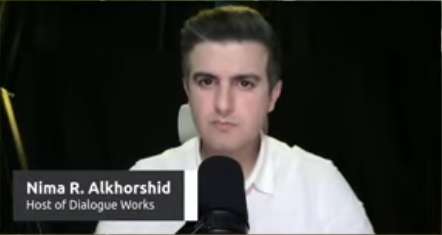 Nima chats with Laith Marouf • Scott Ritter
| Traducir—Translate! | |
| Make fonts bigger>>> | Resize text-+= |
 Dialogue Works • Mar 11, 2026
Scott Ritter: The U.S. Has Lost and Is Trapped in the Iran War With No Way Out
Summary
The video features an in-depth discussion with Scott Ritter, a former Pentagon analyst and intelligence officer, about the ongoing 12-day war between the United States and Israel on one side, and Iran on the other. The conversation centers on the tragic and controversial events of the war’s first day, specifically a devastating Tomahawk missile strike on a primary school in Iran that killed over 180 children. Ritter exposes significant failures in U.S. military targeting procedures and the disregard for international law, particularly the cancellation of the civilian harm and mitigation team by Secretary of War Pete Hegseth, which led to unchecked strikes on civilian infrastructure such as schools and hospitals.
Ritter explains how the U.S. military’s use of AI-driven targeting without proper human oversight resulted in repeated war crimes and inadequate battlefield assessments. He also critiques the strategic objectives of the U.S., highlighting failures in suppressing Iranian missile capabilities, neutralizing the Iranian navy, and halting Iran’s military-industrial base growth. The Iranian response, according to Ritter, has been more effective politically and militarily, focusing on survival, sustained pressure, and strategic targeting designed to erode U.S. and Israeli resolve without maximizing casualties.
The discussion also explores the broader geopolitical implications, including failed attempts to involve Azerbaijan and Saudi Arabia in the conflict, the erosion of U.S. regional influence, and the economic impact of the war on the American home front. Ritter warns that the war’s outcome will be decided politically rather than militarily, with Iran likely to achieve its objectives: pushing the U.S. out of the Middle East and destabilizing Israel by making life there unlivable. Throughout, Ritter emphasizes the moral, legal, and strategic failures of the U.S. approach, lamenting the human cost and calling for accountability among military personnel involved in war crimes.
Highlights
- [01:18] 💥 Tomahawk missile strikes on a primary school in Iran caused mass civilian casualties, including over 180 children, sparking accusations of war crimes.
- [10:17] ⚖️ Cancellation of the civilian harm mitigation team removed critical legal safeguards, allowing indiscriminate attacks on civilian infrastructure.
- [22:20] 🎯 AI-driven targeting without human oversight led to strikes on protected sites like hospitals and schools, violating the law of war.
- [39:36] 🚀 U.S. efforts to suppress Iranian missile launches have failed, with Iran continuing frequent missile attacks.
- [43:03] 🚢 Targeting the Iranian navy has been strategically ineffective due to Iran’s naval weakness and the inability to close the Strait of Hormuz.
- [01:00:12] 🇮🇷 Iran’s primary objective is survival and political resilience, successfully maintaining autonomous military districts and rallying national support despite losing the Supreme Leader.
- [01:18:42] 🏙️ Iran aims to destabilize Israel politically and economically, making life unlivable to cause population decline without maximizing casualties.

BELOW: LAITH MAROUF'S IMPRESSIONS ON HEZBOLLAH'S WAR ON THE ZIONIST ENEMY
Summary
The video presents an in-depth discussion on the ongoing conflict in Lebanon and the broader Middle East, focusing on Hezbollah’s military engagement against Israeli forces and the geopolitical implications of this confrontation. The speaker, Le, reports firsthand from southern Lebanon, particularly Nabatiyeh, describing the destruction caused by Israeli attacks and the resilience of Lebanese civilians amid shortages of shelter and resources. Hezbollah is depicted as a formidable force, effectively repelling Israeli ground invasions and employing advanced weaponry such as long-range missiles, drones with anti-tank capabilities, and strategic ballistic missiles that reach deep into Israeli territory, including near Tel Aviv.
The discussion highlights the degradation of Israeli air defense and early warning systems due to targeted strikes on command and control hubs by Hezbollah and Iranian forces. This has led to high Israeli casualties and panic among northern Israeli settlements, many of which have been abandoned by civilians and officials alike. The speaker also touches on the internal Lebanese dynamics, including the threat posed by Wahhabi death squads linked to HTS (Hay’at Tahrir al-Sham) and the local resistance by tribal militias.
Broader regional dynamics are also analyzed, emphasizing the failure of western powers, particularly the U.S. and Israel, to weaken the axis of resistance, which includes Iran, Hezbollah, and allied groups. Despite significant assassination campaigns and military pressure, the resistance is portrayed as growing stronger and more unified. The conversation underlines the strategic importance of Palestine in the larger conflict and warns against underestimating the resilience of Iranian and Lebanese forces. It also critiques western media silence regarding the extent of devastation in Israel, contrasting it with the heavy focus on Iranian suffering.
Finally, the speaker forecasts a shifting geopolitical landscape where traditional U.S. influence wanes, and powers like Iran, Russia, and China gain prominence in the Middle East. The Arab states’ leadership is seen as trapped between popular anti-Israel sentiments and American pressure, with the overall future of the region hinging on the resistance’s ability to sustain and expand its influence.
Highlights
- [01:00] 🏚️ Description of devastation in Nabatiyeh and southern Lebanon amid ongoing attacks.
- [03:30] 🚀 Hezbollah’s advanced drone and missile capabilities significantly challenge Israeli forces.
- [06:00] 🎯 Strategic ballistic missile attacks reach southern Tel Aviv, shocking Israeli military analysts.
- [09:00] 🛡️ Israeli air defense and communication systems are severely degraded due to targeted Hezbollah strikes.
- [11:30] 🏃♂️ Mass exodus of civilians and officials from northern Israeli settlements due to missile bombardments.
- [14:30] ⚔️ Internal Lebanese resistance successfully repels HTS-linked Wahhabi death squads in border areas.
- [22:00] 🌍 Broader Middle East conflict intensifies with resistance forces strengthening despite Western military pressure.
 BEFORE you leave, PLEASE pay attention to this alert.
[t4b-ticker id="1"]
Print this article [bws_pdfprint display=’print’]
 This work is licensed under a Creative Commons Attribution-NonCommercial 4.0 International License •
ALL CAPTIONS AND PULL QUOTES BY THE EDITORS NOT THE AUTHORS