[su_spoiler title=”Please make sure these dispatches reach as many readers as possible. Share with kin, friends and workmates and ask them to do likewise. ” open=”yes” style=”fancy” icon=”arrow-circle-1″]
 Nima R. Alkhorshid
DIALOGUE WORKS
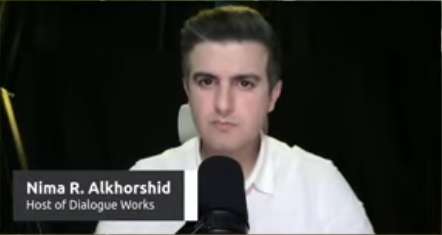 Nima chats with Amb. Chas Freeman
| Traducir—Translate! | [gtranslate] |
| Make fonts bigger>>> | [wpavefrsz-resizer] |

Mar 20, 2026
Summary
The video features a detailed discussion with Ambassador Chas Freeman on the escalating conflict between the United States, Israel, and Iran as of March 2026. The conversation opens with greetings and cultural acknowledgments of significant Muslim and Iranian holidays, setting a respectful tone. Ambassador Freeman then delves into the current military and geopolitical situation in West Asia, highlighting recent escalations, including Israeli airstrikes on Iranian infrastructure and Iran’s retaliatory attacks on Gulf Arab states and Israel.
The discussion addresses the possibilities and challenges of deploying ground forces, particularly US Marines, noting that while Israel and the US contemplate ground operations, significant obstacles exist, including the unwillingness of Kurdish groups to engage and the heavily fortified Iranian positions around the Strait of Hormuz. Freeman suggests that US Marines might instead target the Lesser Tunbs islands, a contested territory between Iran and the UAE, as a strategic move to bolster UAE ties.
The war’s complexity is further underscored by the Gulf Arab states’ precarious position. Despite heavy reliance on US military support, these states face severe vulnerabilities due to their economic dependence on oil and gas revenues, which are threatened by the ongoing conflict and Iranian attacks. Freeman highlights the Gulf states’ dilemma as they struggle to maintain internal stability while caught between Iran’s military pressure and their reliance on US arms sales, which have delayed deliveries.
The conversation also critiques the US political and military leadership, particularly Donald Trump and Benjamin Netanyahu, accusing them of misinformation and reckless escalation. Freeman notes the failure of regime change efforts in Iran, the resilience of Iranian military capabilities including missile and drone strikes, and the likely long duration of the conflict. He emphasizes that Iran has effectively created a “toll booth” at the Strait of Hormuz, controlling oil transit and exports despite US sanctions.
Global ramifications are discussed, including the weakening of the Atlantic alliance as European and Asian allies refuse to engage militarily, the acceleration of nuclear proliferation risks in the region (with Iran likely to develop nuclear weapons and intercontinental ballistic missiles), and the strategic gains for China and Russia amid the conflict. Freeman warns of long-term instability in West Asia and East Asia, citing territorial disputes involving Japan, South Korea, China, and Russia.
The video also touches on Israel’s low-intensity warfare and territorial ambitions in southern Lebanon and Syria, particularly related to water resource control and desalination plants, which are critical for regional survival. Freeman warns that attacks on such infrastructure could escalate the war further and have severe humanitarian consequences.
Finally, the conversation addresses internal dissent within the US administration, highlighting the resignation of Joe Kent, a counter-terrorism official who publicly criticized Trump’s war policies. Freeman describes this as a sign of political fragmentation and growing opposition to the war within Trump’s base. The video concludes with Freeman’s critique of Netanyahu’s leadership and his assertion that the war is a trap set by Israel, supported but not sanctioned by the US Congress or public.
Highlights
- [01:30] 🎯 Netanyahu hints at possible ground forces to escalate conflict with Iran.
- [03:30] 🛡️ US Marines likely to target Lesser Tunbs islands to strengthen UAE ties.
- [07:15] 🔥 Iranian retaliatory strikes damage Gulf Arab oil and gas infrastructure, escalating regional tensions.
- [11:00] ⛽ Iran operates a “toll booth” on the Strait of Hormuz, controlling oil exports despite US sanctions.
- [19:50] 🚀 Iran’s missile and drone strikes weaken Israel’s missile defense capabilities.
- [26:00] 🌏 Atlantic alliance fractures as European and Asian allies refuse to participate in US-led conflict.
- [54:00] ⚠️ Joe Kent resigns from US counterterrorism center, openly opposing Trump’s war policies.
[bg_collapse view=”button-orange” color=”#4a4949″ expand_text=”Click to read KEY INSIGHTS and full analysis” collapse_text=”Show Less” ]
Key Insights
-
[01:20] 🕊️ Complexity of Ground Operations: Netanyahu’s admission that air power alone cannot win the conflict highlights the complexity of military engagement in Iran. However, Ambassador Freeman stresses the improbability of successful ground invasion due to Iran’s fortified positions and lack of local allies, such as the Kurdish groups who refuse involvement. This reflects the limitations of conventional military strategies against a well-prepared and territorially entrenched opponent.
-
[04:30] 🌐 Strategic Importance of Lesser Tunbs Islands: The possibility of US Marines seizing the Lesser Tunbs islands to hand them over to the UAE is a strategic maneuver aimed at strengthening alliances and establishing defensible positions near Iran. This underscores the geopolitical chess game in the Gulf, where territorial disputes serve broader military and diplomatic objectives. The move could provoke Iran but may also solidify UAE-US relations, demonstrating how local sovereignty issues intersect with global power projections.
-
[08:00] 💣 Escalation Through Energy Infrastructure Attacks: Iranian retaliatory strikes on Gulf Arab and Israeli oil and gas facilities, including the Hifa refinery and Kuwait’s infrastructure, signify a significant escalation designed to pressure US allies economically and militarily. This strategy exploits the region’s dependence on energy exports, threatening economic stability and forcing Gulf states into difficult decisions about their alliances and future security arrangements.
-
[11:30] ⛽ Control of Strait of Hormuz as a Strategic Lever: Iran’s effective control over the Strait of Hormuz, described as a “toll booth,” disrupts global oil supply chains and challenges US sanctions efforts. By selectively allowing passage to friendly nations and blocking adversaries, Iran leverages geography to maintain economic resilience and exert influence over global energy markets, complicating US and allied efforts to isolate and pressure Tehran.
-
[19:40] 🚀 Iran’s Advancements in Missile and Drone Warfare: Iran’s use of heavy ballistic missiles with multiple warheads and drones demonstrates a shift in asymmetric warfare capabilities. Despite conventional military inferiority, Iran’s strategy of missile saturation and drone strikes has degraded Israeli and US missile defense systems, illustrating how technological adaptation can offset numerical or conventional disadvantages in modern conflicts.
-
[26:30] 🌍 Deterioration of US-led Alliances: The refusal of European, Japanese, and other US allies to support military actions in the Gulf marks a critical weakening of the Atlantic alliance. This erosion of support undermines US global military strategies and signals growing skepticism about American leadership and interventionism, potentially reshaping future geopolitical alignments and defense collaborations.
-
[54:00] 🔎 Internal US Political Fractures on War Policy: The resignation of Joe Kent, a senior counterterrorism official, and his public dissent regarding the lack of imminent threat from Iran reveals deep divisions within the US administration and its base. This reflects growing skepticism about the war’s justification and consequences, hinting at potential political fallout for Trump and challenges in maintaining public and institutional support for prolonged conflict.
-
[37:00] 💧 Water Resources as a Geopolitical Weapon: Israel’s control over fresh water supplies in occupied southern Lebanon and Syria, along with its use of desalination plants, highlights the critical role of water security in regional conflicts. Control over water is portrayed as a strategic objective as vital as territory, with potential to exacerbate humanitarian crises and fuel further hostilities, emphasizing the multi-dimensional nature of regional power struggles.
-
[47:00] 💸 US Military Spending and Strategic Mismanagement: The rapid increase in US defense budgets amid the conflict, juxtaposed with accusations of irrationality and mismanagement, exposes flaws in US war planning and governance. Ambassador Freeman criticizes the inflated spending requests amid unclear threat assessments, suggesting that resources are being diverted to an ill-conceived conflict that may detract from addressing more significant challenges, such as rising Chinese military capabilities.
-
[52:00] 🕊️ Iranian Resilience and Public Sentiment: Despite significant losses of leadership and infrastructure, Iran remains unified in opposition to US and Israeli aggression. Ordinary Iranians largely blame external actors rather than their own government. This resilience challenges US and Israeli objectives of regime change or state collapse, indicating that military pressure may instead consolidate Iranian nationalism and prolong conflict.
-
[24:00] 🔋 Energy Transition and Geopolitical Winners: The conflict accelerates global shifts toward renewable energy and electric vehicles, areas where China leads technologically. Russia benefits from higher fossil fuel prices and weakened embargoes. These developments suggest that beyond immediate military concerns, the war influences global economic and technological trajectories, potentially reshaping power balances beyond the battlefield.
-
[31:00] ⚔️ East Asian Territorial and Security Tensions: Japan’s strained relations with neighbors over disputed islands and unresolved post-WWII treaties reflect broader regional instability, exacerbated by the US-Iran conflict. The Japanese government’s delicate balancing act between alliance obligations and regional diplomacy illustrates how conflicts in West Asia reverberate globally, influencing security architectures in East Asia.
-
[40:00] 📉 Misinformation and Market Manipulation: US Treasury officials’ statements about “unsanctioning” Russian and Iranian oil to stabilize markets are critiqued as misleading. Ambassador Freeman argues that such rhetoric aims to manipulate financial markets and public perception rather than reflect actual economic realities, highlighting the role of information warfare and propaganda in modern conflict management.
-
[35:00] 🎭 Netanyahu’s Role and US Political Dynamics: The war is framed as a strategic trap orchestrated by Netanyahu, who allegedly manipulated Trump into conflict. This narrative exposes the complex interplay of domestic US politics, foreign lobbying, and international conflicts, underscoring how personal ambitions and political agendas can drive large-scale geopolitical decisions with far-reaching consequences.
Overall, the video presents a comprehensive and critical analysis of the ongoing US-Iran conflict, emphasizing the multifaceted military, political, economic, and diplomatic dimensions of the war. It underscores the likely protracted nature of the conflict, the geopolitical realignments underway, and the risks of escalation that could destabilize the broader region and beyond. The discussion also signals internal divisions within the US political and military establishments, highlighting the uncertainty and volatility surrounding this conflict’s future trajectory.
[/bg_collapse]
BEFORE you leave, PLEASE pay attention to this alert.
[t4b-ticker id=”1″]
[/su_spoiler]
Print this article [bws_pdfprint display=’print’]
[su_note note_color=”#f1efef” radius=”0″]The views expressed herein are solely those of the author and may or may not reflect those of The Greanville Post, although, if we publish them, we obviously find them noteworthy and valuable. [/su_note]
 This work is licensed under a Creative Commons Attribution-NonCommercial 4.0 International License •
ALL CAPTIONS AND PULL QUOTES BY THE EDITORS NOT THE AUTHORS