Home Author

A Letter from Hezbollah to Pope Leo XIV

by Main Desk Editors
Hezbollah Pope Leo
Please make sure these dispatches reach as many readers as possible. Share with kin, friends and workmates and ask them to do likewise.

lecridespeuples
RESISTANCE NEWS
Traducir—Translate!
Make fonts bigger>>>
Resize text-+=

Message from Hezbollah to His Holiness the Supreme Pontiff of the Catholic Church, Pope Leo XIV, before his visit to Lebanon.

Source: Telegram, November 28, 2025

In the name of God, the Most Gracious, the Most Merciful

His Holiness the Supreme Pontiff of the Catholic Church

Pope Leo XIV, Most Esteemed.

Greetings and peace be upon you.

At the outset, we express our full welcome and high appreciation for your esteemed position, and for the visit you have dedicated to Lebanon; this beautiful country, blessed by God with its geographical location and organized sectarian diversity, within a framework of unified coexistence and general consensus that are essential characteristics for the stability of its political system and national security.

Your predecessor, Pope John Paul II, previously considered Lebanon “not merely a country, but a message”… The reality proves that Lebanon, with its diverse composition, represents a civilizational link between the followers of the two divine messages, Christianity and Islam, and between followers of religious, cultural, and secular orientations in all countries and continents of the world.

When the human being is the focus of concern for all religions, and even secular ideological orientations, one can be hopeful and optimistic about the possibility of achieving permanent peace and security.

As we read in your guidance and messages a firm commitment to human rights and the necessity of respecting and protecting them, those rights transcend the individual aspect to a broader sphere, which is the sphere of peoples.

Regarding the conflicts the world witnesses today, the deeper cause is some parties’ disavowal of any commitment or recognition of the rights of others, whether due to differences in religion, color, race, language, or interests.

It is no secret that the erosion of respect for human rights among some parties—whether leaders, groups, parties, sects, states, or organizations—nourishes and feeds tendencies of greed, domination, oppression, and resorting to force instead of appealing to justice.

The tragedy witnessed in Gaza in occupied Palestine over the past two years, and continuing still, is a tragedy resulting from the Zionist occupiers’ persistence in usurping the rights of the Palestinian people to their land, homeland, and self-determination, and from the international system’s denial of adopting the standard of justice and rights to find a solution to the ongoing conflict in our region between the owner of the land and homeland and the occupying usurper.

Likewise, the suffering experienced by the Lebanese people due to the Zionist occupation of parts of their land and the continuation of attacks against them, threatening their security and stability in their country—driven by greed for their water, land, and gas wealth, and attempting to impose submission and subjugation of the Lebanese to its boundless security, expansionist, and political conditions.

Without doubt, the Zionist occupation enjoys—very regrettably—unlimited support from major powers that share its tendency toward domination and greed for the interests of our country and region, without any regard for the rights of our people and the peoples of the region.

What the Israeli enemy has perpetrated in Gaza against the Palestinian people is a described crime of genocide; and what it is doing in Lebanon is ongoing, rejected, and condemned aggression.

We in Hezbollah seize the opportunity of your blessed visit to our country Lebanon to affirm, on our part, our commitment to unified coexistence, consensual democracy, maintaining internal security and stability, and our keenness on national sovereignty and its protection, by standing with our army and people to confront any aggression or occupation of our land and country.

We also commit to our legitimate right to reject foreign interference that seeks to impose guardianship over our country and people, and to confiscate its national decision and the powers of its constitutional authorities.

If our faith affirms that the followers of Jesus Christ, son of Mary, are messengers of love, preservation of rights, and respect for humanity, then we count on Your Holiness’s positions in rejecting the injustice and aggression to which our homeland Lebanon is subjected at the hands of the Zionist invaders and their supporters.

This is what we entrust to you during this visit, in which you express to all Lebanese your care, love, and cooperation, and in which we wish Your Holiness comfort and safety; praying to Almighty God to grant the oppressed in the world justice, security, and relief.

With best wishes.

Islamic Resistance in Lebanon

BEFORE you leave, PLEASE pay attention to this alert.
[t4b-ticker id="1"]


Print this article [bws_pdfprint display=’print’]

The views expressed herein are solely those of the author and may or may not reflect those of The Greanville Post, although, if we publish them, we obviously find them noteworthy and valuable. 

Creative Commons LicenseThis work is licensed under a Creative Commons Attribution-NonCommercial 4.0 International License • 
ALL CAPTIONS AND PULL QUOTES BY THE EDITORS NOT THE AUTHORS

0 comments
0 FacebookTwitterPinterestEmail
Please make sure these dispatches reach as many readers as possible. Share with kin, friends and workmates and ask them to do likewise.

Brad McHenry
Traducir—Translate!
Make fonts bigger>>>
Resize text-+=

1. THE WESTERN VERSION
The CIA-endorsed version, now courtesy of AI, which robotically collects and regurgitates the prevalent views held by the Western establishment about any subject.


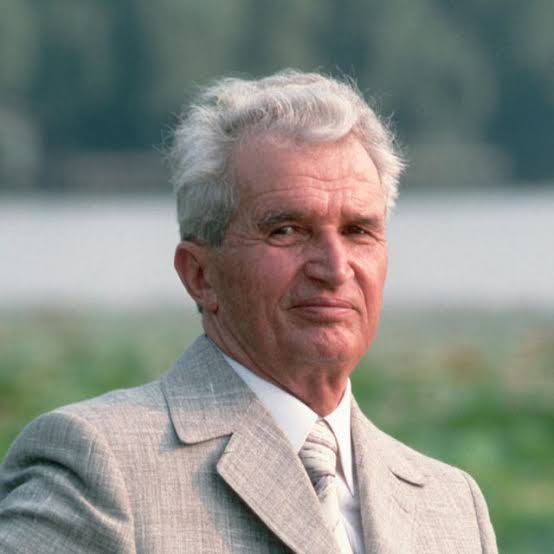
Ceausescu


Nicolae Ceaușescu's rule over Romania, from 1965 until his execution in 1989, was overwhelmingly characterized by his tyrannical and totalitarian actions.

While he was initially seen as a relative liberal within the Eastern Bloc for his independent foreign policy, he quickly established one of the most repressive and monstrous regimes in Europe.

 
Repression and human rights abuses
  • The Securitate: Ceaușescu's feared secret police force, the Securitate, was responsible for the mass surveillance, torture, and deaths of thousands of dissidents and ordinary citizens. At its height, the agency employed about 15,000 agents and nearly half a million informants, penetrating deeply into Romanian society.
  • Forced population growth: In 1966, Ceaușescu implemented Decree 770, which severely restricted abortion and contraception in an effort to boost the population. This led to a drastic increase in birth rates but also resulted in overcrowded orphanages filled with neglected and abused children. These orphans were subjected to deplorable conditions, and many suffered from severe physical and mental health issues, with high rates of HIV infection.
  • Control over citizens: The regime maintained strict control over every aspect of life. Censorship was pervasive, with propaganda controlling media and information. Privacy was destroyed, and speaking freely was a dangerous activity.
  • Violent suppression of dissent: When mass protests erupted in Timișoara in December 1989, Ceaușescu ordered the military to fire on demonstrators, resulting in many casualties. As the uprising spread to Bucharest, the military eventually turned on him, but not before many lives were lost. 
 
Disastrous economic policies
  • Foreign debt and austerity: In the 1970s, Ceaușescu accumulated massive foreign debts by borrowing heavily from Western banks to fund ambitious development projects. To repay these debts, he imposed severe austerity measures on the Romanian people throughout the 1980s.
  • Economic ruin: The austerity plan crippled the country's economy, leading to a decade of stagnation and severe decline in living standards. Basic necessities like food, heating, electricity, and medical care were rationed, while industrial capacity eroded.
  • Megalomanic projects: While ordinary citizens faced immense hardship, Ceaușescu spent lavishly on extravagant projects, most notably the colossal Palace of the Parliament in Bucharest. Construction of the palace involved demolishing an entire historic neighborhood, displacing thousands of people.
Cult of personality
  • Glorification: Inspired by Kim Il Sung of North Korea, Ceaușescu established a pervasive and extreme cult of personality. He was given titles like "Leader" and "Genius of the Carpathians" and was presented as infallible. State media presented a fictionalized, glorious image of the Ceaușescus while hiding their physical flaws.
  • Family dynasty: His wife, Elena, was also a focus of the cult, receiving fabricated credentials as a world-renowned scientist. The couple elevated family members to positions of power, creating what many Romanians jokingly called "socialism in one family". 
The end of the regime
On December 25, 1989, after fleeing a popular uprising, Nicolae and Elena Ceaușescu were captured, tried (sic), and executed by firing squad. Their death marked the end of their 24-year tyrannical rule and decades of communist governance in Romania. 
 

2. THE SOCIALIST VERSION
BELOW, a short piece from Monthly Review, based on material published by In Defense of Communism.


Ceaușescu’s revenge: 66% of Romanians consider him a good leader, express nostalgia for pre-1989 period

Originally published: In Defense of Communism on July 27, 2025 by In Defense of Communism Staff (more by In Defense of Communism)  | (Posted Jul 30, 2025)

Almost 36 years since the counterrevolutionary events in Romania and the execution of Nicolae Ceausescu and his wife, capitalist barbarity has made most Romanians nostalgic of the pre-1989 years.

A recent INSCOP agency survey reveals that 66% of Romanians consider Ceaușescu a good leader, while only 24% view him negatively. The study, titled Public Perception of Communism: Markers of nostalgia, conducted in July 2025 with a sample of 1,500 respondents.

The INSCOP survey highlights the severe popular discontent over capitalist policies and EU’s manipulation of domestic politics thus leading to a significant resurgence of nostalgia for the pre-1989 period when basic social rights were guaranteed. More specifically, according to the survey:
  • Life before 1989: 48.4% of respondents believe life was better before the 1989 revolution, compared to 34.7% who disagree.
  • Corruption: 65.1% claim corruption was lower under Ceaușescu’s regime.
  • Public safety: 75.1% view public safety as better during the communist era.
  • State efficiency: 58.7% believe state institutions functioned more effectively under Ceaușescu.
  • Economic output: Over 68% think Romania produced more goods and services before 1989.
  • Cultural identity: 71.3% feel Romania has lost its cultural identity in recent years.
  • Education and healthcare: 49.9% say education was more accessible, and 48.6% believe healthcare was better under communism.

The survey, which took place between 12 April and 3 May 2019, was conducted by the INSCOP Research Institute and the Laboratory of Informational War and Strategic Communication (LARICS). The research included issues such as the national pride of the Romanian people and their view over a possible union of the country with the Republic of Moldova. 
 
However, the most interesting outcome of the survey is the percentage of those who have a positive view over the old "communist regime", despite the persistent bourgeois anticommunist propaganda that exists in Romania for 30 years. 
 
More specifically, the 27.2% of the participants replied that "communism" (socialism) offered many positive things to Romania in comparison with today's capitalism. A negative opinion about communism (socialism) was expressed by the 29.6% of the respondents. But this is not the end of the story. 
 
A 34.3% of Romanians did not answer directly to the question but, instead, they made a distinction, dividing the "communist period" in two periods. 
 
— The first period, from 1947 to 1965, which has been known as the "Romanian People's Republic (RPR)". This phase of socialism in Romania receives extaordinary positive views by the respondents. 
 
— The second period, from 1965 to 1989, the period of Nicolae Ceausescu which has been known as the "Socialist Republic of Romania" receives more negative opinions. 
 
In the same question, 8.9% of the participants in the survey did not give any answer. 

Nicolae Ceausescu is an exemplary case of how western media manipulate the image of a politician. When, for example, Romania did not participate in the intervention of the Warsaw Pact armies in Czechoslovakia in 1968, the West praised Ceausescu as a “good pal” within the eastern bloc.


Nicolae and Elena Ceausescu, killed by Western-instigated firing squad.


When Romania accepted to participate in the 1984 Los Angeles Olympiad (which was boycotted by the other Socialist countries), western media again praised Nicolae Ceausescu for his “disobedience towards Moscow”. However, this changed when the Romanian leader distanced himself from Gorbachev’s counter-revolutionary line of “compromise” with Imperialism.  Then, the western media propaganda began to portray Ceausescu as “Dracula”, demonizing his leadership. The “good guy” of the eastern bloc rapidly transformed into a “brutal dictator” in the eyes of the so-called international community.

In 1989, Romania was the only Socialist country (except from Albania) which had no standing debts. That, because on March 1989 Romania had repaid all of her external debt which had been accumulated mainly in the 1970s. Romania had become debt-free and independent from Imperialism- that was Ceausescu's crime that the imperialists couldn't forgive. The western media, in collaboration with Romanian counter-revolutionaries and traitors, created the “monster” of “Securitate” (the notorious secret police of Romania). What has been said in the West about “Securitate” could definitely exist as an outrageous Hollywood movie scenario.

However, according to the 1989 reports of western international non-governmental organisations, like “Amnesty International” (which is certainly not communist-friendly), there were just 27 (twenty seven) non-violent political detainees and just 1 (one) detainee died from mistreatment. Nothing more is written in the official report of “Amnesty International” about the so-called “Securitate's reign of terror”.


We could refer extensively to the imperialist-backed, counter-revolutionary plot which created the December 1989 events and the overthrow of Ceausescu. That could be the subject of a future article. 

In these lines, we have tried to present how Romanian people perceive the living capitalist hell which was created after the overthrow of Socialism in Romania, as it is reflected in polls, articles and analysis of bourgeois sources. The people of Romania are still paying for Capitalism's restoration: rapid increase of public debt, high unemployment, extended privatizations, complete destruction of the welfare state, rise of poverty and homelesness, persecutions against communists, etc.

The assumption from this interesting research is that a total of 61.5% of Romanians have a positive view on communism, at least for the first period of socialist construction, from 1947 to 1965. The negative views are concentrated on the period of Ceausescu's leadership, when Romania left the Warsaw Pact, adopted a pro-western stance and began strengthening aspects of "market economy" within the socialist system. 

The results of the above survey confirms a tendency that exists in Romania for more than a decade. In July 2010, a similar research conducted by the Romanian Institute of Evaluation and Strategy (Institutul Român pentru Evaluare şi Strategie —IRES) had shown that 63% of the Romanians regarded life under socialism (pre 1989) as better and a 43% of them would vote for Nicolae Ceausescu if he was a candidate in the elections. 
 
It is in the same country - member of the European Union - that the bourgeois state has outlawed the Communist Party and its symbols and persecutes any political activity related to socialism-communism. 

Today, three and a half decades since the parody trial that sent him to the firing squad, Ceausescu seems to take an extraordinary revenge from the counterrevolutionaries who overthrew his power.


About the Author
Brad McHenry is a retired Buenos Aires Irish expat and former agronomist. 
 

BEFORE you leave, PLEASE pay attention to this alert.
[t4b-ticker id="1"]


Print this article [bws_pdfprint display=’print’]

The views expressed herein are solely those of the author and may or may not reflect those of The Greanville Post, although, if we publish them, we obviously find them noteworthy and valuable. 

Creative Commons LicenseThis work is licensed under a Creative Commons Attribution-NonCommercial 4.0 International License • 
ALL CAPTIONS AND PULL QUOTES BY THE EDITORS NOT THE AUTHORS

0 comments
0 FacebookTwitterPinterestEmail

A Propaganda Film By Betar USA

by Main Desk Editors
Please make sure these dispatches reach as many readers as possible. Share with kin, friends and workmates and ask them to do likewise.

The Grayzone
    max blumenthal  
Traducir—Translate!
Make fonts bigger>>>
Resize text-+=

 
Nov 1, 2025 #TheGrayzone
The Grayzone presents a behind-the-scenes portrait of Betar USA, the militant Zionist street group that claims credit for guiding the Trump administration's jailing and attempted deportation of pro-Palestine student activists. After joining Betar, the producer of this documentary filmed a series of intimate interviews with Ronn Torossian, a famed New York public relations professional who helped establish Betar USA as a vehicle for advancing the ideology of the late Rabbi Meir Kahane in the US.


SUMMARY/ AI
Note: This machine summary, while useful, follows the tone and viewpoint of the Betar principals, who are uniformly strident and paranoid in their sense of persecution, often alleging hostility and dislike in many people —including many anti-Zionist Jews—who oppose the Israeli apartheid regime and the amply documented genocidal methods used by Zionists in the suppression of Palestinian rights and life, claiming that such people are "antisemites" and supporters of "terrorists".
"

 [00:11 → 06:09] Introduction to Betar and Its Ideology

  • Betar is presented as a 100-year-old Zionist organization founded by Ze’ev Jabotinsky, rooted in Jewish pride, strength, and the defense of Jewish people worldwide.
  • The movement is both ideologically driven and acts as a vigilante force to protect Jews against antisemitism, especially in media and public spaces.
  • Betar encourages Jews to fight back and protect themselves against threats.
  • The speaker emphasizes the historical significance of Israel as the Jewish ancestral homeland and stresses the confusion among some Jews who do not support Israel yet remain obsessed with its fate.
  • The narrative highlights the ongoing conflict with Muslims and Nazis, framing them as existential threats to Jewish survival.
  • Betar is proud of its role in strengthening Jewish identity, promoting aliyah (immigration to Israel), and defending Jewish communities worldwide.

[06:09 → 14:59] Public Activism and Safety Concerns for Jews

  • Betar holds public events to rally support and raise awareness about Jewish safety and Israel’s defense.
  • The speakers underscore that Jews are not safe in places like New York City, which they describe as having governments and police forces that do not support Jewish safety adequately.
  • The organization is vocal about Israel’s right to defend itself in its ongoing conflict, particularly after the October 7th attacks.
  • Betar’s activism includes distributing symbolic “beepers” as a form of trolling and Jewish pride aimed at intimidating individuals who support terrorism.
  • Betar faces pushback from social media platforms (e.g., Meta) for such actions but maintains these acts as a form of protest and defense.

[15:00 → 19:56] Betar’s Role in Counterterrorism and Deportations

  • Betar reportedly provides lists of visa holders and naturalized foreigners allegedly linked to terrorism to government authorities.
  • While specifics are not fully disclosed on camera, the organization admits involvement in efforts that contribute to deportations of individuals supporting terrorist organizations like Hamas.
  • Members express the belief that individuals openly supporting terrorism have no place in the United States and should be removed for the safety of all.
  • The group emphasizes its mission to protect Jews legally and physically, including advocating for Jewish self-defense and weapons rights.
  • There is a sense of urgency and secrecy around some of Betar’s operations due to the sensitive and dangerous nature of their work.

[20:00 → 28:22] Ideological Foundations and Historical Legacy

  • Betar considers itself the ideological youth movement of the Likud party, continuing the legacy of Jabotinsky’s vision.
  • The movement embraces a militant stance against Arabs, described as a “cancer” that cannot coexist with Jews.
  • The video recounts the history and influence of Rabbi Meir Kahane, founder of the Jewish Defense League (JDL), who advocated for the expulsion of Arabs from Israel and is considered a controversial but pivotal figure.
  • Kahane’s assassination is described as a dark moment, but his son, Binyamin Zev Kahane, continues his legacy through campus activism.
  • Betar’s leadership advocates for a “Kahane revolution” as the ultimate solution to Jewish survival and security.

[28:22 → 33:06] Activism, Public Presence, and the Fight for Jewish Survival

  • Betar members stress that pro-Israel Jews are morally superior to anti-Israel Jews.
  • Their activism forces other Jewish organizations and communities to take a stronger stand.
  • The movement’s presence in public spaces and protests is portrayed as critical in deterring antisemitic violence.
  • Betar engages in guard duty at disputed Israeli hilltops to prevent Arab takeover and maintain Jewish presence.
  • They emphasize the need for a complete and total victory over Israel’s enemies to secure Jewish survival and improve public relations.

[33:06 → 39:07] Media, PR, and the Anti-Semitism Crisis on U.S. Campuses

  • Betar is involved in the media and PR battle to defend Israel and Jewish interests, but views the current media environment as increasingly hostile and difficult to influence.
  • The video highlights a rising wave of antisemitism on college campuses, including Columbia University, MIT, Berkeley, Georgetown, and others.
  • Jewish students face hostility, violence, and systemic discrimination, with some campuses labeled as “Zionist-free zones.”
  • Betar criticizes university administrations for failing to protect Jewish students (sic) and calls for stronger action against anti-Semitic behaviors.
  • The group expresses skepticism about the effectiveness of dialogue, emphasizing that sometimes forceful resistance is necessary.

[39:07 → 44:45] Jewish Identity, Resistance, and Free Speech

  • Betar members argue that Jews have a right to rage and resist in the face of increasing antisemitism. (An antisemitism that now is being stoked precisely by the actions of Israel at home and abroad.)
  • The movement supports unapologetic Jewish pride and strength, urging Jews to stand up boldly against threats.
  • Betar openly challenges accusations of fascism against them, claiming their opposition is simply exercising freedom of speech and self-defense.
  • The organization maintains a combative stance toward perceived enemies, including Islamist groups, radical leftists, and anti-Zionists.
  • Their activism includes publicly naming and confronting alleged terrorists and supporters of terrorism in the U.S.

[44:45 → 49:00] Organizational Positioning and Media Strategy

  • Betar sees itself as integral to Jewish survival and Israeli statehood, asserting that Israel would not exist without the Betar movement.
  • The group is deeply involved in political advocacy, including endorsing candidates and influencing local politics in New York City.
  • Despite their efforts, Betar acknowledges that the media war is extremely challenging and possibly unwinnable in the current global climate.
  • The organization relies on video content and social media as key tools to control their narrative and communicate their message.
  • Betar’s leadership stresses that their work is about Jewish pride, strength, and survival in historically dangerous times.

BEFORE you leave, PLEASE pay attention to this alert.
[t4b-ticker id="1"]


Print this article [bws_pdfprint display=’print’]

The views expressed herein are solely those of the author and may or may not reflect those of The Greanville Post, although, if we publish them, we obviously find them noteworthy and valuable. 

Creative Commons LicenseThis work is licensed under a Creative Commons Attribution-NonCommercial 4.0 International License • 
ALL CAPTIONS AND PULL QUOTES BY THE EDITORS NOT THE AUTHORS
2 comments
0 FacebookTwitterPinterestEmail
floods
Please make sure these dispatches reach as many readers as possible. Share with kin, friends and workmates and ask them to do likewise.

Matt Simon
GRIST.ORG
Traducir—Translate!
Make fonts bigger>>>
Resize text-+=

As the end of 2025 approaches, regular folk take stock of the past year, and maybe ponder their New Year’s resolutions. Climate scientists, on the other hand, have been busy parsing mountains of data from the last 10 months, ranging from global temperatures to measurements of polar ice to the costs of extreme weather. Accordingly, their goal for 2026 might be to somehow make world leaders understand that humanity is running out of time to avert catastrophe.

A sobering tally of what the year’s data reveals about the state of the planet makes one thing clear: “We are hurtling toward climate chaos,” writes an international team of researchers. They add that recent climatic developments “emphasize the extreme insufficiency of global efforts to reduce greenhouse gas emissions and mark the beginning of a grim new chapter for life on Earth.” 
floods

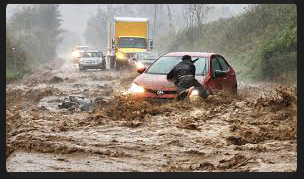
A recent superflood in Valencia, Spain, proved one of the greatest disasters in modern history.


Language from scientists doesn’t get much more alarming than that — and they’ve got good reason to be frightened. In 2023, for instance, the ability of the land to absorb our carbon emissions dropped significantly. The report confirms that last year was the hottest on record, and was likely the hottest in at least 125,000 years. This year, Greenland’s and Antarctica’s ice mass hit record lows, and extreme heat in the oceans drove the largest coral bleaching event on record, with over 80 percent of the world’s reef area affected. Accordingly, earlier this month another team of researchers announced that the world has reached its first major tipping point — in which an Earth system dramatically changes, often irreversibly — as many coral ecosystems pass a point of no return. And in September, still more scientists declared that we’ve hit the seventh of nine planetary boundaries — thresholds that keep our world hospitable to life — as ocean acidification continues to worsen. Taken together, the developments show that humanity is pushing critical Earth systems toward collapse. 

Which is not to say that there’s nothing we can do to stop the runaway deterioration of Earth’s systems. The prices of renewable energy and batteries, for instance, have fallen so precipitously that it’s even taken experts by surprise, meaning ditching fossil fuels makes excellent economic sense. We just need politicians to get serious about decarbonization: Next month at the COP30 climate conference in Brazil, nations will have to redouble their efforts to reduce emissions. “It’s really serious, but it’s not game over,” said R. Max Holmes, president and CEO of the Woodwell Climate Research Center, which wasn’t involved in the report. “There’s still hope. There’s still stuff that we can do, and that’s what we need to lean into.”

Still, the report makes it clear that the severe consequences of climate change, which scientists have long warned about, are here. “The main message is that the planet’s vital signs are flashing red,” said William J. Ripple, a professor at Oregon State University and co-lead author of the report, in an email to Grist. “Twenty-two of 34 tracked indicators are now at record extremes, from ocean heat content to global wildfire extent and Antarctic ice loss. We’re witnessing accelerating warming and a worsening of almost every key Earth system trend.”

Driving this is humanity’s failure to dramatically reduce its greenhouse gas emissions. In fact, energy-related emissions rose 1.3 percent last year, the report notes. That’s due primarily to a lack of ambition from governments to switch to renewables, but may also reflect a feedback loop: The hotter it gets, the more people need to run energy-hungry air conditioners to stay healthy, which results in more emissions and more AC use. 

At the same time, Earth’s systems are struggling to save us from ourselves. Normally, oceans and forests absorb CO2, as marine phytoplankton and terrestrial plants sequester the gas as they grow. But scientists have found a significant loss of phytoplankton in many parts of the sea in recent decades. And in 2024, the planet lost the second highest amount of forest on record. That’s due to deforestation and ever-fiercer wildfires that obliterate ecosystems — warmer temperatures and worsening droughts prime vegetation to burn catastrophically — instead of smaller, less intense blazes naturally resetting them for new growth. 

All told, loss of primary forest last year produced the equivalent of 8 percent of humanity’s emissions. And 2025 hasn’t brought any relief. Canada is suffering through a historic wildfire season, with the second largest area burned on record. That’s been consistently pouring smoke — likely infused with toxic metals from mining operations — across the country and into the United States, leading to extremely unhealthy air quality. 

This smoke initiates another feedback loop, as more carbon spews into the atmosphere, which causes more warming, which in turn worsens wildfires and produces more carbon. Those extra emissions could be helping push other systems to points of no return, further accelerating warming. That, in turn, could set the stage for a “hothouse Earth” scenario, in which the planet keeps warming even if emissions fall. “We’re edging closer to a chain reaction of feedback loops and tipping points including melting ice sheets, thawing permafrost, and forest dieback that could push Earth into a self-sustaining warming path,” said Ripple, who is also the director of the Alliance of World Scientists, which focuses on the climate crisis. “The risk now is that even if emissions fall later, the climate system may keep heating on its own. We might be dangerously close to triggering climate feedbacks that humanity can’t simply switch off.”

Indeed, the report notes that global warming may be speeding up. That could be partly due to an environmental victory, ironically enough: Air quality regulations have been reducing the emission of aerosols, which improves public health. But those aerosols normally reflect some of the sun’s energy back into space — and help brighten clouds to bounce still more energy — so losing them leads to more heating. “We’re seeing the planet heat up faster than expected,” Ripple said. “Surface temperatures are increasing more steeply than past trends would suggest.”

The cascading effects of this warming are getting worse by the year, because each bit of warming, disasters grow deadlier and more expensive. The hotter the ocean gets, for instance, the more fuel for monster tropical cyclones: Last year, Hurricane Helene killed 251 people and caused $79 billion in damages, and early indications are that Hurricane Melissa caused catastrophic destruction as it rolled across Jamaica on Tuesday. In January, the Los Angeles wildfires caused at least $250 billion in damages. And according to one group of researchers, the fires didn’t kill 30 people, as the official tally states, but more like 440 when you factor in those who may have died from the effects of smoke. Separately, last month researchers calculated that wildfire smoke already kills 40,000 Americans each year, which could jump to 71,000 by 2050 if greenhouse emissions remain high. 

All of these findings point to one conclusion: Without a drastic course correction, we’re on track to reach as much as 3.1 degrees Celsius above preindustrial levels — miles above the Paris Agreement’s goal of keeping it below 2 degrees, and even more ideally, 1.5 degrees — by 2100. The costs of climate change will be astronomically greater than preventing that warming by investing in renewables, fighting overconsumption, and protecting the ecosystems that naturally sequester carbon. “Our message is clear,” Ripple said. “We need to act boldly and act now. Every fraction of a degree matters. Delays only magnify suffering and costs.”


BEFORE you leave, PLEASE pay attention to this alert.
[t4b-ticker id="1"]


Print this article [bws_pdfprint display=’print’]

The views expressed herein are solely those of the author and may or may not reflect those of The Greanville Post, although, if we publish them, we obviously find them noteworthy and valuable. 

Creative Commons LicenseThis work is licensed under a Creative Commons Attribution-NonCommercial 4.0 International License • 
ALL CAPTIONS AND PULL QUOTES BY THE EDITORS NOT THE AUTHORS

3 comments
0 FacebookTwitterPinterestEmail