Eric A. Blair (EAB)



| Traducir—Translate! | |
| Make fonts bigger>>> | Resize text-+= |
IT'S THE OILCONOMY, STUPID
Part 6: Peak Oil / Petroleum depletion—
Part 6A: Oil origins and geology, Conventional and Unconventional Oils

Deepwater Horizon leaking, as seen from space.
Part 6A: Oil origins and geology, Conventional and Unconventional Oils
by EAB, November 2025
Note: LTO = light tight oil /// EROEI = Energy Returned over (divided by) Energy Invested – a unitless ratio
I was pondering the best approach to debunking the ill-founded (indeed, downright disingenuous) arguments of the Peak Oil / Petroleum depletion deniers and decided on the following sections:
A) Outline the origins and geology of Petroleum and the difference between Conventional and Unconventional Oils
B) Explain the Hubbert curve, proper understanding of “Peak Oil”, and the geophysical behaviour of conventional oilfields
C) Explain why unconventional shale LTO extraction in the USA is a scam
D) Post common “gotcha” type arguments made by Peak Oil deniers and explain why they are downright wrong or are using misleading “straw man” misrepresentations.
E) Highlight a couple of information-rich third-party presentations and explain the terms and concepts used by them for the layperson.
Part 6 A: The origins and geology of Petroleum and the difference between Conventional and Unconventional Oils
In a nutshell:
Conventional Oil is (relatively) easy* to extract and refine, hence it is sometimes termed “cheap” oil, however, that “cheapness” no longer applies on the far downslope of the Hubbert curve. A better definition of “cheap” oil is high EROEI oil (which, in essence, is conventional oil before, at and just after peak production). The geology of conventional oil is uniform worldwide (source/parent rock below, porous rock reservoir containing oil, impermeable anticline cap rock on top).
Unconventional Oils are difficult to extract and/or refine and are hence “expensive” (low EROEI) and in most cases are NOT economic to extract without the application of the scammiest scams in the history of scammery accompanied by outrageous environmental vandalism and abominable human rights abuses. Their geologic configurations vary and their means of oil extraction and/or refinement can be extraordinarily difficult, for example:
- Deep water oilfields (exemplified by the disastrous Macondo field remembered by the Deepwater Horizon rig explosion in 2010) have standard conventional field geology, but due to their extreme depth, are difficult to get at (eg the oilrig may float on the surface of the water 3 km above the seabed and the oil pocket sits another 5 km under the seabed).
- Arctic ocean oilfields may have conventional field geology but have mostly proved unviable. Various attempts were made, especially by the Russians, but mostly failed because rampaging icebergs particularly during winter storms demolished the rigs. Some polar output exists but is small.
- Shale oil extraction is literally like getting blood out of a stone.
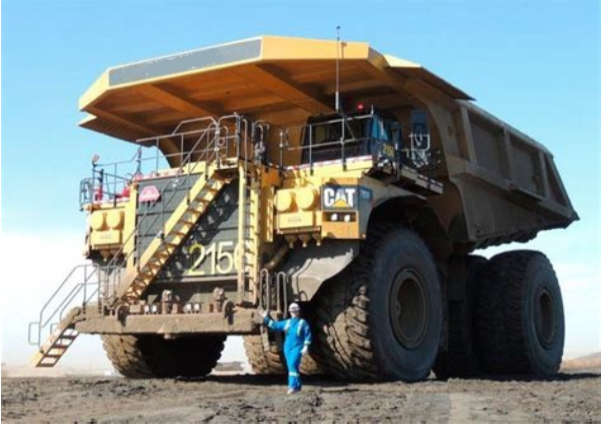
- The tar sands of Canada are dispersed and are essentially sand mixed with solid bitumen in that cold climate. They either need topsoil removal, then mechanical excavation and transportation by massive specialised energy hungry machinery (diesel powered) or, alternatively, “in-situ” extraction by even energy hungrier steam + chemical injection (usually using natural gas - or even worse, dirty coal or filthy tar residues - to boil water to create the steam)
- The extra-heavy crude of the Orinoco basin is viscous but “can be made to flow” in the higher temperatures of the Venezuelan tropics; however, refining is very costly due to major contamination with sulphur and heavy metals. This is what pundits refer to when they say that “Venezuela has the largest oil reserves in the world”. Yet the Orinoco basin was never deemed a particularly desirable spot until oil from the conventional “easy” oilfields peaked, then declined (eg Maracaibo oil peaked in the middle of last century). Harvesting and refining that extra-heavy crude will absolutely lead to horrific environmental eco-devastation and likely extermination of any forest dwellers.
The origin and geology of Conventional Oilfields:
Extensive scientific research from many disciplines (physics, chemistry, biology, geology, paleontology, etc) has determined, beyond any shadow of doubt, where and how crude oil (and gas) in conventional oilfields were created.
We know petroleum originated primarily from marine plankton in shallow, stagnant seas during supergreenhouse warm epochs, mostly during the Mesozoic (the time of dinosaurs – 70% of petroleum), Cenozoic (20%) and Paleozoic (10%) eras multiple millions of years ago.

Due to near equalisation of temperatures between low and high latitudes of the supergreenhouse Earth (the poles were tropical and dinosaurs thrived among the lush vegetation of Antarctica), ocean and sea currents were weak. Plankton that proliferated in shallow seas died, sank to the seabed and their partial decomposition depleted the oxygen in the water resulting in failure of aerobic decomposition of the remainder (most) of the plankton. Over time, the plankton were covered by sediment, buried, and compressed. Eventually, deposits became ever deeper and hence were under more intense pressure and were anaerobically “cooked” by heat radiating from the Earth's core. The complex molecules of the oldest deposits were mostly “broken up” or “cracked” into the simplest hydrocarbon of all, single-carbon methane (CH4), and these deposits became the natural gas fields. Of course, methane fields always contain some longer-chain gases (ethane, propane, butane, pentane) and some amount of (lighter fraction) liquid petroleum as well, and should properly be termed gas/oil fields. Younger fields contain mostly longer-chain hydrocarbons ranging from liquids to tar, although they also contain some gases and hence should properly be termed oil/gas fields.
None of those hydrocarbons could be easily harvestable were it not for some quirks of fate that affected a MINORITY of those dead plankton deposits. This involved the subsequent deposition of porous rock precursors that became limestone or sandstone in the layer above the parent or source shale rock housing the hydrocarbons, and fortuitously above the porous rock, an inverted dome (anticline) of impermeable material, generally clay clay-based cap or seal rock. Tectonic movements caused vertical cracks in the source rock, resulting in the oil from that deepest layer being pushed upwards under high pressure into the porous “reservoir” pocket, displacing water / saline that may have originally filled those pores. The oil and gas were prevented from dispersing away by the impervious anticline cap rock.
These conventional oilfields were the original “low hanging fruit”, the easy pickings that fuelled industrial civilisation ever since the first well was drilled in Titusville, Pennsylvania, by “Colonel” Edwin Drake (not actually a Colonel) in 1859.
That was 166 years ago, and we can be pretty certain that before the second century is up, before 2059, that our oil-based industrial civilisation and OUR OILCONOMY WILL BE OVER, done, ended, kaput...either because we will have run out of economically extractable oil or because we will have cooked ourselves to near extinction (climate collapse of all major bread baskets) on the Greenhouse Earth that we have caused.
Actually, the latter is now practically certain, and the former is fast approaching.

Because of the unique geological structure of conventional oilfields, the use of decades-old seismic technology (exploding dynamite at multiple surface locations while monitoring sound waves reflected back to the surface) has long enabled 3D mapping of conventional fields with great ease ALL AROUND THE WORLD (akin to using ultrasound waves to create a 3D image of a heart or a foetus in the womb). This is why we know FOR CERTAIN that ALL large, easily extractable oil pockets in all geographically accessible locations around the world HAVE BEEN FOUND.
The Peak of DISCOVERY of conventional oil occurred waaaaay back in 1964 and despite ups and downs (substantial upward bumps with Siberia, Prudhoe Bay, Cantarell and North Sea Oil), the overall trend has been relentlessly downwards, with new discoveries now asymptotically approaching ZERO.

Note: the famous “Growing Gap” graph above was created around 2008 with speculative future discoveries shown in yellow, and overall, the trend to zero remains valid.
Here is a graph of conventional discoveries up till 2016, the latest I could find:

We are now living off historical deposits parked in the bank with no interest accrued and no new earnings, and when those savings are gone, we will go COLD TURKEY (unless...more about that later).
SOME PERSPECTIVE:
According to my DuckDuckGo A I search, there are “more than” 25,000 oil and gas fields in total around the world (another search said the total was around 50,000) with 1,500 of them being designated as Giant or Supergiant fields which represent less than 6% of total oilfields (1,500 divided by 25,000), and those major fields provide 94% of our oil.

What does that mean? It means that if we discover another 23,500 “normal” sized oilfields TODAY, those will supply less than another 6% of our current oil needs which, in technical jargon, is termed “bugger all”.
Take home message: “normal” sized oil field discoveries are of no importance, our oilconomy requires the discovery of new GIANT conventional oil fields which by their definition, by their size, are the easiest to discover seismically but...
THERE ARE NO MORE CONVENTIONAL GIANT OILFIELDS TO BE FOUND in any accessible locations and anybody who disputes this, such as the “drill baby drill” MAGAs, are simply dumb, baby, dumb. I will later explain the drilling paradox, which HAS PROVEN IN REAL LIFE that no amount of money thrown at any drilling frenzy will EVER tap any sizable economically extractable oil ANYWHERE.
Note that current global oil consumption is reported as 100 million barrels per day. That means if a brand new giant oilfield with 500 million barrels of economically extractable oil is found, it will last the world just five days!
THE GAME IS OVER, IT IS DONE.
Footnote:
*Despite the remote offshore location prone to vicious storms, North Sea Oil is considered conventional oil. The Troll A rig, built onshore in Norway in 1995, was the largest, tallest and heaviest structure ever to be relocated from building site to final site, the tow across the sea lasting seven days. It is around 470 metres tall with the platform sitting 170m above sea level and concrete legs extending down 300m below sea level to sit on the seabed. This is considered the “easy to get” oil!!!!!
Two versions of this historic achievement—

Deep water UNconventional oil requires floating rigs that are roughly kept in position by cables anchored onto the seabed and more precisely positioned by engine-driven propellers guided by GPS which obviously need continuous energy feed. The seabed may be 3 km under the platform, and the oil well may be perhaps another 5 km below the seabed. Obviously, humans cannot dive 3 km deep, and all work at the seabed is done by remotely piloted vehicles. When the Deepwater Horizon well blew out in 2010, the result was catastrophic. An unimaginably humongous layer of heavier-than-water tar was deposited on the seabed. Floating tar and thick oil killed fish, sea mammals, and seabirds. Toxic detergents ILLEGALLY applied to disperse the oil, killed everything in the vicinity. Fishermen lost their livelihoods. BP tried squashing and smushing all manner of detritus down the wellhead to try to contain the blowout (kitchen sinks, shopping trolleys, dead cats – I exaggerate only slightly), and it was several MONTHS before the flow appeared to be stemmed. Of course, we must take their word for it that they were “successful” in capping the well; it is entirely possible the outflow stopped of its own accord due to declining well pressure. Gotta love advanced technology.
ADDENDUM: ANOTHER BP DEEPWATER HORIZON TYPE OF DISASTER IS ALMOST CERTAIN.
Even the corrupt mainstream media (see below) reported on this crucial question, but arrogant greed emboldened by ignorance and stupidity (embodied in the Trump regime), brushed aside the facts.

Oil floats on the surface of the Gulf of Mexico around a work boat at the site of the Deepwater Horizon oil spill in the Gulf of Mexico on June 2, 2010.
BY NBC NEWS / May 2020
One offshore-drilling safety regulation that was put in place after the Deepwater Horizon catastrophe and rolled back by the Trump administration last year required oil companies to test emergency devices known as blowout preventers that are designed to seal off the flow of high-pressure oil and gas from a well. In 2010, it was a failure of this mechanical valve that caused oil to continue spewing from the Deepwater Horizon's Macondo well months after the initial explosion.
Obama appointed Donald Boesch, a professor of marine science at the University of Maryland Center for Environmental Science, in 2010 to serve as a member of the commission to investigate the root cause of BP's Deepwater horizon oil spill. In a 398-page report, the commission found that systemic failings throughout the oil and gas industry contributed to the disaster and that existing systems of government oversight were inadequate.
In response, the Obama administration crafted new regulations for offshore drilling aimed at avoiding the types of mechanical failures that led to the Deepwater Horizon spill.
The commission also issued a series of recommendations to Congress to improve safety and reduce the risk of future spills, but Boesch said lawmakers largely failed to act on the report's guidance.
"All the recommendations we made to Congress for things they could put in statutes related to safety and reorganization — they were never done," he said.
And in recent years, Boesch has watched as Obama-era rules have been dismantled. The Trump administration's revisions did not entirely eliminate the safety regulations, but the rules were relaxed.
"They have to do with the margin of safety," Boesch said. "The revisions give more flexibility to come closer to the edge of what that safety cliff is. They didn't destroy the improvements that were made, but the message it sends out is that safety may be less important."
Yet, one small positive consequence of the accident was that it resulted in the largest environmental damage settlement in U.S. history. The criminal and civil fines resulted in more than $16 billion being dedicated to environmental restoration of the Gulf Coast. Some of the money that has already been allocated has helped scientists better understand biodiversity in the Gulf and how the many creatures that populate the region have been affected by the oil.
"We didn't have a great baseline before, and that was part of the challenge," said Muth of the National Wildlife Federation. "A lot of what has been going on for the past 10 years is not only trying to measure the effects on organisms, but also to get a better sense of how the whole system operates."
Still, experts caution that without sweeping changes, accidents like the Deepwater Horizon spill are just waiting to happen. And given the role that the oil and gas industry plays in accelerating global warming, those changes should ultimately be a shift away from fossil fuels, according to Boesch.
"From a climate change perspective, we know we have to stop using these hydrocarbons," he said. "So the question should not be: How do we lower the risk of a blowout next year? The question should be: How do we decarbonize the world, and what does that off-ramp look like?"
TIME Magazine, another major capitalist misinformation tool, also somehow reported on this dangerous subject, but, as can be seen, to no avail, since the US government is not run in the public interest.
The Trump Administration Is Rolling Back Offshore-Drilling Regulations
The Trump Administration on Thursday announced plans to loosen offshore-drilling regulations that were put in place after the 2010 Deepwater Horizon oil spill to prevent another disaster.
The new rules — one of which will reduce testing requirements for safety devices called blowout preventers — were announced by former oil lobbyist and acting Interior Secretary David Bernhardt and detailed in a 289-page plan, according to the New York Times. A malfunctioning blowout preventer was one of the leading causes of the BP Deepwater Horizon catastrophe, which caused the worst oil spill in U.S. history.
The changes reduce the amount of live data that operators are required to provide onshore monitors and the amount of safety test reporting that they must provide to the Interior Ministry, the U.S. government department responsible for the management of public lands and natural resources. The legislation also removes the requirement for the Interior Department to externally verify safety operations and equipment used by offshore drillers, according to the Times.
The document also said that the changes will save the oil industry $824 million (!!) over 10 years, according to the Times.
Many of the changes were requested by the American Petroleum Institute, an oil and gas trade association and lobbying group, the Times reports.
“The Trump administration, in other words, wants to hand over responsibility for industry safety to the very entity the commission warned against entrusting with that responsibility,” said Bob Deans, a spokesman for the advocacy group the Natural Resources Defense Council, according to the Times.
Many of the regulations being relaxed were implemented during former President Barack Obama’s administration based on the recommendations of a government committee that investigated the causes of the Deepwater incident, which spilled 4.9 million barrels of oil before it was finally stopped.
Environmental groups expressed their concern.
“The well control rule was one of the most important actions we took in response to the 2010 Deepwater Horizon disaster. If the Trump administration’s final rule weakens these protections, it will put workers, waters and wildlife at needless risk,” environmental non-profit Earthjustice said on Twitter.
U.S. President Donald Trump has pushed to open more U.S. water to offshore drilling, but his plans have been delayed. In late March, a federal judge in Alaska dismissed his 2017 executive order reversing Obama-era moratoriums on drilling in the Arctic.
 BEFORE you leave, PLEASE pay attention to this alert.
[t4b-ticker id="1"]
Print this article [bws_pdfprint display=’print’]
 This work is licensed under a Creative Commons Attribution-NonCommercial 4.0 International License •
ALL CAPTIONS AND PULL QUOTES BY THE EDITORS NOT THE AUTHORS