Bruce Lerro




| Traducir—Translate! | |
| Make fonts bigger>>> | Resize text-+= |
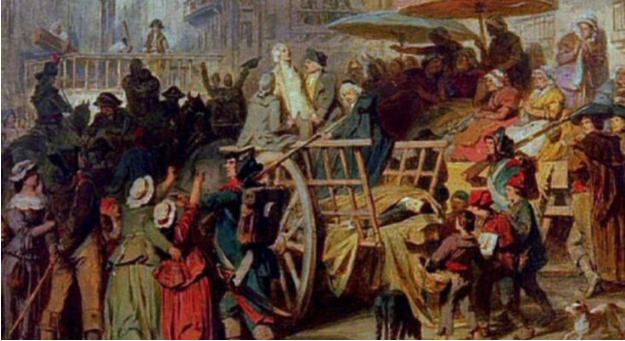
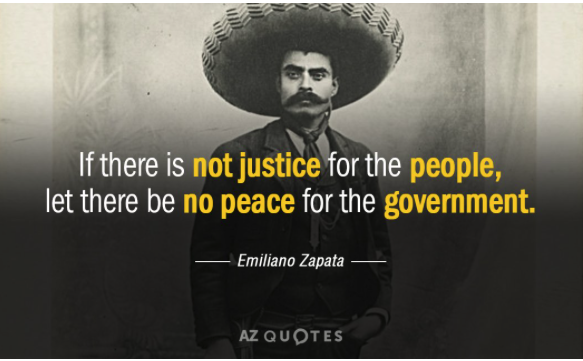
“You’ve always looked for leaders, strong men with no faults. There aren’t any. There are only men like yourselves. Speaking of leaders, they change, they desert, die. There are no leaders but yourselves. A united people is the only lasting strength”. (Emiliano Zapata, to his followers)
“For too long have the workers of the world waited for some Moses to lead them out of bondage. He has not come; he will never come. I would not lead you out if I could, for if you could be led out, you could be lead back again.” (Eugene Debs)
Distinguishing Liberal from Democracy and Why it Matters
What is the relationship between liberalism, democracy and capitalism?
Like love, “democracy” is one of those words that most everyone wants, but if you ask ten people you will get twelve definitions. At its heart, democracy means “the rule of the people”. But this raises a number of questions, such as:
- Who are the people – all social classes or only some?
- How do people express their rule: voting?, discussion?, referendum?
- How broad are the topics over which the people rule – all political topics or only domestic but not international?
- How often do people rule? All the time? Some of the time? Every four years?
- Are there qualifications for participation other than age? Is reading and writing necessary?
We will address these questions later, but before we can do this we need to extract, examine and criticize a word that is used more or less synonymously with democracy. That word is “liberalism.” These days for a society to be liberal it seems to imply that it is automatically democratic. Yet, since the rise of liberalism in the 17th century liberals were not democratic and became married to it like a shotgun wedding (see Arblaster The Rise and Decline of Liberalism) at the end of the 19th century. At heart, the class origins of liberals are in the civil service intelligentsia and the commercial classes of the 18th century. Liberals were clearly not thinking of artisans or peasants in the 17th and 18th centuries, nor wage laborers in the 19thcenturies when they formulated their ideas of what liberal rights were about.
Calling a society a “liberal” democracy smuggles in other questionable assumptions. For example, it throws into question whether it is possible to have a “conservative” democracy. In their history reactionary conservatives have supported three institutions prior to and after the Great French Revolution – the king, the aristocracy and the church. These conservatives are far more honest than liberals about their class origins and their suspicions about democracy. Yet, they too have been swept up in the wave of democracy which crested at the end of the 19th century. Even conservatives have to mumble that they are democrats if they want to receive votes.
The mistress that liberals usually prefer to keep on the side is its relationship to capitalism. All liberal societies presume a capitalist economy. Yet liberals use euphemisms such as “business” and the “market” (especially "free market"), to describe capitalist relations and make those relations appear normal, unremarkable and by implication, eternal. The only political groups that call liberal democracies “capitalist” are socialists. To call a society a “liberal democracy” also means it is economically a capitalist country.
Lastly, calling a society a liberal (capitalist) democracy also implies that a socialist economy cannot be democratic. But the relationship between capitalism and democracy is hardly uncontroversial, given that:
- Fascist Germany and Japan in the first part of the 20th century were both capitalist societies;
- there are many countries outside of western Europe that are either dictatorships or “weak” democracies that are capitalist, and
- there are socialist democratic countries and even state socialist societies such as China, Cuba Venezuela that claim to be democratic but in a different kind of way than liberal democracy.
Nevertheless, the logic of liberal democracies goes something like this:
- all democratic societies are liberal,
- all liberal societies are capitalist and
- all democratic societies are capitalists
Before we can meaningfully talk about the different types of democracy we must first understand that the liberal version is what Benjamin Barber in his book Strong Democracy calls a “thin” democracy and that “an excess of liberalism has undone democratic institutions: what little democracy we had in the West has been repeatedly compromised by the liberal institutions, as fewer and fewer Americans participate in public affairs, more and more public affairs are being relegated to the private sector.
Where are we going?
This article is divided into two parts. Part I goes deeply into the characteristics of the liberal tradition including its ontology in Newton and its epistemology in Descartes. We will then discuss three kinds of liberals including Libertarians, Hobbesian realists and Lockean pluralists. Although they hate to admit it. Liberal democracy is very afraid of too much democracy which they fear will lead to irrational undisciplined decisions, mob rule and bloodshed. In the second half of Part I we will examine the pros and cons of unitary democracy. But is unitary democracy the only alternative to liberal democracy? In Part II I present participatory democracy which challenges the roots and branches of liberal democracy while avoiding the pitfalls of unitary democracy.
I Some Foundation Stones of Liberalism
- For liberals we are all primarily economic beings. Politics is not our identity as it is for Aristotle. Liberty is pursued not in the polis but in private life
- Freedom for liberals is “freedom from” religious or state harassment, not freedom to do things together politically.
- The Social Contract theory of Hobbes and Locke that we are born pre-political beings with natural rights given to us by God or nature.
- The purpose of politics is to advance private interest, not craft social life policy like the bargaining flea market of horse trading.
- Citizenship for liberals involves representation – society is too complex for citizens to actively determine social policy and we must trust their representatives to do so and
- Citizenship involves consent, not participation
II Three Liberal Traditions: Politics as Zoo-Keeping
Despite these negative attitude towards politics there are, three liberal traditions within politics. We will start with the latest, the libertarian tradition, best typified in the work of Robert Nozick’s book Anarchy, State and Utopia. Libertarians claim that human beings are naturally property-owning economic beings whose creativity shines when they have the chance to truck and barter. Human conflict begins when politics, specifically the state tries to interfere. For libertarians the natural world of economic exchanges has no conflict. Conflict only emerges with the meddling of the state.
The second tradition Barber calls the “realist” tradition of Hobbes. Unlike libertarians, realist theory of human nature is more sinister. As Hobbes has written, humans have insatiable appetites, are fearful and lust for power and glory. “The polecats and the foxes who in brute nature plague one another with their competing lusts must be caged by laws, prodded by penalties, deterred by threats, kept ruly by rules and made pliable with rewards” as Barber says. Enter the state. A sovereign is needed to guarantee rights and repress conflict.
The third tradition is that of Locke and also of the famous Yankee political scientist, Robert Dahl. Locke takes the compromised position between the libertarians and the realists. On one hand, human beings are too dependent and naturally competitive to be happy living in solitude. yet people are too distrustful to live easily in mutuality. Despite this situation, Locke does not want to give the state a blank check. Famously, Benjamin Barber writes:
“Locke chastised Hobbes for thinking men so foolish as to avoid what mischief’s may be done to them by polecats and foxes but are content to be devoured by lions. (the state). The liberal impresses into service a sovereign lion and thinks himself secure against his ravenous fellow-creatures only to discover that the lion has appetites even more insatiable.” (15).
Political sovereignty cannot begin and end with the state. There must be a separation of powers. The world of politics is too dangerous and every interaction must be hedged with temperance. The pluralist position of Locke and later Dahl involves tolerance between rival groups while enacting political laws to contain the state, or as Barber says, cage the keepers. The following is a summary of the three kinds of liberals.
For all liberals, civil society is not a habitat for humanity, but as Barber says it is a zoo in which animals of the jungle are kept controlled princely by lions and foxes, bleating sheep, poor reptiles ruthless pigs and, sly polecats, clever coyotes and ornery wolves. For Barber the politics of zookeeping is unfit for humans. It is based on:
- certain ontological premises – Newtonian politics,
- epistemology convictions – Cartesian politics and
- political psychology—apolitical man.
It is to these that we turn.
III Liberal Political Ontology: Newtonian
Usually when we think of politics we don’t think of ontology or epistemology because these terms are used in philosophy. But liberalism has both an ontology and an epistemology which adds to its problems because they are both badly out of date. Each political theory creates its own metaphors, and believe it or not, incorporates particular conceptions of space and time. It employs special language conventions and introduces new definitions. It contains a starting or rest position from which a theorist launches his argument, an ontological grid by which fixed and permanent coordinates track both the location and velocity of every idea so the theory can be measured. For example, to give position and velocity in Newton’s clockwork universe certitude he had to imagine them against some fixity. Thus an “ether” was postulated in order to provide an unmoving, absolute control. For liberals, Newton’s mechanical universe is the ontology of its politics. To give you a sense of the spirit of this see the table below.
| NEWTON’S MECHANICAL UNIVERSE | CATEGORY OF COMPARISON | LIBERAL POLITICAL TRANSLATION |
| Universe is matter in motion | What is a human being? | Physical self and entitled to property as the fruits of his labor (labor theory of value – Locke) |
| Matter is composed of atoms | What is the lowest common denominator? | The indivisibility of atoms is the ground for individualism as the building block of society |
| Through sensations | How do we know matter? | Sensations are the ground for appetites and hedonistic psychology of utilitarianism and interest theory |
| Mutual exclusivity – collisions | How do atoms interact? | Mutual exclusivity – is the ground for territories and boundaries which are called sovereignty |
| Commensurable relations govern atomic relations | Are there universal laws? | Commensurability is the ground for political equality before the law |
| If not interfered with once set in motion, a body can go on forever | What is the degree of autonomy? | Freedom as the absence of constraint (by the state or religion) |
Barber points out that for liberals Newtonian metaphors reduce politics to zookeeping. Zoos are defined by their physical externalities – bars, cages, ditches, fences, closed-in-spaces and sharp-eyed keepers. The state is defined by its externalities – penal codes, prisons, policemen. There is a relationship between the Newtonian ontological frame and Cartesian epistemological frame that liberal democratic theory has also come to rely on as we will now see.
IV Liberal Epistemological Frame: Cartesian Politics
Cartesian politics assumes that there exists a knowable independent ground, an incorrigible first premise or antecedent immutable reality that is secure beyond all challenge. This Cartesian conviction permeates the entire social contract of liberal, state-of-nature tradition. This powerful framework of philosophical solipsism that can be traced back to Spinoza and Hobbes. All knowledge is either:
- a reconstruction of impressions imprinted on the individual subject or (empiricism) or
- a product of ideas directly apprehended by rational individuals (rationalism).
The empiricist tradition of Hobbes and Locke and the rationalist tradition of Spinoza become alternate strategies to the extinction of doubt. “A sturdy house of politics can only arise on an inexpugnable and infallible foundation set deep in pre-political granite. By rooting the political in the pre-political realm of the immutable, politics would not be portrayed in political terms but required antiseptic categories untainted by the subject matter that was to be their object”. Political obligation is not about organic relationships built into the construction of the human community. Political reasoning does not begin with human relationships, but with the axiom. As in a well-conceived geometry, it excavates starting principles of logical priority.
In terms of liberal dispositions, the quest for certainty through rational axioms goes well with the libertarian careful application of individual reason in weighing any pros and cons. The political realist goes well with the realist application of science – sense perception with a science of power politics as its outcome. With it comes the virtue of tolerance and a skepticism that politics is a piecemeal trial-and-error process will keep any absolutist certainty from taking the political ball and running with it. Pluralists are most closely aligned with skepticism. Dahl argues that in Pluralism there can be no common public ends. Public interest are mere aggregations of private interests. For Dahl communal politics is always in danger of treading the path to totalitarianism.
V Three Mythological Anthropologies of Individuals for Liberals
From community to interference; from exile to privacy
Barber writes that it’s only with the Renaissance that humanity’s essential aloneness came to be construed as a liberation rather than an exile. Reason and consent removed God from his Providence in order to establish man’s will in place of the dictates of organized religion. As mercantile capitalist relations begin to take the place of civic relations, communion comes to mean interference; exile becomes privacy. Altruism was discouraged in the name of bargaining efficiency and utility accounting. Community became the enemy of liberty which is understood as economic rather than political.
The dirty little secret of primitive accumulation
The dirty little secrets of capitalism are the conditions under which it was acquired, which Marx called primitive accumulation. This means the centuries-long process of forcibly separating people from their natural resources, tools, laboring process, finished goods and power settings in which this takes place. The labor theory of value is Locke’s attempt to formalize the connection between the natural reality of self-ownership with the legitimacy of property while denying primitive accumulation. He states that humans are entitled to the property that is the fruits of their labor but ignores the entire process by which most people were historically robbed of it. Framing contentions over private property by arguing for the right to “keep” property because keeping somehow seems less offensive than taking. Calling it keeping of property only focuses on the present (what one has) implying that it has always been with us while the past (how one got it) remains unquestioned and grows more and more remote. The answer to the question “where did private property come from?” carried out to its logical conclusion goes something like this:
- “Get off my estate”
- “What for?”
- “Because its mine”
- “From where did you get it?’
- “From my father”
- “Where did he get it?”
- “From his father”
- “And where did he get it?”
- “He fought for it”
- “Well, I’ll fight you for it”.
Liberal ideas of We – either totalitarian collective or atomistic aggregate
Once the entire murderous process of primitive accumulation is whitewashed, then we have either the foundation for the polite, civilized interaction of isolated atoms that Locke describes or the conditions of scarcity and desperation Hobbes describes once the market is put in motion. Liberal politics is atomism wearing a social mask. For the liberal “we” is either a reification of our social foundation into a collective mob which drowns out all individuality, a night in which all cows are black. The other kind of “we” for liberals is a simple adding up of individual wants or needs, simply an aggregate of individuals, a whole which is no more than the sum of its parts. This aggregate “we” becomes the foundation for interest theory. The politics of interest theory is developed with a considerable abstraction from actual social relations.
Barber contends that each of the three liberal dispositions are versions of atomistic individual from a slightly different angle. The libertarian comes upon humans alone by day in the shining luminosity of his highest aspiration at night treating him like a god. He stresses pleasure and gain and argues that just like his noble entrepreneur, nothing ventured, is nothing gained.
The realist on the other hand stumbles upon man alone by night. Barber says that in the darkness, solitude seems more vulnerable than creative. The realist inherits this beast and makes the most of him with less expectations of women and men. For him, the war of all against all will go on even after social contracts have been drawn up and oaths of allegiance are promised. If the realist zoo consists of lions and foxes, whales and sheep, wolves and pigs, it is because we are here in a jungle where even our most human characteristics – reason, language, culture – are so many teeth and claws in the endless struggle for survival. Resistant to change, realist humanity is reluctant to accommodate and suspicious of growth. Beginning with Machiavelli’s attempt to contrive a politics of stability for men who are ungrateful and frantic to avoid danger. The realist is drawn to pain and loss as most important. He is a pessimist who says, “stay put, nothing risked, nothing lost”.
Barber links the difference between the libertarian and realist historically to the stages of capitalism. The libertarian spirit is more likely to become prevalent when accumulating capital is the major project. The realist frame of mind is more likely in preserving capital once it has been received.
The pluralist charts a middle course between the libertarian optimism and the pessimism of the realist. The pluralist places his confidence in prudential reason. He acknowledges that social agreements without the threat of force may be violated out of self-interest, but he knows that covenants ungratified by assent will not last long whenever there is distraction or laziness. The pluralist points out that however much we are animals we do have the ability to delay gratification. The Golden Rule “Do to others as you would have them do to you” is a projection of the “tit for tat” social life of pluralists. But deference to prudence is beyond both the hungry lion and the wily fox of the two other liberal positions. Locke’s natural man is more than a beast. He has the capacity for human association, piety, reverence and civility. Through the pluralist back door ethic, justice equity and religion creep into liberal democracies otherwise secular and hedonistic conception of the human world. Here is a summary table of the three types of liberals.
Three Liberal Mythological Anthropologies of Individuals
Categories of Comparison | Pluralist | Realist | Libertarian |
| What is the place of humanity? | Man is more than a beast: piety, reverence and civility | Man is like a beast | Man is like a god |
| What drives humanity? | Prudential reason; simplistic utilitarianism. Pursuit of private interests will miraculously lead to public good; Mandeville, Smith, Bentham | Pain and loss avoidant | Pleasure and gain are the focus |
| How does humanity deal with the unknown? | Proceed carefully | Stay put Noting risked, nothing lost | Risk-taking nothing ventured, nothing gained |
| What is secular vs sacred? | Religion is brought in: Golden Rule, ethics, justice, equality | Secular, Agnostic, atheist | Secular, agnostic, atheist |
| What is society? | An aggregate of individual will or a collective mob which swarms individuality | An aggregate of individual will or a collective mob which swarms individuality | An aggregate of individual will or a mob which swarms individuality |
VI Representational Liberal “Thin” Democracy
Broadly speaking, Benjamin Barber divides democracy into three basic types: representative, participatory and unitary democracy. Here is an overview in table form.
Three Types of Democracy
| Category of Comparison | Unitary democracy | Participatory “thick” democracy
| Representative, “thin” democracy |
| Range of participation | All the people | All the people | Some of the people |
| How much of public affairs? | All public affairs | Some public matters | All public affairs |
| How frequently ? | All the time | Some of the time | All the time through representation |
Now the kind of democracy liberals advocate based on their ontology, epistemology and psychology is something called “representative” democracy. For reasons we will get into later, liberals set up political bodies that are supposed to represent “the people” because supposedly society is too big or too complex for it to be governed by the vast majority of its citizens directly. Also, liberals have never trusted that the working class was capable of self-government and they imagined nightmares came true in the 20th century with their newly minted term “totalitarianism”.
For liberals, the content of democracy is embodied in the presence or absence of representativeinstitutions, the separation of political powers and the ability of everyone to vote. Democracy as a process lies in the quality of debates of professional politicians, the openness to feedback from its constituents and the protection of civil and private rights. The public gives its consent to these representatives by voting for them. For liberals, representative democratic conflict is something that results from misunderstandings or volatile personalities and is something that should be compromised with, tolerated, resolved or at worst, suppressed.
VIII Liberal Thin Democracy’s Worst Fear: Unitary Democracy
Examples of unitary democracy in history
Barber identifies unitary democracy as having taken place under three very different circumstances. During the Swiss communes of the Middle Ages, during the terror period of the French revolution and during the Third Reich. At first it might seem contradictory to call Nazism anything but a democracy. However, we must keep in mind that Hitler was elected to power. In order to talk intelligently about unitary democracy, it would be helpful to treat the three forms of social organization separately.
Unitary democracy contrasted to liberal democracy
Unitary democracy, like participatory democracy which we will soon discuss, does not trust representational bodies or accept political representatives to speak for the general interest. Unitary democracy involves direct mobilization of people in face-to-face public discussions. For representative democracy, citizens are conceived of as legal persons and the civic bond is a contract. Unitary democracy scoffs at legal personhood and identifies citizens as bound by common blood. These that make us brothers and sisters such as cultural forms of nationalism such as geography, climate and language as exemplified by Herder in Germany. In unitary democracy, citizenship is directly connected to their relationship to other citizens. In the early form of unitary democracy in Switzerland, collectivism was more prevalent than individualism. This means that people will be less respectful and empathetic and their relations are more likely to be mixed up with love and fear that comes from parochial neighborhood relations. People are more likely to make decisions based on conformity, shunning and ostracism are tactics. Conflict is less likely to be tolerated or compromised over. Conflict is more likely to be suppressed to maintain the appearance of group harmony. As we shall see, participatory democracy involves people with empathy and respect, both of which are products of individualism.
The limitations of unitary democracy
Conventional liberal wisdom has it that many of the political pathologies of the 20th century have derived from too much democracy. They were the result of unitary democracy. For liberals, democracy pushed too far results in mass society, the tyranny of the majority and totalitarianism. The great aberrations of 20thcentury political culture, fascism in Italy, Germany and Japan and state socialism under Stalin, liberals claim are the result of this culture. Liberals and conservatives who were eager to blame democracy can be seen in the preoccupation of intellectuals writing about it. For example:
“Revolt of the Masses”, Ortega y Gassett
“Tyranny of the Majority”, Walter Lippmann
“Rule of mediocre”, in the works of de Tocqueville, Mill, and Nietzsche
Totalitarian Democracy – the enactment of Rousseau’s general will, Talmon
Robert A. Nisbet has argued that annihilation of those relationships within which individualism develops, such as clubs and neighborhoods, results in atomization which is the ground for totalism. The neoconservative Samuel Huntington claims that problems of governance in the US today stem from an excess of democracy and require some measure of apathy on the part of some individuals and groups.
The charge is that democracy untampered by liberalism becomes a mob and carries the seeds of totalitarianism. Participatory politics is seen as villainous because when masses of people come together the motion of people in herds move either too slowly or too violently. For liberal Democrats this can be prevented by the judicious application of the separation of powers, checks and balances, representative government, the bill of rights (protecting minorities) and the intervention of the state which is needed as a vital check on whimsical and destructive majorities.
Benjamin Barber agrees that it is undeniable and there is some truth to the fact that large groups of people occasionally do come together and do great damage. Barber argues that at the end of the French revolution crowds called for divisive issues to be settled unanimously through a kind of organic general will of a homogenized monolithic community based on aroused emotion, peer group pressure, group polarization and conformity. This is what liberals have called “the tyranny of the majority, and the degeneration of a reasoning public into a mob”.
The state is the embodiment of society when these ties of citizens – the general will – come together. Liberals complain that leaders do not represent the general will but are the embodiment of it. For unitary democracy, this citizenship is based on not only conformity to real and imagined group pressures but on obedience to authority. In unitary democracy, citizenship is not just one of a number of roles, it is the only role. It is scary because this means that the relationship between parents and children is not understood as a private relation external to politics. Family relations are political meaning it is possible for children to turn in their parents as traitors. In unitary democracy it means too much for the blood brothers of the organic community. Politics is total mobilization of its citizens.
How liberal democracy contributes to unitary mobocracies
Barber admits that unitary democracy when combined with capitalist depression, the emergence of mass media and specialized propaganda techniques something like totalitarianism could result. However, Barber claims that this totalism seems as much a response to the failures of liberalism as a tribute to the success of liberalism’s competitors. Liberalism has contributed to the molding of mass humans. Liberals expect miracles from masses which they keep inert by their forms of representation and then they wonder why people are apathetic about politics and when pushed to vote for candidates who do not represent them. They think their opinions are not intelligent because they are not within a representational frame. When participation is neutered by being cut off by the representative system, understandably citizens will prefer to spend their time in the pursuit of private interests.
Occasionally liberals will throw referendum at the people but they don’t give adequate information, provide a time and place to discuss political matters, while protected from money and media pressures. Then they blame masses of people for lack of judgment. Barber asks what general would shove rifles into the hands of civilians, hurry them off to battle and then call them cowards when they are overrun by the enemy? Groups become mobs of bigotry and hatred not because they are a product of ongoing political discussion but as a result of the mindless isolation of individual wills bombarded by mass media which at the same time relieve people of responsibility for their opinions.
In Goffman’s terms, any totalistic tendencies of groups may be the product not of the unconscious mind acted out but of the unconscious mind thwarted and not of community turned into a mob but of community life rejected. Liberal representative democracy visualizes so little middle ground between the individual on one hand and the state and the capitalists on the other. Liberal democracy confuses masses with citizens. It confuses unitary democracy with what we will soon call “thick democracy”.
- Masses make noise, citizen deliberate.
- Masses behave, citizen act.
- Masses collide and intersect, citizens engage, share.
It is not too much democracy that has failed. After all, it was liberal regimes that have proven themselves unequal to the challenge of a tyranny imposed from within Germany, Italy and Spain. The tolerant pluralist skeptics of liberal democracy are ineffectual allies of civilization when zealots are on the march. Afraid of overstepping the prudent boundaries set by abstract and legalistic rationality, liberal pluralists are overrun.
Differentiating liberal democracy, unitary democracy and participatory democracy
In thin liberal democracy, civic identities are not directly tied to each other but are mediated through the state and subject to duties on one hand and rights on the other. Relations to other citizens are not civic at all. They are private and mediated by the state. This is one of the problems Durkheim described as “anomie”. Citizens’ relationship to each other are distrustful and passive. Civic virtue is simply to make representatives accountable. In liberal democracy, citizenship is a voluntary activity which must compete with other roles. These roles usually take priority, such as worker, parent, or church member.
On the other hand, in unitary democracy civic identities are directly bound together and unmediated by the state in a kind of mystical union. In the cases of aspects of the French Revolution or German fascism, the state becomes the embodiment of society. In thick democracy the civic bond is neither formal and polite nor a mystical union. Relationships are active and cooperative. Citizens neither treat each other with neither kid gloves nor as long-lost brothers. What inequality exists is because of demonstrated skills of some of the participants. More thoughtful, articulate and persevering citizens are treated by others as first among equals.
How are conflicts resolved? For liberal representation conflict is resolved either in libertarian, realist or pluralist ways. In unitary democracy conflict is resolved through community consensus founded by something like Rousseau’s “general will” or loyalty to a sacred collectivity. Participatory democracy resolves conflict through a participatory process of ongoing, proximate neighborhood assemblies and the creation of a political community capable of transforming dependent private individuals into free political citizens who harness community interests to public policy results.
In participatory democracy the democratic whole is neither an aggregate of individuals nor a mystical whole. Citizens are considered neither legal persons nor brothers, but something else. Participatory democracy involves neither a social contract nor blood relations. Citizens of participatory democracy are neither private citizens nor members of a corporate body. The ties with each other are neither mechanical nor organic, but dialectical. Citizens are neither seen as idyllic, apathetic or submissive. Conflicts are resolved not by representative bodies or by a conforming consensus. Agreements do not result from quantitative voting or brow-beating into submission. Is there a place for ritual in politics? Barber says that voting in liberal democracy is like using a public toilet. We need ritual, but not the superstitious kind as in some unitary democracies. Part II addresses all these questions.
 BEFORE you leave, PLEASE pay attention to this alert.
[t4b-ticker id="1"]
Print this article [bws_pdfprint display=’print’]
 This work is licensed under a Creative Commons Attribution-NonCommercial 4.0 International License •
ALL CAPTIONS AND PULL QUOTES BY THE EDITORS NOT THE AUTHORS