
[su_spoiler title=”Please make sure these dispatches reach as many readers as possible. Share with kin, friends and workmates and ask them to do likewise. ” open=”yes” style=”fancy” icon=”arrow-circle-1″]
 Nima R. Alkhorshid
 DIALOGUE WORKS
chats with
PEPE ESCOBAR • PROF MOHAMMED MARANDI
| Traducir—Translate! | |
| Make fonts bigger>>> | [wpavefrsz-resizer] |
Mohammad Marandi & Pepe Escobar: Iran Warns Israel—BRICS Ready to Challenge Trump
Summary
The video presents a highly detailed discussion centered on recent geopolitical developments, primarily focusing on the Israeli attack on Qatar and its broader implications for Middle Eastern politics and global power dynamics. Pepe Escobar and Professor Marandi analyze the motivations behind the Israeli strike targeting the Hamas leadership and the apparent complicity or inability of Gulf states and the United States to prevent such actions despite being strategic allies or proxies. The conversation highlights the deep fractures and vulnerabilities of U.S.-aligned regimes in the Middle East, underscoring the lack of genuine security or respect they receive from their supposed patrons.
The dialogue extends to critique Western influence and policies, especially those of the United States and the European Union, which are portrayed as increasingly ineffectual, arrogant, and self-destructive. Europe is described as facing a severe economic and political decline, largely self-inflicted through its reliance on the West’s geopolitical agenda and its abandonment of ties with Russia, China, and Iran. In contrast, the discussion shifts to a more hopeful tone, highlighting the strategic cooperation between Russia, China, and other Eurasian powers demonstrated during recent summits and forums such as the SCO (Shanghai Cooperation Organization) and the Vladivostok Economic Forum. These gatherings symbolize a new era of Eurasian integration, connectivity, and development, with ambitious projects like the Arctic Silk Road and massive infrastructure initiatives edging the global balance away from the West.
The speakers underline a growing global realignment where Western proxy states no longer enjoy protection despite their loyalty, and where the East, spearheaded by China and Russia, is consolidating economic, technological, and geopolitical strength. The video closes on the historical perspective of China’s previous global economic dominance and how current trends suggest a return to Eurasia’s prominence. Throughout, there is a strong critique of Western arrogance juxtaposed against Eastern humility and strategic patience.

Key Insights
-
⚔️ Israeli Strike on Qatar as a Geopolitical Catalyst: The recent Israeli bombing inside Qatar, targeting Hamas leaders, represents a reckless move that undermines both Israeli and U.S. interests by destabilizing proxy regimes that have been handpicked to secure U.S. influence in the region. This attack signals to other U.S. proxies like Saudi Arabia and the UAE that no alliance guarantees protection, deeply shaking regional security architectures and accelerating instability.
-
️ Role of the U.S. in the Attack and Its Ambiguities: Despite debate over whether the U.S. warned Qatar, the panelists argue the distinction is moot since Qatar, like other proxies, would likely not have warned Hamas or taken effective measures to prevent Israeli action. The U.S. tacitly facilitates such operations to maintain leverage, revealing a cold calculus that all local actors recognize, further eroding trust in American commitments.
-
️ Proxy State Vulnerability Reflects Declining U.S. Hegemony: Gulf monarchies such as Saudi Arabia, UAE, and Qatar are portrayed as fragile “indentured servitude” regimes incapable of genuine sovereignty or defense, heavily reliant on U.S. backing that could evaporate overnight. Their internal contradictions and dependence make them prone to collapse, showcasing the limits of U.S. influence over the region.
-
The Diminishing Influence of Western Powers in Eurasia: Europe’s self-induced geopolitical and economic isolation by alienating Russia and Iran amidst U.S. pressure is digging its own grave. The abandonment of significant energy projects and political deals with Iran, coupled with reliance on expensive American LNG supplies, are hastening Europe’s de-industrialization and economic decline, sending it toward a “century of humiliation” comparable to China’s own historical trauma in the 19th and 20th centuries.
-
SCO and Vladivostok Forum as Epochal Eurasian Developments: The video emphasizes the importance of Russia, China, India, and other Eurasian partners strengthening their multilateral institutions and cooperation mechanisms. The strategic partnership between Putin and Xi Jinping, the development of the Arctic Silk Road led by Russia’s unique nuclear icebreaker fleet, and expanded infrastructure projects represent a tectonic shift in control of global economic corridors and trade routes away from the West.
-
️ Economic and Geo-Strategic Projects Ensuring Long-Term Regional Stability: The Arctic Silk Road and the “Transarctic corridor” are characterized as futuristic mega-projects that could become the 21st-century equivalent of the Swiss Canal in global logistics, drastically altering the trade landscape. Russia’s focus on developing Siberia and the Far East with Chinese and South Korean involvement points toward a new era of geopolitical influence rooted in technological innovation, resource management, and regional integration.
-
Western Political and Intellectual Decline: The discussion underlines the intellectual, cultural, and political decay of Western societies, featuring incompetent and arrogant officials who fail to grasp or respond effectively to global shifts. The dismissive and often ignorant statements from European and American politicians contrast starkly with Eastern humility and strategic resilience, deepening the perception that the West’s influence is eroding rapidly.
-
Historical Cycles and the Return of Eurasian Centrality: Invoking history, the speakers remind that prior to the 18th century, China was the largest global economy, and Eurasia was the world’s economic heart. The current renaissance through Eurasian cooperation and economic projects is seen as a return to that historical norm, symbolizing a reversal of the brief Eurocentric dominance. This historical perspective provides a broader context and legitimacy to contemporary geopolitical realignments.
-
Implications for Regional Conflict and Resistance: The attack on Hamas leadership in Qatar and the broader patterns of betrayal by U.S. proxies strengthen resistance movements across the Middle East, including Iran, Syria, Lebanon, and Yemen. The realization that U.S. alliances offer no protection catalyzes unity around the “axis of resistance” and encourages more steadfast, uncompromising opposition to Western interference.
-
Limitations of Negotiations with Western Powers: The dialogue stresses the futility of negotiating with the U.S. and its allies, as their “ruthless” and “evil” approach to geopolitics precludes honest diplomacy or security guarantees, making ideological and principled resistance critical instead of accommodation.
-
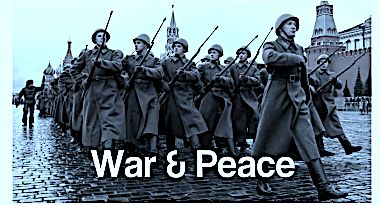
The Emerging Multipolar World Order: The combination of economic forums, military parades projecting readiness, and reinforced bi-lateral relations between Russia and China signify the maturation of a multipolar world. This counterbalances the American unipolar moment and envisions a world shaped by cooperation across Eurasian states rather than Western dominance.
Concluding Reflection
The video offers a rich and nuanced critique of contemporary international relations, presenting the Israeli attack on Qatar as emblematic of the broader geopolitical chaos fostered by U.S. imperial overreach and the fragility of its proxies. It contrasts this with the hopeful emergence of a coherent, integrated Eurasian bloc led by Russia and China, both economically and politically, which promises a profound reshaping of global power dynamics in the 21st century. The underlying theme is a call for realism about power relations, a rejection of Western hubris, and an acknowledgment of the East’s growing leadership as the global paradigm shifts.
BEFORE you leave, PLEASE pay attention to this alert.
[t4b-ticker id=”1″]
[/su_spoiler]
Print this article [bws_pdfprint display=’print’]
[su_note note_color=”#f1efef” radius=”0″]The views expressed herein are solely those of the author and may or may not reflect those of The Greanville Post, although, if we publish them, we obviously find them noteworthy and valuable. [/su_note]
 This work is licensed under a Creative Commons Attribution-NonCommercial 4.0 International License •
ALL CAPTIONS AND PULL QUOTES BY THE EDITORS NOT THE AUTHORS

