[su_spoiler title=”Please make sure these dispatches reach as many readers as possible. Share with kin, friends and workmates and ask them to do likewise. ” open=”yes” style=”fancy” icon=”arrow-circle-1″]
Julian Macfarlane NEWS FORENSICS
Traducir—Translate!
[gtranslate]
Make fonts bigger>>>
[wpavefrsz-resizer]
What makes you human? • Dateline 12/22/2025
Julian delivers a noble message for this Xmas. Kindness and solidarity with all sentient creatures in our planet is the fundamental virtue (and duty) of all decent people.
I’ve been writing a lot about Putin recently. As you know, he is famous for his love of animals, especially. You’ll find lots of photographs online: the feelings are clearly not staged; they are real!
Of particular importance is his liking for cats (as well as dogs, of course).
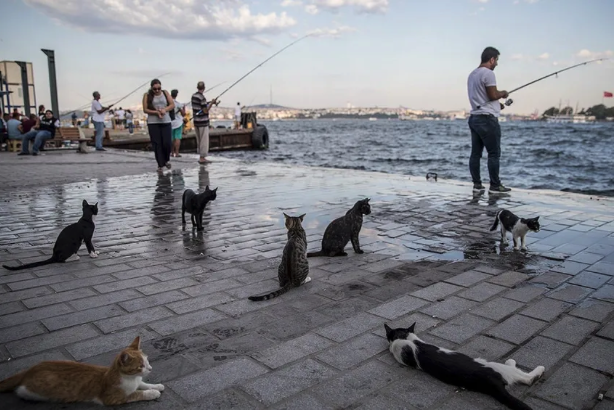
Russia has a higher percentage of households owning cats (around 60%) than any other country, even more than feline-friendly Turkey.
There are many reasons for cats’ popularity in Russia. Cats are practical for apartment living and have always been valued for pest control and good luck.
They are also important parts of Russian history and culture.
The Imperial Cat Decree
In 1745, facing a severe rat and mouse infestation in the Winter Palace, Empress Elizabeth heard about the exceptional rodent-catching skills of cats from Kazan, a city over 600 miles (around 1000 km) away.
She issued an official decree ordering thirty of the “better” cats, the ones able to catch mice” to be brought to St. Petersburg.
These cats were given official status and provided for by the state.
The initiative was highly successful, and the tradition of employing a “feline corps” in the royal residences continued through the reigns of her successors, including Catherine the Great.
Legacy of the Hermitage Cats
Guarding the Hermitage.
The tradition endures to this day at the State Hermitage Museum (formerly the Winter Palace). The museum maintains a population of around 70 cats, known as the “Hermitage cats,” that live in the museum’s cellars and tunnels, continuing their historical role of protecting the valuable art collection from rodents.
The cats are a beloved part of the museum’s identity, celebrated annually on “Hermitage Cat Day”.
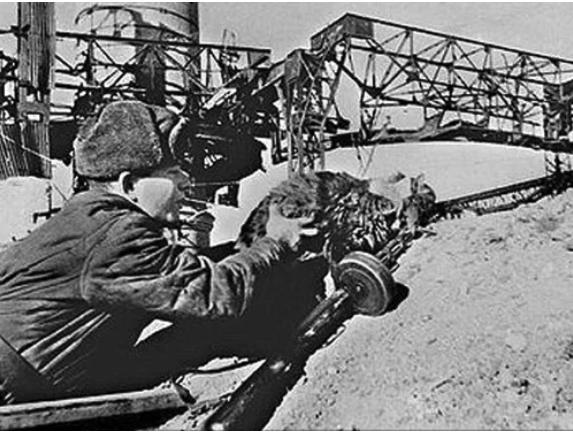
Cats played their role during the Great Patriotic War, protecting grain storage, even during difficult times like the Siege of Leningrad.
Leningrad kitty: beloved for simply surviving with the rest of the heroic population.
Mourka, the “Battlecat of Stalingrad,” delivered messages and propaganda leaflets for the Soviet 124th Rifle Brigade.
Cats are associated with good luck: “killing a cat brings seven years of misfortune”.
BELOW: I found this article on a Russian site and thought in interesting, not only for cat-lovers but for those interested in what makes human beings “human”.
Dogs and cats are Russia’s soft power
by Vladimir Kasyutin
It turns out that among our neighbors—the former Soviet republics and even Eastern European countries—there’s a strong demand for simple, human stories of love and devotion.
That caring for and appreciation for animals is universal.
In an era of political upheaval and military conflict, many feel that “soft power”—the political influence of emotions, stories, and ideas—is losing its significance. Or is being relegated to the realm of necessary state efforts, becoming part of a mechanism that advances state interests at state expense.
In fact, “soft power” is so called because it follows a strategy of indirect action. Its source is not always controlled by government structures.
Sometimes it is found not in the capitals, but in remote provinces. It is born not by decree of government bodies, but by the sincere desire of the heart.
True “soft power” works in such a way that no specific ideological premise is apparent—or even predetermined. It contains something greater, something far-reaching, something supranational.
Little ferret in the company of his giant friend
Something universal, if you will. And precisely for this reason, it extends beyond the country’s borders—creating the right view of the country beyond its borders.
For example, for several years now, the International Prize “My Affectionate and Necessary Animal” has been established in the Kaliningrad region thanks to the efforts of local activists.
It is awarded to animals (dogs, cats, and indeed all smaller animals, regardless of species or class) that have performed some heroic deed in the name of protecting people.
It also recognizes people who have performed heroic deeds in the name of protecting animals.
The idea for the award, of course, was obvious. More than half of Russian households have some kind of pet—usually a cat or dog.
We’re among the top five countries in the world for the number of domestic cats and dogs per capita.
Incidentally, we’re world leaders in cats. And even in the Russian countryside, there are people who seek out and encourage the very best in this passion.
Despite the initial provincial aura, animal rights activists and animal rights activists from around the world have been vying for the top awards since the very first season.
Over the past seven years, 334 candidates from more than 70 regions of Russia, as well as from 31 countries near and far, have been nominated.
The project isn’t a showpiece for cats, dogs, and other animals. It’s an award for human deeds—and the promotion of eternal human values: courage, devotion, true love.
After all, sometimes the love demonstrated by animals is stronger and more convincing than human love.
Special Ops soldier and friend. Ichi at war.
Our smaller brothers and sisters sometimes display no less courage and fortitude than humans. And people… people are capable of gratitude—and they can express their gratitude.
Therefore, another category was created within the awards program – for Russian-language journalists and bloggers who cover human interactions with the world around them.
The Russian Union of Journalists initially supported the idea of our Kaliningrad colleagues. We had no doubt about the success of the creative competition, but we couldn’t have imagined that in its very first season, the nomination would expand beyond our country’s borders.
Since then, the nomination has evolved into a standalone project—a competition for Russian-language media outlets and bloggers called “With Pen and Heart.”
It was the first international competition in the modern history of Russian journalism.
Over the course of six seasons, 773 journalists and bloggers from 82 regions of Russia, as well as from Azerbaijan, Armenia, Belarus, Turkmenistan, Tajikistan, Uzbekistan, Kazakhstan, Kyrgyzstan, and Serbia, submitted applications for the main prize.
This year, for the first time, applications were received from colleagues from Transnistria.
It turns out that among our neighbors—the former Soviet republics and even Eastern European countries—there’s a strong demand for simple, human stories of love and devotion.
[su_note note_color=”#ebf1f7″ radius=”17″]That caring for and appreciation for animals is universal. That virtually the entire post-Soviet region is united by common, traditional Russian values—the desire to sacrifice for others, compassion and humanism, helping the weak, and the value of life itself.[/su_note]
Even if it’s the life of a cat or a dog.
Most importantly, it turns out that Russia is becoming a magnet for people who care about all these values.
Our neighbors are telling their stories in their own countries, to their own audiences, about what’s especially dear to those living in Russia (for example, the journalists from Uzbekistan, who won the award, are talking about the contribution of our smaller brothers to Victory in the Great Patriotic War).
Sanctions, political borders, and distance don’t hinder this. And they’re telling these stories in Russian, in Russian-language media in their own countries.
If anything deserves to be called “soft power” today, this is it. An idea conceived in Russia that inspires far beyond its borders. The story of a dog’s (or cat’s) heroism, seen as a universal example of love and self-sacrifice.
This means that Russia’s “soft power” is each of us. And the pets living alongside us. In summary, while other countries like Turkey also show great affection for felines, Russia stands out for its sheer volume of cat ownership and deep cultural integration.
What makes you human?
These are Russian perspectives, but beyond that, human ones.
When did humans become human?
Anatomically “correct H. Sapiens have been around for at least 150,000 years, perhaps longer.
But “behaviorally modern H. Sapiens appeared less than 50,000 years ago thanks to just over 100 genetic mutations, principally the NCmiRNA. That’s when we “self-domesticated”…. We went from “social” to “hypersocial”, from cooperative to communal and egalitarian (forget what the Mad Grammarian, Steven Pinker says! )
Dogs were key to early human success by becoming invaluable partners in hunting (tracking, flushing game), providing crucial protection and early warning against predators, and even aiding in agriculture by guarding crops, leading to more stable food supplies, increased security, and better social cooperation that gave humans an edge over other hominins like Neanderthals, accelerating the development of complex societies.
When we moved to agriculture, cats joined us. Most wildcats are solitary hunters, but domestic cats are descended from Felis lybica, the African wildcat, which is communal and egalitarian and often hunts in pairs—just like housecats!
Felis lybica
Ferrets came later.
So you can argue that our humanity depends in part on our animal companions.
Quote of the Day
“Imagine for a moment that a new drug comes on the market. It’s super-addictive, and in no time everyone’s hooked. Scientists investigate and soon conclude that the drug causes, I quote, ‘a misperception of risk, anxiety, lower mood levels, learned helplessness, contempt and hostility towards others, and desensitization’……That drug is the news.” ― Rutger Bregman, Humankind: A Hopeful History
Coffee Time
If different species can get along, why can’t we?
Two more days to Christmas. To all those celebrating the 25th, Merry Christmas from Chappy and Ichi and their gnome — Julian.
BEFORE you leave, PLEASE pay attention to this alert. INDISPENSABLE information!
[t4b-ticker id=”1″]
[/su_spoiler]
Print this article [bws_pdfprint display=’print’]
[su_note note_color=”#f1efef” radius=”0″]The views expressed herein are solely those of the author and may or may not reflect those of The Greanville Post, although, if we publish them, we obviously find them noteworthy and highly valuable. [/su_note]
Julian Macfarlane is a Tokyo-based media and strategic analyst. He edits News Forensics (Substack column). Julian is assisted in his writing by two highly proficient felines, Chappy and Ichi.


 Julian Macfarlane







 This work is licensed under a Creative Commons Attribution-NonCommercial 4.0 International License •

1 comment
https://archive.seattletimes.com/archive/19960201/2311809/why-german-nazis-were-big-fans-of-animal-rights