
[su_spoiler title=”Please make sure these dispatches reach as many readers as possible. Share with kin, friends and workmates and ask them to do likewise. ” open=”yes” style=”fancy” icon=”arrow-circle-1″]
 Nima R. Alkhorshid
DIALOGUE WORKS
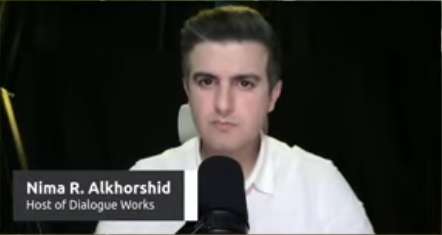
Nima chats with Prof. Mohammed Marandi
| Traducir—Translate! | |
| Make fonts bigger>>> | [wpavefrsz-resizer] |
Mohammad Marandi: Starlink is DOWN. Iran’s reality HITS Trump

Summary
The video features an in-depth interview with Professor Marandi, discussing the complex socio-political situation in Iran as of January 2026. The conversation begins with debunking widespread Western media misinformation, especially regarding alleged communications between Iranian political figures and exiled monarchist groups. Professor Marandi argues these claims are fabrications by Western media to justify foreign aggression and regime change efforts against Iran. He highlights the distinction between peaceful protesters and violent rioters, emphasizing that the latter are well-organized, armed groups with foreign backing aiming to destabilize the country.
The discussion expands to analyze the geopolitical dynamics in the Middle East, focusing on Iran’s security challenges, foreign interference, and regional alliances. Professor Marandi explains how groups like the MEK, monarchists, ISIS remnants, and Kurdish separatists lack genuine popular support in Iran and are used as proxies by Western and Israeli intelligence to foster chaos. He stresses that Iran is more resilient and unified internally than Western narratives suggest, citing massive pro-government rallies as evidence.
Internet shutdowns in Iran are described as strategic moves to curb foreign-backed coordination among rioters and prepare the population and military for potential war, notably against the United States and Israel. Professor Marandi emphasizes Iran’s advanced military capabilities, particularly missile and drone systems, warning of the catastrophic consequences a war would bring globally, including energy crises impacting the West.
The interview also critiques the Western media’s role in psychological warfare and the propagation of false narratives, comparing current tactics to past misinformation campaigns like those preceding the Iraq War. The conversation touches on the use of modern digital platforms, including Elon Musk’s X (formerly Twitter), in facilitating unrest and regime change efforts.
Finally, Professor Marandi reflects optimistically on the younger generation in Iran (Gen Z), asserting their political awareness and resilience against foreign manipulation. He criticizes the West’s ongoing attempts to sow division within Iranian society and undermine its sovereignty, while acknowledging the broader regional instability fueled by foreign powers and intelligence agencies. The interview ends with a call for recognizing Iran’s strength and the likely failure of Western attempts at regime change.
Highlights
- [01:20] 📰 Western media spreads false rumors about Zarif and exiled monarchists to delegitimize Iran.
- [03:34] 🚨 Distinction between peaceful protesters and violent, foreign-backed rioters in Iran’s recent unrest.
- [05:58] 🔫 Hundreds of Iranian security officers killed by organized rioters, contradicting Western portrayal of peaceful protests.
- [08:20] 👥 Proxies like MEK, monarchists, ISIS remnants have no popular support and are tools for foreign interference.
- [22:07] 📵 Iran’s internet shutdowns aim to disrupt foreign-backed rioter coordination and prepare for possible war.
- [26:13] 🚀 Iran’s advanced missile and drone capabilities pose serious challenges to U.S. and Israeli military plans.
- [51:01] 🌍 Iranian youth (Gen Z) show political awareness and resistance to foreign manipulation despite pressures.
Key Insights (Click button below)
-
[bg_collapse view=”button-green” color=”#4a4949″ expand_text=”Show More” collapse_text=”Show Less” ]
-
[01:20] 📰 Western Media Misinformation as a War Tool: Professor Marandi highlights how Western media fabricates and amplifies false narratives, such as alleged communications between Iranian officials and exiled monarchists, to justify sanctions, sanctions, and potential military interventions. This tactic diverts attention from the real political dynamics inside Iran and serves imperial interests by undermining Iran’s sovereignty.
-
[03:34] 🚨 Complexity of Protests vs. Riots: The interview clarifies that initial protests in Iran were largely peaceful, but were subsequently infiltrated and overtaken by violent rioters trained and armed by foreign powers. This distinction is critical for understanding the internal dynamics and for debunking simplistic Western portrayals of Iranian unrest as purely grassroots democratic movements.
-
[05:58] 🔫 Scale and Organization of Violence: The killing of hundreds of Iranian law enforcement personnel by violent rioters indicates a high level of organization and weaponization, which contradicts Western claims of “peaceful protesters.” This violence is often attributed to foreign-backed sabotage rather than genuine domestic dissent, illustrating the geopolitical nature of the unrest.
-
[08:20] 👥 Proxy Groups Lack Legitimacy: Groups like the MEK and monarchists have historical baggage and no genuine popular mandate in Iran. Their collaboration with foreign intelligence agencies demonstrates how external powers exploit fringe groups for destabilization while ignoring the broader Iranian population’s sentiment, which overwhelmingly rejects such proxies.
-
[22:07] 📵 Internet Shutdowns as Dual-Strategy: Iran’s decision to cut internet access serves a dual purpose: it disrupts the coordination among foreign-backed rioters and prevents intelligence gathering by hostile foreign actors. This highlights the modern battlefield of information warfare where control over digital communication is crucial in conflict zones.
-
[26:13] 🚀 Iran’s Military Preparedness: Contrary to Western expectations, Iran has significantly enhanced its military capabilities, including a vast arsenal of missiles and drones capable of striking U.S. bases and allies in the region. This preparedness serves as a strong deterrent but also raises the stakes of any potential military confrontation.
-
[51:01] 🌍 Youth as a Political Force: Despite external pressures and propaganda, Iran’s younger generation (Gen Z) exhibits political awareness and resilience. They are less susceptible to foreign manipulation than previously assumed, indicating a hopeful future for Iran’s social cohesion and sovereignty amid ongoing challenges.
-
[36:14] ⚠️ Western Empires’ Destabilizing Policies: Professor Marandi critiques the role of Western powers and their regional allies in fomenting chaos across the Middle East, from Syria to Yemen to Iran. He argues that fragmentation benefits imperial projects like “Greater Israel,” reflecting a broader strategy of divide-and-conquer rather than genuine democratization.
-
[30:32] 🤖 Digital Platforms in Regime Change Efforts: The interview sheds light on how modern platforms like Elon Musk’s X (Twitter) have become tools for psychological warfare and regime change, facilitating the spread of misinformation and coordination among opposition groups, often backed by foreign intelligence.
-
[43:50] 🕊️ Western Hypocrisy on Democracy and Multiculturalism: Although Western governments promote ideals like democracy and multiculturalism, their covert operations actively encourage sectarianism and ethnic divisions within Iran and other countries to weaken them. This contradiction exposes the realpolitik behind Western foreign policies.
-
[19:11] 🎭 Role of Propaganda in Justifying Violence: The interview exposes how Western media narratives about Iran’s government being “evil” are used to justify sanctions, covert actions, and potential military strikes. This propaganda shapes public opinion to accept aggressive foreign policies under the guise of humanitarian concern.
-
[28:25] 🌊 Strategic Vulnerability of the Persian Gulf: The Persian Gulf’s narrow geography makes it highly vulnerable to missile strikes and blockades, which could disrupt global energy supplies. Iran’s capability to strike critical infrastructure in the region is a significant factor in the geopolitical calculus of potential conflicts.
-
[50:28] 📉 Long-Term Resilience of the Islamic Republic: Despite decades of sanctions, media attacks, and internal challenges, the Islamic Republic of Iran remains intact and resilient. Western predictions of its imminent collapse have proven premature, reflecting a misunderstanding of Iranian society’s complexities and endurance.
-
[16:24] ☠️ Historical Western Use of Chemical Weapons: Professor Marandi recalls the use of chemical weapons by Saddam Hussein against Iranians, facilitated by the West, and criticizes current Western claims accusing Iran of similar offenses. This historical context highlights double standards and the selective application of international norms.
-
[39:10] 🌐 Regional Complexity and Foreign Influence: Iran’s extensive borders with unstable or hostile neighbors, many influenced or controlled by Western powers, pose significant security challenges. Cooperation among Western embassies and local proxies in Iran further complicates Iran’s internal security landscape.
-
[55:44] 🔄 Persistence of Western Anti-Iran Narratives: Western media and political discourse have consistently framed Iran as a “dying regime” for decades, yet Iran’s survival suggests that such narratives are more propaganda than reality. This persistence reflects the enduring geopolitical rivalry rather than an accurate assessment of Iran’s internal stability.
Conclusion
The interview with Professor Marandi provides a comprehensive and nuanced understanding of Iran’s current political climate, revealing significant discrepancies between Western media portrayals and on-the-ground realities. It exposes the intricate web of foreign interference, psychological warfare, and misinformation campaigns aimed at destabilizing Iran, while also highlighting Iran’s resilience, military preparedness, and the political maturity of its youth. The geopolitical stakes are high, with potential for regional and global disruption, yet the conversation ends on a cautiously optimistic note about Iran’s future and the limits of foreign manipulation.
[/bg_collapse]
-
BEFORE you leave, PLEASE pay attention to this alert.
[t4b-ticker id=”1″]
[/su_spoiler]
Print this article [bws_pdfprint display=’print’]
[su_note note_color=”#f1efef” radius=”0″]The views expressed herein are solely those of the author and may or may not reflect those of The Greanville Post, although, if we publish them, we obviously find them noteworthy and valuable. [/su_note]
 This work is licensed under a Creative Commons Attribution-NonCommercial 4.0 International License •
ALL CAPTIONS AND PULL QUOTES BY THE EDITORS NOT THE AUTHORS

