Judge Napolitano
 chats with
Prof. GLENN DIESEN

Streamed live on May 14, 2026
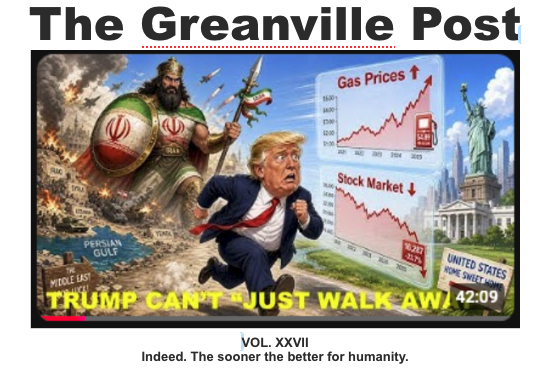
The discussion, led by Andrew Napolitano with guest Professor Glenn Diesen, centers on the strategic failures and geopolitical consequences of recent U.S.- and Israeli-led confrontations with Iran, shifts in European and global alignments, and the broader implications for U.S. policy toward Russia and China. Diesen argues that the perceived universal view among academics, think tanks, and diplomats is that the U.S. and Israel have failed to achieve their objectives against Iran. He cites commentary like Robert Kagan’s as signaling recognition of limits to U.S. power and warns that Iran will not revert to a pre-conflict status quo of crippling sanctions and vulnerability. With control of strategic chokepoints such as the Strait of Hormuz, Iran could retaliate economically and militarily in ways largely beyond U.S. control, bolstered by domestic industrial capacity and likely support from Russia and China.
Europe’s reaction—publicly distancing itself and saying "this is not our war"—reflects both unwillingness to participate and opportunism to avoid blame as the campaign falters. Diesen suggests Europeans historically support Israel rhetorically but avoid direct involvement; when the conflict deteriorated, leaders seized the chance to abstain. He characterizes U.S. decision-making as unilateral, with Trump failing to consult allies and effectively offloading responsibility once the situation soured.
On Ukraine, the conversation turns to waning Western narratives and information control. Diesen notes that revelations about corruption or misconduct in Kyiv, such as allegations highlighted by Tucker Carlson’s interview with a former Zelensky spokesperson, are likely to be downplayed by European media eager to sustain pro-war narratives. He sees Putin’s comment that "the war will be over soon" as ambiguous but possibly tied to Russia’s objective to consolidate control over Donbass; recent Russian strikes and drone attacks could signal preparation for further offensives.
Regarding U.S.-China relations and President Trump’s diplomatic options in Beijing, Diesen is skeptical about Trump’s leverage. He argues Trump’s economic pressure failed to force Chinese concessions and that China has moved to reduce vulnerability—e.g., in rare earths and by protecting domestic firms from compliance with U.S. secondary sanctions. Taiwan remains Beijing’s red line: any U.S. military-political normalization with Taiwan threatens the core foundation of China-U.S. relations and is non-negotiable. While China may offer trade gestures or limited concessions, it will resist changes that appear to endorse Taiwanese secession.
Diesen also doubts the practicality of Trump’s expectations that China would pressure Iran to surrender nuclear material, noting China’s energy and strategic ties to Iran and its interest in freedom of navigation through regional waterways. He argues China and other states increasingly prefer to weather U.S. sanctions while maintaining trade ties with sanctioned states rather than conform to U.S.-led global sanctions regimes. Overall, Diesen portrays a geopolitical landscape where U.S. unilateralism and heavy reliance on sanctions have eroded influence, provoking realignments and hardening resistance from Iran, Russia, and China, while Europe retreats from direct involvement as conflicts become costly and uncontrollable.

