6George Galloway
George Galloway
[00:00]
Summary of the Persian Gulf Conflict and Iran-U.S. Relations:
Be sure to share these materials with friends, kin, and workmates.
George Galloway

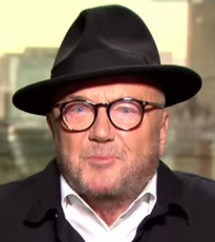
George Galloway
MONOLOGUE: Trump's peace karaoke
[00:00]
Summary of the Persian Gulf Conflict and Iran-U.S. Relations:- The war in the Persian Gulf is portrayed as over, marking a considerable victory for the Islamic Republic of Iran.
- Claims include:
- Cessation of all hostilities, including in Lebanon.
- Reopening of the Strait of Hormuz, though it was never closed.
- Iran regaining access to billions of dollars previously frozen by the U.S. in various international locations.
- Iran committing to not pursue nuclear weapons, effectively returning to the status quo ante established before Trump’s administration.
- This scenario is mainly presented as if Trump’s words are trustworthy, but skepticism is expressed regarding the sincerity of these claims (“only if you believe Donald Trump”).
- Contrasting with Trump’s narrative, Israeli Prime Minister Netanyahu asserts that he and Trump are “shoulder-to-shoulder,” and Israel reserves the right to meet any threats as they see fit, suggesting continued instability in the Persian Gulf region.
- Previously intense threats from Trump to attack Iran have vanished, including promises of regime change and restoration of the Pahlavi monarchy, which have not materialized.
- The Iranian government has showcased a resilient national unity and increasing power, arguably stronger than since the Iranian revolution’s early days.
- Iran is depicted as a military superpower, capable of confronting both U.S. and Israeli forces simultaneously.
- Congressional disclosures reveal the loss or severe damage of 41 American aircraft during the conflict.
- The U.S. Navy’s blockade efforts failed due to the threat posed by Iran’s air power and their agile, fast-attack naval craft, contradicting Trump’s claim of having sunk the Iranian Navy.
- Multiple American aircraft carriers and warships suffered retreats or damage, with some U.S. military bases around Iran evacuated.
- Under the peace terms announced by Trump, the U.S. will withdraw forces near Iran, signaling no imminent new war.
- Regardless of whether hostilities formally end, the event is described as a humiliating defeat for Donald Trumpand a symbolic victory for anti-U.S. imperialism forces.
- Iran’s conduct and military performance have earned global recognition, ending illusions about regime change or vulnerability.
- A tragic event where 21 children were killed in their sleep at a school dormitory in Lugansk.
- The Ukrainian government claims Lugansk as its territory and asserts those killed were Ukrainian citizens.
- The massacre is attributed to Ukrainian forces, enabled and supported by NATO, including provision of weapons, targeting systems, and satellite communications (with a pointed mention of Elon Musk’s Starlink).
- This attack is framed as a deliberate joint NATO operation, not an accident or standard military action.
- Western governments (France, Germany, UK, U.S.) and major media outlets (BBC, CNN) have largely remained silent or failed to meaningfully condemn the incident.
- This silence is described as a form of complicity or indirect support for terrorism.
- The event should have triggered strong reactions, including summoning the UN and launching anti-terror coalitions, but it did not.
- Western media are accused of ignoring the massacre, contributing to an erosion of public trust in mainstream press.
- Terrorism is firmly defined as the intentional killing or maiming of civilians for political ends—illegal under law and immoral under religion.
- The lack of condemnation for the massacre of these children undermines the universal meaning of terrorism.
- The speaker warns that inconsistent treatment of terrorism damages political regimes’ legitimacy, and the term “terrorism” risks losing its meaning altogether.
- French President Emmanuel Macron condemned Russian retaliatory strikes but did not mention the triggering massacre of children, highlighting a selective political narrative.
- Ursula von der Leyen, European Commission President (identified as unelected and described critically), condemned Russia’s retaliatory military actions while ignoring the initial atrocity.
- The Russian retaliations targeted military and political sites only, according to the speaker, avoiding civilian or dormitory targets.
- The mood in Moscow is described as darkening, not only because of the initial atrocity but because of the complicity of Western governments, media, and society in allowing the atrocity’s cover-up.
- Mainstream media face sharp criticism for their failure to report truthfully, which accelerates their decline in credibility.
- The state-controlled nature of much Western media is highlighted, implying they follow governmental agendas rather than independent journalism.
- The disregard for the Lugansk massacre and the failure to condemn it as terrorism undermines global anti-terrorism efforts.
- If terrorism cannot be condemned consistently, public confidence in security measures (such as those enacted after attacks in London, Paris, or Brussels) is compromised.
- The West’s hypocrisy is damaging its own legitimacy and stability, and regimes face growing political crises.
- UK political leader Keir Starmer is depicted as struggling to maintain power, desperate for favorable election outcomes to uphold his position.
- There is a mention of an unnamed rival who plans to challenge Starmer’s leadership.
- Nigel Farage, a prominent political figure, is poised to win an upcoming by-election, impacting the balance of power.
- Farage is accused of receiving a £5 million bribe from an anonymous Thailand-based individual before becoming MP for Clacton, allegedly violating parliamentary standards by failing to disclose the payment.
- Farage reportedly purchased a £1.4 million property in cash, a rare transaction indicating substantial undisclosed wealth.
- He claimed the cash came from earnings on the TV series “I’m a Celebrity… Get Me Out of Here,” but program records show no payment was made at the relevant time.
- In response to these allegations, Farage stated he was a victim of hacking by Russia’s Putin, a defense met with skepticism by the speaker.
- The scandal threatens Farage’s parliamentary career and contributes to broader political turmoil in the UK.
- The video ends on a tone of cynicism regarding British politics and media, dubbing the country “the mother of all talk shows” where scandals and political theater dominate.
- The speaker hints at more upcoming revelations and ongoing political instability.
Key Insights
- Iran emerges victorious in recent Gulf conflict, consolidating power and unity.
- U.S. military weaknesses exposed by Iranian defense capabilities during the 39-day war.
- Massacre of 21 children in Luganskrepresents a major but ignored terrorist act enabled by NATO and Ukrainian forces.
- Western silence and media blackouton the Lugansk atrocity erode public trust and political legitimacy.
- Hypocrisy in terrorism narratives undermines global anti-terrorism coherence.
- Political instability in the UK: leadership crises and scandals (Nigel Farage’s alleged corruption) illustrate governmental dysfunction.
Quantitative Data Table
| Event/Item | Number/Value | Additional Notes |
|---|---|---|
| American aircraft lost/damaged | 41 | During Iran-U.S. 39-day conflict |
| Children killed in Lugansk dormitory | 21 | Massacre attributed to Ukrainian/NATO |
| Nigel Farage bribe amount | £5 million | Undisclosed before becoming MP |
| Nigel Farage property purchased | £1.4 million | Paid in cash |