Monday, July 27 2026 - Welcome • Bienvenidos • Bienvenu
Yemen Heats Up… A New Threat to the Global Oil Supply
The Missile Gulf
Richard Wolff: Yemen’s Bab al-Mandab Blockade & Hormuz Closure Shatter the Global...
Patrick Henningsen: Naval Siege—>Houthis Force 10+ Saudi Tankers to Turn Back After...
Abdul-Malik al-Houthi : le Yémen mettra fin à la tyrannie saoudienne
Iran war expands: This big escalation could cause an oil crisis
From Hormuz to Bab al-Mandab: Yemen Strikes Saudi Arabia and Joins Iran...
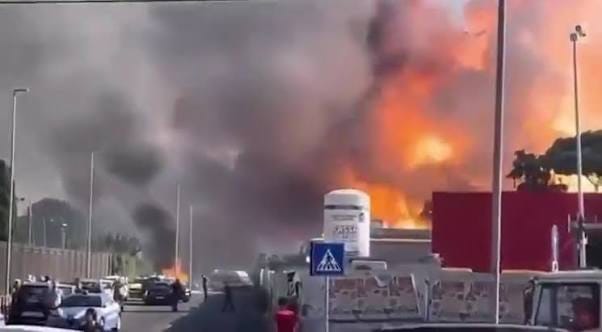
Seyed M. Marandi: Aramco Facility Engulfed in Flames After Yemeni Missile Strike
Trump Titanic, Iran Iceberg
STUPID IS AS STUPID DOES
  • HOME
  • ESSENTIAL
  • MYTH-FREE HISTORY WITH JACQUES PAUWELS
  • MUST VIDEO
  • BLOWBACK
  • NATURE
The Greanville Post
With the truth about Russia completely eliminated, the abject leading elites of Britain, France and Germany are now moving to establish de facto fascism across the EU. In all this, they are following Washington's orders.
  • HOME
  • ESSENTIAL
  • MYTH-FREE HISTORY WITH JACQUES PAUWELS
  • MUST VIDEO
  • BLOWBACK
  • NATURE
Home Author
Author

Bergeracpas

  • Author Profile
  • Posts by the Author
  • Mohsen Rezaei: Iran Is Ready to Go on the Offensive and Deploy Its Ground Forces
  • Bath Time for Black Bears in the Borderlands
  • The Mark of a Disgraceful and Uncompassionate Government: New Rule Would Allow More Grizzly Deaths
  • The Shambala Miracle
  • DEBUNKING MALICIOUS MYTHS: Did Soviet officers really use automatic weapons on their own troops in Stalingrad as depicted in the film Enemy at the Gates?
  • HORSE SLAVES
Bergeracpas

D.P. Bergeracpas is The Greanville Post's operational editor.

Mohsen Rezaei: Iran Is Ready to Go on the Offensive and Deploy Its Ground Forces

by Bergeracpas Published: July 24, 2026
written by Bergeracpas 32 minutes read
Iranian General Mohsen Rezaei

Be sure to share these materials with friends, kin, and workmates.

LE CRI DES PEUPLES
L'info sans le filtre des médias dominants et de la censure d’État.


Iranian General Mohsen Rezaei


Interview with General Mohsen Rezaei, former commander of the IRGC and military adviser to Supreme Leader Mojtaba Khamenei, on Iran’s national news channel (IRIB), July 17, 2026.

Source: YouTube

Translation: resistanceaxis.substack.com

  • The Islamabad Memorandum Is Dead

  • Southern Iran Under Fire: A War of Pressure Before Invasion?

  • Hormuz, Deterrence, and Global Security: Iran’s Doctrine on the Strait

  • “War and Negotiation at Once Is Over”: Tehran’s Ultimatum

  • Trump, a Global “Joke”: Rezaei’s Response to American Insults

  • From Existential War to Revolution: Why Washington Wants to Reduce Iran to a Mere Political Dispute

JOURNALIST: In the name of God, the Most Gracious, the Most Merciful. Dear compatriots, ladies and gentlemen, dear viewers of our national news channel, welcome to this special program. We’re going to talk about the most important developments concerning the country and the region. Allow me to introduce this evening’s guest: Major General of the Revolutionary Guards, Dr. Mohsen Rezaei, former commander of the Islamic Revolutionary Guard Corps during the Imposed War [the Iran-Iraq war], special guest of tonight’s program. General, my greetings, my respects.

REZAEI: Peace be upon you. Thank you for your welcome, and I am at your service.

The Islamabad Memorandum Is Dead

JOURNALIST: The last time you were a guest on this program, you indicated that American officials, particularly the President of the United States, would not honor the Islamabad memorandum of understanding. Today, we see southern Iran under the pressure of American aggressions and attacks, these days and these nights. Does this Islamabad memorandum of understanding still hold?

REZAEI: There are two questions here. In the name of God, the Most Gracious, the Most Merciful. Let’s begin with this noble verse from the Holy Quran:

“Authorization is given to those who are attacked (to defend themselves), because they have been wronged, and God is certainly capable of aiding them. Those who have been expelled from their homes without right.”

The Most High God says, in this noble verse, that He has authorized combatants who suffer oppression and injustice to fight, and that He grants them victory, that He aids them, that He gives them support. The reason for this is that they were unjustly expelled from their land. Their land was unjustly invaded. Their life was unjustly subjected to insecurity.

So there are two questions here. One is the question of the memorandum of understanding: why did we get to this point? The other is this war that has begun: what are its objectives, in what form is it unfolding? It seems to me we need to distinguish between the two. Let’s start with the memorandum of understanding.

It’s better to first look at the question of the memorandum of understanding, why things happened this way. As you mentioned, on the 15th or 16th of Tir [July 6th or 7th], I told Dr. Khosravi: “Gentlemen, you who are opposed to negotiations, be patient: Trump will tear up this agreement just as he tore up the JCPOA [Iran’s nuclear deal].” Why? Because there was practically nothing left of the memorandum of understanding, only a name remained, and that name could not survive either. For what reason? Because, of the five clauses that Trump had accepted as a preamble to the implementation of the other clauses, they had violated every single one of them.

Their first failure, the first violation of the memorandum of understanding, was this: they delayed the Lebanon issue, the ceasefire in Lebanon was delayed, it was never fully implemented, the Israeli withdrawal from Lebanon did not take place. That’s a first violation of the memorandum of understanding.

The second matter: they came to establish a corridor, a route through the Strait of Hormuz, authorizing, encouraging, inciting a series of ships to pass outside the arrangements and management of Iran. We struck them because this constituted a violation: we struck two or three ships, we said: “The route through which 45 ships pass daily is open, why are you going through there? According to the agreement, come, pass through here.” After we struck those ships, the Americans came to commit a third violation: they attacked our coasts, attacked Bandar Abbas airport, struck Qeshm Island, struck the desalination plant, while the first clause was that we would respect the sovereignty and territory of the United States, and that they too would respect our sovereignty and our territory. On what pretext, for what crime did you violate that clause and attack our coasts? So that southern corridor was the second violation, that attack on our coasts was the third violation.

For two or three weeks, there were discussions about those 12 billion dollars they were supposed to pay us. First they said it would be a bank loan; then they said you couldn’t buy just anything with it, only food and raw materials; then they said even that would have to be bought from us, the Americans. Meaning that, in practice, we were getting nothing out of those 12 billion. That’s the fourth violation.

So, even before the day I announced that Trump would tear up this agreement (because in practice there was nothing concretely left of it), the question is: at the moment the Americans signed this agreement, did they intend to commit such violations? Yes, they did. Why? Because they thought they’d sign for the time being, but, through pressure, force Iran to act according to their demands.

We had set up a committee; Dr. Ghalibaf and Mr. J.D. Vance had come, a dispute resolution committee had been established, with the Prime Minister of Pakistan and the Emir of Qatar. Those were the ones forming the dispute committee. Our question is this: if you were truly faithful to this memorandum of understanding that you had signed, and a dispute arose, you would have gone to that committee. Why didn’t they go to it? Because they saw that, if they went to it, they would be condemned, since they had violated the agreement, and if those two mediating and arbitrating countries declared that the Americans had committed violations… That’s why they didn’t go to the Dispute Resolution Committee, and why they tried, through force, through pressure, to wage both war and negotiation at the same time — a policy the Americans in fact embarked upon after the Islamabad negotiations.

That’s why I said it was over. From the very beginning, in the negotiations we started in Islamabad, they did not act sincerely with us. That is to say, first of all, we shouldn’t have granted a ceasefire; we should have continued the negotiations under fire, because the Americans were really at the end of their rope. But in the end, our political officials judged that, since negotiations were underway, a ceasefire was needed. From the very first day of the negotiations in Islamabad, the negotiating session lasted 20 hours, yes, but their entire discourse was about the nuclear issue.

The ceasefire continued for two weeks; they then came to put the naval blockade in place. Now, a naval blockade is already war in itself: are you negotiating, or are you conducting a naval blockade? They conducted a naval blockade. Once those two weeks were over, they said: “Come, let’s extend the ceasefire.” We did not accept; they themselves extended the ceasefire unilaterally, and during those two months that passed, they reloaded their magazines that were empty or half-empty, they added refueling aircraft, they added a certain number of them, and they fell into an excessive and deceptive confidence: now that their magazines were full, their missiles replenished, and their fleet ready, they thought they could, through pressure, steer the negotiations toward what they themselves wanted, even contrary to their own signature.

Here, our Imam [the Supreme Leader], our leader, our people held firm. They constantly advised the negotiators: “Be careful, hold firm, resist.” And they [the Americans] saw that they were no longer going to achieve their objectives through these negotiations. They set aside the Islamabad memorandum of understanding. So, neither in name nor in practice does anything called the Islamabad memorandum of understanding exist anymore. If they resume negotiations, my prediction is that they will want to make amendments to it, meaning they will want to draft a new memorandum of understanding, because obviously, under these conditions, with all this lack of sincerity and this lack of fair dealing toward Iran, the situation has changed a great deal, especially with the martyrdom of the Leader of the Revolution and the matter of the right of blood, the question of vengeance. Naturally, they took a wrong path and fell once again into miscalculations. So this was not a memorandum of understanding at all, it was tied to the war.

Southern Iran Under Fire: A War of Pressure Before Invasion?

JOURNALIST: Yes. A very important point: now, they’ve started their attacks and their aggression against the south, all while talking about a naval blockade, all while announcing: “I want to pursue a set of options in a hybrid war — blockade, airstrikes, and other matters.” All these options, the glorious General [Trump] has already carried them out, and he came out of it in failure.

REZAEI: You see: it’s now been 5, 6 days that they’ve been bombing the southern provinces, striking them with missiles. Khuzestan province, Bushehr province, Hormozgan province, Sistan-Baluchestan province.

It’s like someone who wants to do something, but is extremely afraid, and shoots in every direction around him. They have an intention, they want to do something, but from the west of Iran to the east of Iran, they’re bombing with missiles. They’re striking barracks, they’re striking hospitals. Those bridges connecting the northern provinces to the south, they’ve struck them. Of course, we’ve dealt them resounding slaps, one after another, and we will continue to do so; we will make them pay, and this time we will go even further than before. Repeated slaps, firm, and very stinging ones. Our armed forces — the Islamic Revolutionary Guard Corps, the IRGC Navy, the IRGC Aerospace Force, the army of the Islamic Republic — we are striking. But they’re doing all this to prepare an operation, which I’ll explain.

So they’ve been waging this war for about a week now; they started by seeking, through a new initiative similar to the naval blockade, and alongside the naval blockade, to break our resistance, to say: “You’re under naval blockade, look, we’ve taken this point” — now they’re talking about Kharg and other places — but ultimately, they have an operational intent. Either this resembles the failed Isfahan operation, or it’s the bombing of our nuclear sites, which they’ve said several times they destroyed, but which they still want to come back and strike; or it’s the seizure of part of our territory, by air, landing troops, in order to say: “You’re under a severe naval blockade, and this portion of your territory, we’ve bombed it severely too — come, let’s negotiate now, let’s discuss how to amend these three or four clauses of this memorandum of understanding.”


Wreckage of US military gear

Tabas, 1980 (2 aircraft destroyed, 8 soldiers killed in a failed operation to free the “American embassy hostages”); Isfahan, 2026 (more than 10 aircraft destroyed, unknown death toll in a failed operation aimed at rescuing a pilot and/or seizing Iran’s highly enriched uranium)


Hormuz, Deterrence, and Global Security: Iran’s Doctrine on the Strait

And I declare, on behalf of all the armed forces, that until now, we have chosen not to widen the war, and not to go on the offensive. What have we done? In the 12-day war, we really sought to avoid the region catching fire, that is, although America and Israel attacked us during the 12-day war, we did not attack the American bases in Kuwait, nor elsewhere. But after the 12-day war, we said: “Be careful, if we start the war again, it will become regional.” Unfortunately, they are the ones who restarted the war, and we have made the war regional.

In both wars, our policy has been deterrence, reciprocity, meaning: they fire missiles, and we, we send them firm and powerful missiles right in the mouth, right in the face.

Iranian Revolutionary Guard:

"What kind of army is this that abandons its military bases and flees to take refuge in hotels and shopping centers?"

"Taking shelter in civilian areas — is this the most powerful army in the world?" pic.twitter.com/4GRHZ1m5mF

— Global Insight Journal (@GlobalIJournal) July 18, 2026

“The American army has been humiliated. Today, the United States army no longer has any fighting spirit. An army that flees its own bases to take refuge in shopping malls and hotels in order to avoid being targeted by the armed forces of the Islamic Republic of Iran — what kind of army is that? Can it still be called the most powerful army in the world? An army that abandons its main positions to seek refuge in civilian centers?”

JOURNALIST: An eye for an eye.

REZAEI: That was, if you will, one interpretation: an eye for an eye. The main objective was deterrence, ending the confrontation. The Strait of Hormuz, which we took control of, that was to end the confrontation. Establishing security in the Strait of Hormuz has had, and still has, two objectives for us. One is our own security: we cannot allow hostile forces to pass through this strait and penetrate into the Persian Gulf, when the majority of the Persian Gulf’s coasts belong to us. Now, if hostile forces were to pass through the Strait of Hormuz and enter the Persian Gulf, what security would we have? So we want the Strait of Hormuz for security, to prevent wrongdoing.

The second point is the security of the global economy: if we don’t establish it, the whole world will start a world war right from this same Persian Gulf. For example, what do the Americans tell us? The Americans say: “We have nothing to object to, you can manage it too, let us manage it together in partnership.” Well, partnership, what does that mean? Partnership means the Americans coming to play a role here, at this critical chokepoint of global energy. Even the Europeans don’t accept that. Nor do the Russians. Nor China either. Why do they want to manage the world’s energy chokepoint? Because they want to have their hand on the price of oil, their hand on the price of gasoline. That means the Americans would start a Third World War from the Persian Gulf, against Russia, China, and the whole world. That would become like the Second World War: we had declared our neutrality during the Second World War, but why did the Russians and the British come and invade Iran? Consequently, the security of the Persian Gulf is directly tied to our security, and indirectly too, because it is tied to global security and the global economy. We must not allow anyone other than Iran to manage things here, otherwise America will bring global conflicts and global scores-settling right here, upon us and upon our neighboring countries. So the Strait of Hormuz belongs to us.

“War and Negotiation at Once Is Over”: Tehran’s Ultimatum
JOURNALIST: Is that then the reason why America is so frightened and panicked at the idea that the Islamic Republic of Iran has obtained official sovereignty over the Strait of Hormuz?

REZAEI: That’s the reason. They feel that if the Strait of Hormuz is independent, like the Islamic Republic which is independent, and that the one who owns this strait, namely Iran, manages it and prevents interference by international powers like the United States, then American interests vis-à-vis Russia, China, and other countries will disappear. Aren’t the Americans imposing tariffs on Europe right now, at this very moment? Haven’t the Europeans said they will retaliate in the future? Even between Europe and America, if the Americans were to come wanting to be partners in managing the Strait of Hormuz, a dispute would also break out between America and Europe. Consequently, both for our own security and for the security of the global economy, we must firmly hold on to the Strait of Hormuz here, administer it, and allow global trade to be established. The reason we have closed the strait at this moment is that the Americans are committing wrongdoing; we closed the strait against them.

I’ve heard that some people in the country said: “No, in this affair, it’s Iran that’s at fault, because it’s Iran that started the confrontation.” Where did we start it? We closed the Strait of Hormuz at the moment when America, both in practice and in word, had withdrawn from the memorandum of understanding. So we had to do this. We must hold firm. The security of the Persian Gulf is our responsibility. The security of the Strait of Hormuz is our responsibility.

Well, on this subject, now, they’re striking these provinces, and seeking, alongside the naval blockade they’ve resumed, to also create a new point of pressure. To say what, again? To say: both negotiation and war at once. I declare that this is over. Having both negotiation and war at once, that’s finished. If, in the next two or three days, the Americans continue the war, we will fully enter an offensive and destructive phase. What does that mean? It means we will no longer settle for simple reciprocity. No political border facing Iranian offensive forces will be safe anymore. Of course, we will respect all governments; all peoples are our brothers. But we will now pursue American soldiers through offensive action. We will now pursue American bases through offensive action. Both negotiation and war at once, that’s over. It’s finished, done with. So it would be better for them not to continue.

The reason we have reservations about doing this is that if we enter this phase, the tensions and fault lines present in the region and at the international level will be activated. That is to say, a challenge would arise between Turkey and Israel, a confrontation would arise between Saudi Arabia and certain countries, between China and Taiwan, between Russia and Europe. In short, flames would erupt all over the world, stronger and more widespread flames. And we don’t want that, we don’t want that. But the Americans, just as they spread the war to the whole region by forcing us into it, are unfortunately making this same mistake. It’s another miscalculation that the Americans are precisely in the process of making.

So I ask all the people of the region, the people of Kuwait, the dear people of Jordan, which has been the passage of the divine prophets, the people of Abu Dhabi, the people of Qatar, all of them, to prevent this war from catching fire. Don’t let the Americans and Israel, in practice, gallop about like this and unleash their horses in every direction across the region without any accounting or calculation.

Be that as it may, the matter of war is serious, but this American policy that thinks “both negotiation and war,” wanting it to drag on, in my opinion, they will get nowhere. Of course, even at this current stage, which is the stage of reciprocity, the stage of deterrence, we are striking very hard, and in the coming days we will intensify further still. Let the Americans expect waves of drones, let America expect waves of missiles: it will no longer be one or two or three missiles, that will no longer be the case. And now, if you land somewhere, for example, let’s suppose you manage to get there, then how are you going to get out, how are you going to flee? This will certainly be worse than the Isfahan incident for American soldiers, and they will find themselves in very great difficulty.

I want to ask the question: why have the Americans entered into both pressure and war at once?

Trump, a Global “Joke”: Rezaei’s Response to American Insults

JOURNALIST: Before you explain this point to us, you’re saying that the factor of insecurity in the region is the Americans. The Americans, for their part, claim that it’s Iran that is the factor of insecurity in the region. The President of the United States constantly insults the Iranian people, continues his tirades against Iran, and of course mentions that he is seizing this or that area, island in the region. What’s your response to these tirades?

"A very contemptible person." That's actually a kind assessment.


REZAEI: You see, first of all, sometimes, if one wants to constantly respond to a very [contemptible] person, that becomes, in a way, a manner of giving them importance. I don’t think there’s anyone left in the world who gives Trump any credit anymore; he’s become a joke, an object of mockery, of ridicule. Mr. Trump is a fool who, without any calculation, keeps committing one crude act after another, and let him be certain that we will give him our answers on the ground. We will make sure that in the future, even in his own country, no one will let Trump come near them anymore, that he will be treated, in America itself, as a germ of corruption, as someone who dragged America into the mire.

In my opinion, he is an individual whose behavior is foolish, crude, and insolent, whose statements rest on no sound or logical reasoning whatsoever, and our responses — to every crude act he commits — our friends, myself, our friends, we keep responding to it. And as for what I said concerning the fact that they would want to seize a piece of our territory: it may be that we enter this offensive phase, that we come out of the defensive state, that we come out of the state of deterrence and reciprocity.

From Existential War to Revolution: Why Washington Wants to Reduce Iran to a Mere Political Dispute

JOURNALIST: You mentioned, in your remarks, one point: that the Americans are seeking to establish the “war and negotiation” policy. Why, General?

REZAEI: You see, previously their policy was not that. They had launched an existential war against us, aimed at occupying Iran, bringing down the Islamic Republic, and dividing Iran into 5 zones. This very region that they are currently bombing was one of the zones that the Americans, among those five zones, intended to occupy — the Iranian oil zone, from Khuzestan to Bushehr to Bandar Abbas; that’s Iran’s oil-producing zone. That was one of those five zones they wanted to seize in order to bring down the Islamic Republic and divide Iran.

Then, during the 40-day war, they fully understood that this policy wasn’t working in the short term. They came to transform the existential war into a political war. As for us, what did we do? During the 40-day war, we responded to the war with a revolution. We no longer responded to the war solely with military action. A revolution rose up, a renaissance rose up. So you clearly saw, from the 40-day war until now, the state of mind the Iranian people are in. The funeral procession of the Imam [Khamenei], what situation did it create in Iran and Iraq? How are our armed forces striking with such power? A great revolution has taken place in Iran in the face of a military war.

Through this “war and negotiation” policy, they are seeking to transform this revolution into a mere political dispute, to say: “There’s no revolution here; the Iranian people and the Iranian government have a political dispute with us, we’re waging both war and negotiation, and in the end we’ll reach an agreement, in the end we’ll reach a compromise.” Now, there are a certain number of people who reject this reading, but this is a revolution. Our people have now raised the banner “O avengers of Hussein’s blood” as that of this revolution. Their slogan must be: Rise up for God. Their objectives: the independence of West Asia (the Middle East) from America and Israel. Just as Iran became independent, West Asia must become independent. A Mahdist society must be established in Iran. We ourselves can break the sanctions, the economic sanctions. There must be an economic revolution, an economic war must be launched. The Iranian people have unleashed a revolution.

Their entire fear is that this revolution will continue. They’re striving to bring it down to the level of a mere political dispute between Iran and America. A political dispute means that the war, for now, would step outside its existential nature to become a political war, and Iran would then content itself with a politico-military defense. Slowly, slowly, we would move toward closing, for the time being, our short-term dispute by obtaining certain concessions from Iran, to end the affair for now, so as to come back, in a year, two years, with Israel’s help, with the help of other countries, to try our luck again, to see whether Iran can be taken, occupied, divided into five zones.

Consequently, my request to all statesmen, to all elites, to all our dear fellow citizens: let us ourselves not bring this matter down from a revolution to a mere dispute. America and Israel are seeking to bring this revolution down. That’s why certain political disputes that I see forming in the country — that means aligning oneself with the voice of our enemies. We have unleashed a revolution. This revolution must truly change the way the country is governed, the way the economy is managed. Our armed forces must be ten times more powerful. Within two years, we must accomplish the equivalent of ten years, both in the armed forces and in running the country; we must quickly catch up. Today, many statesmen around the world say: “You’ve reached a very high standing, but will you be able to maintain that standing?” Well, maintaining that standing means we must continue the revolution.

In the face of the threats that have emerged, we must create opportunities. Creating opportunities means that these opportunities that have emerged, we must transform them, turn them into reality. Consequently, the matter of vengeance must be taken seriously. What does backing down on vengeance mean? It means that we want to transform this revolution into a mere political dispute. What political dispute is there? Since the coup against Mr. Mossadegh, America has stood against us. For 70 years, it has stood before us. For what crime did the Americans stage a coup against the nationalization of oil? For what crime did they reinforce the Shah? On 15 Khordad [the demonstrations of June 5–6, 1963 against the Shah’s arrest of Khomeini], hundreds of our people became martyrs. For what crime, in the face of the revolution of 1356 and 1357 [1978–1979 by the Iranian calendar], did they equip the Shah? For what crime did they encourage Saddam Hussein, who attacked Iran for 8 years, who used chemical weapons? For what crime did they design the 1359 [1980] coup in Baghdad with General Oveissi [failed attempt to overthrow the Islamic Republic]? And for what crime did they wage the 12-day war and the 40-day war?

A revolution is needed, and this revolution has begun, and this renaissance has begun, its banner is “O avengers of Hussein’s blood,” its slogan must be: rise up for God, and its objectives are the independence of West Asia from the presence of enemies like Israel and America, who thirst for the blood of Muslims. Those are their objectives.

JOURNALIST: General, what are the “musts” and “must-nots” for preserving this revolution, which is on this path?

REZAEI: A very good question you’re asking there. The first “must” is to not allow the revolution to be brought down to the level of a mere political dispute between us and America. We must — just as our people rose up — preserve this, not let it stop there; the revolution must continue, the revolution must go on.

Well, now, if we want the revolution to continue, what is its first condition? Unity behind the Leader of the Revolution. Criticisms, whether concerning the war or the negotiation, both sides may have valid points, but these points must be expressed in a way that preserves unity behind the Leader of the Revolution. Negotiators must act according to the policies of the Leader of the Revolution. Criticisms directed at the negotiators must be expressed within the framework of the policies of the Leader of the Revolution. Unity is not possible without alignment with the Leader of the Revolution.

So, the second point, or third point, is steadfastness. Steadfastness... Thank God, you, during the 12-day war, you acted very well, as a courageous woman, you showed your steadfastness [translator’s note: when the Iranian TV studio was bombed live on air, the anchor reacted courageously]. We must, alongside unity, have steadfastness.

This steadfastness is worth a great deal to us, its value is great, it’s difficult, but its outcome will secure Iran for the next 50 years to come. It will establish Iran’s security, set the Iranian economy right, Iranian trade will open up, America and Israel will step out of our people’s path. Of course, steadfastness requires patience, it has a cost, it requires endurance. This steadfastness is the third point.

So: first, that the revolution not be brought down to a mere political dispute; second, preserve unity behind the Leader of the Revolution; third, have steadfastness: we must firmly hold our positions, just as, up to now, we have truly, in accordance with international law, formulated our demands.

And the fourth point is that we have two matters on the table with the Americans. One is our rights: we have rights vis-à-vis America; they caused us damages, they must pay us reparations for those damages. So that’s a matter of demanding reparation from America. The second is the matter of vengeance. If vengeance is not taken, particularly vengeance for (the assassination of) our dear Leader — because, as you know, in the past, even in the time of the Qajar kings and the Pahlavi kings, a principle was observed: that the sanctuary of the marja’iyya [the religious authorities] must not be violated by anyone. At the time when the Imam [Khomeini] was arrested in Khordad 42 [June 1963], the marja’ of Qom declared: “Ayatollah Khomeini is a marja’, a marja’, you have no right to touch even a single (hair of his head).” Well, now, a marja’ (has been assassinated), we have been made martyrs in the person of our marja’, who was also our Leader. The Americans, in the martyrdom of our Leader, crossed our greatest red line.

If this becomes established, if it becomes normal that at any moment one can strike the leader of a country, strike the Leader of the Islamic Republic, who is both marja’ and Imam of the Ummah — if this becomes established, then the very national security system of Iran collapses. Consequently, we cannot, we cannot let the blood of our Imam pass without response. This is dangerous both for Iran and for the whole world, for the whole world, and for our national security, for our future generations. They committed an extremely dangerous act; they crossed the greatest red line of the Islamic Republic. America and Israel crossed that; this is not something acceptable. Even the Shah’s regime never dared do that. When the marja’ of Qom said that Ayatollah Khomeini was a marja’, that “you cannot go after him,” the Shah’s regime was forced to free him, to exile him, because it saw that this was creating an immense wave in Iran. And you saw, both in Iraq and in Iran, what an immense wave was created, and everyone was chanting “Vengeance! Vengeance!”

This is not merely a matter of belief; it’s a rational, legal matter, one concerning Iran’s future security. Consequently, we currently have two matters on the table with the Americans and with those who started this war. One is our rights: we must claim our rights, they caused us damages. The second is the future security of the country, and ensuring the future protection of the country’s leaders.

JOURNALIST: General, we’ve covered many subjects tonight on this special news interview program. Given the time we have left, two minutes for a final wrap-up and anything important, while on the air of this program, on the news channel, we continue to see the presence of the people out in the field, and these are unprecedented images after all this time.

REZAEI: I recommend, as a soldier — I truly kiss the hand of the entire Iranian people, I kiss the hand of the popular analysis, I kiss the hand of the elites. As a soldier, I ask you: this heavy price we have paid for this revolution — do not let this revolution be brought down and transformed into political waves, either domestically or in international relations. A great revolution has been set in motion. It must continue, until we achieve all of its objectives.

It’s like in the year 1357 [1978–1979], when the Regency Council was formed in Iran, before the 22nd of Bahman [February 11, 1979, triumph of the Islamic Revolution]: some said to the Imam: “Sir, let it go now, this Regency Council has come to take the Shah’s place.” The Imam replied: “How could we let it go? We must achieve our objective.” And the Imam persevered until the 22nd of Bahman, and the objectives of the Islamic Revolution were realized. We are now halfway through this revolution. This revolution must continue: from the streets, from the squares, from inside the homes, from inside the factories, from inside the universities. We need new technologies. We need our armed forces to be supported by innovation and new inventions. We need more powerful missiles. We need to continue innovations and dual-use — both military and economic — creativity. Consequently, this revolution is a comprehensive revolution; we must continue until we achieve all our objectives.

Let us not be stopped halfway: let us not have paid the price without having obtained any result.

JOURNALIST: I ask my colleagues broadcasting the news channel to give us a little more time, and I would like to ask one important question in conclusion. Perhaps we are seeing, on the field of operations and in the crushing responses of the Islamic Revolutionary Guard Corps, the readiness and motivation of our valiant men within the armed forces. You are the former commander of the Islamic Revolutionary Guard Corps during the Sacred Defense. The people would very much like to know: on the ground, and regarding the state of readiness of the armed forces, where does Iran currently stand?

REZAEI: I promise our dear people that, although we are truly facing a very powerful enemy — and I constantly advise all my brothers, both within the Guard Corps and the army: do not underestimate the enemy, keep your vigilance, do your rajaz [chants of warrior defiance], but do not underestimate the enemy. Despite these recommendations, thank God, during that same ceasefire period which the enemy abused, we too were able to fix some of our weaknesses, to make up for them, over those two or three months. However, we must manage the war methodically.

Yes, we could even, in a single day, fire 100 missiles and 2000 drones, but war requires planning, requires management. We must manage things according to the enemy’s final defeat, and so that, at the last point, we deliver the final blow, the one after which it will no longer be able to get back up. We must manage that. That’s why war management is an important matter, and the reason why, as I said, we have not yet entered into heavy offensive and destructive operations that would have us cross borders is that we truly do not want, even today, for the expansion of the war to happen in a way that activates international fault lines. But probably, with the mistakes the Americans are making, we may end up there, we may enter that phase. Then we will deploy our other capabilities, we will deploy our ground capabilities, we will deploy other capabilities we possess, the war will widen, and we have not yet used that capability either.

JOURNALIST: Thank you very much. Dear General Dr. Mohsen Rezaei, former commander of the Islamic Revolutionary Guard Corps during the Sacred Defense, I extend my greetings, and thank you for taking part in this interview.

REZAEI: Peace be upon you. Thank you. May God keep you.

JOURNALIST: May God keep you, and thank you very much for also following tonight’s special news interview program, all of you. Asking for your prayers, good night and farewell.

Thanks for reading Resistance News Unfiltered! Subscribe for free to receive new posts and support my work.

Published: July 24, 2026 0 comments
0 FacebookTwitterPinterestEmail

Bath Time for Black Bears in the Borderlands

by Bergeracpas Published: July 17, 2026
written by Bergeracpas 2 minutes read
Be sure to share these materials with friends, kin, and workmates.


By Center for Biological Diversity


Bath Time for Black Bears in the Borderlands


Need a break from the news this week?

Head to Facebook or Instagram to watch a family of black bears bathing in the borderlands.

Our Southwest Conservation Advocate Russ McSpadden caught this therapeutic footage on one of his wildlife cameras near the U.S.-Mexico border. It's just one brief glimpse of the spectacular wildlife we work to protect in this biodiverse region — also home to Sonoran pronghorns, lesser long-nosed bats, Quino checkerspot butterflies, cactus ferruginous pygmy owls, and larger predators like jaguars, Mexican gray wolves, and ocelots.


Oil drilling zone polluting our environment


Join Us: Defending California From Fossil Fuels

The Trump administration keeps escalating its assault on California coastlines and public lands. Our state has some of the strongest environmental protections in the nation, but the administration wants to nix them so Big Oil can profit.

The federal government is now advancing a plan to lease California public waters and lands to extractive industries. It's also trying to debilitate the California Coastal Commission — a state agency that protects our coastal environments — and remove power from the courts to make it easier for the administration to greenlight fossil fuel projects.   We’re fighting back, and you can too. Join the Center and the Oil & Gas Action Network on Thursday, July 23, at 5 p.m. PT for a virtual call exploring how Californians can stand up for the ocean, wildlife, and public lands. You'll learn how you can get involved in protecting our state’s beloved wild places for future generations.
Don't miss out: Learn more and RSVP for the call.

Revelator: Captive Elephants

Tourists riding elephants

Riding elephants may seem fun, but it’s harmful to the animals — and that’s just one way India’s captive elephants are suffering. Two high-profile elephant deaths shine a light on the cruelty of this elephant servitude.

Read more in The Revelator.

And if you haven’t yet, subscribe to The Revelator’s free weekly newsletter for more wildlife and conservation news.

That’s Wild: Robots Like Diving Birds


For most folks the word “robot” brings up images of a humanoid droid with clanky limbs and a tinny voice. Now a team of researchers at MIT have redefined the term with a set of light, graceful creations modeled after seabirds like puffins, petrels, kingfishers, and murrelets.

The new robots, engineered to operate in the ocean, can fly, dive, and swim, according to a study just published in Science. They can plunge into the water and — more difficult to achieve — leave it again. Their creators are still working to perfect them, but they hope the robots will have helpful applications like collecting data on harmful algal blooms and filming endangered marine animals.


Published: July 17, 2026 0 comments
0 FacebookTwitterPinterestEmail

The Mark of a Disgraceful and Uncompassionate Government: New Rule Would Allow More Grizzly Deaths

by Bergeracpas Published: July 16, 2026
written by Bergeracpas 4 minutes read
Be sure to share these materials with friends, kin, and workmates.

Center for Biological Diversity

Grizzly bear looking straight at the camera


No. 1,358, July 16, 2026

New Rule Would Allow More Grizzly Deaths

The Trump administration just proposed a revised Endangered Species Act rule that would facilitate more killing of grizzly bears across the lower 48 states, where they’re still federally protected as threatened.

The rule would give states more flexibility when it comes to managing and killing grizzly bears. For example, in some areas the accidental killing of grizzlies in traps set for other species would no longer be a violation of the law.

Grizzlies already suffer from high mortality rates and can’t afford more killings. Only about 2,000 of these charismatic bears survive in just 6% of their historical range in four isolated northern Rockies locations.

“There’s no doubt this rule will lead to more dead grizzly bears,” said the Center for Biological Diversity’s Andrea Zaccardi. “We’ll continue our fight so grizzly bears get the protections they deserve.”

You can help with a gift to our Future for the Wild Fund.

Collage of Grand Gulch and Bears Ears National Monument

Trump Slashes Bears Ears for Second Time

On Monday President Donald Trump issued a proclamation cutting nearly 3 million acres out of Bears Ears and Grand Staircase-Escalante national monuments — about 90%. It’s a repeat, at an even more outrageous scale, of a similar action he took back in 2017 that was later reversed by President Biden.

This new attack, like the first, goes against the wishes of Western voters and the public at large. In revoking agreements with the Tribes in the region, it also dishonors Native sovereignty.

“Gutting Utah’s national monuments to enrich polluting extractive corporations is a national embarrassment,” said the Center’s Taylor McKinnon. “These monuments protect some of America’s most iconic landscapes and rich biodiversity. We’ll fight like hell to safeguard their future.”

Take action to save Bears Ears, Grand Staircase-Escalante, and all the other monuments that are now under fire.

Biodiversity Briefing: Hands Off the Act 

As you've probably heard, the Trump administration just gutted the Endangered Species Act — stripping away vital habitat protection endangered species need to survive. We went to court immediately.

This is a pivotal moment, and the Act is the foundation for the Center’s fight to prevent extinction. So next week our Executive Director Kierán Suckling is hosting an exclusive call for members to discuss our work to save wildlife and wild places amid the worst assault we've ever seen on the Act.

Register now to join us Thursday, July 23, at 10 a.m. PST/11 a.m. MST/ 1 p.m. EST.

We welcome your participation in the Q&A session following the web presentation. Questions? Get instructions on event registration and the Q&A.

Collage of a diamondback terrapin and a Cascade red fox

Advances for Turtles, Foxes, and Three Fish Species

In response to Center petitions, this week the U.S. Fish and Wildlife Service announced that five species warrant consideration for Endangered Species Act protection. The species are diamondback terrapins, coastal marsh turtles who live from Massachusetts to Texas; Washington’s Cascade red foxes; and three struggling fish who live only in an Oregon-California lake — Goose Lake lampreys, Goose Lake suckers, and Goose Lake tui chub.

Whether the Act can save these species, however, is now in serious question after the Trump administration finalized its rule attempting to erase nearly all habitat protection.

“If Trump’s gutting of habitat safeguards is allowed to stand,” said Noah Greenwald, endangered species codirector at the Center, “it will radically ramp up the extinction risk for these five species and many more across the country.”

Bath Time for Black Bears in the Borderlands


Need a break from the news this week?

Head to Facebook or Instagram to watch a family of black bears bathing in the borderlands.

Our Southwest Conservation Advocate Russ McSpadden caught this therapeutic footage on one of his wildlife cameras near the U.S.-Mexico border. It's just one brief glimpse of the spectacular wildlife we work to protect in this biodiverse region — also home to Sonoran pronghorns, lesser long-nosed bats, Quino checkerspot butterflies, cactus ferruginous pygmy owls, and larger predators like jaguars, Mexican gray wolves, and ocelots.


Oil drilling zone polluting our environment


Join Us: Defending California From Fossil Fuels

The Trump administration keeps escalating its assault on California coastlines and public lands. Our state has some of the strongest environmental protections in the nation, but the administration wants to nix them so Big Oil can profit.

The federal government is now advancing a plan to lease California public waters and lands to extractive industries. It's also trying to debilitate the California Coastal Commission — a state agency that protects our coastal environments — and remove power from the courts to make it easier for the administration to greenlight fossil fuel projects.   We’re fighting back, and you can too. Join the Center and the Oil & Gas Action Network on Thursday, July 23, at 5 p.m. PT for a virtual call exploring how Californians can stand up for the ocean, wildlife, and public lands. You'll learn how you can get involved in protecting our state’s beloved wild places for future generations.


Published: July 16, 2026 0 comments
0 FacebookTwitterPinterestEmail

The Shambala Miracle

by Bergeracpas Published: July 14, 2026
written by Bergeracpas 11 minutes read
Be sure to share these materials with friends, kin, and workmates.

Love & Commitment
Actress Tippi Hedren at Shambala
ACTON, CALIFORNIA

Actress Tippi Hedren relaxes with Boomer, a maneless lion, at her Shambala Preserve on Soledad Canyon Road in Acton, 1985.


The Lion's Share of the Good Life:
Tippi Trades Roar of the Greasepaint for the Real Thing

By Tia Gindick, Times Staff Writer.

Los Angeles Times | September 26, 1985.

What's striking is their size. Some 350 to 550 pounds of muscle, but not really intimidating as they nudge visitors affectionately, large pink tongues coming out of enormous heads to lick human arms.

Tippi Hedren laughs delightedly. "Mama's angel," she croons to Starface as she nuzzles her face next to his. Starface, a 17-year-old lion from a now-defunct wild animal park in Texas, seems to be humming. Hedren and lion lie on the ground, his paw covering her hand, her head cocked to his.

Minutes later Starface wanders off. Zazu, a 14-year-old Bengal tiger, creeps down the hill of the compound he shares with the lions Starface, Boomer and Lolita.

Time to Leave

Zazu moves from person to person, his muscular body rocking against theirs, occasionally sniffing. He returns to one visitor and sniffs more persistently.

"OK, let's leave now," Hedren says abruptly.

On the other side of the wire fence, the gate locked behind her, she explains, "that's how we keep ourselves safe. We've learned to read them, it's almost instinctive. Zazu was getting too interested."

There is a curious balance of both tension and peace at Shambala, the 180-acre ranch in Soledad Canyon, north of Los Angeles in the Santa Clarita Valley, where 93 lions and tigers and other big cats along with two African elephants wander, stretch and sleep in a secluded river setting.

Since 1971, Shambala — which is ancient Sanskrit for "a meeting place of peace and harmony for all beings, animal and human" — has been beset by fire and flood, births and deaths, maulings and financial problems.

Yet Shambala has survived: the necessary $4,000 a week somehow always found; those early maulings simply memories offering insight into animal behavior.

These days, Tippi Hedren says, strolling past flower beds through jungle-like foliage down to the wooded picnic area by a man-made waterfall on the Santa Clara River, "Shambala is just Shambala."

The story of how Shambala came to be was a natural for publication. There were too many crazy adventures: movie actress Hedren and her former husband, producer-turned-businessman Noel Marshall, blithely raising lion and tiger cubs along with their combined children in their home off Beverly Glen Boulevard in Sherman Oaks; making "Roar," the movie that prompted the acquisition of Shambala; the nightmare of the natural disasters; the first birth in captivity of a ti-tigon (a tigon is the offspring of a lion and tiger; and a ti-tigon comes from the mating of a tigon and a tiger.)

Hedren and veteran writer Theodore Taylor had her journal and about 160,000 photographs to draw from and the resulting book is "The Cats of Shambala," published this summer by Simon & Schuster.

It may seem odd to think of Tippi Hedren, the cool blonde actress best known for her roles in the Alfred Hitchcock classics "The Birds" in 1963 and "Marnie" in 1964, as earth mother-vet technician to a bunch of lions and tigers. She still is movie-star pretty, her figure trim in khaki safari pants and a sweater. Her last movie was "Roar," a seven-year effort completed in 1980, which she and her husband co-produced and starred in. (Though distributed elsewhere in the world, "Roar" never made it to the United States.)

Simply an Obsession

What happened to her, she says, was simply an obsession: initially with getting the movie made, but in the long run, an obsession with these big cats.

"We were so sure the film was going to be a success that we thought everything (financing the ranch and the lions, etc.) would take care of itself.

"Of course, when we first got the idea for the film, we didn't realize that the genetic dictates of the big cat require it to fight other cats it doesn't know. So we couldn't just bring in cats and make a movie, we had to raise them together."

As she relates how she and Marshall eased into the big-cat business, it seems amazing that any two people could be so naive, so impulsive, but mostly so persevering on a project that had to be incredibly difficult and expensive.

Shambala and "Roar," as the story is told in Hedren's book, came about after Hedren and Marshall on location in Africa, saw an abandoned flat-roof Portuguese-style house. It had been the residence of a game warden until it was flooded and now was home to the largest pride of lions in Africa.

Fascinated by the house, all the lions living there as one big happy family and what they learned about lions on just this one afternoon guided tour, Noel Marshall uttered the words that were to change their lives. "You know we ought to make a picture about this."

There were a few more trips to Africa for films (Hedren admits she occasionally used acting as a way to travel) before she and Marshall really got going with the film idea. But then it was like a snowball. As Hedren writes in her book, they just had to ask "who owns a lion" and they were involved with a whole network of big-cat people.

The first lion was more of an exchange student. He was an adult named Neil, who lived with a man named Ron Oxley who was building an animal rental business in Soledad Canyon.

A friendly, easy-going creature who liked to sleep on Hedren's daughter's bed, Neil would visit the Marshall home on Knobhill Drive for four or five days at a time. He was such a delight that it was only a matter of time before the Hedren-Marshall family got its own lion, a four-week cub named Casey who'd already outworn his welcome as a house pet for a Mandeville Canyon physician.

Casey was soon joined by Needra, an excess cub from Lion Country Safari. Then there were Ike and Mike, Trans and Bridget — all adorable, all rambunctious.

The Hedren-Marshall home, normally neat and so organized that Tippi's closets were color-coordinated, acquired a certain chaotic charm with six cubs running around, poking their little heads over the fence to terrify the neighbors, leaping from mantelpiece to coffee table, playing tug of war with the bedspread.

Hedren, who'd always had dogs or cats, is one of those people with a special affinity for animals. Her little lions, she knew, were only behaving normally. So for the chaos: "I just got used to it."

Even now, she says, glancing around her two-bedroom trailer where nine normal-sized cats live full time and the big cats are allowed on occasion by invitation, "you see those bedspreads (madras-type prints on the sofa and chairs). They're covering a multitude of sins."

Hedren and her staff tend to refer to the younger animals as the "little guys." But "little" is only a moment in time. When born, they can be held in your hand. For a brief time, they're puppy-sized. Then, as Hedren says, "they blow up like balloons."

Shambala was inevitable — both as a movie set and as a home for the babies. From flat, dry high desert, it was converted to an Africa-like setting filled with trees, lakes and hills.

As for the animals, by the end of 1979, the nose count ran: 71 lions, 26 tigers, 10 cougars, nine black panthers, four leopards, two jaguars, one tigon, two elephants, six black swans, four Canadian geese, seven flamingos, four cranes, two peacocks and a marabou stork. All had names and distinct personalities. All were given attention, training and lots of love.
'A Magical Time'

This was the movie period — from roughly 1973 to 1980 — "a magical time," as Tippi Hedren thinks about it today. "It was spectacular, all these animals growing up together."

It was also a time of problems, so many in fact that by film's end Hedren and Marshall no longer really knew each other, she says. The film cost "I don't know, millions" and never recovered its costs. Hedren and Marshall eventually sold all their income property, plus the Knobhill house.

They were divorced in 1982. Marshall continues to provide the bulk of Shambala's financial support. Hedren is engaged to an Orange County businessman.

"People sometimes say to me that if it weren't for the lions, Noel and I would still be together ... I can't say, but the accidents, the floods — these things didn't happen every day. During the actual filming, there were 140 people around the lions and tigers every day. It's amazing we didn't have more accidents. We learned so much from that time. That's what keeps us safe now."

Hedren's career, she says, just sort of slid — downward — the more she became involved with the cats. It wasn't so much a choice as simply something that happened; except, she observes, "you have to be very visible as an actress and I found my life here to be very, very interesting."

"However," she adds with a burst of laughter, "that's not to say I wouldn't take part in another movie ... I'm negotiable."

The cats, however, are here to stay. In 1983, the actress established the Roar Foundation to provide protection, shelter, care and maintenance for the animals at Shambala. The foundation also conducts educational programs and research. Says Hedren, "with the problems of losing wildlife due to poachers or encroaching civilizations, it's zoos, animal parks and places like Shambala that are safe for wildlife."

In addition, there will be a second book, this one on Noelle and Nathaniel, the tigon and ti-tigon; then a third, covering the personality traits of the different big cats.

Shambala itself has settled into a routine with four full-time handlers and two maintenance men on staff.

And never, Hedren says, has she ever doubted the rightness of everything that's happened.

"People don't have any idea of the depth of feeling in these animals. These are thinking, feeling beings that are just fascinating."

She laughs, recalling some favorite stories. Like about Gregory, the Siberian tiger in the compound behind the house and how they had to put up bars because he was always trying to climb in through the kitchen windows. Or how Noelle, the tigon, took over the office for three months, allowing no one in while she taught some manners to her obstreperous child. And David, another lion, who went to Africa for a commercial.

(But no, the lions don't pay for themselves. They don't regularly hire out either. Some, like Buster the cheetah or Boomer the lion, are quite amiable to public appearances. But most just like to laze, occasionally roaring, playing with Tippi and the staff or scrapping with each other.)

Hedren gazes at Sidney, a lion born while she and Marshall were in Australia four years ago. He is standing on his hind paws, stretched to his full height of eight feet on the fence of his compound, looking at the visitors.

"Look at that size. You'd think I'd get used to them. But their size, their beauty, their power ... I consider myself extremely lucky. It's a wonderful honor to come home and have a lion, a tiger come up and greet you."

About Photographer Ken Lubas
From his website, ArtBeyondControl.com, accessed 2015:

For years, Ken Lubas' photographs could be found on pages of The Los Angeles Times accompanying stories of breaking news, in-depth investigations and standalone features. His resume includes two Pulitzer Prizes for team projects dealing with the 1992 Los Angeles riots and the 1994 Northridge earthquake. Nominations submitted to Pulitzer judges over the years included work dealing with the homeless, wildfires, floods, the O.J. Simpson saga and standalone feature packages. In all instances the images were straightforward, un-altered recordings of moments in time. Lubas said, "A true journalist doesn't inject his beliefs into a story, and a photojournalist doesn't alter the moment captured on film or digital memory card." The results can be world shaking — a single image can influence public opinion and reshape policies.


Published: July 14, 2026 0 comments
0 FacebookTwitterPinterestEmail

DEBUNKING MALICIOUS MYTHS: Did Soviet officers really use automatic weapons on their own troops in Stalingrad as depicted in the film Enemy at the Gates?

by Bergeracpas Published: July 9, 2026
written by Bergeracpas 2 minutes read
Be sure to share these materials with friends, kin, and workmates.
Profile photo for SepiaGlyphs
SepiaGlyphs
Jun 11

soviet army ww2


In 1942, Soviet blocking units at Stalingrad intercepted 140,000 retreating soldiers. But instead of turning machine guns on their own men, the Red Army did something far more practical.

The opening scene of the 2001 film Enemy at the Gates features one of the most infamous depictions of the Red Army in popular culture: Soviet officers ruthlessly mowing down hundreds of their own infantrymen during a failed charge. While Soviet military discipline was extraordinarily harsh, this mass slaughter is a Hollywood myth.

While Europe gave rise to horrid lies about Communism, nowhere has anti-communism propaganda been more unrelenting and devious than in the US.

The scene is loosely based on Stalin's Order No. 227, issued in July 1942 as the Soviet Union faced catastrophic losses and unauthorized retreats. The decree, famously known as "Not a step back!", established "blocking detachments" (zagradotryady) consisting of reliable soldiers and NKVD personnel. These units were positioned behind the front lines to maintain discipline and stop panicked retreats.

However, their purpose was not to massacre fleeing troops. The Red Army at Stalingrad was desperately short of manpower and could not afford to exterminate its own infantry. Internal NKVD reports from the Don and Stalingrad fronts between August and October 1942 detail exactly how these detachments operated.

Of the 140,000 retreating or straggling soldiers intercepted during that period, the vast majority—over 131,000 men—were simply detained, reorganized, and marched back to their units to continue fighting. Roughly 2,700 were arrested, and just under 3,000 were sent to penal battalions (shtrafbats) to undertake the most dangerous combat assignments. Only 1,189 soldiers—less than one percent of those intercepted—were executed.

When executions did occur, they were not carried out by firing machine guns into crowds of fleeing men. They were targeted actions resulting from rapid drumhead tribunals. Those executed were typically identified as ringleaders of desertion, mutineers, or officers who had ordered an unauthorized withdrawal.

While the historical reality of penal battalions and summary executions reflects the brutal nature of the Eastern Front, the cinematic image of Soviet commanders casually slaughtering their own army in waves removes all agency from the soldiers who fought and died at Stalingrad.

Soviet infantry fighting in one of the shops of the Red October factory during the Battle of Stalingrad. Source: Wikimedia Commons.


Published: July 9, 2026 0 comments
0 FacebookTwitterPinterestEmail
  • 1
  • 2
  • 3
  • …
  • 1,865

Choose your language

Recent Posts

  • Yemen Heats Up… A New Threat to the Global Oil Supply

    Published: July 26, 2026
  • The Missile Gulf

    Published: July 26, 2026
  • Richard Wolff: Yemen’s Bab al-Mandab Blockade & Hormuz Closure Shatter the Global Oil Market

    Published: July 26, 2026
  • Patrick Henningsen: Naval Siege—>Houthis Force 10+ Saudi Tankers to Turn Back After Ballistic Strikes

    Published: July 26, 2026
  • Abdul-Malik al-Houthi : le Yémen mettra fin à la tyrannie saoudienne

    Published: July 26, 2026

Search

AND THERE’S NOTHING WASHINGTON CAN DO TO STOP IT.

Why US War on China Will FailClick inside the image to read


Speaking for the suppressed is our mission

IF YOU THINK THE WARMONGERING MEDIA ARE A DISGRACE AND A HUGE OBSTACLE TO REAL CHANGE IN AMERICA…
why haven’t you sent at least a few dollars to The Greanville Post (or a similar anti-imperialist citizen’s media)?. Think about it.  Without educating and organizing our ranks our cause is DOA. That’s why our citizens’ media need your support.  
Click anywhere on the image.

Gateway

  • Log in
  • Entries feed
  • Comments feed
  • WordPress.org

Most Important Info Sources


Most Trusted:
Andrei Martyanov
Black Agenda Report
Caitlin Johnstone
Caleb Maupin
China Rising/Jeff J. Brown
Consortium News
Danny Haiphong
Don Hank
Free PalestineTV–Laith Marouf

Garland Nixon
George Galloway
George Hazim
Gilbert Doctorow —Armageddon
Glenn Greenwald
Godfree Roberts / Here Comes China
Information Clearinghouse
In Defense of Communism
Jim Kavanagh/The Polemicist
Jonathan Cook Blog
Julian Macfarlane
Michael Roberts
Mondoweiss
Moon of Alabama
Multipolarista
Oliver Boyd-Barrett
Orinoco Tribune
Revolutionary Blackout Network/ Nick Cruse
Richard Medhurst
Roger Boyd
Sabby Sabs
Scott Ritter/AskThe Inspector
Seek Truth From Fact Foundation (STFF)
Simplicius the Thinker
Sonar21/Larry C Johnson
The Cradle
The Electronic Intifada
The Grayzone
The Jimmy Dore Show
The New Atlas/ Brian Berletic
The Vineyard of the Saker
Thomas Fazi Dispatches
Voltairenet.org
William Schryver / imetatronink

DONATE to The Greanville Post! It’s your media.


“Nothin’ tougher than cat herding!”

NOW IN THE TOP 1% OF AMAZON’S ASIA TITLES. WITH A SPECIAL FOREWORD BY PEPE ESCOBAR. 568 PP, ILLUSTRATED.

About Us

Kitty studious philosopherTHE GREANVILLE POST (TGP) is an antidote to and refuge from the ubiquitous brainwash long afflicting most people in the United States and the rest of the collective West. TGP is an independent, (barely) reader-supported, non-dogmatic publication dedicated to seeking the truth wherever it may be found. Thus, we publish voices from any point in the political spectrum, left, right, up, down, except shitlibs, professional disinformers, media whores, and demagogues of the extreme right. TGP is already heavily shadowbanned; it could be gone tomorrow. That’s the lousy, uber-hypocritical times we inhabit, so read it while you can, and do pass its carefully selected articles to others: friends, kin and workmates. Incidentally, if you can send a donation, do so. For obvious reasons, we do not operate behind a paywall. Defeating the Big Lie is too important and urgent to subject the truth to the test of wallet power.

He does not believe in Western “objectivity”.

bandido no stinking badge

Legalities: Disclaimer, etc.


Disclaimer Notice
  • Facebook
  • Twitter

@2021 - All Right Reserved. Designed and Developed by PenciDesign


Back To Top
The Greanville Post
  • HOME
  • ESSENTIAL
  • MYTH-FREE HISTORY WITH JACQUES PAUWELS
  • MUST VIDEO
  • BLOWBACK
  • NATURE