


Noblesse n’oblige—
Julian Fellowes’ dubious tears for a morally suspect social order
Downton Abbey is a hidebound reactionary’s wet dream concretized on television, albeit with a peeling high-brow patina…

By GUI ROCHAT & PATRICE GREANVILLE
[su_dropcap style=”light”]T[/su_dropcap]he British are especially apt to deplore what is irretrievably lost, namely their power over 1/5th of the globe. Instead of which they are very cleverly now re-creating a quite phantasmagorical image of superior moral rectitude, much of which is part of imperial justification like US exceptionalism. Having long been considered the ruffians of Europe, their war-like might and business acumen and ruthlessness (after all Napoleon, and no slouch he, called them the grocers of Europe) permeated into their colonies which is preserved till today. (The Brits were one of the first caste-bound aristocracies to allow for the entry of commercial fortunes into their ranks—a phenomenon that could be seen as some sort of “regressive meritocracy” system. All the thick pretenses aside, money talks loud in the British way of things.)
In that vein their television dramas are laudatores actis of a society that brought forth in Victorian times the horrid deprivation of much of their population as correctly described by Dickens.
[su_pullquote]Vehicles like Downton Abbey, dripping pomp and circumstance, serve to justify British chauvinism and the rule of reactionary specimens like David Cameron and his neocolonialist ilk. [/su_pullquote]
The ownership of land, which was always a measure of wealth, prevented what the French Revolution created, the very idea of private property, promptly annexed by the manufacturing owning classes. Deprived by legislation of their Commons, land which was at the disposal of everyone, indigent peasants looked for employment in the increasingly huge estates that the income from colonial exploitation and the indentured rural workers created. These were in fact if not in name like the Roman latifundia where the slaves created the wealth for their owners. With the male primogeniture system that earmarked the feudal systems in Europe came the result that younger sons and daughters had to find work with the aristocracy. This created especially in England with the wealth from their colonies, enormous households serving a small coterie of owners, who held to their own set of rituals and behavior. Coupled with what was considered to be an elitist and very educated form of English, it easily excluded those who were not part of “society,” i.e. a privileged and equestrian group (still very much in force today even though entirely without its previous glory).
[dropcap]N[/dropcap]ostalgia for former power and exclusion of lesser humans is now expressed in the many television dramas like Upstairs, Downstairs which tried to gloss over the humiliation and exploitation with a markedly hypocritical talent, showing a ‘refined’ upstairs sensitivity with a glorified downstairs nobility, both of which are fake. The treacherousness of the upper classes who know no loyalty except to their survival is beautifully illustrated in the movie The Remains of the Day, which is an exception, like the equally quite superb depiction of betrayal in the movie the Glorious 39, but, well, as I say, they are the exceptions. What we have now in the television medium are what the editor very aptly described as aristo-voyeurism, a type of nefarious peepshows designed to show that elites are also people with ‘normal’ reactions and feelings. Their fictional benevolence and rectitude equals the virtuousness of their servants and flunkies. In that manner, wittingly or not, these television shows are a clever tool for bolstering the status quo as they convey that with hard work and ‘duty’ one can attain the serenity, self assurance and benefits of the reigning elite.
The British class system in films and television, in the postwar.

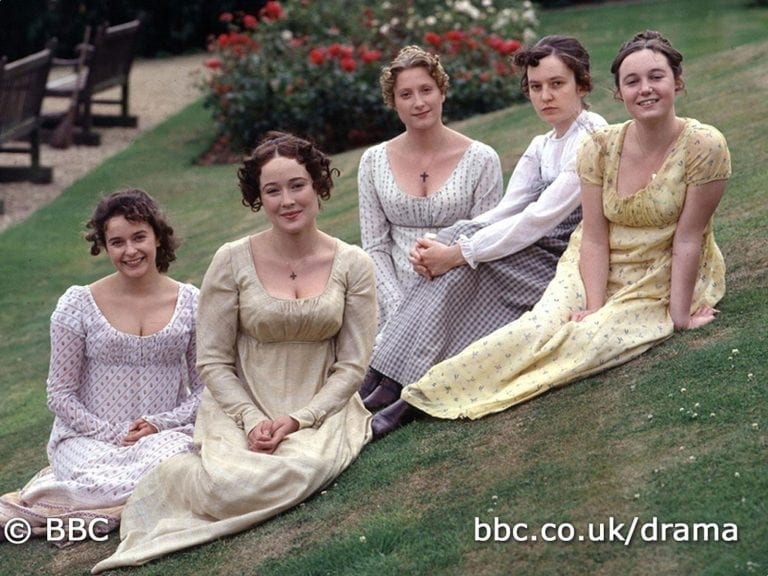


 The present and possibly most intrusive assertion of this myth, a veritable cultural fungus irresponsibly disseminated in America by PBS, is the haughty British soap opera Downturn Blarney, sorry, we mean, Downton Abbey, a vehicle that uses the faux château of the ancient Herbert family as its main stage.

The series mastermind, sometime actor and author Julian Fellows, himself a member of the aristocracy, albeit with some trepidation.
The concoction is so full of calculated deceit and so steeped in pretension that one hardly knows where to begin. Lordy lordy, the writer Fellowes has a hate/love relationship with his betters (at least as he sees them) and also a hardly hidden contempt for the poor souls who had to service these dolts out of simple poverty. England never had a revolution, per se, despite its bloody civil wars in which the very same class who finally hijacked the French revolution managed to take power and commit regicide a full half century before their gallic counterparts. The Restoration notwithstanding, bourgeois power, now entrenched in parliament, was never fully relinquished, especially when one monarch after another, despite savvy courtiers, proved altogether inept at holding back the forces of modernity.
That said, one seeks answers for the relative ease with which the British masses fell back into the nobility trap after tasting an admittedly flawed but more egalitarian republicanism. Perhaps brute force, entrenched traditions, a fragile self-image and very clever propaganda by the ‘upper classes’ made the slaves consent once again to be exploited and heartily despised. But like the Stockholm syndrome or at least pretended to be so by Fellowes, they adored their masters and did everything to please them instead of coshing them over their snotty heads like they smartly once did in France.

Mr Carson, the Butler. “Plus royaliste que le Roi.”
One of the most tragicomic and despicable figures in the pantheon of classist society is doubtless the servant who makes it his business to climb the greasy pole by displaying more loyalty to the interests of his “betters” than they themselves can muster. Thus Fellowes in DA has constructed a poor butler who is plus royaliste que le roi, a man who has no doubts about his sacred duty to keep the rest of the underground grovelers in line while the above ground crowd indulges in silly games and in pseudo-problems. (Raffish communists, having no respect for genteel manners, accurately depicted these characters as “running dogs of capitalism.” Of course, while the label may strike some as a bit too harsh, it is 100% precise, even if, in general, the capitalist running canines perform many other duties well beyond and more critical to the well-being of the privileged than running a household, things like serving as foreign policy advisors (think Kissinger, Condi Rice, etc.) for example, or as bemedalled henchmen, or, as working lordship baron Fellowes does, as a clever propagandist.)
Speaking of the tinseled crowd upstairs, nobody in this moving-picture photo romanza is believable, from the holier-than-thou Mrs.Crawley to the grumpy old drama queen Violet Grantham played by Dame Maggie Smith, who acting the dowager behaves more like an upper-middle class British bourgeois snob (and probably reflects Fellowes’ own attitude rather closely) regaling us with snide comments that a Victorian / Edwardian aristocrat would surely might have found beneath her dignity to make. The only one who really comes across as believable is Lady Sybille, who is therefore mercilessly offed in the script. Americans who luckily never had to cope with the likes of Grantham and his worthless family (although far too many American plebs lacking in self-dignity are willing to bow and scrape before the native industrial royalty, the spectacle of celebrities kissing the rump of egotist Doanld Trump in The Apprentice is quite telling), view this photo novella as amusing and as an accurate insight into the lives of these ci-devant bollixes, the Creepy-Crawleys. As the conservative but brilliant writer Shakespeare said: “Thus conscience does make cowards of us all”, a Machiavellian thought much appreciated by elites but a dire warning to those who would think otherwise.
BELOW: Some remedial views of what it meant to serve in these grand establishments, by direct witnesses and descendants of servitor class.
APPENDIX
Plus que ça change…
Who owns Britain today?
You’ll be surprised. Click on the bar below and find out.
[su_spoiler title=”WHO OWNS THE UNITED KINGDOM? THAT IS THE QUESTION. ” style=”fancy” icon=”arrow-circle-1″]
Look who owns Britain: A third of the country STILL belongs to the aristocracy
By TAMARA COHEN FOR THE DAILY MAIL \ UPDATED: 10 November 2010
More than a third of Britain’s land is still in the hands of a tiny group of aristocrats, according to the most extensive ownership survey in nearly 140 years. In a shock to those who believed the landed gentry were a dying breed, blue-blooded owners still control vast swathes of the country within their inherited estates. A group of 36,000 individuals – only 0.6 per cent of the population – own 50 per cent of rural land.

Do click to examine to max. resolution.
Their assets account for 20million out of Britain’s 60million acres of land, and the researchers estimate that the vast majority is actually owned by a wealthy core of just 1,200 aristocrats and their relatives. [For reference: In a nation as small as Britain, these folks control a surface as big as three Belgiums.—Eds]

Life is good: The Duke of Westminster. This laddie has a property portfolio totalling around £6billion
The top ten individual biggest owners control a staggering total of more than a million acres between them. These figures have been uncovered by the ‘Who Owns Britain?’ report by Country Life Magazine, thought to be the most extensive survey of its type undertaken since 1872. The top private landowner, not just in Britain but Europe, is the Duke of Buccleuch and Queensbury, whose four sumptuous estates cover 240,000 acres in England and Scotland. But while his land is the most vast, it is not the most valuable, as the net worth depends on how much is farmland, as well as the value of the property and sporting and heritage activities on it.
The most valuable land belongs to Number 4 on the list, the Duke of Westminster, whose Grosvenor Estate, worth a whopping £6billion, takes in the wealthiest areas of London, including Belgravia and Mayfair. Second on the list of the most land owned is Scottish magnate the Duke of Atholl. His 145,700 acres have pushed Prince Charles, who as Duke of Cornwall has 133,000 acres, into third place on the list of individual owners. Yet all are dwarfed by the incredible reach of corporate land-ownership, which barely existed 100 years ago. As the biggest 19th-century landowners such as the Church have been sidelined by economic and social changes, their land has been snapped up by the state, charities and the private sector. More than 2.5million acres – 4 per cent of the country – is in the hands of the Government-run Forestry Commission, which the Coalition plans to privatise.
Second on the list is the fast-expanding National Trust, with 630,000 acres. Most of the report’s information has been uncovered only in the past five years after a registration campaign targeting huge landowners who had previously avoided disclosing their assets.
The report’s author, Kevin Cahill, who has been researching land ownership for ten years, told the Daily Mail: ‘A small minority still own a huge amount of Britain’s land and what surprises many people is that over the last 100 years, not a lot has changed. ‘For the rich the pursuit of land is as important as it’s ever been. They receive subsidies and most of their assets are held in trust, avoiding inheritance tax. ‘The biggest change in land ownership in the past 100 years is that people who live in cities now finance the countryside whereas it used to be the other way around.’ Read the full report in Country Life, on sale today.[/su_spoiler]
Read more: http://www.dailymail.co.uk/news/article-1328270/A-Britain-STILL-belongs-aristocracy.html#ixzz404jpqkMR
Follow us: @MailOnline on Twitter | DailyMail on Facebook
[su_box title=”ABOUT THE AUTHORS” style=”glass” box_color=”#f3efdf” title_color=”#c40606″]
Gui Rochat (Guillaume Frédéric Rochat) is an international private art dealer and consultant, dealing primarily in seventeenth- and eighteenth-century French paintings and drawings, working from New York as “Gui Rochat Old Masters”. His long experience with four art auction houses, Sotheby’s, Phillips, Son & Neale, Butterfields (now Bonhams) and Doyle, NewYork, has given him the background for rescuing a number of Old Master paintings from oblivion. Patrice Greanville is a social and media critic, and editor in chief of The Greanville Post. Both authors detest institutionalized snobbery and the devious glorification of social inequalities. They reside in the New York City metro area. [/su_box]
Note to Commenters
Due to severe hacking attacks in the recent past that brought our site down for up to 11 days with considerable loss of circulation, we exercise extreme caution in the comments we publish, as the comment box has been one of the main arteries to inject malicious code. Because of that comments may not appear immediately, but rest assured that if you are a legitimate commenter your opinion will be published within 24 hours. If your comment fails to appear, and you wish to reach us directly, send us a mail at: editor@greanvillepost.com
We apologize for this inconvenience.


Nauseated by the
vile corporate media?
Had enough of their lies, escapism,
omissions and relentless manipulation?
Send a donation to
The Greanville Post–or
But be sure to support YOUR media.
If you don’t, who will?



1 comment
Gui Rochat adds:
What is curious is that servitude was as severe on the Continent as in England. But traditionally even in France or Germany there was a tradition which included the servants in the family like in Roman times, with a Pater Familias who reigned over a huge extended household. Still when I lived in Rome in the late 1960’s servants formed part of the aristocratic Roman family with a say-so in how the household was run and with a lack of fear of saying their opinion and in a familiar way addressing the prince or count with the diminutive: ‘thou’. It amazed me how little they played the underdog, unlike England where I later experienced similar circumstances but where industrial exploitation took over the feudal aspects of servitude.