[su_spoiler title=”Please make sure these dispatches reach as many readers as possible. Share with kin, friends and workmates and ask them to do likewise. ” open=”yes” style=”fancy” icon=”arrow-circle-1″]
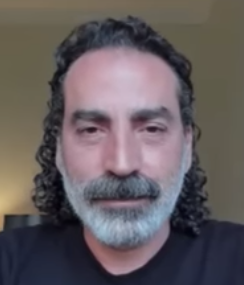
 Laith Marouf
DIRECTOR OF
FREEPALESTINE.VIDEO
 CHATS WITH
INDIA GLOBAL LEFT’S JYOTISHMAN
| Traducir—Translate! | |
| Make fonts bigger>>> | [wpavefrsz-resizer] |

Summary
This video features an in-depth conversation between the host and Laith Marouf, a Lebanon-based Palestinian Syrian journalist and political commentator, discussing the Gaza ceasefire and its broader implications. The ceasefire, framed as the first phase of a plan influenced by a 20-point proposal linked to former US President Trump, includes prisoner swaps, partial Israeli withdrawal, and humanitarian aid. Laith Marouf critiques the proposal as psychological warfare by Israel and the West, designed to pressure Palestinians but ultimately failing to break their resistance.
The agreement involves the release of 20 Israeli prisoners in exchange for 2,000 Palestinian prisoners, including key Palestinian leaders, marking a significant victory for Palestinian resistance. Despite the ceasefire’s announcement, Israeli bombardment reportedly continues, casting doubt on its durability. Laith Marouf highlights the historical context of Israeli and Western deceit and broken treaties, emphasizing the resilience of Gaza’s population and resistance movements, who withstood two years of siege and attacks.
He explains that the October 7th Palestinian offensive represents a historic turning point, triggering a global awakening about Western power structures and the reality of Zionism, particularly in Western societies. This awakening has exposed the limits of democracy, free speech, and media independence in countries like the US and Canada. The conflict has transformed Palestinian resistance into a broader global anti-colonial struggle, undermining Western imperial narratives.
Laith Marouf discusses the internal political implications for Palestinian leadership, predicting the weakening of Mahmoud Abbas and the rise of a more unified national resistance movement involving Hamas, Fatah, and the Popular Front for the Liberation of Palestine. He also addresses the skepticism about the ceasefire’s longevity, noting Israel’s history of violating agreements and its ongoing military ambitions.
The conversation extends to the regional impact, particularly on Lebanon and the axis of resistance involving Hezbollah, Syria, Yemen, and Iran. The October 7th events shattered the so-called Abraham Accords and the alliance of reactionary Gulf monarchies, exposing their betrayal of Palestine and strengthening regional resistance alliances. In Lebanon, popular support for Hezbollah and resistance remains strong despite US attempts to destabilize the country.
Finally, Laith Marouf evaluates the role of media, contrasting the declining influence of mainstream Western media with the rise of alternative and citizen journalism, particularly from the Global South. Despite significant financial resources in alternative media in the West, much of it remains ineffective due to careerism and lack of genuine revolutionary commitment. He praises grassroots media efforts from Palestinian and Lebanese resistance as vital in shaping public opinion and advancing the struggle.
The discussion ends with reflections on the ongoing challenges, the potential for renewed conflict, and the transformative global impact of the Palestinian resistance movement.
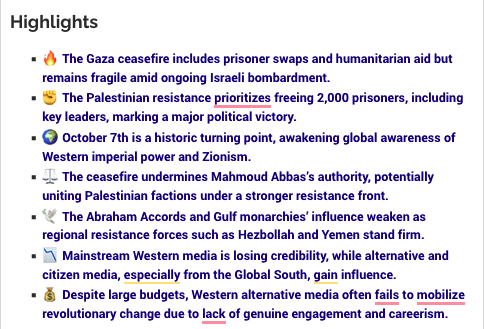
Key Insights
-
Ceasefire as Psychological Warfare: Laith Marouf critiques the 20-point ceasefire proposal as a strategic psychological tool by Israel and the West aimed at breaking Palestinian resistance. The failure of assassination attempts on Hamas negotiators and the Palestinian insistence on prisoner swaps demonstrate the resilience and agency of Palestinian actors. This insight underscores the layered nature of conflict negotiations where military actions intertwine with psychological and political strategies.
-
✊ Prisoner Exchange Symbolizes Power Shift: The planned exchange of 20 Israeli prisoners for 2,000 Palestinian prisoners, including prominent resistance leaders, is a significant political and symbolic victory. It challenges Israeli narratives by showing Hamas’s prioritization of Palestinian prisoners across political factions, suggesting a unified Palestinian front that could reshape power dynamics in the West Bank and Gaza, particularly weakening the Palestinian Authority under Mahmoud Abbas.
-
Global Political Awakening Post-October 7: The events of October 7 have catalyzed a tectonic shift in global consciousness. Western populations, particularly in the US and Europe, are increasingly aware of systemic issues like lack of true democracy, media manipulation, and imperial control. The Palestine conflict has moved from a peripheral issue to a central one, serving as a catalyst for broader anti-colonial and anti-imperial movements worldwide.
-
⚖️ Transformation of Palestinian Politics: The conflict is accelerating political realignments within Palestine. The weakening of Mahmoud Abbas and the rise of a national unity involving Hamas, Fatah, and the Popular Front for the Liberation of Palestine signals the potential emergence of a new leadership structure that could repudiate collaborationist policies and push for genuine liberation and self-determination.
-
️ Regional Resistance and the Collapse of Reactionary Alliances: The conflict has exposed and undermined the Abraham Accords and Gulf monarchies’ complicity with Israel and the US. Resistance groups like Hezbollah, Yemen’s Ansar Allah, Syria, and Iran have solidified their roles as defenders of Palestine, transcending sectarian divides and demonstrating a strong axis of resistance. This shift weakens US regional influence and challenges the geopolitical status quo.
-
Media Landscape Shifts and Limitations: Mainstream Western media’s declining credibility contrasts with the rise of alternative and citizen journalism, especially from the Global South. However, Laith Marouf highlights the paradox of alternative media in the West: despite substantial funding and infrastructure, much of it is ineffective or co-opted by careerist interests, failing to harness the revolutionary potential witnessed in grassroots media efforts from Palestine and Lebanon.
-
Resource Misallocation in Alternative Media: The abundance of financial resources in Western alternative media has not translated into effective revolutionary communication or mobilization. This points to systemic issues within progressive media organizations where institutional inertia, lack of genuine grassroots connection, and professionalization hinder transformative impact. This insight calls for a reassessment of how alternative media is funded, organized, and directed toward genuine social change.
Conclusion
This comprehensive discussion reveals the multifaceted impact of the Gaza ceasefire and the broader Palestinian resistance. From shifting political dynamics within Palestine to regional geopolitical realignments and global ideological awakenings, the conflict transcends local boundaries. The role of media, both mainstream and alternative, emerges as a crucial battleground for narratives that shape public opinion and resistance movements worldwide. Despite ongoing challenges, the conversation conveys a message of resilience, unity, and transformative potential rooted in the Palestinian struggle and its global reverberations.
BEFORE you leave, PLEASE pay attention to this alert.
[t4b-ticker id=”1″]
[/su_spoiler]
Print this article [bws_pdfprint display=’print’]
[su_note note_color=”#f1efef” radius=”0″]The views expressed herein are solely those of the author and may or may not reflect those of The Greanville Post, although, if we publish them, we obviously find them noteworthy and valuable. [/su_note]
 This work is licensed under a Creative Commons Attribution-NonCommercial 4.0 International License •
ALL CAPTIONS AND PULL QUOTES BY THE EDITORS NOT THE AUTHORS