

 karlof1’s Geopolitical Gymnasium
KARL SANCHEZ


| Traducir—Translate! | |
| Make fonts bigger>>> | Resize text-+= |
Lavrov on the Nuremberg Trials
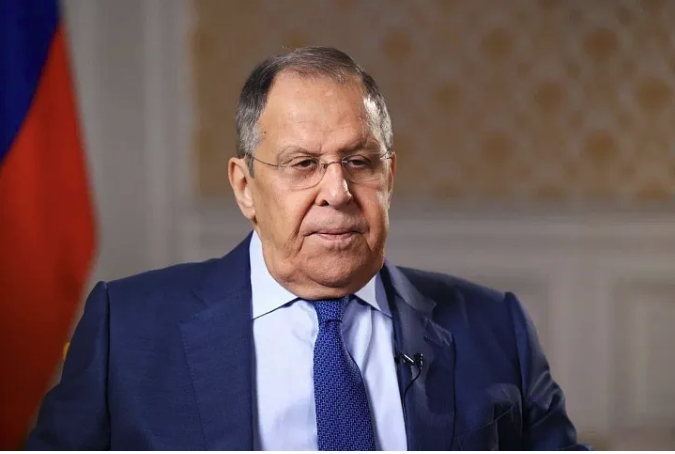
On Sunday, FM Lavrov was asked how the Nuremberg Trials arose and provides some of the details regarding the resistance of the UK and Outlaw US Empire to the idea, which given what we now know was to be expected. IMO, this short segment is likely part of a longer interview that will surface sometime in the future.
Question: How and when did the idea of creating an International Military Tribunal appear? What role did the Soviet side play in organizing and holding it? Why was the position of the Soviet Union, which from the very beginning consisted in the need for a trial, alien to Great Britain and the United States in the early stages of the creation of the tribunal?
Sergey Lavrov: It was the Soviet Union that was the main driving force in initiating discussions and then creating the tribunal. The question of the need to ensure the inevitability of punishment of Nazi criminals was first officially raised in a note from the Soviet side in November 1941.
In 1942, there was a special Statement of the Soviet government, which called on all countries to cooperate in the detention, search, expulsion and trial of Nazi criminals. At first, our British and American colleagues (although a dialogue with the participation of the Soviet Union in this format “began” quite quickly) took this idea coolly for various reasons. But “on the surface” an argument was put forward that this issue is political and, they say, there is no need to make “judicial ideas” out of it.
In October 1943, at a meeting of the foreign ministers of the USSR, Britain and the United States in Moscow–-it was held in the Mansion of the Russian Foreign Ministry on Spiridonovka-–among other agreements, it was recorded that cooperation in identifying criminals and bringing them to justice would be established and organized. This idea was finally formalized in Yalta, and on “paper” it was legally enshrined in October 1945 in London, when the tribunal was created. The charter of this tribunal was signed, which formed the basis for all further activities.
I note that in the course of all these efforts, the Soviet Union acted independently. He did not just rely on the fact that one day we would create an international structure, and it would “restore justice.” In 1942, the Extraordinary State Commission for the Establishment and Investigation of the Crimes of the German Fascist Invaders and Their Accomplices was created. It accumulated facts, materials and eyewitness testimonies and organized several trials in the following years and after the end of the Great Patriotic War, including in Krasnodar, Kharkov and other cities. The experience gained in the framework of these judicial initiatives was actively used in the Nuremberg Tribunal.
As a result, the Americans and the British agreed to the creation of a judicial body. At first, they had doubts. There are such interesting facts. At some point, the then US President Franklin D. Roosevelt said that why create a tribunal, it would be better to simply demonstratively shoot 50 thousand German officers. And then British Prime Minister Winston Churchill also said that it was better to kill them than to try them. This is an interesting observation.
On the other hand, in the initially restrained attitude of the Anglo-Saxons to the idea of creating an international judicial body, as contemporaries write in their memoirs, there was a fear that the trial would somehow “touch” the question of the root causes of the war, why after the Treaty of Versailles, the countries that were supposed to ensure the deterrence of Germany under Adolf Hitler began to cooperate with him.
It is well known that in 1935 the British signed a naval agreement with Adolf Hitler, according to which, in gross violation of the Versailles Peace Treaty, they undertook to unilaterally assist Germany in increasing the composition of its naval forces by five times in comparison with the restrictions established in the Treaty of Versailles.
Of course, there is also such a thing as the Munich Agreement of 1938, which played a decisive role in what was later called “appeasement of the aggressor.”
Our Western colleagues did not want to go too far into history so that it would become known and talk about it again. These facts were well known at that time. We must give credit to the fact that in the end, the correct understanding of responsibility prevailed, and the arguments of the Soviet Union, which was the main initiator and driving force in the creation of the Nuremberg Tribunal, were heard and accepted. Our role here is absolutely undeniable.
Question: What do you think is the historical significance of the Nuremberg Trials in the post-war years? How did this affect the change in the world order?
Sergey Lavrov: The decision of the Nuremberg Tribunal contains principles that were first formulated during that trial. They formed the basis of modern international law. They abolished the right of the “strong” and enshrined the unacceptability of the use of force and the violation of humanitarian principles in any conflict.
The most essential principle of the inevitability of punishment for war crimes, aggression, crimes against humanity, and genocide was formulated on an international, universal scale during the Nuremberg trials.
Then this was organically reflected in the content of numerous conventions adopted in the UN and other formats. This is also reflected in the principles of international law that formed the basis of the activities of the UN International Law Commission. The International Court of Justice largely takes into account what was done in Nuremberg in its work.
The special significance of the Nuremberg Verdict lies in the fact that it established the absence of a statute of limitations for crimes against humanity, genocide, and war crimes. Nazi ideology, the party, structures such as the SS, SD and others were banned forever. Unfortunately, these parts of the decree are now being subjected to a significant test and are often violated. [My Emphasis]
As usual, the roots of the issue were to be avoided by the English speakers. That numerous pro-Nazi undertakings were engaged in by UK and USA even before the war formally ended speaks to the level of motivation those two nations had. The planning of Operation Unthinkable in 1945 and many other actions taken to protect German and Japanese war criminals are now known via the declassification of documents, such as the immediate support given to the Ukrainian OUN in 1945 to continue its Nazi aspirations that are on display today. Examining the roots of today’s SMO would reveal those illegal activities. Churchill’s Iron Curtain Speech in March 1946 must be seen within the context of the ongoing trials at Nuremberg that ran from 20 November 1945 to 1 October 1946. Churchill’s preference to silence those who knew things fits in with his Operation Unthinkable mindset and inner passion for Hitler’s Plan Ost.
Unfortunately, it appears the Nuremberg Trials will be a unique event since so many similar crimes have since been and are being committed, with several entities being repeat offenders, the Outlaw US Empire most specifically. Perhaps the most concerning issue related to Nuremberg’s uniqueness is the great erosion of the Rule of Law within many nations and internationally. Nuremberg effectively outlawed Aggressive War but did nothing to halt the Outlaw US Empire from perpetrating it in many different guises along with grossly violating the UN Charter at its inception. Somehow Humanity must rise above this very longstanding crisis and make the Rule of Law paramount and create means to genuinely enforce it. In today’s lawless world, that looks like an impossibility, but it must become a goal to be incorporated within the remaking of global governance.
 Like what you’ve been reading at Karlof1’s Substack? Then please consider subscribing and choosing to make a monthly/yearly pledge to enable my efforts in this challenging realm. Thank You!
 BEFORE you leave, PLEASE pay attention to this alert.
[t4b-ticker id="1"]
Print this article [bws_pdfprint display=’print’]
 This work is licensed under a Creative Commons Attribution-NonCommercial 4.0 International License •
ALL CAPTIONS AND PULL QUOTES BY THE EDITORS NOT THE AUTHORS
