

 ROGER BOYD



| Traducir—Translate! | |
| Make fonts bigger>>> | Resize text-+= |
Share prices generally reflect a price to earnings (p/e) ratio that assumes the growth rate of earnings in future years, with faster growing companies having higher p/e ratios. This is the fundamental reason for the Western AI boom, as companies such as Apple, Google, Amazon, Microsoft and Oracle saw a future of much slower growth and reached for the AI dream to keep investors believing in the future growth required for those high p/e ratios. When that dream becomes a nightmare it will not be just the investment write-offs, but also a significant fall in the p/e ratios, that will crush their share prices. The future profits are discounted with interest rates to arrive at a present value, which means that higher interest rates also reduce p/e ratios.
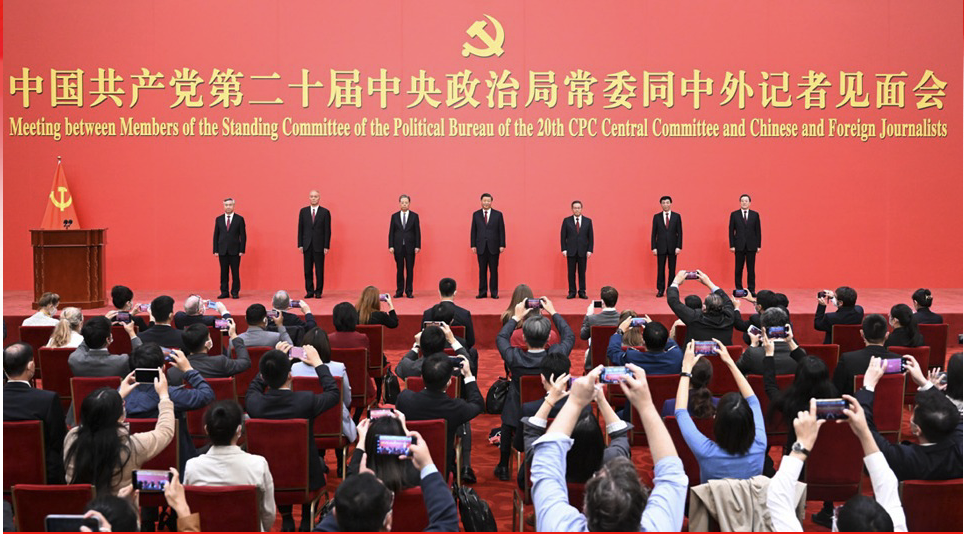
China's leadership marches to a different trumpet than the West's. Even billionaires can be arrested and executed for major crimes.
Medium and long term loans rely upon an economy that is growing in nominal (growth plus inflation) terms faster than the rate of interest rates charged, otherwise the principal+interest will tend to become larger and larger with respect to the economy. That is why economic contractions can lead to a debt-deflation spiral as both principal and interest cannot be paid and defaults lead to forced sales that depress asset prices. Notably, margin debt on stock purchases is at an historic high. The current US private debt to GDP ratio is 142%, while the government debt to GDP ratio is 124%, a total of 266%. The US also has net external assets of close to 100% of GDP; so a total of 366% of GDP; and growing each year. A mixture of growth and inflation is required to keep this from escalating rapidly, not helped by the 7% of GDP government deficits, and current account deficits of about 4% of GDP.
Financial wealth, stocks and bonds, are highly concentrated within the top 10% of society across the West, and then even within the top 1%. The richest 19 people in the US (the 0.00001%) now have wealth equivalent to 2.1% of the economy.

The richer a person is the greater his or her wealth is linked to stock and bond prices. The vast majority of the wealth of the richest people in the world is linked to stock prices; e.g. Musk, Ellison, Bezos, Zuckerberg, Page, Brin, Arnault, Ballmer, Huang. In recent years, US nominal growth has been averaging about 5%. The mix between actual growth and inflation may be questionable given all the games played by US state statisticians to reduce reported inflation, but that does not affect the rate of nominal growth. Slow growing countries such as Germany have been rescued by higher inflation in recent years, keeping nominal growth at 5% or above. Looking forward both actual growth and inflation may be much lower, in Germany at perhaps 2%. Germany’s government debt is only about 60% of GDP, and the country runs a significant current account surplus, but it is about to go on a significant spending splurge on war making and “infrastructure”. Italy’s debt woes are due to decades of slow nominal growth, with primary budget surpluses not being able to offset the growth in debt.
Population reductions, especially in the working age population, threaten stock and bond prices as they can lead to falls in both actual GDP and inflation. The two poster children for this are Japan and South Korea. Japan’s private debt to GDP is about 180% of GDP and its government debt about 250% of GDP (3.6% GDP budget deficit). Japan’s GDP growth is stuck at about 1% and below, while inflation is trending to below 2%. Over half the government debt is owned by the central bank, which is owned by the state, so the actual publicly owned government debt is only 125% of GDP; so 305% publicly-owned private and government debt. Japan also has net external assets of 77% of GDP, so a net position of 228% of GDP. South Korea has net external assets of about 50% of GDP, while its private debt is 263% of GDP and its government debt is 47% of GDP (4% of GDP budget deficit), with only a small amount held by the central bank. As both Japan and South Korea see their working age populations shrink, the possible avenues are:
Faster productivity growth (not probable given low investment rates)
Higher inflation which will tend to impact real wages
More debt monetization, which may increase inflation
Corporations increasing presence in higher growth economies
But this assumes no global recessions and the competitive abilities of Japanese and South Korean corporations abroad; two very questionable assumptions. There is also a fundamental question of who makes any required sacrifices. If government debt monetization is simply used to bail out the corporate sector, such as the heavily indebted South Korean Chaebols, the pain will be born by the general population. This is the general approach taken by Western governments during the 2008 GFC and the COVID-19 pandemic.
China’s private debt to GDP is at about 200%, and its government debt is 90% of GDP. It also has net external assets of 30% of GDP; a balance of 260% of GDP. The state-owned banks hold a substantial share of government debt, so the net balance is probably much closer to 200%. The government budget deficit is around 8% of GDP. In addition, the Chinese state owns large amounts of productive industrial assets which in the West have tended to be privately owned or privatized. Chinese GDP is growing at about 5% per year, with about 1% inflation; 6% nominal growth. With a large move of investment from the property sector to the industrial sector; supporting continued rapid productivity growth. Chinese corporations are also proving to be increasingly competitive in foreign markets and China runs a 2.5% of GDP current account surplus.
The Party-state class dominates decision making, rather than the oligarchy. China has also maintained extremely competitive domestic markets, together with restraining rentier based profit-making, and that is reflected in relatively low p/e ratios with respect to future growth prospects. China’s working age population will not start to fall substantially until the late 2030s. US actions have also driven China to reduce its dependency upon the US economy, both with respect to the holdings of US debt and in a reduction in US-China trade. US restrictions have also meant that Chinese investments in the US are very limited. A financial contagion would spread rapidly through the West, but much less with respect to China, and not at all with respect to Russia (see below).
In the oligarch-dominated West we can expect continued policies of tax cuts for the rich and the facilitation of greater and greater levels of extraction through both profiteering on state contracts and a continued subjugation of union power. Together quite possibly with significant cuts to social spending justified by “government deficits” ignoring the massive amounts of revenue lost to decades of tax cuts for the rich and corporations. All of this will be deflationary, as the rich have a much lower propensity to spend than the less wealthy population deciles below them. It will also require greater levels of state authoritarianism to manage a majority that are seeing falls in living standards. At the same time there will be a push for lower interest rates to support the equity and debt bubbles, which will require increased government debt monetization to manage medium and long term interest rates.
With the US stock market completely dependent upon the valuations of the “MAG 7” of Nvidia, Microsoft, Apple, Alphabet, Amazon, Meta and Tesla, any popping of the AI bubble will cause a severe fall in share prices. With many of these companies, together with others in the AI space, taking on huge amounts of debt to build AI infrastructure there could also be quite a severe debt crisis. Any resulting recession would quickly expand the US budget deficit beyond 10% of GDP. The same GFC and COVID-19 playbook can be expected, but the underlying economic strength and government debt expansion capacity may be much less than was previously possible. Especially when so much investment may turn out to be non-recoverable malinvestment. The general population is also in a more immiserated state than previously (partially hidden by the under-reported inflation). A recession, when added to the Chinese driven moves toward personal and commercial vehicle electrification, may also place the solvency of the fossil fuel industry in question. The result may very well be a currency crisis for the US, repeating the experience of the 1970s.
Many of the rich have also partaken of a tax planning strategy of financing their spending and investments through debt, rather than the sales of assets (which would trigger a tax event), which has left them with significant debts. Those debts will maintain their level during a recession while share prices and asset valuations may fall substantially. In this way, many rich people can very quickly become ex-rich or even bankrupt. This will only increase the oligarchic pressure upon the state to bail out the corporate sector, especially when that corporate sector is highly leveraged.
The one country that is very well disposed to deal with such a recession is a Russia that has been forced to become very substantially an autarchy, with Western sanctions forcing Import Substitution Industrialization (ISI). Russian government debt is 20% of GDP, its budget deficit of about 3% of GDP. Private debt is 81% of GDP. A combined amount of 101% of GDP. As an autarchy, and with foreign debt of only 10% of GDP, Russia can also respond to falling oil prices through a fall in its exchange rate. It has a current account surplus of 2% of GDP.
Any GFC-like event may produce the large change in relative strength between the West and China and Russia that COVID-19 produced, as the latter two nations showed much greater levels of state technocratic ability. Such an event may also serve to open up the Western elites to the realization of their decline and the preeminence of China. The risk is the same one as that which occurred before WW1 and WW2, a greatly intensified turn to war making, but it may be that the China has placed itself in a strong enough position not to be challenged. The utter dependence of the US (and Western in general) economy, and MIC, upon Chinese inputs points to such a position. The resilience of the Russian economy during such an event will also hopefully serve to limit Western aggression.
The linkage of oligarch wealth to continued economic growth is also why Western countries tend to follow either outright climate denial (US with its large fossil fuel corporate sector) or soft climate denial eco-modernist policies. Neither of which require a reduction in economic growth. The reality that continued economic growth is not consistent with the level of reductions in atmospheric greenhouse gases required to stave off accelerating climate change must be continuously obfuscated and denied. With policies that place the burden of sacrifices on the majority rather than the oligarchy. The dominance of the Party-state has allowed for a much more intense level of eco-modernist transformation, but with the Party-state needing to continue growth for domestic legitimacy and geopolitical concerns, there will be no discussion of the need for a limitation of growth.
The linkage of oligarch wealth to economic growth is also why the elites of nations tend to favour mass immigration against the wishes of their own populations. Even when political parties that profess to be against such immigration take power (e.g. the Conservatives in the UK), the mass immigration continues. There may also be short-term reductions in the worst immigration excesses (as in Canada and the US) but they do not reflect a long-term strategic change. For example, Canada still took in nearly 400,000 new permanent residents (about 1% of the population) in 2025 as it reduced the temporary student and worker populations that had ballooned during the Trudeau years. For homogeneous nations such as South Korea and Japan, the resistance of the population to massive influxes of foreign residents may be a significant block to the oligarch plans.
In China, there are no such discussions of mass immigration. Rather a focus on reducing basic living costs (e.g. housing) to a level more conducive to the costs of child rearing and on bolstering productivity growth and moving lower value added activities abroad. Greatly supported by the Party-state’s very large transfer of financial resources away from property development and toward the productive forces. AI is seen in a very positive light as both a provider of new products and a booster of productivity growth in a population that is slowly declining, while also seeing a continued decline in the birth rate (total fertility rate of 0.93 in 2025). With a working population which will not decline substantially until the late 2030s due to a 2010s relative baby boom.
 BEFORE you leave, PLEASE pay attention to this alert.
[t4b-ticker id="1"]
Print this article [bws_pdfprint display=’print’]
 This work is licensed under a Creative Commons Attribution-NonCommercial 4.0 International License •
ALL CAPTIONS AND PULL QUOTES BY THE EDITORS NOT THE AUTHORS
