
[su_spoiler title=”Please make sure these dispatches reach as many readers as possible. Share with kin, friends and workmates and ask them to do likewise. ” open=”yes” style=”fancy” icon=”arrow-circle-1″]

 Eric A. Blair (EAB)
| Traducir—Translate! | |
| Make fonts bigger>>> | [wpavefrsz-resizer] |
IT’S THE OILCONOMY, STUPID
Part 2A: WEALTH, ECONOMICS, FINANCE, MONEY, DEBT and CURRENCY
By EAB
Marx was into dialectical materialism for good reason. I share his assertion that the key to good governance is providing material well-being for the governed. In a nutshell: good governments make their people rich (or at least alleviate their poverty). Needless to say, well-being requires physical security (= peaceful civil society), which is why we always use the terms peace and prosperity together.

Stack of pipes for natural gas pipeline North Stream 2 at Mukran port, September 2020. The pipes are made from steel with a concrete casing.
What is wealth? Let us put aside ideas of non-material wealth (social, spiritual, emotional etc, etc). Yes, they are important, but do not do you much good on an empty belly, as any starving Gazan child today will be able to tell you.
So we must obtain a useful working definition of MATERIAL wealth, from which we can build our ideas.
My definition of material wealth is this: having easy access to a wide variety of high-quality goods and services.
Easy access means expending little to no effort to get what you want/need. The lottery winner is suddenly able to buy a luxury mansion and a yacht, fancy sports cars, fly first class to stay in six-star hotels, eat at the best restaurants enjoying multiple cuisines, have access to the best medical services etc, etc. Of course, many, indeed most, lottery winners are eventually ruined by such wealth, whether in the pursuit of fast women, slow horses or plentiful drugs. A fool and his money. Those who work long and hard to produce goods and services of value, in order to earn and save however, manage their wealth quite differently.
The key to understanding how wealth is produced is to understand how high-quality goods and services are produced.
This then leads to my working definition of economics.
Rather than use less helpful definitions such as “the study of how resources are allocated”, my definition of economics is “the study of the production and distribution of goods and services”.
Unfortunately, the problem with looking only at the “goods” is that traditional economics ignores the “bads”, which they call “externalities”, which is a euphemism for pollution, resource depletion, exploitation of the working classes and indigenous people, ecological destruction, global warming, resource wars etc, etc. The term “externalities” betrays the bias of the stuffed shirt academics in Western (mental) institutions who author and promote blinkered “neoliberal” or Straussian or Chicago school or Austrian school lying liar economics (which is just about the only type of so-called economics taught in Ivy League or Oxbridge mental institutions).
I assert that we must study ecological and equitable economics, which we can define as “the study of the production and distribution of goods and services, along with resultant benefits and detriments”.
“Detriments” is my euphemism for likely human extinction, which is almost certain to ensue if we do not address the “externalities” of neoliberal economics.
I have a simple definition of finance, which is how we fund (or not fund) each economic sector.
Funding is mediated through money, which takes many forms.
What is money from the point of view of individuals and small businesses?
Money is a token promise for the future delivery of goods and services, it is a proxy for the exchange of goods and services.
As money is numerically quantifiable, it is used as a means of accounting.
Money can also be a store for savings, a proxy store for wealth.
Money that bears interest eg, in a term deposit, can be an investment, albeit one with low returns that does not keep pace with inflation.
Money used to be based on physical gold stored in bank vaults. Gold is NOT material wealth; it is a conventionally accepted proxy for the future delivery of goods and services, which are the true embodiment of wealth. Due to the extreme impracticality of using physical gold or silver coins (and problems with counterfeiting using base metals), especially for large transactions, populations have come to accept proxy representations of the gold, which in itself is a proxy representation of wealth. These proxies of the gold proxy took the form of printed notes, bank drafts, cheques and nowadays just numbers in electronic ledgers.
This is what money is today: numbers in electronic ledgers which we accept as the proxy of a proxy for wealth. This fiat money is a matter of faith, and if people and institutions lose faith in that token promise, that money becomes worthless.
From the point of view of banks and governments, however, money is quite a different beast. Money is created and managed differently in different economic/political systems, with different results. Money can be an incentivising tool for the physical growth of a real material economy, but can also be a vehicle for fraud, for coercion and for control of individuals and populations.
We will deal with these ideas in part 2B.
Going off on a tangent…
Q: 2B or not 2B, that is the question
A: Not 2B
What am I referring to? When a supposedly “unidentified” party bombed the Nordstream pipelines in 2022, three of the four pipelines were successfully destroyed (1A, 1B and 2A), however, the explosives attached to pipeline 2B did not detonate. This fact was uniformly reported in multiple Western media, it is not in dispute.
I have read anecdotal reports that US Navy ships, shortly after the bombing, converged on the area to retrieve the 2B explosive ordnance. If true, that meant the USA seized and hid/destroyed the evidence, which essentially proves that they were the culprit.
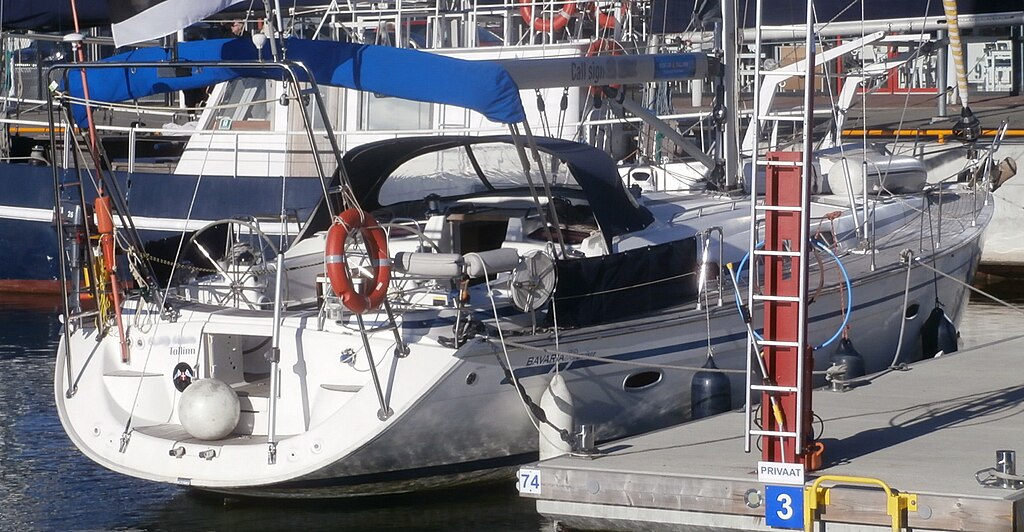
A 15m boat similar to the 50-foot Andromeda, accused by the Germans of involvement in the Nordstream sabotage.
If untrue, it means that the subsequent Danish and Swedish investigators into the bombing would certainly have identified and retrieved the 2B explosive ordnance. This is undisputable smoking gun evidence to prove who made and deployed the explosives, bearing unique chemical and electronic signatures of manufacture, particularly the specific advanced composition of explosives that are able to sit for months on the seabed and resist saline degradation with a 75% success rate of future detonation.
However, the Danes and Swedes refused to disclose their findings, which means they are complicit in a COVER-UP, which means that NATO (headed by the USA) was certainly the culprit behind the Nordstream pipeline bombing.
Those who hide or destroy or cover up the evidence are either the guilty party or are trying to protect the guilty party, ie they are accomplices.
Those who believe the CIA psyops that six privately funded Ukrainians in a sailboat were the culprits are fools and imbeciles. That story is an impossibility according to all laws of physics, chemistry and biology (decompression chambers were essential and could not, along with the large amount of explosives, be contained in the sailboat).

A gas leak at the Nord Stream 2 gas pipeline off the Danish Baltic island of Bornholm on Sept. 27, 2022. The leak is said to be one of the most important incidents of ecoterrorism in history.
(TO BE CONTINUED)
BEFORE you leave, PLEASE pay attention to this alert.
[t4b-ticker id=”1″]
[/su_spoiler]
Print this article [bws_pdfprint display=’print’]
[su_note note_color=”#f1efef” radius=”0″]The views expressed herein are solely those of the author and may or may not reflect those of The Greanville Post, although, if we publish them, we obviously find them noteworthy and valuable. [/su_note]
 This work is licensed under a Creative Commons Attribution-NonCommercial 4.0 International License •
ALL CAPTIONS AND PULL QUOTES BY THE EDITORS NOT THE AUTHORS

