
[su_spoiler title=”Please make sure these dispatches reach as many readers as possible. Share with kin, friends and workmates and ask them to do likewise. ” open=”yes” style=”fancy” icon=”arrow-circle-1″]

 Nima R. Alkhorshid
DIALOGUE WORKS
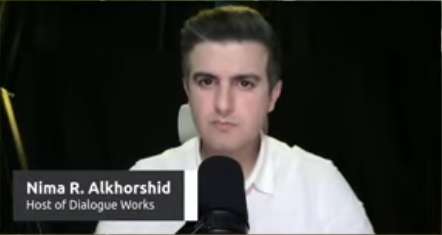
Nima chats with John Helmer and Amb Chas Freeman on the world’s fragile peace and other matters
| Traducir—Translate! | |
| Make fonts bigger>>> | [wpavefrsz-resizer] |



Streamed live on Jan 22, 2026
Summary
The video features a detailed conversation with Ambassador Chas Freeman, providing an in-depth analysis of the escalating tensions between the United States, Israel, and Iran, alongside broader geopolitical dynamics involving Europe, Greenland, and the Arctic region. Ambassador Freeman discusses the context of protests in Iran, the possibility of war, and the complex interplay of military preparations and political maneuvers. He highlights how the protests in Iran, initially sparked by economic grievances, have been exploited by foreign intelligence agencies, particularly Israel’s Mossad and Western allies, to destabilize Iran ahead of a potential Israeli-American attack. Freeman emphasizes Iran’s preparedness to retaliate massively, especially with missile barrages, and the reluctance of Gulf states to support an attack on Iran due to their own political and strategic interests.
The discussion transitions to the strategic importance of Greenland for the United States, challenging the narrative put forth by American politicians like J.D. Vance and President Donald Trump, who have expressed interest in acquiring Greenland. Freeman critiques this stance as motivated more by Trump’s personal vanity rather than genuine national security concerns, noting that Denmark and NATO have long cooperated on missile defense involving Greenland. He also highlights the potential damage Trump’s rhetoric has caused to NATO’s cohesion.
Freeman then explores the broader challenges facing Europe, including the debate over American military bases, the increasing European defense budgets as a hedge against US unpredictability, and the complex relations with Russia and China. He notes the absence of strong leadership in Europe, the rise of nationalist movements like Germany’s AfD, and the continent’s struggle with its reduced global influence.
Finally, the conversation touches on U.S. strategy in the Western Hemisphere, especially regarding Latin America and Venezuela, where American interventionism contrasts sharply with Chinese investment strategies. Freeman predicts an arms race in South America as countries seek to protect themselves from perceived U.S. threats, drawing an analogy to the futility of resisting inevitable geopolitical tides.
Overall, the video presents a comprehensive and sobering view of a world in flux, marked by potential military conflict, shifting alliances, and the erosion of traditional power structures.
Highlights
- [01:11] 🚀 The U.S. is deploying fighter jets and an aircraft carrier to the Middle East amid rising tensions with Iran.
- [03:09] 🔍 Protests in Iran may have been exploited by foreign intelligence agencies to destabilize the country before a potential attack.
- [05:22] 💥 Iran is reportedly prepared to launch up to 2,000 missiles simultaneously in retaliation to any attack.
- [15:23] ⚛️ Iran maintains nuclear latency, the ability to build a nuclear weapon quickly if ordered, but has not yet decided to deploy one.
- [23:14] ❄️ Greenland’s strategic value lies in Arctic missile defense, but U.S. claims about threats from China and Russia there are exaggerated.
- [33:02] ⚠️ Trump’s push to acquire Greenland threatens NATO unity and European-American relations.
- [50:18] 🌎 U.S. interventionism in Latin America is driving an arms race and pushing countries toward Chinese investment and influence.
Key Insights
- [bg_collapse view=”button-orange” color=”#4a4949″ expand_text=”Click button and read further details” collapse_text=”Show Less” ]
- [01:45] 🔥 Intent and Military Buildup Signal Imminent Conflict: Ambassador Freeman underscores that beyond military capability, intent is crucial to understanding conflict likelihood. The Mar-a-Lago meeting between Trump and Netanyahu signaled a strategic agreement on Iran, coinciding with the sudden outbreak of protests that appear manipulated to justify a strike. This convergence of political moves and military preparation strongly suggests a looming confrontation. The use of Starlink receivers and smuggled arms reveals a sophisticated covert support system for regime destabilization.
- [05:22] 🎯 Iran’s Missile Retaliation Capability is a Major Deterrent: Iran’s capacity to launch thousands of missiles simultaneously represents a formidable threat to Israeli defense infrastructure. This volume and coordination could overwhelm missile defense systems, potentially causing severe damage and casualties. This deterrence factor may explain the delay in planned attacks, as Israeli leadership weighs the high costs of retaliation.
- [12:33] 🛰️ Iran’s Reliance on Chinese Beidou GPS Reflects Strategic Autonomy: Facing vulnerabilities in American-controlled GPS systems, Iran’s shift to China’s Beidou navigation system indicates a broader strategy to reduce reliance on Western technologies. This move enhances Iran’s military resilience, complicating U.S. efforts to disrupt Iran’s missile guidance and communications. It also exemplifies the growing Sino-Iranian cooperation in technology and defense.
- [16:34] 🕵️ Propaganda and Psychological Warfare Shape International Perceptions: The Israeli Ministry of Strategic Affairs’ effort to discredit Iranian moderates like Javad Zarif and to promote divisive figures aligned with exiled opposition highlights the intense information warfare accompanying physical conflict. Such campaigns aim to undermine internal cohesion in Iran and influence Western public opinion, complicating diplomatic solutions.
- [23:14] 🧊 Greenland’s Strategic Importance is Misused Politically: While Greenland is critical for Arctic missile defense, the exaggerated portrayal of Chinese and Russian threats there serves domestic political agendas in the U.S., particularly Trump’s desire for a historical territorial acquisition. The longstanding cooperation with Denmark and NATO shows no evidence of an imminent sovereignty crisis, making Trump’s rhetoric disruptive rather than constructive.
- [36:17] 🇪🇺 Europe’s Defense Dilemma Reflects Declining Trust in the U.S.: European countries are increasing defense spending and hedging against possible U.S. abandonment. Simultaneously, they face internal political instability, nationalist movements, and economic challenges exacerbated by severed energy ties with Russia. The absence of strong leadership leaves Europe vulnerable to fragmentation and unable to articulate a coherent long-term strategy, especially regarding NATO and relations with Russia and China.
- [50:38] 🌎 U.S. Interventionism in Latin America Drives Regional Arms Race and Alignments: The U.S. approach to Venezuela and broader South America creates insecurity and provokes an arms buildup, contrasting sharply with China’s investment and infrastructure offers. This dynamic threatens to push Latin America further into China’s sphere of influence, undermining U.S. strategic interests and illustrating the limitations of coercive diplomacy in the 21st century.
The video overall paints a picture of a world where traditional power centers face disruption from both rising regional assertiveness and shifting global alliances, with a particular focus on the fragile and dangerous status quo in the Middle East and the Arctic. Ambassador Freeman’s insights provide critical context for understanding the underlying causes and potential consequences of these geopolitical developments.
[/bg_collapse]
BEFORE you leave, PLEASE pay attention to this alert.
[t4b-ticker id=”1″]
[/su_spoiler]
Print this article [bws_pdfprint display=’print’]
[su_note note_color=”#f1efef” radius=”0″]The views expressed herein are solely those of the author and may or may not reflect those of The Greanville Post, although, if we publish them, we obviously find them noteworthy and valuable. [/su_note]
 This work is licensed under a Creative Commons Attribution-NonCommercial 4.0 International License •
ALL CAPTIONS AND PULL QUOTES BY THE EDITORS NOT THE AUTHORS

