Judge Napolitano
CHATS WITH
AMB CHAS FREEMAN
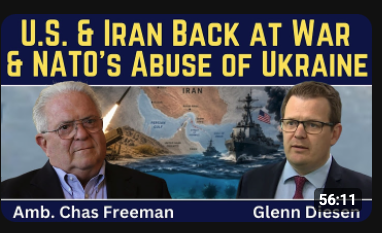
AMB. Chas Freeman : Can Netanyahu Defy Trump?
Summary
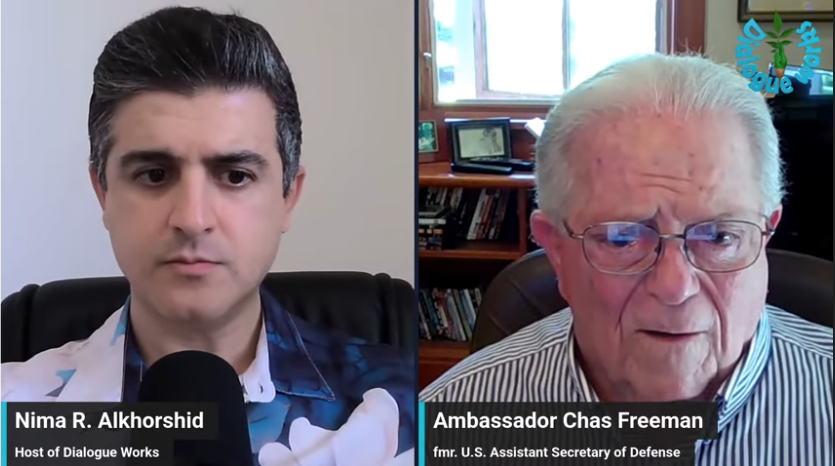
This video presents an insightful and candid interview with Ambassador Chas Freeman, conducted by Judge Andrew Napolitano, focusing on the ongoing geopolitical tensions in West Asia, particularly the Israeli-Iranian conflict, and its broader implications for U.S. foreign policy and international law. The discussion critiques the normalized acceptance of undeclared and preemptive wars by governments, urging a deeper understanding and rejection of the initiation of force to "promote freedom". A significant focus is on the current strained dynamics between Israel, Iran, and the United States, highlighting Israel's disproportionate military responses and Iran’s evolving strategic posture mirroring those tactics. Ambassador Freeman elaborates on the "war of attrition" between Israel and Iran, with Hezbollah adapting its military and communication infrastructure for prolonged conflict, underscoring a deteriorating ceasefire.
The interview also touches upon the delicate balance of power in strategic locations such as the Strait of Hormuz, emphasizing Iran’s control and the U.S. Navy's controversial blockade. Ambassador Freeman dismisses the notion of active U.S.-Iran negotiations, criticizing President Trump's optimistic declarations as detached fantasies. The conversation delves into the ideological underpinnings of Israeli policy, Israeli territorial expansionism, and the failure to offer peaceful coexistence frameworks, partly fueled by religious narratives espoused by some U.S. political figures.
Netanyahu’s recent defiant stance against Trump is central to the discussion, illustrating a complex dynamic where Israeli leadership openly rejects U.S. presidential directives, challenging Trump's capacity to enforce compliance amid competing political pressures, including those from Zionist donors and internal nationalist factions. This tension is exemplified by publicized verbal altercations and staged leaks intended for political theater.
A striking segment revisits a dark chapter of U.S.-Israeli relations—the 1967 attack on the USS Liberty by Israeli forces—framed by a passionate exposition from Congressman Thomas Massie, who recounts the assault and subsequent cover-up that remains a stain on American history.
The closing analysis questions whether Trump has the political strength to counter Netanyahu's defiance, given his entanglements with powerful influencers and the threat of damaging revelations. Ambassador Freeman’s profound commentary reveals a grim yet lucid understanding of the geopolitical machinations, concluding with appreciation for the candid dialogue and indication of further discussions on related international conflicts.
Highlights
- [01:20] ⚔️ Ambassador Freeman explains Iran’s strategic shift to mirrored disproportionate reprisals against Israel in ongoing conflict.
- [04:36] 🌊 Discussion on Iran’s control over the Strait of Hormuz and U.S. naval blockade complicating regional oil transit.
- [07:44] 🤝 Ambassador Freeman refutes claims of meaningful U.S.-Iran negotiations, describing Trump’s statements as fantasy foreign policy.
- [13:19] 📢 Netanyahu’s Knesset declaration of saying “No” to President Trump highlights Israeli defiance.
- [15:56] 🚢 Congressman Thomas Massie recounts the 1967 Israeli attack on USS Liberty and the subsequent U.S. government cover-up.
- [20:33] 🕵️ Analysis of Trump’s political vulnerability due to pressures from Zionist donors, potential Epstein files, and divided nationalist factions.
- [21:46] 🗣️ The importance of profound understanding of geopolitical conflict underscored by the interview's conclusion and upcoming expert guests.
Key Insights
[01:20] ⚔️ Iran’s Adoption of Israel’s Disproportionate Reprisal Doctrine:Ambassador Freeman reveals that Iran has shifted to adopting Israel’s historical military doctrine of disproportionate responses under international law. While traditionally the law of war enforces proportional retaliation, Iran now justifies striking Israel with equal intensity, signaling a prolonged "war of attrition" with escalations rather than tit-for-tat exchanges. This shift endangers regional stability and weakens prospects for peace.
[04:36] 🌊 The Strategic Importance and Control of the Strait of Hormuz: Iran’s dominance over the Strait of Hormuz secures a critical chokepoint for global oil exports. The U.S. Navy’s blockade, described as excessive, exacerbates tensions, with Iran proposing passage under set fees, contrasting with U.S. restrictions. This maritime control amplifies Iran’s geopolitical leverage and underscores the fraught energy security dynamics critical to global economics.
[07:44] 🤝 Failure of U.S.-Iran Negotiations and Trump’s Detached Foreign Policy: The interview dismantles optimistic narratives about ongoing U.S.-Iran talks, suggesting the U.S. is incapable of both negotiating an agreement and implementing it. Trump’s public pronouncements, claiming imminent peace deals and dialogue with Hezbollah, are called "fantasy foreign policy," exposing a disconnect between political rhetoric and ground realities.
[13:19] 📢 Israeli Prime Minister Netanyahu’s Defiance as a Political Statement: Netanyahu’s emphatic "No" to President Trump symbolizes a rare open challenge to U.S. influence by an Israeli leader. This defiance complicates U.S.-Israeli relations, putting Trump in a politically vulnerable position. Netanyahu’s stance demonstrates Israel’s prioritization of its national interests over alliance deference, highlighting limits of U.S. power in the region.
[15:56] 🚢 The USS Liberty Incident as a Historical Example of Cover-up and Complicity: The detailed recount by Congressman Massie of Israel’s attack on USS Liberty in 1967, including the machine-gunning of survivors and subsequent U.S. government cover-up, reveals a long-suppressed but critical episode of betrayal and duplicity in U.S.-Israeli relations. This incident exemplifies the murky realities behind official narratives and illustrates the complex, sometimes adversarial nature of alliances.
[20:33] 🕵️ Trump’s Political Constraints Under Multiple Pressures:Ambassador Freeman highlights multifaceted pressure on Trump—from potent Zionist financial backers, blackmail risks linked to Jeffrey Epstein, to diverging nationalist constituencies. These pressures restrict Trump’s ability to decisively alter U.S. policy toward Israel or assert control over Netanyahu, indicating the underlying power networks shaping U.S. foreign policy.
[21:46] 🗣️ The Value of Informed, Critical Analysis of International Conflict: The depth and nuance of Ambassador Freeman’s analysis exemplify the necessity of comprehensive and critical understanding of global geopolitical conflicts, urging audiences to question simplistic official stories and recognize the interplay of power, ideology, and realpolitik shaping contemporary events.
Additional Summary Details for Context
The video opens by framing the moral and philosophical stakes of government aggression and war, invoking Thomas Jefferson’s ideas about the justification for overthrowing unjust governments and the imperative of fighting for freedom. This sets a thematic tone regarding the legitimacy of state violence.
Throughout the interview, Napolitano and Freeman intertwine historical context, revealing a persistent pattern in the Middle East where Israeli military strategies provoke Iranian and allied retaliations, creating a self-perpetuating cycle of violence. Hezbollah’s changed command structures indicate a strategic commitment to sustained conflict, reflective of Iran’s broader regional ambitions.
Iran’s "agreed de-escalation" is described as fragile, with ceasefire terminology masking underlying hostilities. Ambassador Freeman is skeptical about any durable peace absent significant policy changes, noting the absence of a genuine peace offer from Israel over its 78-year history.
Trump’s reported conversations and interactions with figures such as Hezbollah are critiqued as implausible or theatrical. The anecdote about the "land of the marshmallows and the skewer" metaphor captures Netanyahu’s perception as dominant and willing to assert aggressive policies despite U.S. opposition.
The interview also critiques certain U.S. political figures’ religious justifications for Israeli state rights, exposing ideological distortions influencing foreign policy.
The disclosure about U.S. complicity in Israeli strikes on Iranian targets and Netanyahu’s leveraging of U.S. military assets paints a picture of covert cooperation beneath public adversarial rhetoric.
Moreover, the political drama involving Trump’s frustrations with Netanyahu, including allegedly leaked vulgar comments, is interpreted as a staged spectacle aimed at manipulating public perceptions and internal political pressures rather than a genuine breakdown.
Lastly, the interview rounds off with recognition of the complex pressures faced by U.S. leadership, cautioning about the limits of presidential agency in foreign policy wrought by influence from donors, blackmail, and political factionalism.