[su_spoiler title=”Please make sure these dispatches reach as many readers as possible. Share with kin, friends and workmates and ask them to do likewise. ” open=”yes” style=”fancy” icon=”arrow-circle-1″]

Garland Nixon
| [wpavefrsz-resizer] |
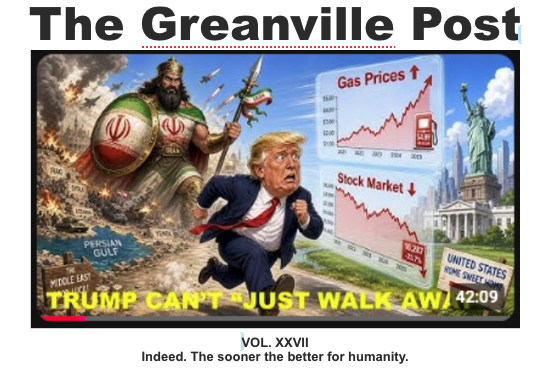
US VERSUS IRAN – A WAR THAT THE US MIGHT JUST LOSE BIGLY – TRUMP & THE CHIHUAHUAS VS THE BRICS POWER
Streamed live on Feb 22, 2026
Summary
Garland Nixon presents a detailed analysis of the potential for a military conflict between the United States and Iran, emphasizing the possibility that the U.S. could suffer a significant defeat. He references historical war games, such as the 2002 Millennium Challenge, where simulated U.S. forces were overwhelmed by unconventional, low-tech tactics, highlighting vulnerabilities in U.S. military doctrine against asymmetric warfare. Nixon argues that U.S. military planning suffers from systemic issues, including a reliance on proxy wars, disregard for soldier casualties, and a lack of experience fighting peer or near-peer adversaries like Iran, especially when supported by Russia and China. Technological advancements, particularly in missile and drone warfare, have transformed the battlefield, rendering traditional U.S. advantages such as overseas bases and air superiority less effective or even liabilities.
He stresses the political fragility within the U.S., noting low public support for war and a “glass jaw” inability to sustain casualties, which could rapidly erode political will. Additionally, Nixon highlights the U.S.’s diminished industrial capacity to sustain prolonged conflict, a consequence of decades of de-industrialization and economic outsourcing. The Iranian military’s integration with BRICS countries’ technology and strategic support enhances their asymmetric capabilities, including hypersonic missiles, anti-shipping weapons, and potential cyber and satellite warfare countermeasures.
Nixon also warns of the broader geopolitical and economic ramifications, including the potential closure of the Strait of Hormuz, widespread economic disruption, and the risk of a “civilizational jihad” if high-profile Iranian leaders are targeted. Political instability in the Middle East, loss of U.S. bases, and opportunistic attacks in other regions such as Africa and South America could further strain U.S. military resources. He concludes that while a war with Iran is not inevitable, the risks and consequences are severe and should be seriously considered.
Highlights
- [01:30] 🔥 Millennium Challenge 2002 war game revealed U.S. vulnerability to low-tech asymmetric warfare.
- [08:00] 🏀 “Practice like you play”: U.S. military’s bad habit of disregarding proxy soldiers’ lives undermines combat effectiveness.
- [20:30] 🚀 Surface-to-surface missiles and drones have neutralized traditional U.S. military advantages like overseas bases.
- [34:40] 🥊 U.S. faces a “glass jaw” politically with only 21% public support for war, risking rapid loss of political will if casualties mount.
- [39:00] 🏭 U.S. de-industrialization limits its ability to sustain long-term combat operations.
- [42:00] ⚔️ Israeli attack on Iran proxy failed in 12 days, demonstrating Iranian resilience and warning of potential U.S. difficulties.
- [01:00:30] ⛔ Closing of the Strait of Hormuz by Iran could trigger immediate economic crisis in the U.S. and global markets.

[bg_collapse view=”button-orange” color=”#4a4949″ expand_text=”Click here to read the full analysis” collapse_text=”Show Less” ]
Key Insights
- [01:30] 🔍 Millennium Challenge exposed real-world vulnerabilities: The 2002 war game, where U.S. forces were decisively defeated by low-tech, asymmetric tactics, foreshadowed challenges faced in Iraq and beyond. This shows that superior technology alone cannot guarantee victory against unconventional enemies who reject traditional rules of engagement. The U.S. military’s failure to adapt to this reality leaves it exposed to similar defeat in future conflicts.
- [08:00] ⚠️ Proxy wars foster dangerous habits of expendability: Nixon highlights how the U.S. habitually uses proxy forces as cannon fodder, reflecting a disregard for soldier lives that in turn degrades the quality of military planning and execution. This “practice like you play” mentality results in poor combat readiness and high casualty rates, weakening the U.S. position in actual conflicts against capable adversaries.
- [20:30] 🎯 Missiles and drones have revolutionized warfare: Traditional U.S. advantages — such as proximate military bases and manned aircraft — are increasingly liabilities because of missile technology’s extended reach and drone swarms’ ability to saturate air defenses. The proliferation of hypersonic and multi-warhead missiles, combined with electronic countermeasures, significantly complicates U.S. defense strategies. This technological parity or superiority by adversaries like Iran (backed by Russia and China) drastically shifts the balance of power.
- [34:40] 📉 The political “glass jaw” threatens war sustainability: With only about 21% of Americans supporting a potential war with Iran, any significant casualty toll could quickly erode domestic political support. Nixon argues that unlike past total wars, the U.S. public today is unlikely to tolerate high losses in conflicts perceived as unjust or unnecessary. This lack of political will could force premature withdrawal or strategic failures, undermining military objectives.
- [39:00] 🏭 De-industrialization cripples warfighting capacity: Decades of outsourcing manufacturing and financializing the economy have left the U.S. unable to rapidly produce the weapons, vehicles, and supplies needed for sustained warfare. Even a short war could exhaust existing stockpiles, with no industrial base ready to replenish them. This structural weakness profoundly limits U.S. strategic options and endurance.
- [42:00] 🛡️ The Israeli proxy war failure foreshadows U.S. challenges: The 12-day conflict where Israel’s advanced military was repelled by Iranian forces illustrates Iran’s effective defense and offensive capabilities. Despite Israel’s technological superiority and full-scale operation, Iran’s missile and drone attacks devastated Israeli forces, signaling that the U.S. could face even harsher resistance and losses if it directly engages Iran.
- [01:00:30] 🌍 Economic choke points amplify Iran’s global power: Control over strategic waterways like the Strait of Hormuz gives Iran enormous leverage to disrupt global energy supplies. Nixon predicts that a U.S. attack would likely provoke Iran to close this vital shipping lane, triggering immediate spikes in fuel prices and economic turmoil in the U.S. and worldwide. This economic dimension magnifies the stakes of any military conflict and raises the risk of widespread instability.
Additional Analytical Points
- Asymmetric warfare and “no rules” mentality: Nixon uses historical anecdotes to stress that Iran and its allies will not abide by conventional warfare norms, instead employing guerrilla tactics, cyber attacks, and proxy forces. This unpredictability complicates U.S. operational planning and increases the risk of strategic surprise.
- Space and satellite warfare vulnerability: The U.S. reliance on low-orbit satellites for reconnaissance and communication is a double-edged sword. Russian and Chinese anti-satellite capabilities could blind U.S. forces, severely degrading command and control in a conflict scenario.
- Potential for multi-front destabilization: Nixon warns that a war with Iran could ignite wider regional conflicts, provoke attacks on U.S. bases in Africa and elsewhere, and invite Chinese moves on Taiwan or Russian escalations in Ukraine, stretching U.S. military resources thin and compounding strategic risks.
- Internal U.S. instability: The prospect of a “civilizational jihad” following the assassination of Iranian leaders could lead to domestic unrest among Muslim populations in the U.S. and Europe, adding a home-front security challenge rarely seen in modern U.S. conflicts.
- Geopolitical chess game with BRICS: Iran’s integration into the BRICS alliance, backed by Russia and China, means any conflict is not isolated but part of a broader great power contest, with sophisticated technological and economic support available to Iran, increasing U.S. risks and complicating diplomatic calculations.
Conclusion
Garland Nixon’s analysis compellingly argues that a U.S. military conflict with Iran carries severe risks of rapid and significant defeat due to a combination of outdated military doctrines, asymmetric warfare tactics, advanced missile and drone technology, political fragility at home, and a lack of industrial capacity for sustained combat. The geopolitical and economic consequences would be profound, potentially destabilizing the Middle East, the global economy, and triggering multiple simultaneous crises. While not predicting inevitable defeat, Nixon stresses the importance of seriously considering these possibilities and preparing accordingly. The video serves as a cautionary overview of the complex challenges facing U.S. military planners and policymakers contemplating confrontation with Iran and its allies.
[/bg_collapse]
Addendum Feature
IRAN – IS TRUMP GETTING CORNERED INTO WORLD WAR 3?
Streamed live on Feb 16, 2026
Summary
In this extensive discussion, Garland Nixon analyzes the escalating geopolitical tensions centered on the Middle East, particularly focusing on the potential for conflict involving Iran and its relations with the United States, Israel, Russia, and China. He draws parallels between the current situations in the Middle East and Ukraine, emphasizing the decline of the US empire and the rise of new global and regional powers such as Russia, China, India, and Iran. Nixon argues that Iran, given its strategic geographical location, military capabilities, and alliances, should be considered a world power, albeit on a different tier than the US, Russia, and China. The US and its allies, particularly Israel, have long sought to dominate global choke points vital for energy supplies, and Iran’s control over key maritime passages like the Strait of Hormuz and its alliance with Yemen (controlling the Red Sea route) give it significant leverage.
The US’s approach to Iran has been one of coercion and attempted domination, demanding Iran dismantle its missile program, nuclear capabilities, and regional alliances, all while expecting Iran to comply as a vassal state. Iran’s refusal to comply and its demonstrated military strength, particularly shown in the 12-day conflict with Israel where Iran decisively defeated Israeli forces, underscores its resolve and power. Nixon also highlights Iran’s use of drones and missile technology, much of which has been developed with Russian cooperation, enhancing Iran’s asymmetric warfare capabilities. The speaker warns that any US military confrontation with Iran would be far more challenging than anticipated, as Iran can potentially overwhelm US defenses with missile and drone swarms, target US bases and ships, and disrupt global energy markets by blocking critical choke points.
Nixon also recalls the 2002 Millennium Challenge war game where the US military was overwhelmingly defeated by an Iranian simulation, suggesting that Iran’s asymmetric warfare tactics and advanced intelligence make it a formidable opponent. He critiques US political leadership, particularly under Donald Trump, suggesting that any decision to attack Iran would be politically catastrophic, risking American lives, assets, and the stability of the US empire, especially given Iran’s willingness to retaliate aggressively. The video closes with a cautionary note about the unpredictability of conflict escalation, potential nuclear options, and the broader implications for global markets and political stability.
Highlights
- [01:08] 🇺🇸 The decline of US empire and the rise of new powers like Russia, China, India, and regional power Iran.
- [02:07] 🛢️ Iran’s strategic position controlling key global energy choke points including the Strait of Hormuz and Red Sea.
- [08:12] ⚔️ Iran’s military superiority demonstrated in the 12-day conflict against Israel, debunking myths of Israeli invincibility.
- [14:46] 🤖 Iran’s advanced drone and missile technology, much of it shared with Russia, enhances its asymmetric warfare capacity.
- [37:27] 🎮 The 2002 Millennium Challenge war game where US military was decisively defeated by an Iranian simulated force.
- [48:28] 💥 Iran’s capability and willingness to target US regional bases, ports, and infrastructure in retaliation.
- [53:34] ⚠️ The political risk for Trump and the US administration if a war with Iran leads to heavy American casualties and losses.
Key Insights
- [01:08] 🌍 Declining US Hegemony and Rising Multipolarity: Nixon identifies the US empire as waning in influence, contrasted with the emergence of Russia, China, India, and Iran as significant powers. This multipolar shift disrupts the post-Cold War US-dominated global order, forcing the US to reassert control through militarized choke points and coercion, which risks escalating conflicts in regions like the Middle East and Eastern Europe.
- [02:07] 🛢️ Iran’s Strategic Importance as a Choke Point Power: Iran’s control over the Strait of Hormuz, through which a significant portion of the world’s oil supply passes, and its alliance with Yemen controlling the Red Sea, grants it outsized influence over global energy markets. This geographic leverage makes Iran a critical player, able to threaten the global economy by disrupting energy flows, elevating its status beyond a typical regional power.
- [08:12] ⚔️ Iran’s Military Effectiveness and Regional Dominance: The swift and decisive Iranian victory over Israeli forces in the 12-day conflict challenges global perceptions of military power in the region. Israel’s inability to defeat Iran’s forces, despite its advanced military, reveals Iran’s significant military strength, which includes missile and drone technology, and serves as a deterrent against external aggression.
- [14:46] 🤖 Asymmetric Warfare and Technological Advancements: Iran’s investment in missile and drone technology, including unmanned aerial vehicles and sophisticated anti-ship missiles, creates a potent asymmetric warfare capability. This allows Iran to challenge superior conventional forces by overwhelming air defenses and naval assets with swarms of drones and missiles, raising the stakes for any military confrontation.
- [37:27] 🎮 Historical Precedent of US Underestimation of Iran: The 2002 Millennium Challenge war game, where US forces were overwhelmed by simulated Iranian tactics, highlights the potential risks of underestimating Iran’s unconventional warfare strategies. This simulation underscores the effectiveness of Iranian asymmetric tactics and the difficulty the US might face in actual combat scenarios.
- [48:28] 💥 Potential for Widespread Regional Conflict: Iran’s explicit threats to target US bases, ports, and airfields in the Middle East illustrate the scale of destruction a conflict might unleash. The loss of these key logistical hubs would diminish US regional power projection and could disrupt global trade and energy supplies, causing far-reaching economic and political consequences.
- [53:34] ⚠️ Domestic Political Consequences for US Leadership: Nixon points out that a war with Iran resulting in significant American casualties and military setbacks would be politically disastrous for President Trump and the US administration. Public opinion, already low, would likely turn sharply against the leadership, potentially ending political careers and weakening US global standing. Nixon suggests that this political risk is a key reason why a military strike on Iran is unlikely despite aggressive rhetoric.
Conclusion
Garland Nixon’s analysis presents a sobering view of the geopolitical landscape surrounding Iran and the Middle East. He emphasizes that Iran’s combination of strategic geography, military capabilities, and alliances elevate it to world power status in a unique category, capable of challenging US dominance regionally and affecting global energy markets. The US’s declining global hegemony paired with aggressive attempts to contain Iran risks a costly confrontation that could destabilize the region and have severe consequences for the US politically and economically. Nixon’s insights into asymmetric warfare, historical war games, and the balance of political power offer a nuanced understanding of why war with Iran is fraught with risks and uncertainties, suggesting caution in any move toward military conflict.
BEFORE YOU LEAVE:
People’s journalism can’t survive without your active support.
[su_note note_color=”#f1efef” radius=”0″]Because YouTube (Google) is a heavily (and capriciously) censored platform aggressively enforcing the Empire of Lies’ official narrative, dissident, anti-imperialist voices like Garland Nixon’s are constantly harassed via demonetization, shadowbanning and outright deletion. This forces such voices—all of us, actually—to seek alternative platforms that still respect the right of free speech, such as Rumble.com, Rofkin.com, etc. Garland has now alternative archives on Rofkin, Rumble, etc. Should YouTube pull the plug, be sure to find him there. Also, please consider a donation to keep his work as vibrant as ever. [/su_note]
GARLAND’S ROFKIN & RUMBLE PLATFORMS:
ROFKIN: https://www.rokfin.com/garlandnixon
RUMBLE: https://rumble.com/user/garlandnixon/videos
DONATIONS:
BUY ME A COFFEE • https://www.buymeacoffee.com/garlandnh
PayPal – garlandn@gmail.com
/ garlandnixon
[t4b-ticker id=”1″]
[/su_spoiler]
Print this article [bws_pdfprint display=’print’]
The views expressed herein are solely those of the author and may or may not reflect those of The Greanville Post.
[su_animate type=”fadeInRightBig” duration=”1.5″]
Unfortunately, most people take this site for granted.
DONATIONS HAVE ALMOST DRIED UP…
PLEASE send what you can today!
JUST USE THE BUTTON BELOW[/su_animate]
This work is licensed under a Creative Commons Attribution-NonCommercial 4.0 International License