Judge Napolitano
| Traducir—Translate! | |
| Make fonts bigger>>> | Resize text-+= |
ALASTAIR CROOKE: TRUMP'S DANGEROUS WAR
Streamed Mar 2, 2026
Summary
The video presents a detailed analysis and commentary on the unfolding geopolitical conflict involving the United States, Iran, and regional actors, framed within a broader critique of government aggression and military interventionism. Judge Andrew Napolitano introduces the topic by reflecting on the normalization of undeclared wars and the dangerous consequences of preemptive strikes justified under questionable premises. The discussion then shifts to an in-depth interview with Alastair Crooke, who offers a comprehensive breakdown of the decisions leading to the recent escalation, the regional fallout, and the broader strategic implications for global power dynamics.
The conflict has quickly escalated into a dangerous regional confrontation, with Iranian missile and drone attacks targeting American military bases and allies like Israel and Bahrain, while Gulf States have reportedly exhausted their missile intercept capabilities. The narrative dispels myths about U.S. and Israeli air dominance, noting that no American or Israeli aircraft have entered Iranian airspace due to robust Iranian air defenses, which have successfully downed numerous drones and aircraft, including some American planes.
Highlights
- [03:00] ⚔️ Premeditated war decision made at Mar-a-Lago on December 29th, not a last-minute action.
- [06:00] 🔥 Assassination of Iran’s second most revered Shiite leader IN THE WORLD sparks widespread protests and violence across the Middle East.
- [10:30] 🕊️ The murdered leader was humble, beloved, principled and courageous, and chose not to hide, creating a martyr figure rather than weakening Iran.
- [15:00] 💥 Iran’s missile and drone attacks are overwhelming Gulf States’ defenses and threatening American bases and Israel.
- [19:00] ❌ No credible imminent threat from Iran to the U.S.; strike driven by political and financial motives.
- [23:00] 🌍 The war is part of a larger conflict to maintain U.S. dollar hegemony against BRICS and global rivals.
- [33:00] 🛰️ Russia and China provide covert support to Iran, enhancing its air defense and targeting capabilities.
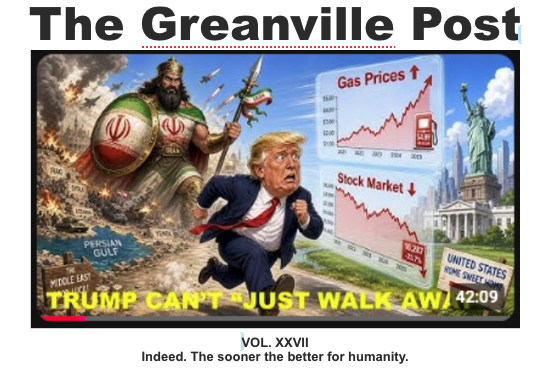
The discussion critiques the Trump administration’s rationale for the strike, highlighting the absence of any imminent threat from Iran to the United States, and arguing that the motivations were largely influenced by Zionist interests and a strategic desire to counter the BRICS alliance’s challenge to U.S. dollar hegemony. The economic consequences are severe, with oil and gas prices soaring, and cities like Dubai suffering significant damage that threatens regional economic stability.
Crooke warns that the military and political situation for the U.S. and Israel appears precarious, as missile supplies dwindle and no clear exit strategy emerges. He also outlines the covert support Iran receives from Russia and China, including advanced targeting systems and satellite intelligence, which have enhanced Iran’s defensive capabilities and complicated U.S. military options.
The video closes with a call for continued monitoring of the evolving conflict, emphasizing the risks of a broader regional war and the profound geopolitical shifts underway.
Key Insights
- [03:00] ⚔️ Premeditated Military Aggression: The war was not a spontaneous reaction but a deliberate plan formulated weeks in advance. The strategic deception through fake negotiations highlights a pattern of using diplomacy as a smokescreen for predetermined military actions, undermining trust and escalating conflict unnecessarily.
- [06:00] 🔥 Martyrdom as a Catalyst for Resistance: The killing of a spiritual and political leader, far from destabilizing Iran, has united the Iranian people and Shiite groups regionally. This counters conventional military logic that decapitation strikes weaken adversaries; instead, they can fortify resolve and expand resistance movements.
- [10:30] 🕊️ Leadership and Legitimacy in Conflict: The leader’s humility and decision to remain accessible to his people symbolize a form of leadership that commands genuine loyalty, complicating foreign attempts to delegitimize or dismantle Iran’s power structures through violence.
- [15:00] 💥 Asymmetric Warfare Challenges Conventional Military Superiority: Iran’s use of missiles and drones, combined with robust air defenses, is eroding the technological and logistical advantages of the U.S. and Israel, signaling a shift in military dynamics where quantity and adaptability can offset traditional air dominance.
- [19:00] ❌ Questionable Justifications for War: The Trump administration’s framing of Iran as an imminent threat is contradicted by intelligence assessments and expert analysis, suggesting the war serves political and economic agendas rather than genuine national security needs. This reflects a broader pattern of justifying military action through exaggerated or fabricated threats.
- [23:00] 🌍 Geopolitical and Economic Underpinnings: The conflict is intertwined with global economic struggles, particularly the challenge to the U.S. dollar’s dominance by the BRICS coalition. Military actions in the Middle East are a tactical extension of a larger strategic competition involving trade wars and financial control.
- [33:00] 🛰️ Covert Support and Multipolarity: Russia and China’s discreet but critical support to Iran signals a multipolar world order where proxy conflicts are backed by major powers through advanced technology and intelligence sharing, complicating U.S. efforts to isolate adversaries and maintain unilateral dominance.
This comprehensive analysis reveals that the current conflict is far more complex than presented in mainstream media. It is a calculated escalation with deep political, economic, and military dimensions, reflecting shifting global power balances and the limitations of traditional military approaches in contemporary warfare.
SECOND FEATURE
Murdering the ayatollah backfires.
Larry Johnson : The Dangerous Fallout of Ayatollah Khamenei’s cowardly murder
Streamed Mar 2, 2026
Summary
The video transcript presents a detailed and critical discussion on the recent depraved assassination of the Iranian Ayatollah (the signature of the US empire and Israel's way of war) and the ensuing conflict between the United States, Israel, and Iran. Judge Andrew Napolitano hosts expert Larry Johnson, who analyzes the geopolitical fallout, military consequences, and broader implications of this undeclared war. The conversation begins with reflections on government aggression and the erosion of American freedoms due to repeated preemptive wars. It then shifts to the specific events surrounding the killing of the Ayatollah, who for decades prevented Iran from developing nuclear weapons, highlighting the irony and strategic blunder this represents. Johnson outlines the deteriorating U.S. position in the Middle East, the impact on global oil supplies, and the strategic advantages gained by Russia and China as a result of U.S. and Israeli actions.
The dialogue reveals that the initial attack was reportedly rushed and that the U.S. joined the Israeli operation reluctantly, which raises serious constitutional and ethical questions about war powers and transparency. Iran’s retaliation has been swift and effective, targeting U.S. military bases, oil infrastructure, and maritime vessels, severely impairing U.S. military capabilities in the region. The depletion of missile defense resources and the shutdown of key oil chokepoints like the Strait of Hormuz threaten to escalate the conflict further.
Criticism is leveled against political leaders, especially Donald Trump and his Secretary of Defense, who are accused of lying to the American public, breaking campaign promises, and misrepresenting Iran’s threat. The interview stresses that the actual drivers of terrorism are Sunni extremist groups supported by U.S. allies, not Iran. The killing of the Ayatollah may unite various Muslim factions, including moderates and extremists, against the U.S. and Israel, potentially leading to significant geopolitical realignments.
The interview concludes with a somber forecast: the conflict will intensify, the U.S. will face increasing military, economic, and diplomatic isolation, and the domestic political fallout could lead to impeachment proceedings against Trump and his administration. The video closes with a preview of upcoming discussions on related topics.
Highlights
- [03:16] 🔥 The U.S. and Israeli invasion of Iran is a strategic disaster that may end U.S. influence in the Middle East.
- [04:41] ⚠️ The assassination of the Ayatollah, who opposed nuclear weapons, ironically removes the main barrier to Iran’s nuclear ambitions.
- [09:20] ⛽ Iran has closed the Strait of Hormuz and attacked oil pipelines, threatening global energy supplies.
- [11:52] 💥 U.S. and Israeli missile defenses are rapidly depleting, risking vulnerability to sustained Iranian missile attacks.
- [14:28] 🛑 The U.S. narrative of regime change and Iran’s nuclear threat is contradicted by facts and historical context.
- [18:42] 🌍 Sunni extremist groups, backed by U.S. allies, pose a far greater terrorism threat than Iran.
- [27:06] ⚖️ The war’s consequences may lead to President Trump’s impeachment due to unconstitutional war initiation.
Key Insights
- [00:05] 🕊️ The Illegitimacy of Preemptive Wars: The discussion opens with a profound critique of undeclared wars and government aggression. It challenges viewers to reconsider the accepted norm of initiating force without the consent of the governed, framing it as a fundamental threat to liberty. This sets the tone for understanding the Iran conflict as part of a broader pattern of governmental overreach.
- [04:41] 💣 Strategic Miscalculation in Killing the Ayatollah: The interview exposes a bitter irony: the Ayatollah Khamenei had issued a fatwa forbidding nuclear weapons development in Iran for 36 years. His assassination paradoxically removes the key internal obstacle to Iran’s nuclear weapons program, making the U.S. and Israeli justification for the strike deeply flawed. This insight underscores how intelligence failures and political motivations can backfire catastrophically in international relations.
- [09:20] 🚢 Iran’s Tactical Control Over Global Oil Supply: Iran’s closure of the Strait of Hormuz and attacks on oil pipelines in neighboring countries represent a potent strategic lever. This move threatens to increase global oil prices dramatically and benefits adversaries like Russia, which stands to gain financially and geopolitically. The insight highlights how military actions in one region can have cascading effects on global economic stability.
- [11:52] 🎯 Depletion of U.S. and Israeli Missile Defense Systems: The rapid exhaustion of Patriot missile stocks signals a critical vulnerability in the U.S.-Israeli defensive posture. This technical detail reveals that Iran’s missile capabilities could overwhelm Western defenses, forcing a strategic retreat or escalation. It also calls into question the sustainability of current military engagements without congressional approval or clear objectives.
- [14:28] 🕵️♂️ Deconstructing the “Regime Change” Narrative: The Secretary of Defense’s rhetoric claiming regime change as a success is exposed as disingenuous. The reality is that the regime changed only because the U.S. killed the Ayatollah who prevented nuclear proliferation. This insight challenges government propaganda and advocates for critical scrutiny of official war narratives.
- [18:42] ☯️ Sunni vs. Shia and Misplaced Terrorism Blame: The distinction between Sunni extremist groups and Shia-led Iran is crucial. Sunni groups like ISIS and Al-Qaeda, often supported by U.S. allies such as Saudi Arabia and Qatar, are the main perpetrators of terrorism. Iran, by contrast, has fought these groups and has not engaged in similar terrorism tactics. This insight disrupts simplified “good vs. evil” portrayals and urges nuanced understanding of Middle Eastern sectarian dynamics.
- [27:06] ⚖️ Political Repercussions and Constitutional Crisis: The transcript concludes with a warning that President Trump and his administration’s unauthorized war actions could lead to impeachment and removal from office. This underscores the tension between executive overreach and constitutional war powers vested in Congress. It also reflects the broader domestic consequences of foreign policy missteps in a democratic system.
This comprehensive discussion reveals the complexity of the Iran conflict, the dangers of misinformation and political opportunism, and the profound consequences for international stability and American democracy.
Prof. Marandi describes the start of the war for Iranians
Prof. Mohammad Marandi : The Bombs Are Falling: LIVE From Iran!
First streamed live on Feb 28, 2026
BEFORE you leave, PLEASE pay attention to this alert.
[t4b-ticker id="1"]
Print this article [bws_pdfprint display=’print’]
This work is licensed under a Creative Commons Attribution-NonCommercial 4.0 International License •
ALL CAPTIONS AND PULL QUOTES BY THE EDITORS NOT THE AUTHORS