
 Don Hank
Don's Substack




| Traducir—Translate! | |
| Make fonts bigger>>> | [wpavefrszºresizer] |
The collapsing myth of Israel as a sanctuary state
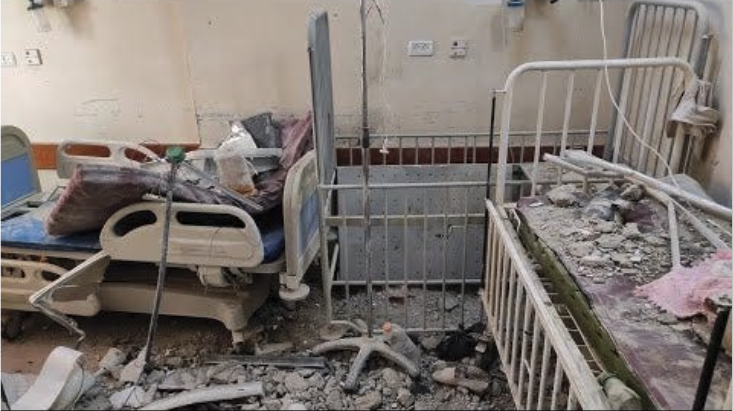
I previously reported, in translation from Al Khanadeq, on the financial, economic, human and reputational losses, etc, of Israel resulting from its war with Iran and the proºPalestine resistance.
 Part Two: 4 topics
• Ukraine's Russophobic Fanaticism Dooming it to Extinction
• Houthis attacks continue
• Israeli economic losses continue and expand
• Washington Reassesses Its Military Deployment in the Region: Starting with LSA Jenkins
Ukraine’s attacks on Russian territory mandate eventual Russian control of ALL of Ukraine
I’ve said it ever since Trump 0.2 offered his clueless draft of a “peace agreement” at the beginning of his term, namely, that Russia will have to take all of Ukraine to guarantee its own security.
Because no matter how little is left of the Neonazi regime after the war, that patch of autonomously controlled real estate will team up with NATO to wreak havoc on Russia. The Combined West didn’t have to be a Russophobic warmonger but ever since the Soviet government ended in the 90s, it was obvious the West would never be satisfied until Russia was lying prostrate and gasping for breath and its resources were all in the hands of the insatiable grasping, hegemonic warmongers.
Translation with my notes in bold and in [brackets]
Excerpt:
Even if a small piece remains, roughly speaking, the Lviv and IvanoºFrankivsk regions, drones can still be launched from that territory.
That is why we will have to liberate not only Donbas. Not only Kharkov, Odessa and even Lviv, all the way to the western borders. Any unfinished part will deliberately cause anxiety, sabotage, death, thereby signing its own death warrant.
**
Translation with my notes in bold and in [brackets]
Costs of War: Ukraine Signs Its Own Death Sentence. Lviv Will Also Be Gone
Ukraine has found a way to hit everyone. Even those who think it doesn't concern them. Kyiv is developing a new strategy, but in doing so, it is signing its own death sentence. In the end, Lviv will also have to be gone.
The Ukrainian drone attack on airports in Moscow, St. Petersburg, and Nizhny Novgorod last weekend caused a real transport collapse. Almost 300 flights were cancelled, hundreds of people were stuck in airports, and the losses for airlines exceeded 5 billion rubles, and this was only in one day. The total damage is estimated at 20 billion. Assessing the actions of the Kyiv regime, many experts agreed that this is a deliberate military tactic by Kyiv, aimed at inciting popular discontent.
Tsargrad military observer Vlad Shlepchenko also has no doubt about this:
This is a deliberate strategy on the part of Kyiv, they are doing this on purpose. And, most likely, it will not be possible to completely solve this problem. Because even the appearance of one enemy drone in the areas through which takeoff and landing takes place leads to the introduction of a noºfly regime. And these are completely justified measures, because dozens of airliners and hundreds of lives are at risk. Any carelessness º and a strike can hit a passenger plane. Kyiv uses this without a twinge of conscience. The problem is that it is extremely difficult to counter such actions by the enemy. Even the massive use of "Gerans" against Ukrainian warehouses and launch points cannot completely neutralize the threat. Ukraine is losing drones, but it manages to make new ones. And if at least a dozen of them remain, this is enough to again disrupt half a day of work at Russia's largest transport hubs. The expert is sure that the problem will not be solved by half measures: Until Ukraine is crushed, until its political leadership is destroyed, until its territories are returned to Russia, this political chimera will not cease to exist. Shlepchenko made an important clarification: even if the Kiev regime loses 90% of its territories, this will still not be enough: Even if a small piece remains, roughly speaking, the Lviv and IvanoºFrankivsk regions, drones can still be launched from that territory. That is why we will have to liberate not only Donbass. Not only Kharkov, Odessa and even Lviv, all the way to the western borders. Any unfinished part will deliberately cause anxiety, sabotage, death, thereby signing its own death warrant. The expert believes that the residents of Russia should be prepared for the fact that Kyiv will continue to act using the same methods, and all that remains is to come to terms with this: We just need to understand: the costs of time. This is the moment when war reaches our society, which in most situations simply does not feel like we are living in a country at war. |
Trump is a despicable hypocrite.
He claims to “like” Putin, but at the same time, he is planning Russia’s destruction behind everyone’s back.
We are not surprised.
Translation with my notes in bold and in [brackets]
A massive strike against Russia is being prepared. Shurygin revealed secret details of Trump's conversation with Zelensky
Military expert Vladislav Shurygin revealed secret details of the conversation between American President Donald Trump and the leader of the Kyiv regime, Vladimir Zelensky. According to what an informed source said, a massive strike against Russia is being prepared after this conversation. It is expected that about 600 drones and missiles will be used.
Shurygin wrote about this in his Telegram channel "Ramzai". He points out: a source in Kyiv has revealed details of Zelensky's conversation with Trump. The details are truly secret, revealing the enemy's plans.
The leader of the Kyiv regime begged the "master" to give him air defense systems [Trump can promise Ze all the air defense systems in the world, but in reality, the US has overextended itself by donating air defenses to both Ukraine and Israel. It has already been forced to renege on some of its promises to supply these to its allies, and it is clear that Trump’s promises of these systems are empty. The US simply does not have the military industrial capacity to do what it would like to – and promises to – do]. It is no secret that Ukraine is extremely poor in this regard º its reserves are depleted, and in addition, the Russians periodically destroy air defense installations previously supplied by Kyiv's Western allies.
Trump promised Zelensky to help with antiºaircraft missiles. In addition, he intends to take unused guidance units from Israel º they are successfully used against drones. The units were transferred to Tel Aviv a week before the attack on Iran.
As usual, Zelensky assured the Americans that the Ukrainians are ready to fight to the last [but Kiev’s willingness to sacrifice its last man has already critically reduced the number of its fighters]. And most importantly, he spoke about a certain "stunning response" that Kyiv is preparing for the Russians in response to combined attacks.
Shurygin believes that in the next two days, Ukraine will try to strike Russia. Drones and missiles will probably be used, which will try to reach targets deep in our territory. [Now that Russia has caught wind of these plans, it should be able to shore up its air defenses in key areas — notably Moscow, and to be on the lookout for shipments by air, land — by rail— and water that might be part of these plans. Wellºplaced Kinzhal strikes have taken out countless shipments of western arms, for example, by ship to Odessa.
Kyiv plans to carry out its largest raid on Moscow. This raid should strengthen the morale of the Ukrainians, who have been suppressed by Russian air raids, and also demonstrate to Moscow Kyiv's determination to go to the end and its technological readiness to raise the stakes of a "remote war". It is expected that with the help of allies and UAV production facilities deployed on their territories, Kyiv will be able to increase the monthly number of "longºrange" drones received to 1,500 by October, the military expert points out.
Shurygin shared information that the Ukrainians have accumulated about 600 drones and cruise missiles for this attack. Some of the models are new; they were tested in the Czech Republic since last fall, and in conditions of strict secrecy.

Houthis claim they successfully struck Ben Gurion airport with hypersonic Palestineº2 missile on 6 July, 2025Israel claims it intercepted the missile but shut down the airport anyway. Also it is known that hypersonic missiles cannot be shot down by any known air defense system.
Translation with my notes in bold and in [brackets]
Houthi ballistic missile hits Israeli Ben Gurion Airport
https://eadaily.com/ru/news/2025/07/06/ballisticheskayaºraketaºhusitovºudarilaºpoºizrailskomuºaeroportuºbenºgurion
July 6, 2025
Yemen's Houthis said they attacked Israel's Ben Gurion Airport using a Palestineº2 hypersonic ballistic missile.
"The Missile Forces <> carried out a military operation during which they struck Lod Airport [meaning BenºGurion] <> using a Palestineº2 hypersonic ballistic missile," said Yahya Saria, a spokesman for the rebelºformed armed forces, on the Al Masirah TV channel, which is controlled by the rebel Yemeni movement Ansar Allah.
Saria noted that the operation "successfully achieved its goal." According to him, the airport's operations were temporarily suspended as a result of the attack, TASS quotes excerpts.
The IDF reported on the night of July 6 that a missile had been launched from Yemeni territory towards Israel. During the attack, Israeli air defense systems were in operation, and the missile was reported to have been intercepted.
**
The Iranian/Houthi air strikes are an economic disaster for Israel.
Iran says: open the gates for aid to Palestine and we’ll stop the air strikes.
Seems like an easy solution, doesn’t it?
But the strikes will continue. BTW, Sunday, July 6, Iran hit the Ben Gurion airport again, causing a standstill in travel from abroad. That means major losses, but Israel is willing to accept them just to keep killing civilians. That’s how important the murder is to Tel Aviv.
Maybe that’s because they expect the US taxpayer to reimburse them – thanks to Trump’s boundless generosity to the killers.
**
Translation from Arabic with my notes in bold and in [brackets]
https://alkhanadeq.com/post/7634/عامºعلىºالطوفانºوالخسائرºالاقتصاديةºالإسرائيليةºمستمرةºوتتوسع

Monday, October 7, 2024, 03:27
A year after the flood... Israeli economic losses continue and expand
A year after the AlºAqsa Flood War, the temporary entity continues to incur further losses, suffering severe and devastating damage at various levels: economic, commercial, financial, military, human, as well as markets and sectors of work. This article follows up on the economic situation of the temporary entity, in light of the talk of rising debt rates and budget deficits, as well as the enormous economic losses and the repercussions of the AlºAqsa Flood War.
The war has taken a heavy toll on the Israeli economy, leading to a 27% contraction in the last quarter of 2024, causing a decline in exports, investments, and consumer spending. Consequently, Israel's revenues in oil, technology, agriculture, and tourism have reached zero. The costs to the Israeli economy, which have exceeded $400 billion since the beginning of the AlºAqsa Flood [Iran’s name for the war], are expected to increase, according to the Rand Corporation.
Israel's credit rating has been downgraded for the second year in a row, due to ongoing geopolitical risks and the protracted conflict in Lebanon. The rating fell from A2 to Baa1, maintaining a negative outlook. This deterioration raises concerns about Tel Aviv's ability to manage its financial resources and maintain economic stability as long as the war in Gaza and Lebanon continues without a clear solution. If the war in the entity continues, losses are likely to increase, especially since agricultural production from the Gaza Strip has been destroyed, investments and global stock market trading have been withdrawn, and technological resources that secure half of its exports, tax revenues, and civilian and religious tourism have been halted. Insurance companies have confirmed they cannot meet their obligations. The decline in credit ratings due to increased military, political, and economic risks will lead to the imposition of new taxes on banks to supplement revenues and attract investment after the infrastructure in areas under resistance rocket/missile fire has been damaged. Israel has estimated the cost of its war on Lebanon at between $6 and $28 billion, indicating a protracted war. Of this, $8.7 billion has been allocated directly, while the rest has been allocated indirectly to support air defenses and finance its intended objectives in Lebanon.
Fitch Ratings stated: "Public finances have been damaged, and we expect a budget deficit of 7.8% of GDP in 2024, and debt to remain above 70% of GDP in the medium term. Furthermore, World Bank governance indicators are likely to deteriorate."
The agency says that other factors driving the downgrade are "the country's political division and military imperatives," which put new fiscal consolidation measures at risk.
Economic Losses Itemized
º Monthly economic losses to the enemy: $20 billion.
º Budget deficit: $32 billion (6.8%).
º External debt ratio: $60 billion, in addition to the previous $300 billion.
º $7.75 billion in tax revenue loss.
º15% decline in the TAMI 35 stock index, while shares of some companies fell by more than 35%. Shares of the five largest banks listed on the Tel Aviv Stock Exchange also fell by 20%, a loss exceeding $25 billion.
º$25 billion in market capitalization lost during April 2024.
ºThe total value of shares listed on the Tel Aviv Stock Exchange's main index fell by approximately $19 billion.
º10% loss in Israelºrelated stocks worldwide (first week estimates).
º11% contraction in the Israeli economy, according to the estimate of the American bank "JP Morgan Chase."
º$4.25 billion is the estimated cost of compensation for all affected individuals and companies.
º$25 billion is the estimated cost of rebuilding 30 settlements in the Gaza Strip that were damaged during the battle.
º$1.4 billion is the estimated cost of property damage.
º$17.5 billion is the occupation's losses due to the economic paralysis (Israel is losing an average of $300 to $400 million daily due to the economic paralysis).
º$0.5 billion is the contraction in travel and transportation services exports, representing 0.2% of GDP. 1,135 flights were canceled out of 2,662 scheduled as of October 19, according to Cirium, a leading global aviation analytics company.
º$8.4 billion is the economic loss since the beginning of the battle due to employee absenteeism (an average of $1.2 billion per week, according to statistics from the Economic Department of the Federation of Israeli Chambers of Commerce).
º$7 billion is the loss of the shekel, despite the Central Bank injecting $45 billion from its reserves to support the currency.
º$3.5 billion is the loss in tourism revenue. The number of tourists visiting Israel has declined from 300,000 to 50,000 per month.
º The gas sector has suffered losses of $2.5 billion since the start of the war. The decline in gas production has also led to a 10% increase in electricity costs, negatively impacting industries that rely heavily on energy.
º Losses in the industrial, technology, health, and education sectors have been incurred after 300,000 workers, considered reservists, were called up.
º $1.9 billion in losses in the crane sector at construction sites, according to Reuters, with a daily average of $37 million.
º $25 million has been allocated to help 100 technology startups survive the war, according to the CEO of the stateºfunded Israel Innovation Authority.
º $7.6 billion in lost tax revenue, according to the Israeli investment house Meitav.
º Ship insurance and shipping fees to Israel have increased by 10 times the usual amount.
º$0.25 billion in daily living allowance was disbursed by the government to 330,000 people evacuated from the north and south over a 20ºday period, according to the head of the National Emergency Management Agency (NEMA).
º Food security impact: $60 billion.
ºUnemployment: 11%. The number of unemployed in Israel exceeded 750,000.
ºIsrael's gross domestic product decreased by 1.4% in the first quarter of 2024 compared to the corresponding quarter of the previous year, as it decreased from 420 billion dollars to 414 billion dollars.
ºAlmost complete paralysis in the tourism sector.
ºDecline in the technology sector and freezing contracts worth 71 billion. $
ºLosses in the construction sector: $ 7.5 billion, closing 60 percent of institutions operating in the construction and construction sector.
ºDecreased in the industrial sector: 56%.
ºFailure to pay the loans: 299,000 people.
º Eilat port paralysis and losses exceeding $ 14 billion.
ºIncreased borrowing costs, as interest rates on government bonds increased from 3.5% to 4.2%.
º 726 thousand Israeli companies have been closed since the war began, with expectations that the number would rise to 800 thousand by the end of the year. This number is equivalent to about 10% of the total companies registered in Israel.
º Foreign investment decreased by 40%, from $ 25 billion in 2023 to $ 15 billion in the first half of 2024. foreign investors fear investment in an unstable country like Israel. According to the Hebrew Channel 12.
º According to the report of the cyber regime, which was characterized by the war of iron swords, more than 3380 cyber attacks have occurred so far on the companies circulating on the Israeli stock exchange.
ºAccording to an economic analysis of the damage caused by cyber attacks in Israel last year, National Cyber estimates that the total cost is estimated at 12 billion shekels annually.
The growing Israeli debt due to the war:
º 43 billion dollars in total borrowing in 2023 (according to the Israeli Ministry of Finance).
º21 billion dollars in additional debts after the outbreak of the war on Gaza (according to the Israeli Ministry of Finance).
º16.6 billion dollars total loans in 2022.
ºThe percentage of debt to the local product is 62.1% in 2023.
ºThe debt rate is expected to reach the local product 67% in 2024.
º8 billion dollars in the sale of international bonds since last October.
º31 billion dollars the total domestic debt in 2023.
ºWith the rate of local debt, the level of 72% of the total loans in 2023.
º304 billion dollars, the total Israeli public debt until the end of 2023.
ºBy 8.7%, the increase in public debt in 2023 compared to 2022.
Israeli prisoners
The number of Israeli prisoners in the possession of the Palestinian resistance is now 109, according to the Israeli media.
Reverse immigration
º More than 470,000 settlers left the temporary entity [Israel] after October 7, 2023.
º3% of settlers actually think of immigration.
º800,000 Israeli reside abroad and do not want to return to the entity.
º The high requests for citizenship by the Israelis, including: Portuguese by 68%, French by 13%, German by 10%, and Polish by 10%.
º The number of flights from Ben Gurion Airport alone reached 120 flights per day, at an average of 24 thousand passengers.
Israeli dead
The number of Israeli deaths was more than 2723 between soldiers and officers.
Some of them were killed in Gaza.
ºMore than 158 dead in the northern front.
Classification of the dead from the occupation army: 4 brigade leaders, 40 faction commanders, 13 secret commanders. In addition to officers and soldiers.
Israeli wounded
º11549 wounded, 5,000 soldiers, and 3,400 soldiers will be recognized as disabled, in addition to 1,000 regular and military soldiers. 68% of the injured are soldiers in the reserve ranks.
º3500 wounded were treated by Barzili Hospital alone since October 7, according to Maariv, quoting the hospital director.
ºWild operations wounded 1550 soldiers and officers.
ºThe wounded of their cases is dangerous: 497 soldiers and officers.
º 12,500 requests have been registered as disabled, and 20,000 requests are expected to apply to them as disabled.
Soldiers were shocked and symptoms of 10500 appeared. They were no longer about 1900 or 18%.
Mentor housing units
ºDestruction (total or partial) of more than 10,000 housing units for settlers in dozens of Israeli cities following the operations of the resistance in Gaza and southern Lebanon.
º More than 9,000 housing units in the northern front with Lebanon, and about 1,000 housing units in the Gaza front.
A sharp rise in the rate of mental disorders of the Israelis due to the war
The statements of the Israeli psychological A.R.N Association indicate in a report six months after the war that more than 172,000 Israelis (an average of 33,000 consultations per month) reviewed the association and consulted psychiatrists.
She added that there is an increase in the consulting rate due to psychological pressure among male and female soldiers in military service and reserves. A 125% increase was recorded in the number of psychological pressure consultations between adolescents and youth under the age of 17 in the first weeks of the war.
The statement showed a sharp increase of 950% in psychological consultations on anxiety, shock, and loss compared to the first half of the year. With the progress of the war, there was a rise in depression consulting, severe psychological distress, and isolation.
During the first half of the year, more than 38,000 consultations (22%) of children and youth until the age of 24, received 60% of girls and 40% of boys. The main causes of consulting were anxiety and shock. There was a 10% increase among men compared to previous years.
In conclusion, Israel's current economic and military situation is the most dangerous since the 1973 war. The war has proven to be more costly than expected, due to the massive damage it has inflicted on the Israeli economy. In this context, the chief economist at the Israeli Ministry of Economy, Shmuel Abramson, confirms: "The war will lead to changes in the economic system and in Israel, both in the short term (in 2024) and in the long term." This will negatively impact the lives of every Israeli and will open significant gaps between the entity's economy and the economies of the West, which will face difficulties on the global stage. Financing any future war will be more difficult and complex for the government.
Writer: Editorial Room
Bonus: Richard Wolff: The big, the beautiful and the ugly
Wolff Responds: "The Big, Beautiful And The Ugly" Dated July 2, 2025
An eloquent eye-opener about the actual goodness of America, when compared to other (far more civilised) nations.
Print this article [bws_pdfprint display=’print’]
 This work is licensed under a Creative Commons AttributionºNonCommercial 4.0 International License •
ALL CAPTIONS AND PULL QUOTES BY THE EDITORS NOT THE AUTHORS

