

 ABD ALRAHMAN M. ABU ATTIEH

| Traducir—Translate! | |
| Make fonts bigger>>> | Resize text-+= |
| What the author documents in this report amounts to an indictment of Jordan for practicing de facto apartheid. Not surprising that this ridiculous kingdom would remain, to this day, a staunch ally of the "White Empire". |
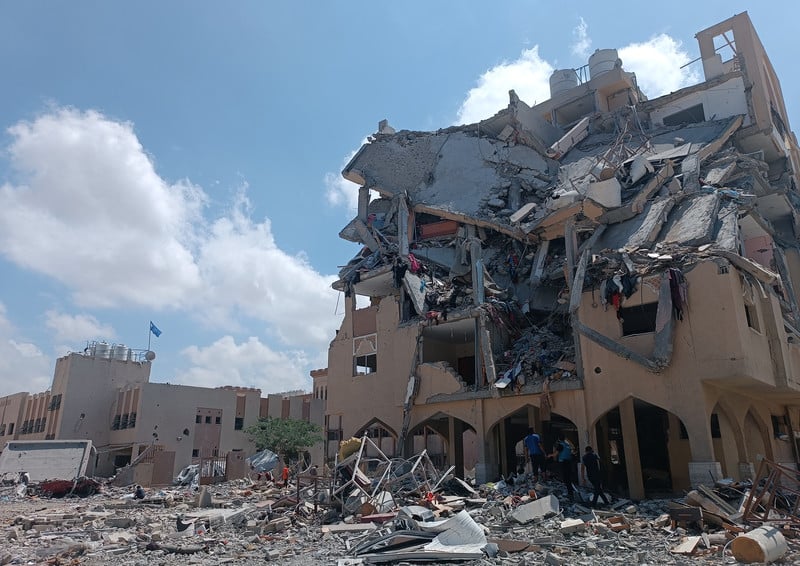
Diaspora Gazans in countries such as Jordan are in no position to return home.
Following the 1948 Nakba (Arabic for “catastrophe”), hundreds of thousands of Palestinians were forcibly displaced from their homes to other Palestinian cities and neighboring countries such as Jordan, Lebanon, Syria, and Egypt. Many sought refuge in Gaza City, considered a safer area far from the war, hoping to return home soon. After the Six-Day War in 1967, Israel occupied the Gaza Strip, which had previously been under Egyptian control. Some insisted on remaining on their land, while others sought safer places. Many fled to Jordan, believing their suffering would end there and that they would soon return home once the war was over. However, reality proved the opposite: instead of relief, they faced greater hardship and were denied many basic human rights simply because they were Gazans. These hardships have continued throughout their lives; over time, some challenges have eased, but others remain, still preventing them from living like any other human being, as they face legal restrictions and economic hardships.
In 1948, Ali Al-Otlah’s family fled from Yafa to Gaza after the Nakba. Following the Six-Day War in 1967, they emigrated once again, this time to Jordan. Three years later, Ali was born in Amman, Jordan specifically in Jabal al-Hussain Refugee Camp, and from the moment of his birth, his life was marked by hardship. Because his parents came from Gaza, they were denied Jordanian citizenship. As Ali grew older and eventually married, his struggles only deepened. The sole reason behind these challenges is his identity as a Gazan. Today, Ali and his family of six hold only temporary Jordanian passports without national IDs. Moreover, these passports must be renewed every two years, at a cost of 100 JD, whereas a regular Jordanian passport can be renewed every five years for only 50 JD. This lack of proper legal documentation makes their lives terribly complicated, restricting their ability to access basic rights and opportunities.
Working in Jordan is not an easy task for Gazans. “If any of us want to seek a job, we are asked for a work permit. This is the only thing that distinguishes us from other refugees, as we pay 60 JD to obtain it, whereas others pay approximately 800 JD,” he explained. Furthermore, Gazans are not allowed to work in all professions; there is a list of allowed professions set by the Amman Chamber of Industry. “Not having permanent work affects my daily life greatly, and we are going through a very hard economic situation that even affects our mental health,” he added.Unfortunately, his daughter Lobna had studied nursing, fulfilling a lifelong dream, but they later discovered that she could not work in her field or obtain a Health Professional License because she does not hold national IDs. Her father tried tirelessly to apply for the license, but the result was that she could only be contracted with a hospital or clinic, and the license would need to be renewed yearly at a cost of approximately 3,000 JD. Due to these restrictions, her dream was devastated, and she ultimately decided to do nothing until she got married.
Since 2007, Ali has been struggling to find a permanent job, and as a result, he and his family are facing many obstacles. Among the most pressing are paying the rent for their small apartment and their limited access to private healthcare, as Ali suffers from heart disease, which makes him completely unable to work. “The only sources of income that me and my family rely on are financial aid and support from philanthropists,” he explained. Moreover, the rising prices in Jordan today have made life even harder, placing heavy financial obligations and debts on Ali. This has subjected him to intense emotional pressure and left him deeply disappointed. “I wish we were in Gaza and got murdered instead of living this life,” he said. At one point, Ali considered taking out a loan to cover his expenses, but he was unable to do so because he does not have a fixed income.
The financial aid that Ali’s family receives is far from enough to cover their needs. For instance, UNRWA provides them with assistance every three months, amounting to 22.15 JD per family member. This means that for a five-member family, the total aid comes to only about 37 JD per month. In addition, a few charities offer limited support, such as the Green Crescent Charity, which provides 40 JD monthly for the entire family, along with small contributions from other organizations. “The total income that I have is around 140 JD, while our actual needs are nearly 600 JD each month to cover rent, groceries, bills, and university tuition fees. This gap has left me with nearly 8,000 JD of debt,” he added.
As mentioned previously, Ali unfortunately suffers from heart disease as well as cardiomyopathy, which is one of the heaviest burdens he carries. Moreover, he needs a cardiac catheterization to determine the specific nature of his condition. The cost of this procedure ranges from 500 to 800 JD, an amount Ali cannot afford, so he began looking for alternatives. One of these options was applying for medical exemption through Prince Ghazi’s Office. He submitted his application in January 2025 and only received the exemption in July 2025, after facing numerous hardships, whereas Jordanians can obtain the same exemption in just one day. Nowadays, Ali is receiving treatment in public hospitals, which have very long waiting periods between appointments due to the large number of patients. This delay has caused his health to deteriorate further. “There are huge differences between Gazans and Jordanians in treatment costs. Gazans pay around 500–800 JD for cardiac catheterization without an exemption, while Jordanians pay only 100 JD,” he explained. These differences also apply to all other medical procedures.
These economic hardships do not only affect Ali’s daily life but also have damaged his children’s academic opportunities. Mohammad, one of Ali’s two sons, was forced to leave high school and instead enrolled at the Wadi Seer Training Centerrun by UNRWA, which offers free vocational training for Palestinians who hold a relief card. Ibrahim, Ali’s oldest son, was a bit more fortunate than his younger brother. He graduated from high school, and since he is a distinguished volleyball player on the national volleyball team, he received a full scholarship to study at Applied Science University. However, this scholarship covers only tuition credits, so Ali must still pay 540 JD each term in registration fees. “Collecting this amount of money is outrageous for us,” Ali said.
The situation Ali’s family is facing is not unique; it reflects the struggles of thousands of Gazan families living in Jordan—many of whom endure even harsher conditions. What these families seek is simply the recognition of their basic civil rights. Over the years, the Jordanian government has shown great generosity in hosting refugees and offering them safety and stability. It has always been recognized as a country that upholds human dignity and stands with those in need. The noble Jordanian government can continue this tradition by finding practical solutions for Gazan families and ensuring that they are granted the basic rights and opportunities that every human being deserves.
 BEFORE you leave, PLEASE pay attention to this alert.
[t4b-ticker id="1"]
Print this article [bws_pdfprint display=’print’]
 This work is licensed under a Creative Commons Attribution-NonCommercial 4.0 International License •
ALL CAPTIONS AND PULL QUOTES BY THE EDITORS NOT THE AUTHORS

