


 Larry C. Johnson



| <• Choose your language • Elija su idioma | |
Resize text-+= |
The US Can’t Break Russia
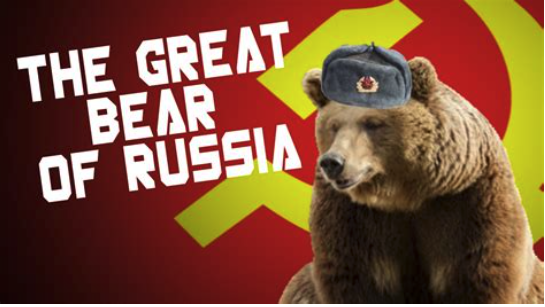
During my recent sojourn in Russia, a common theme from the people I interviewed was the failure of the West to comprehend that Russia is NOT dependent on international trade… Russia is self-sufficient in all critical natural resources. It looks like the US intelligence community (IC) is slowly beginning to grasp this, although most of the IC continues to falsely assert that Russia is suffering massive casualties and facing an economic collapse.
The CIA has proven itself to be the most delusional of the agencies that fall under the umbrella of the IC. Earlier this year, the CIA was at odds with the State Department’s Bureau of Intelligence and Research (aka INR). A report this week from NBC highlighted the rosy scenario being spun by the CIA since Trump took over:
CIA assessments have sometimes been optimistic about the prospect of finding common ground with the Russian leadership, according to two former officials.
Beginning early in the administration, U.S. officials requested numerous secret assessments and briefings from intelligence analysts about the Ukraine issue to determine Putin’s goals in Ukraine and gauge his willingness to negotiate the war’s conclusion, according to the people familiar with the issue.
CIA analysts, in response to the administration’s requests, produced assessments concluding that Trump could find opportunities to negotiate with Putin, according to several people who viewed the reports.
A tip-of-the-hat to INR for getting it right early on:
The State Department’s internal intelligence agency cast doubt earlier this year on the notion that Russian President Vladimir Putin was prepared to negotiate an end to the war in Ukraine, dissenting from a more optimistic Central Intelligence Agency assessment of potential talks, according to several current and former officials.
Analysts at the State Department’s Bureau of Intelligence and Research, known as INR, expressed this opposing view in assessments and briefings in the months leading up to President Trump’s August meeting with his Russian counterpart in Anchorage, Alaska. The dissent also appeared in the President’s Daily Brief, according to the current and former officials.
And how did Trump react to the dose of cold water from INR? According to a March article in the Washington Post, President Trump was not happy:
Some of the U.S. assessments on Putin’s intransigence have appeared to irk Trump, another person familiar with the matter said. Indeed, Trump and his aides in recent days have raised the prospect of stiff new sanctions on Russia if it refuses to agree to end the war. They have not specified what those sanctions would be, though Trump on Wednesday said they “could be devastating.”
As Yogi Berra once remarked, “This is deja vu all over again.” I once was on the receiving end of Presidential unhappiness with intelligence analysis that contradicted the White House beliefs about a favored policy, so I can readily empathise with the pressure coming down on the INR analysts. RBC-Ukraine provided additional details this week on INR’s attempt to swim against the conventional wisdom in Washington:
WSJ also reports that in the spring of 2025, the head of the State Department told analysts during staff meetings that ongoing disagreements were undermining INR’s credibility among administration officials. Then, in July, three analysts working in the Russia–Eurasia group were dismissed, and another analyst resigned.
The State Department shut down the intelligence office that worked with private-sector experts, as well as another one responsible for declassifying intelligence for sharing with allies, former employees said. The department also merged the INR groups for Europe and for Russia and Eurasia, and several Europe analysts were either laid off or reassigned.
There is a determined group of politicians and analysts who insist that the US and NATO can apply sufficient pressure on Vladimir Putin that he will be compelled to accept a ceasefire:
Ukrainian officials, European governments and Kyiv’s supporters in Congress have repeatedly urged Trump to exert pressure on Russia through arms shipments and sanctions to push Moscow to agree to a ceasefire and peace negotiations. The announcement of sanctions on Russian oil companies was the first time Trump has followed through on threats to introduce economic penalties against Moscow.
The new sanctions on Russia, Ukraine’s drone attacks on Russia’s oil and gas facilities and European efforts to provide more weapons to Kyiv’s forces could alter the Kremlin’s calculations over time, according to European diplomats, former U.S. intelligence officials and experts.
Ain’t gonna happen. It is time for President Trump and his national security team to wake up and accept the fact that there is nothing the West can do to alter Russia’s stated intention to de-militarise and de-nazify Ukraine… NOTHING! The only deal that Russia will entertain is what Putin presented last year to the Russian Foreign Ministry. On June 14, 2024, President Vladimir Putin declared that Russia would end the war in Ukraine only if Kyiv ceded the entirety of four regions—Donetsk, Luhansk, Kherson, and Zaporizhzhia—to Russian control and formally renounced any intention to join NATO. Putin demanded that Ukraine withdraw its military from these regions within their full administrative borders (including areas not currently occupied by Russian forces), formalise its neutrality, and accept demilitarisation. He also insisted that Western countries lift sanctions against Russia as part of any settlement.
For some unknown reason, the CIA analysts are ignoring what Putin and the rest of his government have been saying for more than a year. But the deluded analysts are only part of the problem… Donald Trump and his national security team continue to labor under the illusion that the the United States has leverage over Russia and can force Putin to acquiesce to the West. Ain’t gonna happen!
I had a great chat with Danny Davis today… We discussed Russia, Ukraine and the new crisis brewing with Venezuela:
˛
Print this article [bws_pdfprint display=’print’]
 This work is licensed under a Creative Commons Attribution-NonCommercial 4.0 International License •
ALL CAPTIONS AND PULL QUOTES BY THE EDITORS NOT THE AUTHORS








Subscribe