

Max Blumenthal
 The Grayzone
TALKS WITH
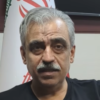
Mostafa Khoshcheshm

Watch part one below:  • 'Millions of enraged people' hunting for r... ||| The Grayzone ||| Find more reporting at https://thegrayzone.com
Iran-U.S. Conflict Escalation and Strategic Analysis from an Insider Perspective
Summary
This interview offers an in-depth analysis of the ongoing conflict between Iran, the United States, and their respective allies, focusing on military escalations, strategic advantages, and potential future developments. Mostafa Khoshcheshm foresees the conflict escalating into a full-scale war involving new regional players and intensified attacks on Iranian infrastructure, notably the bombing of a crucial railway corridor in northern Iran. The analysis stresses Iran’s resilience and emerging military strength, especially in ballistic missile and drone technologies, backed by indigenous development efforts initiated during the Iran-Iraq War era and shaped by enduring sanctions.
Iran's tactical and operational capabilities, including rapid adaptation of air defenses and continuous domestic missile production despite enemy strikes, form a robust defense posture. The public resolve and support in Iran further bolster morale, maintaining internal unity amid escalating attacks. The interview also highlights Iran’s strategic patience regarding its nuclear program, following religious prohibitions and strategic calculations, but acknowledges that use of nuclear weapons by adversaries could force Iran's reconsideration of its nuclear stance.
Discussing ground invasion prospects, Mostafa Khoshcheshm underscores Iran's vast manpower, sophisticated ground forces, and guerrilla-style reserve militias that make large-scale occupations costly and difficult for the U.S. and its allies. The prospect of Israel’s decline is also discussed based on internal socio-economic and political challenges, which are likely to weaken its regional influence.
Throughout the interview, Mostafa Khoshcheshm conveys a tone of confidence in Iran’s ability to emerge victorious or at least prevent regime change and disintegration, framing the conflict as a protracted contest that hinges on strategic endurance, indigenous military capacity, and public support rather than quick battlefield successes.
Highlights
- [00:40] 🔥 US escalates conflict by bombing strategic Iranian railway corridor to Mashad.
- [04:00] 🛡 Iran's victory defined by survival, strategic control, and resilience under intense pressure.
- [08:10] 🚀 Homegrown ballistic missile and drone tech key to Iran’s military edge under sanctions.
- [13:40] 🙌 Strong public support and civil resilience shown by continual street demonstrations despite bombings.
- [16:20] ⚔️ Iran’s ground forces and volunteer militias offer high resistance potential against possible ground invasions.
- [21:40] ☢️ Tactical nuclear weapon use by US/Israel possible but would provoke Iranian nuclear response.
- [30:00] 🕊 Israel faces internal collapse driven by political, economic, and military weaknesses.
Key Insights
[01:00] 🔥 Conflict Escalation Beyond Regional Borders: The war is no longer confined to Iran but threatens to engulf multiple regional players, with the U.S. and Israel directly involved. The bombing of a vital northern Iranian infrastructure signals a strategic shift toward broader and intensifying conflict theaters.
[04:30] 🛡 Definition of Victory Beyond Territory: Victory for Iran is about preserving the Islamic Republic and preventing objectives such as regime change or military disarmament, which have failed. Iran’s resilience, despite devastation, has elevated its regional power status, symbolized by control of strategic chokepoints like the Strait of Hormuz.
[08:45] 🚀 Homegrown Military Technology as Strategic Backbone: Indigenous ballistic missile, cruise missile, and drone technology developed under decades of sanctions proved decisive. Despite targeted bombings on production sites, Iran maintained continuous manufacturing and never depleted older stockpiles, signaling a long-term strategic war readiness.
[13:45] 🙌 Popular Mobilization and Public Morale: The willingness of Iranian civilians to demonstrate publicly amidst active bombardment is a critical psychological factor. This popular support underpins national cohesion and boosts military morale, differentiating Iran from other conflict zones where civilian resistance wanes under attack.
[16:30] ⚔️ Ground Defense and Guerilla Capacities: Iran's vast trained volunteer forces and experienced ground troops, equipped with specialized weaponry and drones, present a formidable obstacle to any potential amphibious or land invasions. The sheer necessary troop numbers for occupiers (2 million+) make full-scale invasion improbable.
[21:50] ☢️ Nuclear Weapon Threshold and Deterrence Doctrine: While Iran currently refrains from nuclear weapon production due to religious and ethical prohibitions, a strategic nuclear weapon program remains technologically feasible. Use of tactical nuclear weapons by adversaries could push Iran to reconsider its doctrine, illustrating the high-stakes deterrence balance in the region.
[29:30] 🕊 Israel’s Decline and Regional Implications: Factors such as emigration, economic downturns, and military weaknesses indicate an ongoing decline of Israeli power. Coupled with internal Zionist conflicts, this foretells a potential collapse within a few years, altering the regional strategic equilibrium in Iran's favor.
 WATCH HERE PART ONE OF THIS SUPERB INTERVIEW!

• Millions of enraged people' hunting for revenge -top Iranian analyst on war's terrifying next phase
The Grayzone |||
Find more reporting at https://thegrayzone.com
On Substack: https://substack.com/@thegrayzone
Support our original journalism at Patreon:  / grayzone