Nima R. Alkhorshid
DIALOGUE WORKS

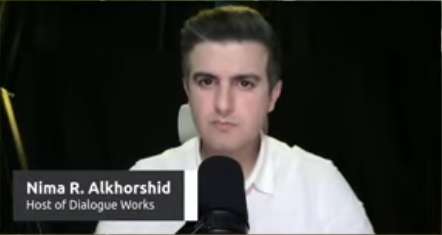 Nima chats with Profs. Michael Hudson & Richard D. Wolff
| Traducir—Translate! | |
| Make fonts bigger>>> | Resize text-+= |

Summary
The video presents a detailed and critical analysis of the ongoing geopolitical and economic crisis centered around the escalating conflict in the Middle East, particularly involving the United States, Iran, and their respective allies. The conversation unfolds with commentators Richard Wolf and Michael Hodson discussing the consequences of U.S. military actions against Iran, especially the attacks on Iranian oil facilities and the resulting regional instability. The discussion highlights how these events have weakened U.S. influence and exacerbated global economic pressures, particularly through disruptions in oil supply and the global financial system.
Key themes include the strategic failures of U.S. policies under Donald Trump’s administration, particularly regarding sanctions and military interventions. The speakers emphasize that Trump’s aggressive tactics have ironically strengthened Iran and Russia by forcing global markets to rely on their oil supplies, despite sanctions. The closure and disruption of the Strait of Hormuz, a vital oil transit route, have significant repercussions for OPEC countries, many of which face economic collapse due to lost revenues and the need to liquidate financial reserves. This also threatens the historic dollarization of global oil trade, undermining U.S. financial dominance.
The conversation further explores the broader implications of U.S. foreign policy failures, including the erosion of trust from traditional allies in NATO and the fracturing of international alliances. The speakers note that U.S. arms exports, once a symbol of power and alliance, have proven ineffective, with some clients discovering kill-switches in their fighter jets controlled by the U.S., further deepening mistrust.
Economic consequences are severe and multifaceted: U.S. defense spending is ballooning to nearly double, financed by borrowing amid a deteriorating credit rating and rising interest rates. The war effort and sanctions are straining global markets, pushing inflation higher, causing energy prices to soar, and shaking investor confidence in traditional safe havens like gold. The ongoing conflict threatens to destabilize not only the Middle East but also the economies of Europe, Asia, and other U.S. allies dependent on oil and gas.
The Iranian perspective is framed as a long-term resistance against U.S. imperial presence in the Middle East, with Iran aiming to expel U.S. influence rather than merely ending military attacks. The speakers argue that Iran’s determination to endure and continue fighting until the U.S. withdraws reflects a broader shift in global power dynamics, where the declining U.S. empire faces new multipolar economic and geopolitical realities driven by China, India, Russia, and others.
Finally, the discussion touches on the political ramifications in the West, noting rising discontent in Europe, with leaders like Britain’s Starmer distancing from U.S. policies. The conversation ends on a sobering note about the potential for further escalation, including the risk of nuclear weapons use, underscoring the profound uncertainty and danger that the current conflict entails.
Highlights
- [01:00] 🔥 The U.S. attack on Iranian oil facilities has triggered massive regional retaliation, impacting key oil producers and destabilizing global energy markets.
- [03:00] 💥 Trump’s policy of “unsanctioning” Russian and Iranian oil paradoxically strengthens these nations, undermining U.S. sanctions and geopolitical goals.
- [06:00] ⚠️ Closure of the Strait of Hormuz acts as a military sanction on OPEC, forcing reliance on sanctioned Russian and Iranian oil, reversing decades of U.S. strategy.
- [08:00] 💸 OPEC countries are liquidating dollar reserves amid lost oil revenues, threatening the global financial system based on petro-dollar recycling.
- [26:00] 📉 U.S. defense spending is set to nearly double amid soaring national debt and deteriorating credit ratings, raising risks for the American economy.
- [45:00] 🌍 European leaders, including Starmer and Macron, are distancing from U.S. policies, signaling cracks in NATO and Western alliances.
- [01:07:00] ☢️ The World Health Organization warns of possible nuclear weapon deployment in the conflict, highlighting the war’s escalating dangers.
Key Insights
[02:00] 🔄 Sanctions Backfire: Strategic Reversal Through Oil Trade
Trump’s aggressive sanctions and attacks on Iranian oil have ironically backfired by pushing global markets to depend more on Russian and Iranian oil. This undermines U.S. economic pressure tactics and prolongs conflict by financially empowering adversaries. The “unsanctioning” of oil shipments acts as a temporary market fix but signals a loss of U.S. control over global energy markets.[05:30] 💣 Military and Economic Interdependence: The Strait of Hormuz as a Choke Point
Iran’s control and partial closure of the Strait of Hormuz creates a military choke point effectively sanctioning OPEC exports, forcing shifts in global oil supply chains. The disruption threatens oil-dependent economies and destabilizes the delicate financial interdependence built over decades between the U.S. and oil exporters.[07:00] 💰 Dollarization of Oil Trade Under Threat
The longstanding U.S. strategy to dollarize global oil trade, securing financial dominance through OPEC’s reinvestment of oil revenues into U.S. bonds and stocks, is unraveling. OPEC countries, starved of income, must sell off reserves, weakening U.S. leverage and signaling a potential end to petro-dollar supremacy.[26:30] 📈 Unsustainable Defense Spending and Economic Consequences
The U.S. faces a near doubling of its defense budget amid ongoing war efforts, financed by borrowing rather than taxation. This exacerbates the national debt crisis, drives up interest rates, and fuels inflation, threatening economic stability and investor confidence. The Federal Reserve’s reluctance to cut rates reflects uncertainty about the economic fallout.[38:00] ✈️ Eroding Trust in U.S. Military Technology and Alliances
Revelations that U.S.-supplied military equipment can be remotely disabled by America undermine the credibility of U.S. arms exports. This technological control erodes trust among allies and buyers, weakening the U.S.’s global military influence and economic ties through arms sales.[44:30] 🌐 Fracturing of Western Alliances and Shift Toward Multipolarity
European leaders’ growing opposition to U.S. war policies, exemplified by Starmer’s stance on NATO bases, illustrates the fracturing of traditional alliances. This reflects broader geopolitical shifts toward multipolarity, with countries like China, India, and Russia playing increasingly assertive roles in countering U.S. dominance.[55:00] 🛡️ Iran’s Strategy: Endurance and Expulsion of U.S. Presence
Iran’s leadership articulates a long-term strategy centered not on ending attacks but on forcing U.S. withdrawal from the Middle East altogether. This reflects a fundamental challenge to U.S. imperial influence and demonstrates how local resistance combined with global geopolitical realignments can prolong conflict and undermine U.S. objectives.[01:07:00] ☢️ Nuclear Escalation Risk
The World Health Organization’s concern about nuclear weapons deployment signals that the conflict could escalate beyond conventional warfare, posing unprecedented global risks. This potential development underscores the urgent need for diplomatic efforts to avert catastrophic outcomes.
Additional Contextual Analysis
The discussion highlights an overarching theme of imperial decline and systemic failure: U.S. attempts to maintain dominance through military aggression, economic sanctions, and financial control are increasingly being resisted and circumvented. The multipolar world order, with emerging powers like China and India stepping into roles previously dominated by the U.S., complicates the traditional unilateral approach to global governance.
Financially, the erosion of the petro-dollar system threatens to destabilize not only energy markets but also international capital flows, with ripple effects on global debt, inflation, and economic growth. The internal political ramifications in the U.S. and allied countries, including rising public discontent and political realignment, suggest the conflict’s impact extends well beyond the battlefield.
Finally, the speakers underscore the cognitive dissonance in Western societies, where leaders and publics often ignore or downplay the systemic nature of these crises, delaying necessary strategic rethinking and policy adjustments. This denial risks exacerbating both the humanitarian and economic fallout of the conflict.
The video thus serves as a comprehensive, multi-layered exploration of how a regional military conflict has profound and wide-ranging implications for global geopolitics, economics, and security architecture.
 BEFORE you leave, PLEASE pay attention to this alert.
[t4b-ticker id="1"]
Print this article [bws_pdfprint display=’print’]
 This work is licensed under a Creative Commons Attribution-NonCommercial 4.0 International License •
ALL CAPTIONS AND PULL QUOTES BY THE EDITORS NOT THE AUTHORS