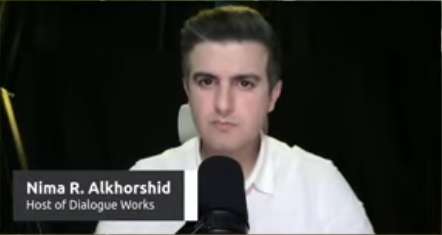
Nima R. Alkhorshid
DIALOGUE WORKS

 Nima chats with Profs.
Richard D. Wolff & Michael Hudson
| Traducir—Translate! | |
| Make fonts bigger>>> | Resize text-+= |
SummaryThe discussion between Richard Wolf, Michael Hudson, and the host centers on the escalating geopolitical tensions involving the United States, Iran, and broader global dynamics, highlighting the failure of U.S. military and economic strategies, the decline of Western power, and the shifting balance toward China and other emerging powers. The conversation begins with an analysis of the U.S. attempts to destabilize Iran economically and militarily, emphasizing the ineffectiveness and counterproductive outcomes of these efforts. The U.S. strategy of leveraging economic sanctions and military threats to coerce regime change in Iran is presented as failing, as Iran remains defiant and capable of retaliating with missile capabilities that threaten U.S. and Israeli interests in the Middle East.The dialogue then expands into the broader implications of U.S. foreign policy, highlighting illegal actions such as the killing of civilian fishermen in Latin American waters and the violation of international law. This behavior is framed as symptomatic of a desperate and declining American empire, unwilling or unable to abide by established international norms. Domestically, the discussion points to rising civil unrest in the U.S., including general strikes and political instability, fueled by dissatisfaction with the Trump administration’s aggressive policies and disregard for democratic processes.Europe’s predicament is also explored, depicting it as a fading power caught between the dominant forces of the U.S. and China. Europe faces enormous challenges, including the need to militarize, invest heavily in modern technology, and cut social welfare programs, driven by the geopolitical pressure to align against Russia and China. The conversation critiques Europe’s reliance on fear-mongering about Russia to justify these sacrifices, suggesting this is a desperate attempt to preserve relevance and autonomy.The participants also delve into the economic consequences of these geopolitical struggles, discussing the collapse of manufacturing jobs in the U.S. and the failure of tariffs to reshore industry or weaken China’s economic growth. The U.S. energy policy, particularly under Trump, is criticized for hindering technological advancement and industrial growth by rejecting renewable energy sources, which undermines the country’s long-term economic and military strength.Overall, the discussion paints a picture of a world at a critical juncture, where declining Western powers cling to outdated and aggressive policies, risking global conflict and economic collapse, while emerging powers like China advance through technological innovation and adherence to international trade norms. The conversation ends on a somber note, warning that if these trends continue unchecked, the world may face another catastrophic war, signaling the end of the current international order and the urgent need for new frameworks of cooperation and law.Highlights
Key Insights
ConclusionThis in-depth analysis reveals a world at a crossroads where aggressive, outdated policies from a declining Western order confront technologically advanced and economically resilient emerging powers. The U.S.’s reliance on military coercion, economic sanctions, and disregard for international law undermine global stability and domestic cohesion. Europe’s struggle to maintain sovereignty amid geopolitical pressures compounds the crisis. Without a fundamental reevaluation of strategies and a recommitment to international law and cooperation, the risk of global conflict and systemic collapse looms large. The shift toward a multipolar world dominated by China and other emerging powers appears inevitable, demanding new frameworks for peaceful coexistence and shared prosperity. |
 SPECIAL FEATURE:
Amb. Chas Freeman: Negotiations… or the Brink of All-Out War?

Summary
The video features an in-depth conversation with Ambassador Chas Freeman, focusing on the complex geopolitical dynamics surrounding Iran, the United States, Israel, and the broader West Asia region as of early 2026. The discussion begins with reflections on the late Graham Fuller, a former CIA officer turned ethical analyst who was concerned about the future of West Asia. Ambassador Freeman critiques the erratic and unfocused policies of the Trump administration towards Iran, highlighting the lack of a coherent strategy and the counterproductive nature of military posturing alongside diplomatic negotiations, especially those involving Jared Kushner and Steve Wolff.
Freeman argues that the U.S. approach—centered around regime change, sanctions, and military threats—is unlikely to succeed and only serves Israeli interests, which aim to secure regional hegemony by neutralizing Iran. The talks in Oman are viewed with skepticism due to unrealistic American demands, such as Iran’s complete disarmament and halting uranium enrichment, which Iran sees as existentially non-negotiable.
The ambassador further explains the regional dynamics, noting that Gulf Arab states and Turkey, despite ideological differences, share a vested interest in avoiding war due to the catastrophic consequences it would bring to the region. He also explores the complex relationships between Iran, Russia, and China, emphasizing that while these countries offer some support to Iran, they are not committed allies ready to intervene militarily.
The conversation touches on broader international issues, like the ongoing Ukraine war, European disunity, and the declining influence of the U.S. in West Asia. Freeman highlights the weakening of American interests in the region, which now primarily revolve around freedom of navigation and supporting Israel due to domestic political pressures. The ambassador critiques the Western media’s manipulation of narratives around issues like the Epstein files and pipeline sabotage to deflect criticism from Israel by blaming Russia.
Ultimately, Freeman paints a bleak picture of the current state of affairs—an absence of meaningful U.S. policy toward Iran, internal Iranian unrest, regional tensions, and a global power struggle involving China and Russia—all contributing to a dangerous stalemate. He doubts any positive outcome from ongoing negotiations and warns that any military confrontation would strengthen the Iranian regime rather than weaken it. The discussion closes on a note of uncertainty, reflecting the precarious state of international diplomacy and the urgent need for realistic, informed policies.Highlights
[01:00] 🕊️ Ambassador Freeman reflects on the legacy of Graham Fuller, a CIA officer turned ethical analyst concerned about West Asia’s future.
[05:30] ⚔️ Critique of Trump administration’s chaotic Iran policy, highlighting military posturing without clear strategy.
[08:00] 🇮🇷 Iran will not accept demands to end uranium enrichment or dismantle its missile program—core to its national defense.
[12:30] 🚢 Discussion of the U.S. naval armada near Oman and its symbolic but ineffective role in pressuring Iran.
[24:00] 🌍 Regional powers like Turkey and Gulf Arabs unite against war despite political and ideological differences.
[30:00] 🤝 Iran’s partnerships with Russia and China are strategic but do not guarantee military support.
[38:00] 📰 Western media manipulations, including shifting blame from Israel to Russia on sensitive geopolitical incidents.Key Insights
[02:00] 🧠 Ethical Intelligence Work vs. Policy Realities: Graham Fuller’s refusal to engage in covert operations that compromise personal conscience illustrates a tension within intelligence communities between ethical considerations and national security objectives. This contrast helps explain some of the moral complexities behind U.S. foreign policy decisions in West Asia.
[06:00] 🔄 Lack of Coherent U.S. Iran Policy: The Trump administration’s approach is marked by inconsistency and lack of credible strategy, with decisions driven more by political posturing and internal distractions than by clear foreign policy objectives. This absence of a unified approach undermines diplomatic efforts and inflames regional tensions.
[08:30] 🛡️ Iran’s Non-Negotiable Security Interests: Iran’s refusal to halt uranium enrichment or disarm missile capabilities stems from a profound sense of vulnerability and historical context. These are seen not merely as military assets but as essential deterrents ensuring national survival amidst hostile neighbors and foreign threats.
[12:00] 🎭 The Illusion of Negotiations: The talks in Oman involving Jared Kushner and others are widely perceived as insincere or tactical distractions, given the American side’s unrealistic demands and the track record of failures by these negotiators in other conflict zones like Gaza and Ukraine. This diminishes trust and prospects for genuine conflict resolution.
[25:00] 🌐 Regional Realpolitik and Anti-War Coalition: Despite deep political and sectarian divides, Gulf Arab states and Turkey are aligned in their desire to avoid war with Iran, recognizing the devastating regional consequences. This pragmatic coalition underscores the complexity of Middle Eastern geopolitics where survival often mandates cooperation beyond ideological lines.
[31:00] ⚖️ Complex Sino-Russian-Iranian Relations: While Russia and China support Iran to varying degrees, their priorities differ significantly. Russia offers military support and benefits from Iranian drone technology, whereas China balances relations by supplying both Russia and Ukraine with military technology, revealing a nuanced, interest-based engagement rather than ideological alignment.
[38:30] 🔍 Media Manipulation and Geopolitical Narratives: The concerted effort by Western media to blame Russia for various destabilizing events, including pipeline sabotage and the Epstein scandal, aims to obscure Israel’s role and influence in international affairs. This narrative shaping highlights how information warfare is integral to modern geopolitical conflicts.
[50:00] 🇺🇸 Diminished U.S. Interests and Overreliance on Israel: The U.S. has retreated from its traditional role as a stabilizer in West Asia, shifting focus to narrow interests like freedom of navigation and supporting Israel due to domestic political pressures. This shift alienates regional partners and complicates conflict resolution.
[54:00] 📉 Domestic Political Turmoil Driving Foreign Policy: President Trump’s foreign policy decisions, particularly regarding Iran, are heavily influenced by his personal desire to project power amid declining domestic popularity, rather than by objective strategic calculations. This personalization of policy risks escalating conflicts without clear benefit.
[56:00] ⚠️ Perilous Stalemate and Uncertain Future: The cumulative effect of failed diplomacy, regional unrest, and great power rivalries suggests a dangerous deadlock. Without a coherent strategy or willingness to compromise, the risk of military conflict or prolonged instability in West Asia remains high.
Conclusion
The dialogue with Ambassador Chas Freeman offers a comprehensive and sobering analysis of the geopolitical quagmire involving Iran, the United States, Israel, and regional actors. It underscores the failures of U.S. policy, the resilience and strategic calculation of Iran, the cautious pragmatism of regional states, and the broader implications of shifting global powers. The conversation reveals that without thoughtful leadership, clear strategy, and genuine dialogue, the region’s prospects for peace and stability remain bleak, with potential repercussions that extend far beyond West Asia.
 BEFORE you leave, PLEASE pay attention to this alert.
[t4b-ticker id="1"]
Print this article [bws_pdfprint display=’print’]
 This work is licensed under a Creative Commons Attribution-NonCommercial 4.0 International License •
ALL CAPTIONS AND PULL QUOTES BY THE EDITORS NOT THE AUTHORS