

Streamed live on Jul 2, 2026
Precis
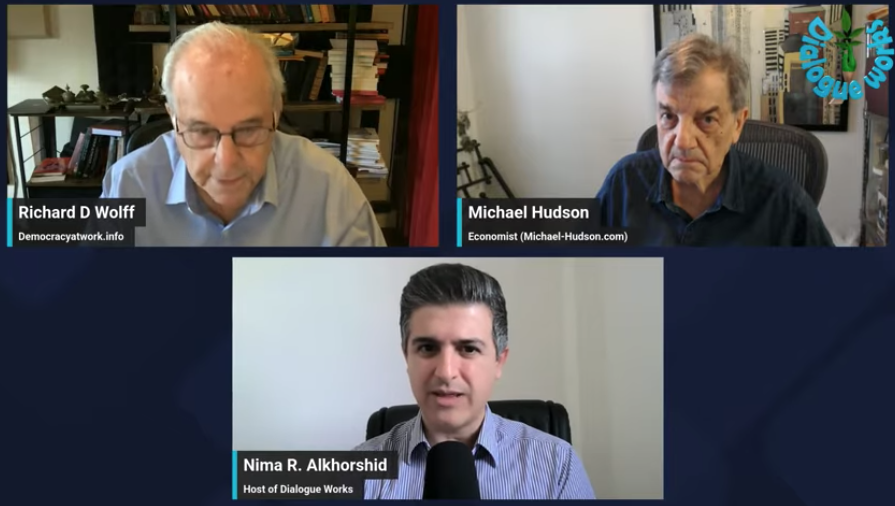
The video features a detailed discussion on the geopolitical dynamics surrounding the United States, Iran, and the broader Middle East, set against the backdrop of ongoing conflicts and negotiations. Richard Wolff and Michael Hudson analyze the implications of a Memorandum of Understanding (MOU) between the U.S. and Iran, suggesting it is less a genuine resolution and more a temporary ploy to stabilize the global oil economy amid escalating tensions.
The conversation highlights the United States’ desperate attempt to preserve the petrodollar system by controlling oil trade routes, notably the Strait of Hormuz. However, the regional reality reveals declining U.S. influence, with Gulf states seeking closer ties with China and Russia. The speakers propose a transformative, albeit imaginative, vision where China and Russia guarantee security in the Gulf, establish a Palestinian state, and shift control over key strategic assets away from Western powers.
The panel emphasizes the erosion of U.S. trust, citing instances of extrajudicial killings of fishermen and illegal seizures of financial assets that contravene international law. This signals a broader collapse of established norms and Western colonial-style domination. The unfolding crisis parallels historical precedents, drawing comparisons to the pre-World War I colonial struggles and the eventual disintegration of imperial powers.
The speakers point out that the current geopolitical fragmentation and economic desperation, exemplified by U.S. attempts to control global trade routes and financial markets, mark the decline of the Western empire. They foresee increased instability in the Middle East, including potential civil wars in Lebanon and the Emirates, and a reconfiguration of global alliances, especially with countries like India siding with the U.S. while others gravitate toward the new powers, China and Russia.
The discussion culminates in a historical reflection on the nature of imperial decline, warning that unresolved colonial legacies and competitive ambitions may push the world toward broader conflict or force the creation of a new international order.
Highlights
- [03:00] 🛢️ The U.S. aims to use the MOU with Iran primarily to stabilize the global oil economy, not to solve underlying problems. [05:00] 🌏 A hypothetical solution envisions China and Russia guaranteeing security in the Gulf and creating a Palestinian state, shifting regional control. [10:00] ⚖️ The systematic extrajudicial killings of fishermen by the U.S. reveal disregard for international law and are seen as a form of state terror.
- [15:00] 💵 The U.S. enforces control over global oil trade to uphold the petrodollar but this is causing countries like Saudi Arabia and the UAE to seek alternatives.
- [26:00] 🌐 Gulf states are pivoting away from the U.S. toward China and Russia to escape American dominance and economic control.
- [39:30] 🔥 Saudi Arabia reportedly refused U.S. permission to use its airbases for an attack on Iran, highlighting declining U.S. influence.
- [44:00] ⚔️ The current situation resembles the buildup to World War I, with imperial powers edging closer to conflict amid collapsing colonial orders.
Key Insights
- [03:45] 🛢️ Temporary Stability Through MOU: The Memorandum of Understanding between the U.S. and Iran is less a peace agreement and more a tactical move to "refill" oil reserves amid supply disruptions, reflecting a temporary stabilization tactic rather than a lasting diplomatic solution. The U.S. aims to maintain its grip on the global oil economy, signaling that the underlying conflict remains unresolved, especially as Iranian trust in U.S. commitments has eroded due to ongoing military actions during negotiations.
- [06:00] 🌏 Rise of Sino-Russian Influence in the Gulf: Richard suggests that the real solution to the regional chaos might be the entrance of China and Russia as security guarantors and infrastructure developers, including a new Mediterranean port and Palestinian state, which would disrupt the current U.S.-led order. This vision indicates a potential multipolar shift in global governance, challenging Western dominance and colonial legacies in the Middle East.
- [10:15] ⚖️ Erosion of International Law Norms: U.S. extrajudicial killings of fishermen without due process reveal a broader trend of abandoning international legal norms, paralleling Israeli military actions in Gaza, which undermines global order and trust. This shift towards lawless state behavior raises questions about the future of international diplomacy and conflict resolution.
- [15:45] 💵 The Petrodollar’s Declining Hegemony: The U.S. insistence on pricing oil in dollars and controlling the financial assets of countries like Iran, Venezuela, and Russia underscores the petrodollar system’s centrality to America’s global financial hegemony. Yet, this aggressive control breeds resistance, leading key Gulf states to seek partnerships with China and Russia, threatening the sustainability of the dollar-centric order.
- [26:50] 🌐 Gulf States’ Strategic Realignment: Saudi Arabia’s pivot to China and refusal to allow U.S. military use of its bases for attacks on Iran signal a pragmatic rejection of the American security umbrella. This realignment indicates a critical erosion of U.S. influence in a region long dominated by Washington, with implications for U.S. military and economic strategy.
- [39:30] 🔥 Military and Economic Constraints Limit U.S. Actions Against Iran: The abortive U.S. attack on Iran reflects logistical and political limitations that hinder U.S. efforts to maintain dominance via military force. This failure underscores the limits of U.S. military power projection and the growing assertiveness of regional actors in contesting U.S. strategies.
- [43:45] ⚔️ Historical Parallel to Pre-World War I Colonial Rivalries: The geopolitical tensions over control of trade routes, resources, and alliances closely resemble colonial struggles and imperial jockeying before World War I. This comparison warns that ongoing global rivalry and unresolved imperial ambitions could escalate into wider conflicts unless new cooperative international frameworks are devised.
- [52:00] 📉 The Decline of Western Colonial Empire and Capitalism: The discussion frames the current chaos as part of the terminal decline of Western imperialism and capitalism, characterized by desperation among elites attempting to cling to lost power. This transition portends a period of instability, in which old structures collapse and new orders emerge, possibly driven by non-Western powers such as China, Russia, and Iran.
- [56:30] 🌍 Need for a New International Order: Both speakers emphasize the necessity for radically redesigned global governance that transcends outdated colonial frameworks, recognizing the new geopolitical realities. The inability of the U.S. and its allies to manage the Middle East effectively and peacefully obligates the world to look for alternative arrangements to establish sustainable peace and economic development.