

 ROGER BOYD
 PLUS
PLUS


Getting India Very Right and Very Wrong
| Traducir—Translate! | |
| Make fonts bigger>>> | Resize text-+= |
China Getting Real With Iran At Last?
Iran is the southwestern pivot of Central Asia, an Iran defeated and subjugated by the US and Israel opens up the underbelly of Russia, provides entrance into the “Stans”, delivers utter dominance of the Straits of Hormuz, and even a border with Pakistan. So much more than the West lost when it left Afghanistan. Such a subjugation and defeat would be a disaster for both Russia and China. The latter invested money in Iran, and buys Iranian oil, but it has not flexed its military and security service muscles to make Iran strong enough to deter US aggression.

Xi Jinping Meets with Supreme Leader Ali Khamenei of Iran
The 12-day war and the ability of Mossad and the CIA to so successfully get inside Iranian systems and Iranian institutions seems to have woken up China somewhat to the peril that Iran faces. Both Russia and China need to be to Iran what the West is to Ukraine; suppliers of financial resources, weaponry, secure systems and intelligence. Iran is more important to both Russia and China than Ukraine is to the West. As Navroop Singh surmises “Israeli Intelligence Breakthroughs in Iran Triggered a Chinese Strategic Pivot”. He goes on to state:
What initially appeared as an Iranian failure was reclassified by China as a regional destabilizer with direct consequences for Chinese strategic, economic, and logistical interests … This realization triggered a decisive expansion of Chinese technical cooperation with Iran, focused on sealing intelligence gaps rather than merely upgrading conventional defenses.
One of the most visible outcomes of this shift was Iran’s decision to transition fully to China’s BeiDou platform, abandoning reliance on U.S. and Western GPS networks … [and China] advising Iran to purge American- and Israeli-origin software from sensitive state and military systems and replace them with closed, Chinese-built architectures designed to frustrate both Mossad and the CIA.
In parallel, the start of a deeper military alliance with China which supplied the materials needed to rebuild Iran’s missile batteries while also “making its missile forces more resilient to electronic sabotage and pre-launch neutralization”. Iran has also requested China’s more advanced radar platforms.
China is fundamentally reassessing its relationship with Israel, seeing Israel as the Western tool being utilized to undermine BRINCISTAN that it is. China has banned new investment in Israel, and is removing all Israeli (and other Western) software from state offices, while also enforcing strict export regulations around the export of dual-use items to Israel.
China and Russia have also placed their military vessels in the region, which will obviously be sharing intelligence information with the Iranians while acting as somewhat of a deterrence. The ability to monitor US forces during any attack will also be invaluable to the Chinese military in developing counter measures and calibrating their weapons.
Another step would be to inform the US that any attack upon Iran would be immediately met with an absolute ban on the export of rare earths and other critical materials and components to the US and any other nation involved in the attack. China has the US by the proverbials and needs to squeeze now and again to remind the US to behave itself.
China has made itself invulnerable to US attack, it now needs to do the same for its Central Asian heartland.

Getting India Very Right and Very Wrong
There are times that I read an article that gets some things so very right, things that are not on the mainstream political discourse, but then unfortunately get other things so very wrong. The article “The Liquidation of India Ltd: Why the ‘World’s Largest Democracy’ is Actually a Lifeboat Operation” by Steven J. Newbury is a great example of this.
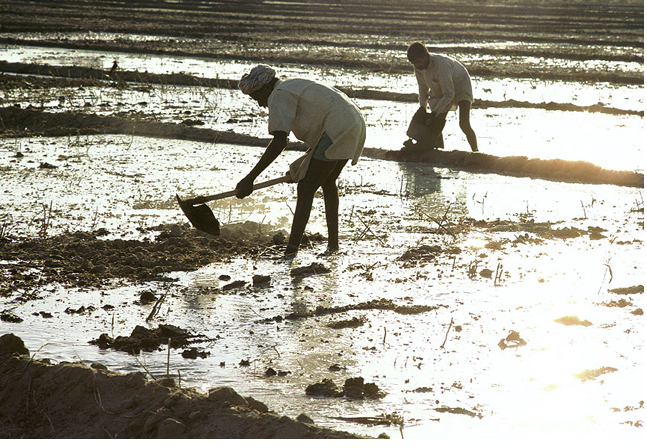
India is one of the most water-challenged countries in the world, from its deepest aquifers to its largest rivers. Groundwater levels are falling as farmers, new urban residents, and industries drain wells and aquifers. What water is available is often severely polluted, and the future may only be worse, with the national supply predicted to fall 50 percent below demand by 2030. (New Security Beat)
It starts from the excellent premise that India is in ecological overshoot while also being one of the nations that will be most affected by climate change. Also, that the Indian oligarchy and courtier class are the very same group that ruled India as vassals of the British Empire and are still of the type of extractive and rentier orientation that they were when they served their British masters. These are all excellent points but the author stumbles on a simplistic materialist causality, saying that “geopolitics is just the shadow cast by geology”. Then on thinking that the Indian oligarchy are so dominated by the West that they do not operate independently. If there is one thing that India has demonstrated over the post-independence years is that it DOES operate independently. That independence includes a close relationship with a Russia/Soviet Union that provided both diplomatic and naval support during the 1971 East Pakistan War; forestalling an intervention by the US. Over 60% of Indian military hardware is provided by Russia, and India has refused US attempts to have it move to a US-MIC centric military. Again and again the US has tried to bring India within its anti-China and anti-Russia alliances and India has skillfully managed to stay on the fence, acting as an independent player.
It is in this context that India decided to purchase discounted Russian oil after the start of the Russo-Ukraine proxy war, from both profit-seeking and long-term relationship bases. Yet another error made is to view India’s recent agreement with the US, with many details somewhat vague and subject to lengthy negotiations and ratification, as anything more than India’s usual deft diplomatic slipperiness. The US gambit on Venezuelan oil has been greatly over-estimated by many commentators. The reality is that much of Venezuela’s oil industry has been destroyed by years of low maintenance and sabotage, and there is little enthusiasm by the fossil fuel corporations to spend the arduous and costly years fixing the oil producing infrastructure in the face of what may be a very hostile population; as Trump himself found at his Whitehouse meeting with oil executives. Venezuela is currently capable of producing up to one million barrels per day of oil, with any increase requiring years and years of expensive investment. India understands this and has committed at best to slowly move away from Russian oil imports as Venezuelan oil becomes available. Part of its strategy is also a waiting game to see if the US Supreme Court rules against Trump’s across-the-board tariffs. If it does, then we can expect many countries such as India to perform a very rapid volte face with resect to any recent trade agreements with the US. China has already stopped buying Venezuelan oil as it is now being sold at market prices rather than at a big discount.
The Indian oligarchy, now using Hindu nationalism as its tool of social domination while it extracts more and more riches from a still very poor population (at PPP GDP per capita of about US$13,000 with extreme inequalities in wealth and income), is not a vassal of any other country. It is an utterly selfish and extractive one, working for its own short-sighted interests. As Newbury notes, the upcoming electoral changes will reflect higher population growth in the north and lead to a transfer of seats into the Hindu heartland; benefitting the BJP. This will enhance the power of the Hindutva political movement behind which the oligarchs can continue with their exploitation of the Indian population and of the country’s other resources.
It is the actions of this oligarchy over decades that has limited the industrial development of the country, with its manufacturing base lagging far behind nations such as China, Vietnam and even Bangladesh. It has practised the mixture of high import tariffs and other import restrictive actions combined with a monopolistic, corrupt, and rent seeking oligarchy. What exactly is in the India-US trade deal?
US tariffs on Indian goods fall from 50% to 18% (there had already been exclusions for such things as pharmaceutical inputs) immediately.
India will reduce tariffs on select US imports from March onwards, notice the vagueness of this. These reductions will have to go through a formal time-consuming process to be implemented.
It is understood that an agreement will likely be signed by mid-March, after which the process of authorizing the reduction on tariffs on US goods can begin.
India has clarified that it will not be investing in the US, contrary to the Trump “US$500 billion” statement. India has agreed to buy US$500 billion in US goods over five years, in 2025 India imported US$720 billion of US goods so this is not that much of a stretch. It is also over a long timeframe which goes beyond the US mid-terms and the next presidential election.
India is also considering a large purchase of Boeing aircraft and parts etc., but this could easily be stretched out over many years, and changes in US administrations.
India has ABSOLUTELY NOT agreed to lower tariffs on US goods to zero, nor agreed to stop purchasing Russian oil.
India has expertly given Trump the “victory” that he needed to back out of the ridiculously high tariffs on India that were having the effect of driving India closer to China and Russia. It has also placed large amounts of delays and the ability to drag its feet while the US Supreme Court rules, then the mid-terms take place, then the next presidential election. This is a classic Indian approach, providing Trump with a “victory” to hide TACO while also gaining time to wait for the Supreme Court ruling and a possible change in the balance of political power within the US.
India is the world’s largest extractor of groundwater, and that water is rapidly diminishing due to a rate of use far above the natural replenishment rate; 60% of India’s agriculture depends upon groundwater. Its use is highly concentrated within the bread basket states of Punjab, Haryana, and Rajasthan in the north east. Ground water use is concentrated among India’s masses of smaller farmers, with half a billion of the population dependent upon groundwater. From this article:
In 2000, water could be found at 30–35 meters (about 110 feet) in much of Punjab; now it’s down to 140 meters (450+ feet). If this trajectory continues, projections suggest groundwater may drop to 300+ meters by 2039, rendering large swathes of Punjab barren. The story is similar in Rajasthan and Haryana, and in parts of southern India where tube wells have to chase the water table ever deeper each year … Farmers are forced to cut back on watering or planting as water tables fall. Research in Science warns that, at current depletion rates, India’s farmers may lose the ability to plant nearly one-fifth of their crops nationwide
The article also notes the impact of climate change:
The crisis is compounded by climate change, which acts as a threat multiplier. Rainfall patterns are becoming erratic, monsoons shorter and drier in many regions, pushing farmers to irrigate more from wells when rains fail. A recent study noted that monsoon rains in north India have declined ~8.5% since the 1950s, while winters have warmed significantly – meaning crops need more water even as less rain arrives.
Less precipitation and higher temperatures will only increase the rate of groundwater extraction.
It’s a vicious cycle: drier monsoons and hotter temperatures drive more groundwater use, lowering water tables and worsening drought impacts. The warming climate is baking our soil dry, demanding more irrigation to maintain yields.
The response of the government has been quite limited, while also keeping other policies that support groundwater extraction in place; such as the free electricity provided to farmers to extract groundwater and the subsidization of water-guzzling crops. There are many things that could be done to reduce the level of groundwater extraction, such as drip irrigation and a move toward less water-intensive crops. India is also launching a vast engineering project, the US$168 billion National River Linking Project to transfer about 200 billion cubic metres of water per year (China’s South to North Water Diversion project will only transfer 30 bcm/yr) to the arid areas, as well as feeding many hydro-electric dams.
Such a project is a profit dream to the Indian oligarchy, which has already mightily profited from previous state-financed infrastructure projects. Very large amounts of corruption, cost escalation and delays can be expected, as already seems to be the case; “Beset by delays, construction of the first 221-kilometer link—the Ken-Betwa connection—is expected to take at least six years”. The whole project is also based in the ecological realities and science of the 1980s, and may have many unintended consequences while not meeting its goals. For example:
Scientists and water policy experts, however, have doubts about the scheme’s scientific footing. They worry that the government hasn’t adequately accounted for the potential unintended consequences of moving such a large amount of water. Case in point, new research suggests the river interlinking project threatens to affect India’s seasonal monsoon … the project could actually exacerbate water stress by causing the amount of rain falling in some dry regions to drop by up to 12 percent while increasing rainfall elsewhere.
The “initial assumption,” says Chauhan, “is that river basins are independent systems and output from one … can be used to feed the other.” But they exist as parts of a hydrological system. “Changes in one can lead to changes in another,” he adds. To further complicate the project’s value, research shows that rainfall is decreasing over Indian river basins currently thought to contain a surplus of water.
The oligarchy is forcing this through with as little oversight as possible:
Thakkar is deeply concerned about the river-linking project—most notably its lack of transparency. Thakkar was part of a Supreme Court–appointed committee on river linking but says he was not allowed to review the hydrological data behind the plan’s logic of defining certain watersheds as surplus basins and others as sites with water deficits.
“[That data] is a state secret,” says Thakkar. “It has not been peer-reviewed in any credible way,” he adds. “We need to take democratic and informed decisions—that’s not happening.”
What India will most probably experience is a slow moving disaster, with the Indian oligarchy focused on “solutions” which provide for the greatest level of profiteering. While China next door, with its Party-state focused on the national good rather than profiteering is carrying out a myriad of policies and projects to mitigate the effects of climate change and to reduce the extraction of groundwater. Such is the case with India and China in so many areas. Geopolitics is not just geology, it is also geography and the nature of the state/society complex.
The Indian elites are not “betting on Dubai, London, and Singapore” as Newbury states, but rather continuing their extractive control of their own country. As China becomes even more of a dominant economic presence, fully integrated with ASEAN, Russia and Central Asia, the Indian oligarchy will pivot more toward it as a matter of necessity; and its military will continue to be armed by Russia. It has also signed a huge free trade deal with Europe, and there are moves for an FTA with the ASEAN nations (or perhaps an Indian entry into the RCEP). India is operating as an independent nation, balancing between competing powers and changing that balancing over time to reflect geopolitical realities.
 BEFORE you leave, PLEASE pay attention to this alert.
[t4b-ticker id="1"]
Print this article [bws_pdfprint display=’print’]
 This work is licensed under a Creative Commons Attribution-NonCommercial 4.0 International License •
ALL CAPTIONS AND PULL QUOTES BY THE EDITORS NOT THE AUTHORS
