
[su_spoiler title=”Please make sure these dispatches reach as many readers as possible. Share with kin, friends and workmates and ask them to do likewise. ” open=”yes” style=”fancy” icon=”arrow-circle-1″]

 Nima R. Alkhorshid
DIALOGUE WORKS
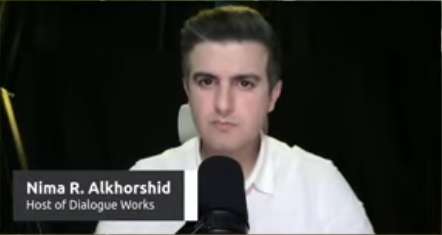
Nima chats with Prof. M. Marandi
| Traducir—Translate! | [gtranslate] |
| Make fonts bigger>>> | [wpavefrsz-resizer] |
Mohammad Marandi: Tehran Under FIRE & Israel Faces OBLITERATION

Streamed live on Mar 3, 2026
Summary
The discussion between the host and Professor Marandi centers on the ongoing conflict between Iran and the United States, with a focus on recent military confrontations, political dynamics, and regional implications as of March 2026. Professor Marandi critiques U.S. President Donald Trump’s aggressive rhetoric and military actions against Iran, highlighting how Trump’s calls for unconditional surrender and claims of destroying Iran’s military capabilities were proven false. Despite heavy bombardment and targeted assassinations, including the killing of key Iranian figures and civilians, Iran’s military remains resilient, united, and capable of defending itself effectively.
The professor emphasizes that Western powers, particularly the U.S. and Israel, have consistently misjudged Iran due to racist and orientalist assumptions, expecting Iran to collapse for decades, which has not happened. Iran’s sophisticated integrated defense system, combining Russian, Chinese, and indigenous technology, has successfully repelled drone and missile attacks. The bombing of civilian infrastructure such as hospitals and schools by the U.S. and Israeli forces is condemned as war crimes, with Western media largely ignoring these atrocities.
Iran’s regional alliances with groups like Hezbollah, the Houthis, and Iraqi militias have strengthened the country’s strategic position, and these allies are actively engaged in the conflict. Iran is also exerting control over critical economic chokepoints like the Strait of Hormuz, disrupting oil shipments and pushing global energy prices higher, which increases pressure on the U.S. administration.
Professor Marandi predicts a prolonged war of attrition, with Iran prepared for months of conflict while the U.S. struggles with internal economic and political issues. He foresees a strategic defeat for the U.S. and its Israeli ally, with long-term geopolitical shifts in the Middle East. Arab Gulf states, heavily reliant on U.S. military support, are increasingly vulnerable and may face demands from Iran for reparations once the conflict ends. Growing dissatisfaction and unrest in some Arab countries, like Bahrain, reflect broader regional instability fueled by proxy dynamics and authoritarian governance.
The professor also discusses the leadership vacuum in Iran following the martyrdom of a key leader, explaining the constitutional process for appointing a new leader under heightened security conditions. He stresses the moral and ideological strength of Iran’s leadership and people, contrasting it with the brutality and arrogance of the U.S. and Israeli regimes. Finally, the conversation touches on the potential escalation against Israel and other U.S. allies, warning that Iran controls the conflict’s pace and can intensify its military response if provoked.
Highlights
- [01:00] 🇮🇷 Trump’s claims of destroying Iran’s military capabilities are debunked by Iran’s resilience.
- [04:30] 🕊️ Massive Iranian public gatherings mourn the martyrdom of leaders and reject Western narratives.
- [09:30] 💥 U.S. and Israeli bombings target civilian infrastructure, including hospitals and schools, ignored by Western media.
- [14:00] 🚀 Iran’s integrated air defense system (Russian, Chinese, indigenous) effectively counters drone and missile attacks.
- [19:30] ⛽ Iran’s control of the Strait of Hormuz disrupts global oil flow, raising energy prices and pressuring the U.S.
- [22:00] 🤝 Stronger regional alliances with Hezbollah, Houthis, and Iraqi militias bolster Iran’s strategic position.
- [27:30] ⚔️ Iran prepared for a long war of attrition, with U.S. military overstretched and politically divided.
Key Insights
-
[01:15] ⚔️ Trump’s rhetoric vs. battlefield reality: Trump’s loud demands for Iran’s unconditional surrender and boasts about eliminating Iranian leadership failed to materialize in reality. Instead, Iran effectively resisted and even inflicted setbacks on Israeli forces, highlighting the disconnect between U.S. political bravado and military outcomes. This underscores the danger of underestimating Iran’s military and political resolve.
-
[04:45] 🌍 Western misconceptions rooted in orientalism: The West’s persistent narrative over four decades that Iran is unstable, unpopular, and on the verge of collapse is deeply rooted in racist and orientalist biases. These assumptions have blinded policymakers to Iran’s complex society, ideological cohesion, and national resilience, leading to repeated strategic miscalculations. The continuity of these failed narratives demonstrates a systemic failure to understand Iran’s sociopolitical fabric.
-
[09:50] 💣 Targeting civilians as a strategy of desperation: The deliberate bombing of hospitals, schools, and media infrastructure represents a brutal tactic aimed at breaking Iranian morale and social cohesion. This strategy backfires by unifying the population and galvanizing support for the regime. The Western media’s silence on these war crimes reveals a double standard that fuels anti-Western sentiment and undermines the credibility of international humanitarian norms.
-
[14:15] 🛡️ Integrated and resilient air defenses: Iran’s multi-layered air defense system, combining Russian S-300 systems, Chinese technology, and domestic innovations, creates a robust shield against U.S. and Israeli aerial assaults. The system’s success in downing drones and jets demonstrates Iran’s technological sophistication and adaptability, which challenges Western claims of overwhelming military superiority. This integrated defense also complicates enemy targeting strategies and reduces the effectiveness of air strikes.
-
[19:15] 🛢️ Strategic leverage through the Strait of Hormuz: Iran’s control and partial closure of the Strait of Hormuz, a critical global oil transit point, exerts significant economic pressure on the U.S. and its allies by driving up global oil and gas prices. This economic dimension of the conflict highlights Iran’s ability to influence global markets and underscores the interconnectedness of military and economic warfare. It also signals Iran’s willingness to escalate beyond purely military means to achieve strategic objectives.
-
[22:30] 🤜🤛 Regional proxy alliances strengthen Iran’s position: Iran’s alliances with Hezbollah, the Houthis, and Iraqi militias create a multi-front resistance network that complicates U.S. and Israeli military efforts. These groups not only provide tactical support but also symbolize a broader ideological and political coalition opposing Western and Israeli influence. Their active participation indicates a regionalization of the conflict, making it harder for the U.S. to isolate Iran or achieve quick victory.
-
[26:45] 🕰️ War of attrition favors Iran: Iran’s preparedness for a prolonged conflict, with stockpiled weapons and underground infrastructure, contrasts sharply with U.S. expectations for a short, decisive campaign. The U.S.’s political divisions and economic pressures at home weaken its ability to sustain long-term military engagement. Iran’s strategy of gradual escalation and targeted strikes on U.S. assets and proxies is designed to wear down enemy resolve, suggesting that the conflict could reshape regional and global power balances over months or years.
-
[30:00] 🔄 Changing regional dynamics and unstable Gulf regimes: The vulnerability of Gulf allied regimes, exposed by their reliance on U.S. military support and proximity to Iranian power, fuels internal dissent and popular uprisings, as seen in Bahrain. These regimes’ complicity in Western-led aggression against Iran undermines their legitimacy domestically and raises questions about their long-term survival. Post-conflict, Iran may demand reparations, further shifting the regional order and challenging the U.S.-backed status quo.
-
[39:30] 🎯 Iran’s control over escalation and strategic targeting: Iran’s military and intelligence superiority allow it to dictate the pace and intensity of conflict escalation, including attacks on Israeli territory and U.S. bases throughout the Persian Gulf. This control frustrates U.S. and Israeli efforts to contain the conflict and signals that Iran can expand or contract military operations as it sees fit. Such capability enhances Iran’s deterrence posture and complicates enemy strategic planning.
-
[47:00] 👥 Leadership continuity amid crisis: Despite the assassination of key leaders, Iran’s constitutional mechanisms and security protocols ensure leadership continuity and stability. The council of judiciary, president, and guardian council temporarily manage leadership functions while a new supreme leader is selected confidentially. This institutional resilience underpins Iran’s ability to maintain governance and military coordination during wartime, countering narratives of chaos or collapse.
-
[53:00] ✊ Ideological and moral underpinning of Iranian resistance: The professor highlights that Iran’s strength lies not only in its military capabilities but also in its ideological commitment to justice, resistance against oppression, and moral principles. This ideological cohesion fosters popular legitimacy and national unity, enabling Iran to withstand external pressures and sustain a long-term conflict. It also differentiates Iran’s resistance from purely geopolitical or material calculations, making the conflict more intractable for adversaries.
Conclusion
The conversation presents a comprehensive overview of the multi-dimensional conflict between Iran and the U.S.-led coalition, revealing Iran’s military resilience, sophisticated defense capabilities, and strong regional alliances. It highlights the miscalculations of Western powers rooted in orientalist assumptions and the brutal tactics employed by the U.S. and Israel against civilian targets. The conflict is framed as a long-term existential war for Iran, with a significant potential to reshape Middle Eastern geopolitics and global energy markets. The discussion underscores the importance of understanding Iran beyond Western media narratives and anticipates a strategic defeat for the U.S. and its allies unless they reassess their approach.
 BEFORE you leave, PLEASE pay attention to this alert.
[t4b-ticker id=”1″]
[/su_spoiler]
Print this article [bws_pdfprint display=’print’]
[su_note note_color=”#f1efef” radius=”0″]The views expressed herein are solely those of the author and may or may not reflect those of The Greanville Post, although, if we publish them, we obviously find them noteworthy and valuable. [/su_note]
 This work is licensed under a Creative Commons Attribution-NonCommercial 4.0 International License •
ALL CAPTIONS AND PULL QUOTES BY THE EDITORS NOT THE AUTHORS


1 comment
Do you want the Truth? Can you handle the Truth?
https://www.youtube.com/watch?v=Nsd2E2BRnAA
For DECADES Iran had always been negotiating honestly in good faith, ALWAYS adhering conscientiously to signed agreements eg the JCPOA.
The United Snakes of America always “negotiated” deceitfully in BAD faith, speaking with their forked tongues, NEVER adhering to agreements and indeed using their pretence of sham negotiations to launch sneaky, perfidious attacks to inflict mass murder on Iran.
Those are the FACTS, anybody who believes any different is STUPID, STUPID, STUPID (or maybe pure evil).
https://www.youtube.com/watch?v=u6kScwcLGGM
Only two outcomes are now possible:
the YankeeZioNazis must ALL get the fuck out of West Asia and Palestine must be returned to the Palestinians,
OR there will be nuclear war (initiated by Israel but ended by retaliation from Iran, Russia and China) which may go global and cause human extinction.
In the interim, there will be global economic collapse.
Iran will NEVER submit to the Epstein class pedophiles, rapists and cannibals.
The YankeeZioNazi Epstein perverts are, beyond any shadow of doubt, the criminal psychopathic culprits to blame for all this trouble.
100%
Nothing can be clearer.