
By Godfree Roberts
 HERE COMES CHINA
A Bulletin of Information and Discussion on China's Transformations
As regular readers know, China is advancing—rapidly and simultaneously—on almost every technological frontier and has already surpassed the United States in Medical Science1, a backwater in America where funding, careers and fortunes go to develop pharmaceutical palliatives—while life expectancy continues falling. Ferocious media attacks on surgical/innovative trials failures, plus 1000-page trials applications leave the field open to Chinese scientists. Jacob Stern, an American medical scientist (PhD in protein design) is just back from a trip with VC Sid Sijbrandij. A few excerpts to tempt you to read his entire report:
Last August, Sid Sijbrandij and I traveled to Beijing for an experimental scan to look at a biomarker that’s specifically upregulated in his cancer.2 At that time, the only place we could do this was in China, using a molecule developed by Yang Zhi (杨志)’s group at Beijing Cancer Hospital. So that’s where we went. We were stunned. The whole experience — from international patient check-in, to preparation of the radio tracer, to injection, to imaging, to discussing the result with the physician, to leaving with a glossy printout of the whole-body scan — took two hours. Even in Germany, where clinics are experienced in using developmental tracers, this process would take most of a day. Beijing broadly and the hospital specifically were surprisingly straightforward to navigate for foreigners such as us who speak no Chinese.
The “investigator-initiated trial” (IIT) is an important fundamental concept to understand. Through IITs, individual physicians at major hospitals in China can propose and run studies for cell and gene therapies under the oversight of local scientific and ethics committees. There’s no need to clear a single, centralized national gate before enrolling patients. Compare that to the United States, where early trials are usually company-driven and require formal approval from a national regulatory body (like an IND filing with the FDA) before anything can begin. The tradeoff is pretty straightforward: the US system emphasizes uniform standards and upfront rigor, while China’s IIT model pushes decision-making closer to the doctor and the patient, making it easier to start trials quickly and iterate as data comes in.
Based on what I heard on the ground, it takes about 6 months to go from a first conversation between a doctor and a patient to that patient getting dosed, and people noted that exciting programs with support from senior investigators can go even faster. This means new therapies can get to patients faster, and companies and physicians start learning from and improving the underlying therapies earlier in their development.
On my trip, I was repeatedly quoted a timeline of 18 months from a company having an idea for a therapy to testing it in a patient. My lived experience from my week on the ground backs up this speed. I experienced a sense of urgency at every level. Not just from start-up companies themselves, but also the ecosystem of third-party vendors that perform services for these companies.
During a visit with a CDMO focused on cell therapy manufacturing in Suzhou, I asked the business development rep giving the presentation about the company’s experience with non-viral gene editing. He picked up his phone. As we were preparing to leave 10 minutes later, the principal scientist responsible for the non-viral editing platform caught us by the door. He answered my questions, and we figured out the next steps to evaluate the suitability of their platform for the non-viral editing approach our collaborator is using.
It is ironic to me that the ‘marketplace of reputation’ that seems to govern China’s IIT ecosystem is more market-oriented than the regulatory apparatus we use to govern early-stage trials in the US. Every system has its strengths and drawbacks, China’s included. The parts I saw up close show how the Chinese ecosystem is leaning into its strengths — velocity of science and engineering, urgency, close-knit relationships within the ecosystem, compassion for patients. I’m hopeful that, as a country, we can reflect on and actively lean into our strengths as an ecosystem too. For more, please visit sytse.com/cancer. Please write to us with thoughts or questions at cancer@sytse.com.—Thanks to Jacob Stern and ChinaTalk. From: Clinical Trial Abundance, Made in China. Flying to China for cancer care. APR 17. 2026. ChinaTalk.
How China does it
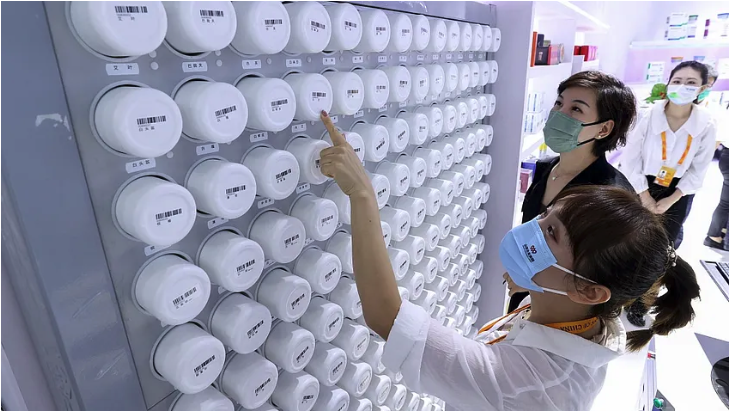
Chinese hospitals and medical centers are now in general far better equipped than American counterparts to treat patients efficiently and effectively.
Leon Liao’s perspective is so valuable that I’ve hoisted it from the comments: This American medical scientist’s experience in a Beijing hospital highlights more than just speed—it reveals the deeper institutional strengths of China’s healthcare system. China’s investigator-initiated trial (IIT) ecosystem operates with stronger reputation effects, physician-led decision-making, and local ethics/scientific oversight, making it in key ways more market-oriented than the current U.S. early-stage clinical trial system, which relies heavily on rigid top-down procedures.
The real advantage lies in China’s ability to deliver speed, cost predictability, and high technical credibility—simultaneously—which many Western systems struggle to provide. What was once dismissed as basic “medical tourism” has evolved in China into a sophisticated option, supported by integrated tertiary hospitals, fast diagnostic and treatment pathways, aggressive procurement, and high-throughput specialist environments.
China compresses timelines (e.g., an experimental biomarker scan in two hours or moving from trial idea to patient in 18 months) not through isolated miracles, but through tighter coordination among doctors, hospitals, CDMOs, and research platforms, combined with lower administrative friction and stronger system-level integration.Western healthcare’s core challenge is systemic: multi-payer fragmentation, administrative burdens, specialist shortages, and referral/approval bottlenecks turn speed itself into a scarce resource.
In contrast, China has chosen a different tradeoff—lower unit prices, higher physician intensity, and concentrated top-tier capabilities—in exchange for dramatically shorter waits.Formal regulatory review timelines can also be misleading. A 30-day FDA clock matters little if reaching the starting line already takes 12–18 months and millions of dollars in preparation. China’s faster hospitals are downstream of faster regulators and lower entry barriers for early clinical experimentation.
Caveat on sensitive areas
While system coordination explains many efficiency gains, domains like organ transplantation require extra scrutiny. Short wait times there raise legitimate questions about donor sourcing, transparency, and independent verification, even as China has increased official voluntary donations and built national allocation systems in recent years.In short, China’s edge is not merely cheaper care or more hospitals—it is a structural ability to reduce coordination costs and waiting times in complex medical processes, making it a rational choice for patients seeking timely, credible advanced care.
1 Most recent item in the newsletter: In 2010, China accounted for less than 8% of global clinical trials; by 2020,

The Synthesis Apr 22
The 60-day default approval at NMPA (deemed approved if no objection raised, post-2018 reform) is the operational expression of what you're describing. FDA's median IND review is 30 days, but the prep work behind that submission averages 12-18 months and seven figures. Speed at the hospital is downstream of speed at the regulator, and increasingly downstream of who is willing to bear the prep cost.
China as a System @leonliaoApr 22
Exactly. This is why formal review timelines can be misleading. A 30-day FDA clock tells you very little if getting to the starting line already takes 12–18 months and seven figures. At that point, the real gatekeeper is not the nominal review period. It is the prep burden.
That is also why China’s speed should be understood as a whole-system phenomenon. Faster hospitals are downstream of faster regulators, and faster regulators are downstream of a system that imposes lower entry friction on early clinical experimentation. The question is no longer just who reviews faster on paper. It is who has built a system in which fewer things have to be painfully assembled before innovation can even touch a patient.
Te Time Apr 18
They are also real good at finding organ donors. I think the wait time is two weeks.
Apr 18
The Chinese government crackdown started in 1994 because of the number of people who were going bankrupt from buying all those "holy texts". Then a Falun Gong genius staged an illegal protest in Tiananmen Square and the government decided to just shut the whole cult/scam down. Falun Gong is a business masquerading as a cult (like Scientology) derived from traditional Chinese spiritual and health beliefs (like western yoga) with restrictions on using modern medicine (like Jehovah's Witnesses).
It strictly educates and controls what its followers say and do, and is aim directly at taking down the Communist Party of China, so it happily profits from political arbitrage between China and the West. Falun Gong profits from Western fascination and ignorance of Chinese culture: their Shen Yun is billed as a spectacular Cirque du Soleil-style presentation of Chinese culture that the Communists [supposedly] destroyed.
In reality, it’s a Disneyfied caricature of Chinese culture to indoctrinate audiences about Falun Gong. Falun Gong runs a propaganda campaign that’s far more sophisticated than the Communist Party of China. (Maybe they have help from a foreign agency with long experience in that field?)
China as a System @leonliaoApr 18
That is a much more sensitive category, and I would be careful not to confuse speed with legitimacy. In some areas of healthcare, China’s advantage really does come from stronger system coordination, lower friction, and faster execution. But organ transplantation is different. If wait times are unusually short, the question is no longer just institutional efficiency. It is also about donor sourcing, transparency, and whether the process can be independently verified. In that domain, speed by itself is not a clean signal of system strength.
To be fair, China’s officially reported organ donation and transplant volumes have been rising in recent years. In 2024, the official figures reported 6,744 organ donations and 24,684 transplant surgeries. China has also built out a more complete institutional framework over the past decade. Since 2015, voluntary citizen donation has been designated as the only legal source of organs, with the reform presented as being aligned with WHO principles and still undergoing further refinement. That includes new regulations that took effect in 2024, as well as COTRS, the national organ allocation system.
At the level of system design alone, it is entirely plausible that a national allocation platform, a high concentration of major hospitals, a dense cluster of leading transplant centers, and tighter multidisciplinary integration inside large hospitals could shorten the organizational timeline at several points in the process: identifying donors, coordinating across hospitals, retrieving and transporting organs, and moving patients into surgery quickly.
But the American problem is not simply “too few donors.” It is also a system with extremely long waiting lists, complex allocation rules, difficult cross-regional coordination, and much higher compliance and transparency requirements. Both official U.S. data and the GAO have shown that around 2025, the number of people waiting for transplants in the United States was still above 100,000. So long waits in the U.S. do not automatically mean another country is “miraculously efficient.” In many cases, they also reflect the fact that the U.S. is a system with high transparency, dense rules, and heavy oversight — but also very high friction.