This is a truly world-civilizational war with no immediate end in sight, fought on many fronts. A fight to the death by the West against the Rest, for control of humanity.— Eric Arnow
Mark Wauck is a retired FBI agent who writes the Meaning In History Substack. Apparently Wauck is one more former security official who has finally realized what the US government actually represents. Wauck is also a husband, father, and incorrigible amateur.
Everything is connected in this war on the world, so let’s do some connecting. We start by recalling Trump’s disgusting display at the UN—threatening to nuke Iran.
Aaron Rupar @atrupar
Sep 22 Trump to the UN: “Do I annihilate the Islamic Republic, and do it quickly? Do I drive them into hell?”
That led to this exchange:
Warwick Powell | 鲍韶山 @baoshaoshan
Sep 23
This is the Liberal Rules Based International Order at its essence; American exceptionalism and violence has been the sine qua non of the LRBO. The slogan was ideological gaslighting, a con-job, a deceit and a western conceit.
Jostein Hauge @haugejostein
I say this with the utmost seriousness as a scholar of international political economy: the rules-based international order is dead.
At the UN General Assembly, Trump, in very casual language, talks about annihilating another country. The room stays quiet. No collective protest. No formal objection.
And this goes far beyond rhetoric.
The US *has* bombed Iran, in clear violation of international law.
The US *has* kidnapped Venezuela’s head of state and is in the process of looting the country’s natural resources, in clear violation of international law.
The US *has* tightened its blockade on Cuba, in clear violation of international law.
Then there is, of course, the genocide in Gaza, for which the US has provided unconditional support.
After World War II, the US was one of the primary architects of a system meant to encourage global cooperation. But the US has consistently broken that system’s rules to advance its imperial interests.
The system has therefore lost all its legitimacy.
Kathleen Tyson, reflecting on this, linked to another disgusting display:
Acyn @Acyn
18h
Scum clogging the US Congress. Par for the course in US politics.
[US Sen. John] Kennedy (Louisiana Republican): I think that the people running Iran are reptiles. And they’re part of a colony of reptiles. China, Russia, North Korea, and as I said, Iran. The chief reptile is President XI in China. You can’t trust any of them. All of them are the same. It’s like the same hooker in different dresses
In the aftermath of Trump’s despicable display, an embarrassment to all decent Americans, we saw a major upward surge of US Treasury bond rates. It’s almost as if the bond market, having hovered at crisis levels for weeks, took this in and delivered a vote of no confidence in the US regime by surging up to unsustainable levels.
The Kobeissi Letter @KobeissiLetter
3h
BREAKING: The US 30Y Note Yield rises to 5.44%, its highest level since June 2004.
We are nearing a +500 basis point gain from the 2020 low.
Where is the US Treasury?
And to pile on with some data points, to illustrate that the regime’s ability to manipulate markets is increasingly constrained:
The Kobeissi Letter @KobeissiLetter
41m
BREAKING: Brent crude oil prices rise above $105/barrel as peace talks between the US and Iran appear to have stalled again.
1h
BREAKING: Oracle stock, $ORCL, falls -5% after declaring “force majeure” on a massive data center being built in New Mexico.
Oracle has reportedly made the move in order to shield itself from rapidly rising expenses on the project.
Here’s the connection. Prof Pape made this comment in a long recent video—he connects the chatter about using tactical nukes on Pickaxe Mountain to the US bond market:
Chapter 13: Pickaxe Mountain & The October Surprise
Well, the problem here is there’s a real worst case to using tactical nuclear weapons, and that worst case starts with the fact we’re $40 trillion in debt, and we need people to buy our bonds.
The interest rate on the 30 year is, what, 5.3% this morning--something like that? Yesterday 10-year notes hit 5% for the first time in decades. So let’s say those jack up to 8% or 9%. It would kill the economy. The problem here is not that nobody will ever buy the bonds at any price. It’s that people are gonna be doggone mad at the United States, and if they take a hit in the value of their bonds, that’s... I’m just telling you, people are saying, “Oh, no, they’ll always buy our bonds, you know. They, they need us.” I’m telling you, this is too dangerous. We’re playing with fire, and we gotta understand the way the world is gonna think about that and what they’re really gonna think about America as pariah.
The other day I cited Trump’s most recent post aimed at Russia, in which he claimed that Russia had “lost control” of its diesel refinement capability. Now, the implication of that statement—probably aimed at the Russian public, was that Russia was being defeated—and so Trump called on Putin to do a ceasefire or something like that. My point was that this may well have been not an effort to prevent diesel prices in the US from rising, but instead another attempt to defeat Russia. It was a fairly open acknowledgement that this whole drone offensive was an Anglo-Zionist project—because anyone with an IQ above room temperature knows that the targeting intel and guidance comes directly via the CIA.
Today there’s a fair amount of coverage of another story that also illustrates that Trump is still all in with regard to the Anglo-Zionist war on Russia. It appears that the CIA may be plotting a false flag attack that could lead to a widespread war on the high seas—a potentially global expansion of the Anglo-Zionists’ current drone and missile offensive from their Ukraine launchpad.
Matt Bracken @Matt_Bracken48
2h
Posing this ship-to-shore drone warfare threat is an attempt by NATO to expand the current NATO-Russia war, currently using Ukraine as its kinetic missile launching pad.
If ship-to-shore “Russian” (false-flag) drone operations are given credibility, the NATO-Russia war can expand to allow NATO to attack Russian merchant ships anywhere. “They might be ready to launch more drones!”
We are swiftly moving to “unrestricted naval warfare.”
1. USN sub torpedoes the unarmed Iranian Dena frigate near Sri Lanka, killing ~100 crew.
2. Russian ship Ursa Major sunk in western Med, “still a mystery.”
3. British commandos seize Russian “ghost fleet” tanker and imprison the captain and officers.
i could list more examples, but my point is we’re very close to unrestricted warfare at sea.
Other examples: France and Norway have seized Russian vessels.
Example: If an LNG tanker in the middle of the ocean disappears in a fireball, satellites will see it, but nobody on earth will see or hear it. There will be no survivors and no witnesses, other than the submarine skipper via his periscope. So, whodunnit? False flag, or a “Russian” submarine attack?
Chay Bowes @BowesChay
CIA warns Spain, France, and Italy that Russia might launch Gerbera drones from containers in the Mediterranean.
No evidence, no proof, of course.
Just another round of anti-Russian hysteria.
There is speculation that CIA Ratcliffe’s mission to Moscow included some sort of warning of escalation unless Russia—for example—didn’t stop supporting Iran.
This war isn’t winding down—the people behind it will not allow that, no matter what. And, as a reminder, there was never any declaration of war. Congress is in recess.
Thanks for reading Meaning In History! Subscribe for free to receive new posts and support my work.
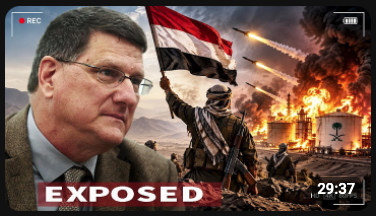
This video features a discussion between Nima Alkhorshid and Scott Ritter (recorded September 16, 2026), focusing on recent military developments in the Yemen conflict and broader geopolitical shifts involving the United States, Saudi Arabia, and Russia.
Key Military Developments in Yemen:
Downing of a Saudi F-15: The discussion opens with reports and footage of Ansarallahforces (Houthis) downing a Saudi F-15 aircraft in the Marib province (0:00:20 - 0:03:38). Scott Ritter emphasizes the increasing technological sophistication of Ansarallah, noting their improved air defense, drone, and ballistic missile capabilities (0:04:46 - 0:05:17).
Regional Control and Strategic Chokepoints: The conversation highlights Ansarallah's growing control over islands in the Red Sea, including Mayun (Perim) Island and the Hanish Islands, which impacts the security of the Bab al-Mandab strait (0:12:44 - 0:15:10).
Geopolitical Analysis:
The State of Saudi Arabia:Scott Ritter argues that Saudi Arabia is facing a precarious position, describing their military situation as "drowning" and suggesting that the relationship between Riyadh and the United States has significantly fractured (0:44:00 - 0:49:25).
Energy Crisis and Global Economy: The speakers discuss how these regional conflicts, combined with the depletion of the U.S. Strategic Petroleum Reserve, contribute to a global energy crisis that complicates Donald Trump's administration (0:15:15 - 0:19:00).
Ukraine Conflict: The second half of the video (starting around 0:58:20) shifts to the war in Ukraine. Ritter asserts that Russia is effectively winning the war of attrition, claiming that the Western support for Ukraine is failing and that the Ukrainian state is near collapse (1:12:55 - 1:14:00).
Criticism of Western Policy: Throughout the video, Ritter is highly critical of U.S. foreign policy, the FBI, and the mainstream media narratives regarding Russia and the Middle East, which he characterizes as disinformation (1:16:00 - 1:19:00).
Yemen Just Exposed Saudi Arabia’s Biggest Weakness | Scott Ritter
Houthis next to downed F-15 wreckage. Even the American press is forced to report it.
I saw this earlier but was waiting for confirmation. It appears to be true:
The Hormuz Letter @HormuzLetter
BREAKING: Yemen’s Houthis have shot down a Saudi Air Force F-15SA over Marib with a surface-to-air missile, with Houthi fighters pictured standing on the wreckage, and tail number 5529 visible. This is the first Saudi F-15 ever brought fully down by Houthi fire. The jet costs roughly $110 million.
Saudi Arabia lost its most advanced fighter jet to the Houthis. The F-15SA is a two-seater, meaning two crew are either dead or captured.
Here’s what an F-15-SA is. It’s not the same as US variants, but it’s still an advanced plane. And we know that at least one of the American variants was taken down by Iran:
The F-15SA (Saudi Advanced) is the initial Advanced Eagle variant for Royal Saudi Air Force and the baseline from which the F-15EX would be developed from. The F-15SA has the older AN/APG-63(V)3 radar, AN/ALQ-239 Digital Electronic Warfare System (DEWS), AN/AAR-57 Common Missile Warning System (CMWS), and AN/AAS-42 "Tiger Eyes" IRST mounted on the targeting pod pylon.
This is a real achievement—a first for Yemen. And we have video:
BREAKING: Iran struck a US-contracted oil tanker with US troops on board around the Strait of Hormuz earlier this week, using 4 drones and at least 1 missile, with one projectile directly hitting the tanker and causing injuries including smoke inhalation, per two sources to Fox News.
This is the first hit on an oil tanker carrying US troops since WW2, and one of the first times the US confirms US troops are onboard oil tankers. The US adds injured troops are being treated in a Gulf country.
Yemen continues its attacks on Saudi infrastructure:
The Hormuz Letter @HormuzLetter
2h
BREAKING: Yemen’s Houthis announce they struck Saudi Aramco oil facilities in Yanbu with “dozens of ballistic missiles and drones,” with precise and direct hits causing “massive fires and widespread destruction,” the first time the Houthis have taken responsibility for the fire at the YASREF oil refinery in Yanbu yesterday, per spokesman Yahya Saree.
And the US is getting jittery about diesel supplies:
The Hormuz Letter @HormuzLetter
3h
BREAKING: The US is considering a ban on US diesel exports, with Senate Majority Leader John Thune telling reporters that “if we have the supply in this country and we’re exporting it right now that might be one way of getting at it.”
The US is the world’s largest diesel exporter, at around 1.7 million barrels per day, mostly to Latin America and Europe, and Russia, the second largest, has already halted exports. A US ban would take the last large diesel exporter off a market where diesel in Germany has already reached €2.80 a liter this morning.
But Trump is saying that the war (and presumably the energy crisis) will end “immediately” a month and a half from now. Or maybe a bit later. If that’s the case, why are we contemplating a ban on diesel exports? Huh.
Thanks for reading Meaning In History! Subscribe for free to receive new posts and support my work.
As expected, Iran is not about to allow a face saving TACO. They will force Trump to either escalate into deepening disaster or accept total humiliation. Also, I’ve obtained a summary of the WSJ report on Trump’s contemplated victory declaration—Trump’s deliberations are real and portray an administration in disarray.
First, here’s an even briefer summary. As you’ll see later, what is presented as a “plan” isn’t really that. It’s a delusional “option” that’s being contemplated, debated, wished for, whatever.
The Hormuz Letter @HormuzLetter
1h
BREAKING: The Trump administration is now planning to resume the Iran war with full force after the November midterm elections, with Trump having a window from November 3rd through January to significantly escalate the war, until the newly elected members take office in the Senate and House, per Reuters.
Meanwhile, top Trump aides are pushing him to formally declare the Iran war over and keep it from escalating before November to limit Republican electoral losses.
This comes as Iran says it will “defeat Trumpism” in the November midterms, by “systematically damaging Trump’s presidency” through economic warfare.
Obviously, Trump 2.0 is simply scrambling, juggling conflicting “options” when they’re trapped with no off ramp available.
Iran pounced almost immediately after these reports came out. They clearly know that Trump has painted himself into a corner, and that the electoral damage will happen no matter what. This is the thinking behind Iran’s new unilateral escalations—to force the cornered rat to turn. There is zero chance that Iran will give Trump a breather until November. Note, too, that Iran is ignoring Israeli threats.
The Hormuz Letter @HormuzLetter
1h
BREAKING: Iran has directly warned the US that it would launch “a large-scale Iranian attack” on Israel, in response to any Israeli offensive on the Ali al-Taher ridge in southern Lebanon where Iran’s IRGC military personnel are located alongside Hezbollah fighters, per Reuters citing 3 senior officials briefed on the message.
The Israeli military has already occupied swathes of Lebanese territory south of the Ali al-Taher ridge and has publicly identified the ridge as one of its “primary operational focuses,” signalling it will proceed with the plan of destroying it in the coming weeks.
Bear in mind that when Iran says it will launch “a large-scale attack on Israel” they undoubtedly are threatening a large scale attack on the densely packed US military assets that have been pulled back from the Gulf region and are now stationed in Israel. This is a huge threat and one that is undoubtedly beyond US abilities to prevent at this point. Also bear in mind that Iran has repeatedly stated that if Trump continues the naval blockade Iran will strike.
So, read what follows with all that in mind. Trump is cornered and desperate. All his threats are backfiring.
The focus of US has now shifted from military action to economic sanctions to keep the pressure on Tehran.
US President Donald Trump is having private discussions with senior aides about potentially declaring the Iran war over ahead of the November midterm elections.
According to a report in The Wall Street Journal, top aides are advising Trump that an escalation of the war beyond recent strikes could cost Republicans the midterm elections.
Sources told WSJ that Trump favors the idea of declaring an end to the war,even as both sides remain embroiled in routine flareups and impasse over the Strait of Hormuz.
The report said that Trump believes that sticking with economic pressure will eventually force the Iranian regime either to dismantle its nuclear program or collapse. This comes days after US Treasury Secretary Scott Bessent announced “economic asphyxiation” of Iran, imposing a wave of sanctions on Tehran as the war enters its seventh month.
Trump has been informed by his aides that any further escalation in the war, beyond the retaliatory strikes, may end up costing the Republicans in the crucial November elections.
The barn door is open and the horses are cavorting out in the fields.
According to the report, Trump told aides that his decisions in the war are not guided by electoral consequences.
In a separate report, Reuters also quoted Trump aides as saying that they are pushing Trump to keep the Iran war from escalating before November’s midterm elections to staunch Republican electoral losses.
The report said that the Trump administration will consider ramping up military action after the November 3 vote.
Again, no way that Trump could restart this unpopular war after November 3. First, Iran won’t give him a breather and that means stocks of munitions won’t be reconstituted. Second, the economic chickens coming home to roost will make further war politically impossible. Third, the electoral damage will be significant enough to prevent a restart. This is pure delusion.
The focus of US has now shifted from military action to economic sanctions to keep the pressure on Tehran. “We are keeping the pressure on Iran. But November is a priority,” a White House official told Reuters.
Way too late. I predict that even if Dems enable GOP to hang on, the political and economic climate will prevent a restart. And Iran will not allow for a breather.
Keeping the war mostly contained until then would help prevent the unpopular conflict from dominating the news as Trump’s Republicans campaign to defend thin majorities in the Senate and House of Representatives, the sources told Reuters.
Meanwhile, WSJ reported that the US military is keeping around 50,000 troops in the region, giving Trump flexibility to escalate.
On paper. I question whether any such attempt would lead to an open revolt by the top brass.
US forces are intercepting Iranian missiles, protecting commercial shipping in the Strait of Hormuz and blockading Iranian ports and coastal areas. Last month, Trump was briefed on options including expanded airstrikes, ground operations to seize Iranian islands near Hormuz and strikes on the fortified Pickaxe Mountain site, which could be linked to covert nuclear activity.
Right. Trump was briefed on all those great options a month ago, and what great results flowed from that?
Just heard Brandon Weichert state that he’s hearing from people close to Vance who are saying that many people are leaving because Trump is “mentally checked out.”
Thanks for reading Meaning In History! Subscribe for free to receive new posts and support my work.
First a brief update on Trump’s latest foolish venture into pointless escalation. It illustrates the fundamental dishonesty of his dealings with Americans—and, amazingly, he seems to expect Iran to cooperate with him in that psyop:
The Hormuz Letter @HormuzLetter
40m
BREAKING: Iran says Trump sent a private message to Tehran asking them not to respond to the latest US strikes, per two senior Iranian officials. Iran has directly rejected that request and started launching retaliatory attacks in the past few minutes, with the IRGC warning that “harsh punishment awaits the attackers.”
Trump separately warned on Truth Social that if Iran retaliates, Iran “will be hit again at a much harder and higher level,” and that “it will not be the biggest attack of them all, that is waiting in the wings and, when it is over, there will be very little left of the Islamic Republic of Iran.”
Onward.
As I continually remind readers, as soon as Trump launched his war on Iran I suggested—not predicted—that it was possible that he wouldn’t last until the midterms. I see no reason to change my view on that. Again, not a prediction, but a possibility to keep in mind. The politicians are definitely getting nervous, although they’re remaining silent for the most part lest they incur the unhinged wrath of their Jewish Nationalist minders and owners. But Trump’s mismanagement is leading in directions that could compel even our craven “representatives” to take action.
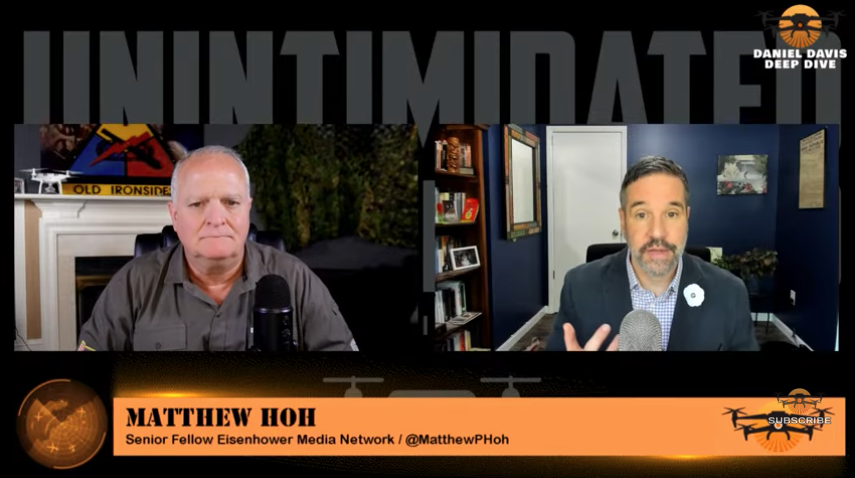
Last week I addressed the military aspects of the mishandling in Trump The Destroyer. Since then we have learned that the military brass is in semi-open revolt against Trump’s war, which they are leaking to the WaPo is “unsustainable”. Trump, as we see today, Trump’s response to their alarm is to double down. And Hegseth continues his purge at DoD. Now, I’m not really qualified to comment on the state of the military, although I’m perfectly willing to believe that it is in a sorry state. Much of that can be traced back to the purge of the Obama years and the march of DEI through the defense institutions. For a balanced and enlightening account of all these issues I refer readers to Danny Davis and Matt Hoh today:
Given that the latest resignation, that of Army Secretary Dan Driscoll, featured a military veteran and a Veep Vance confidant, it seems clear that DEI purging isn’t the only thing going on in the Hegseth DoD. Danny and Matt get into all that. The point is that the US military is getting close to collapse. Prosecuting a major war halfway round the world while conducting a chaotic purge at home is ill advised at best.
My point here is that, while Trump, Congress, and the MSM have, up to now, relied on the support of Jewish Nationalist money to defy the wishes of the vast majority of Americans, the destruction of the military takes Trump into uncharted political waters. Trump is CinC and, as such, the political buck will stop with him—more so than with Congress. The military sector of the US government is supported by a huge swath of American society that has a vested interest in it. Active Duty service personnel, reserves, National Guard personnel, veterans—healthy and disabled—the families and relatives of all the above, civilian employees of all the above, employees of the defense industries. Many of these people live in Red states. These people all get to vote and my bet is that they’re increasingly outraged at Trump and Hegseth—as well as at Congress over the mistreatment of service personnel on bases and ships in the Middle East. They’re probably communicating their outrage to the politicians who need their votes even as I type. My guess is that their outrage will be heard in the weeks to come. The politicians, at some point, will sell out Trump’s ego for their own political survival. How soon that point arrives is the question. Iran is actively seeking to hurry it along.
There are other scandals building. I’ll quote Matt Bracken on that score soon, but the article that Bracken works from is a very informative read. The author is clearly no fan of Trump but what he reports is true enough. Read it in conjunction with Danny and Matt’s commentary:
The Army just lost its last adult in the room, half the four-star bench is gone, and the Department of Defense is secretly paying MAGA posters to tell you he’s winning. LOL.
DEAN BLUNDELL
AUG 31, 2026
September 1, 2026
The Pentagon has secretly installed several conservative military veterans with massive online followings into government roles, and it’s refusing to say what those jobs are while these guys amplify Pete Hegseth’s talking points and attack anyone who scrutinizes the administration. That’s the Washington Post, this weekend, with receipts.
…
Here are Matt Bracken’s comments on this article:
Matt Bracken @Matt_Bracken48
5h
Pentagon records show that retired Air Force Colonel Rob Maness and retired Army Colonel Kurt Schlichter, who have roughly 135,000 and 620,000 followers, respectively, are carrying official government email addresses with a “.civ” suffix, meaning they’re on the books as civilian employees.
Another retired colonel, Thomas Anderson, who posts under the pen name Cynical Publius to more than 323,000 followers on X, was listed in Pentagon records with a .civ address too. All of them were assigned to the office of Anthony Tata, the undersecretary of defence [sic] for personnel and readiness, and officials won’t disclose what they actually do.
Traitors, in other words.
So the Department of Defence [sic], the one that tells you it’s “the most transparent Defence [sic] Department ever,” is running a taxpayer-adjacent propaganda shop out of a Pentagon office and won’t answer basic questions about who’s getting paid and for what. One political writer called it a roundabout way to use taxpayer money to run psyops against taxpayers, and honestly that’s the polite version.
Now ask yourself why Pete Hegseth needs a secret battalion of influencers.
Because the actual military is coming apart in his hands and he knows it.
Labor Day is coming up—the traditional start of the campaign season. I’ll be very surprised if there isn’t more SHTF stuff.
Thanks for reading Meaning In History! Subscribe for free to receive new posts and support my work.
Be sure to share these materials with friends, kin, and workmates.
Mark Wauck
Give or take a few days, anyway.
As best I can remember, it started with leaks that Trump was considering—once again—using nukes on Iran. But wait, it turned out that Hormuz was open and there was a virtual bottleneck of tanker traffic, so forget the nukes. Then Bessent intervened in the bond market. Woops! When that effort came a cropper Trump weighed in with his threat to bomb anyone selling treasuries. Then Trump and Bessent finished off the week that was with their proposed Economic D-Day, without prior consultation with, like, anybody. Capped by Bessent telling China to “get with the program” or the US would cut them off from Persian Gulf oil. Then Trump pulled the rug out from under Mark Carney. As I understand what happened, Trump and Carney had a deal that would have cut Canadian trade with China. It was all read for signing, but then Trump tried to insert a clause that said Trump could raise tariffs on Canada anytime he wanted to in the future. Now Carney is reminding Trump how much the US needs Canadian oil—which is true—and threatening economic war on is own part.
And to cap it all, Trump asserted that he wasn’t even thinking about the midterms, much less concerned about them. A dead giveaway of exactly the opposite.
What’s going on here?
One place to start might be this article today at AmCon:
A new biography of the notorious lawyer sheds light on the Trump era.
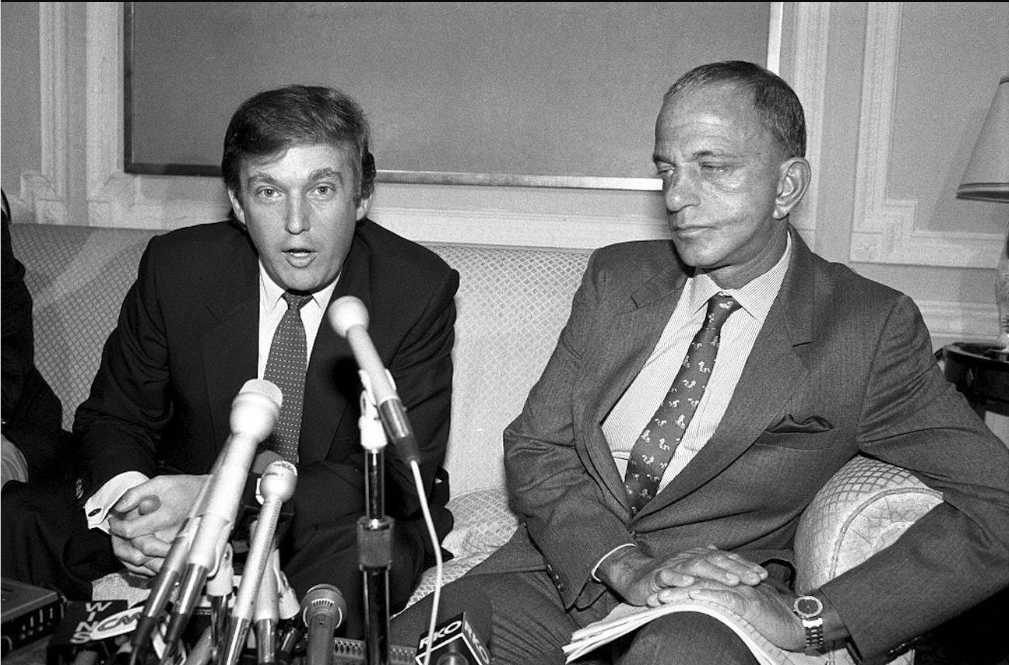
Trump with mentor and professional anti-communist Roy Cohn—one of the slimiest and vilest figures in modern US history. A case of natural affinity.
It can’t be emphasized enough that Roy Cohn was Trump’s mentor before Trump hooked up with Epstein. To give you a flavor for this book review:
In the 11 years since Donald John Trump crashed American politics at the end of a golden escalator ride, oceans of ink have been spilled attempting to explain his and his movement’s political origins. …
Kai Bird points us … to a universe where ideology matters less than crass opportunism in the pursuit of money, sex, and power—where extreme narcissists will shatter everything around them to get their way. This was Roy Cohn’s world; Donald Trump is his inheritor.
... So how did a self-described “biographer of the American establishment” choose an embodiment of its antithesis? Bird admits that a few years ago he had “an epiphany and realized that with the political rise of Donald Trump I had somehow underestimated the significance of Roy Cohn.”
Readers of this page-turning, sometimes cringe-inducing book may agree that Cohn’s stamp on history has heretofore been underappreciated. They may also feel the need to take a shower after spending so much time with such a despicable man.
…
“Trump learned from Cohn that the court of public opinion is far more important than a court of law,” Bird says. Had he lived long enough, Cohn might have coined “fake news,” one of the current president’s favorite insults. Both men, of course, loved the media spotlight and privately sought favorable coverage to reinforce their strongman reputations.
Also like his mentor, Trump inspires hatred in his enemies. Indeed, he seems to feed off it. Readers who endure Cohn’s remorseless crime spree across four decades of American life will better understand how his kindred spirit and protege could eventually make it to the White House.
OK, so, what’s going on? Maybe this past week reminds you a bit of the beginning of Trump 2.0. Remember the tariff shock and awe, with which Trump was going to strongarm the world with his “strongman reputation”, forcing the world to disgorge trillions to send to the US, where Trump would distribute the largess to his tech bro allies (and others) and pay off the debt? Or at least reduce the debt to manageable proportions? Or refinance it by rejiggering global trade? Or something? All while littering the Imperial City on the Potomac with monuments to himself—the new Genghis Khan, or Napoleon? Venezuela was supposed to be a lesson to the likes of China and Russia and Iran to “get with the program.”
But Trump progressively lost control of that program, and my suspicion is that the antics of the past week were his attempt to regain control. But with some serious aspects. I can’t prove this, but I do suspect that the outrageous lies about 40 tankers transiting Hormuz in a single night—put out by Trump’s favorite Mossad scribe at Axios—was bluster aimed at, well, certainly at Canada, which supplies the US with similar grades of oil. Possibly at China, too, although the Chinese are probably immune to that sort of nonsense. Certainly all the over the top threats fit within Trump’s Cohnian mold. The apple doesn’t fall far from the tree.
My prediction is that all this bluster will be to no effect, so in the meantime lets round things up a bit. Because there are some interesting things going on. Let’s start with the shifting tectonic plates of American politics and the limits of money.
Megatron @Megatron_ron
Aug 22
 Mike Rogers, Michigan’s Republican nominee for the U.S. Senate, has asked AIPAC not to run ads supporting his campaign, fearing that backing from the pro-Israel group could hurt him among voters angered by the war in Gaza, Axios reports.
Rogers discussed the issue with AIPAC chair Michael Tuchin in Los Angeles last week, and the group shelved a video ad targeting his Democratic opponent, Israel critic Abdul El-Sayed, the following day.
Speaking of shifting tectonic plates, that could be happening in West Asia, as well. Although unconfirmed, this is being widely reported. If true, it’s very big. I would expect—again, if true—that Egypt would be in line as well. It would spell the end of US dominance in the region:
Clash Report @clashreport
NEW: Iran has reportedly been invited to join the Mecca Joint Defence Agreement between Saudi Arabia, Pakistan, and Türkiye.
Mehdi Rahimi, head of the Iranian parliament’s official news agency Khaneh Mellat, told Al-Mayadeen that Iran received an invitation and that “the matter is under consideration.”
For now, however, the invitation has not been independently confirmed by Iran’s Foreign Ministry or senior leadership, nor publicly by Saudi Arabia, Pakistan, or Türkiye.
This falls in line with earlier reports out of Iran:
محمدباقر قالیباف | MB Ghalibaf @mb_ghalibaf
1/2 We’ve received numerous messages from neighboring countries about shaping new security arrangements and economic cooperation in the region.
The United States put the security of every single one of its allies at such risk through bullying and pure disregard for their interests for the sake of Israel that they briefly saw their entire existence on the line.
A homegrown, independent order is what will actually deliver peace and security.
Here’s a burst of Iran updates:
The Hormuz Letter @HormuzLetter
9m
BREAKING: US House Speaker Mike Johnson says the Iran war is going to enter a “new phase very soon,” declaring “we’ll get this finished.”
Dutifully talking up Economic D-Day?
BREAKING: Iran views the war as restarting in the coming days, with Marandi saying “In the coming days, it is very likely that the military conflict will be renewed.”
I wonder whether this signals a kinetic Iranian response to Trump’s Economic D-Day?
BREAKING: The Trump administration has asked Pakistan to send a new peace deal proposal to Iran to keep Iran’s “IRGC backchannel” open, coming as a senior Iranian official says Trump is using Pakistani officials to announce fabricated talks rumors to stabilize the oil market, per Reuters and a senior Iranian official in Tehran familiar with the matter.
Iran, however, continues to refuse reopening the Strait of Hormuz or return to negotiations unless Trump agrees to all of Iran’s conditions, including $300 billion in US compensation, the lifting of all US sanctions, the release of all Iranian frozen assets, and the end of the US naval blockade of Iran.
BREAKING: Iran announces the discovery of major gas reserves [in southern Fars province] worth over $165 billion, containing more than 7.5 trillion cubic feet of “sweet” natural gas, the highest quality type with close to zero impurities, plus significant gas condensates, Iran’s oil minister told IRIB.
BREAKING: U.S. service member casualties in the Iran war have just jumped to 774 wounded or killed, after the Pentagon added scores of new troops to the wounded list in the last few days, per WaPo.
BREAKING: Iran’s IRGC has successfully shut down a UK power plant for 4 days in an unprecedented cyber attack, believed to be the first time Iranian-affiliated hackers have successfully shut down a UK facility of this kind, per The Telegraph.
BREAKING: Trump made over 1,000 stock trades in June alone worth up to $263 million tied to market events he created, often buying and selling the same security on the same day after the event was over, per new government ethics filing.
Recent purchases include Visa, Berkshire Hathaway, Mastercard, and Cintas, following 3,642 trades involving stocks of public companies between January 1st and March 31st. Trump also made more than 21,000 securities trades in 2025 in bursts tied to market events he created, with the total value between $600 million and $1.86 billion, occasionally buying and selling the same security on the same day.
The White House claims Trump’s trades pose “no conflict of interest” as they are “independently managed,” coming amid Trump already being sued in federal court over Trump Media selling advance access to his Truth Social posts to subscribers paying up to $100,000 per month via Truth API.
BREAKING: Iran warns it “will respond with an earthquake-like retaliation” in response to Trump’s economic warfare, directly warning all Gulf countries not to join the economic war, and saying Iran will strike all US-backed Gulf energy infrastructure and Hormuz bypass oil routes, including Yanbu and Fujairah, Iran’s SNSC chief Rezaei told IRIB.
On the financial front Trump 2.0 is encountering open skepticism, even from the establishment media—but bear in mind that everything Trump/Bessent do is connected:
JaguarAnalytics @JaguarAnalytics
Financial Times:
“Scott Bessent’s running battle with the bond market is starting to look like his boss’s war in Iran — started by his own hand with a tangled set of objectives, an underestimated opponent and an implausible path to victory. And like the conflict in the Middle East, we are all going to suffer its effects.
Three weeks ago, of course, he inserted himself in the market for the Japanese yen, of all things, buying the currency to prop it up in what was painted as a friendly act of solidarity with an ally in need.
The link back to Treasury bonds may not be immediately obvious, but bond market insiders are not buying the friends-helping-friends explanation, and instead see it as an effort to stop Japan from fixing its yen problem by selling down its gigantic stash of US debt.
So now, no fewer than three times in three weeks, Bessent has given the message to investors to please stop selling his bonds. But they are selling his bonds anyway.”
Was this the wrong time to anger Canada?
Could be a wild ride coming up.
Thanks for reading Meaning In History! Subscribe for free to receive new posts and support my work.