
Julian Macfarlane
 Russia advances; the West retreats into madness
 As Russian forces in the Ukraine continue their advances, cauldronizing the last remnants of Kievan occupation forces in Liman and Konstantinovka in preparation for taking the Slavyangrad - Kramatorsk agglomeration, and with Russian airpower strikes on all fronts, it would seem that the SVO is entering a decisive phase. Kiev is getting desperate with more and more terrorist strikes. Kiev will not give up easily. And the West is increasingly deranged. ]
The Silovik myth
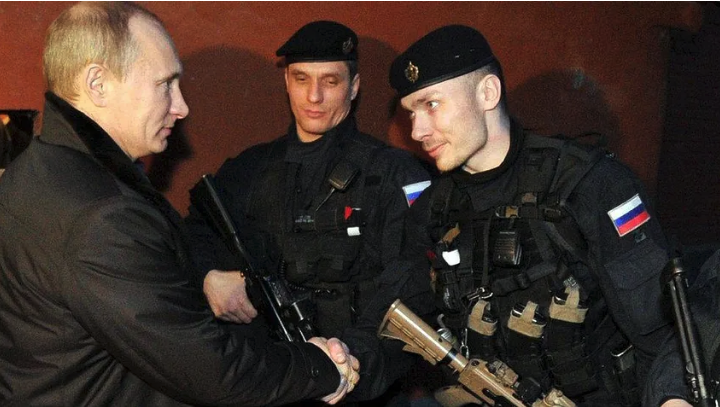
There are constant references to Putin’s KGB background, with the KGB understood as the USSR’s Gestapo. Putin is the ultimate silovik.
This word, “silovik” tells us much about the centuries old phobic response of Europe and the Anglosphere to Russian civilization and its values. And indeed Putin IS the “ultimate Silovik” have reinvented the concept of public service in the context of a renewed Russia.
For him, “Siloviki” are public servants who have dedicated their lives to serving Mother Russia. They represent service and sacrifice And the Russian public agrees. No world leader, other than Xi, is as popular with his people as Putinm One can keep in mind, that, if the Russian people, don’t support him, they won’t vote for him.
Of course, as Western academics will tell you, the siloviki were associated with the KGB in the context of the USSR, post Stalin.
Yet to understand the full meaning of what this kind of public service means you must also understand why Putin sought to join the KGB as a young man, despite the discouragement of family, friends, teachers — and the KGB itself! (That’s in a separate post for coffeebuyers. You can click on the link later.)
In my last post, we talked about honesty - an important idea in any country with complex hierarchies—and not something seen much in Washington DC. .
The honest man
Who would say that of any Western politician?
Nor is Putin’s association with the KGB and a its successor agencies a problem for Russians.
It may be hard for Western readers to grasp this, for lack of historical context.
The KGB was the successor to Stalin’s’ NKVD which was a massive organization including secret police, the regular police, the penal system and border and internal troops.
American Threat
The Soviet Union at this time was under constant threat from Western intelligence agencies, which were overthrowing governments around the world, Greece, Iran, etc.
The Soviet espionage networks at Los Alamos were organized and directed by the NKVD (People’s Commissariat for Internal Affairs) under the code name ENORMOZ. Soviet intelligence officers operating out of the New York consulate recruited scientists and set up a system to funnel research to Moscow.
The majority of these scientists were Jewish, including Ethel Rosenberg who was not a scientist. The only non-Jew was Klaus Fuchs who was German. Only the Rosenbergs were executed although records show Ethel Rosenberg was innocent of anything but marrying a spy.

She deserves exoneration, of course — but it will probably never happen. .
Why you don’t know?
The point is that the USSR had good reason to be afraid of American intentions. Its initial intelligence after WWII was thanks to the…
KVD / NKGB: foreign intelligence services
MGB: (Ministry of State Security), which handled collection of early U.S. war plans like Operation Fleetwood and Operation Charioteer.
GRU: which intercepted a large portion of Pentagon tactical planning.
These plans were partially revealed in the 70s, then more fully with the opening of Soviet archives in the 90s. which helped dispel Russian illusions about American benevolence.
It also revealed how much Russia owed its siloviki.
It also helped that the KGB which replaced the NKVD organizations had a much better image.
Beginning in the Khrushchev and Brezhnev eras, aware of the NKVD’s reputation, the USSR promoted “Chekist fiction” in literature and film (such as Yulian Semyonov’s Seventeen Moments of Spring).

These stories portrayed KGB officers as brilliant, incorruptible patriots, deeply devoted to the state rather than blindly serving a political party.
Whether or not ordinary people believed this, as you will see, the KGB did— and tried to live up to the new image, as I explain in the follow-up article on the coffee buyer’s site.
The KGB represented order and the rule of law (Soviet Style) And principles and integrity at the same time...
But with the economic and social chaos of the 80s and the geopolitical humiliations that broke the Soviet Union apart, the KGB foundered and was replaced by the FSB, created by Boris Yeltsin and the FSR and GRU.
The FSB handles domestic counterintelligence.

The SVR is the foreign intelligence branch.

The GRU handles military intelligence and offshore operations.

So, Yeltsin basically broke the KGB into three organizations. Putin was given the job of making them work. And he did, imposing on them the values he had hoped for in the old KGB.
Russia Under Threat
The Chechen War, which has been set up by the CIA and MI6 was raging with major terrorist attacks in Russia. Naturally, the Western media portrayed the Chechens as “freedom fighters”, although the rhetoric lost momentum after the Boston Bombing.

Budyonnovsk Hospital Hostage Crisis (June 1995): Militants led by Shamil Basayev seized a hospital in southern Russia, taking over 1,500 hostages. The siege resulted in the deaths of 129 civilians and hostages.
Kizlyar-Pervomayskoye Hostage Crisis (January 1996): Fighters attacked a military airbase and a hospital in Kizlyar, taking thousands of hostages and retreating to the village of Pervomayskoye, leaving dozens dead.
Moscow Theater Siege (October 2002): Chechen militants seized the Dubrovka Theater in Moscow, holding approximately 850 people hostage. Russian special forces stormed the building using gas, resulting in the deaths of 40 attackers and at least 129 hostages.
Beslan School Siege (September 2004): Attackers occupied School Number One in Beslan, North Ossetia, holding over 1,000 people hostage. The three-day siege ended in a violent chaotic rescue operation, leaving 334 people dead, including 186 children.
Russian Apartment Bombings (September 1999): A series of coordinated bombings targeted apartment blocks in Buynaksk, Moscow, and Volgodonsk, killing nearly 300 people.

Moscow Metro Bombings (February 2004): A suicide bombing on a crowded Moscow metro train during morning rush hour killed 41 people and wounded over 100.
Domodedovo Aircraft Bombings (August 2004): Two Russian passenger planes were blown up by female suicide bombers within minutes of each other, resulting in 90 deaths.
Yessentuki Train Bombing (December 2003): A suicide bombing on a commuter train near the Yessentuki station in southern Russia killed 46 people and injured 160.

That’s about 600 civilians – not counting Chechens. By comparison about 500 to 1000 Russian civilians have died as a result of Ukranian terrorism since 2022 – not counting those who died after 2014.
In Russia, the Russian intelligence agencies are credited with reducing casualties , but often criticized for being too liberal in their approach.
But today, Chechnya is thriving and very pro-Russian.

But the Russian public is tired of Western interference and increasingly vocal in demanding more extreme measures !
The responsibility of the siloviki is to protect not just the “state” but its people. Also to lead, not to be led by special interests. In the US the government is “led” by the wealthy. The Epstein Class does not serve — it is served. This is one reason why Putin’s anti-corruption efforts are so popular. “Don’t lie, don’t steal, don’t cheat”. It’s pretty simple.

By Garland Nixon


Summary
The video presents a comprehensive dialogue between Garland Nixon and Joti Brar discussing her recent experience attending the third Anti-Fascist Forum held in Moscow, organized primarily by the Communist Party of the Russian Federation. The conversation centers on the nature of the ongoing conflict in Ukraine, the role of imperialism, terrorism, and fascism in perpetuating global conflicts, and the ideological battle to control narratives surrounding these events.
Joti Brar contextualizes the war in Ukraine as a proxy war between NATO and Russia, highlighting how the West’s imperialist powers manipulate the conflict, using terrorism and fascism as tools to destabilize and weaken Russia. She clarifies that genuine opposition to imperialism is scant among Western leftist groups, many of whom uncritically adopt NATO’s propaganda. This failure necessitated the creation of the World Anti-Imperialist Platform, which has gained significant traction primarily among anti-imperialist forces from the Global South.
The forum's main theme focused on anti-fascism and anti-terrorism, with special attention to Ukraine’s use of banderite fascism—resurgent ultranationalism rooted in World War II-era Nazi sympathies—as a weapon by imperialist powers. Bra asserts that Ukrainians and Russians are culturally intertwined, and the manufactured hatred is a tactic to fracture socialist resistance and turn Ukraine into a Western foothold against Russia. The discussion addresses the slow war of attrition that Russia pursues, arguing this approach is strategically sound because it gradually demilitarizes Western support and exhausts imperialist resources without unnecessary sacrifice.
Joti and Garland also delve into the strategic use of terrorism, including Ukraine’s alleged attacks on civilian targets like children, used to provoke Russia into overreaction and to sway Western populations toward more aggressive involvement. The conversation discusses the weaponization of the term "terrorism" and the way imperialist powers manufacture proxy terrorist groups worldwide to justify military invasions.
Historical and ideological analyses extend to the post-Soviet space and the global struggle for socialist revival versus capitalist-imperialist resurgence. The ideological division in Russia’s Communist Party, the influence of Western culture through media, and ongoing efforts to subvert socialism via market ideology are explored. The conversation concludes by highlighting the emerging “axis of resistance” to imperialism, including Russia, Iran, China, and others, emphasizing that this global anti-imperialist movement is organically growing as a reaction to aggression.
Garland and Joti end with calls to support Marxist education and grassroots organization, emphasizing the need to counter imperialist narratives and to train committed activists capable of advancing socialist ideals.
Highlights
- [02:04] 🛡️ Overview of the third Anti-Fascist Forum held in Moscow, backed by the Communist Party of the Russian Federation.
- [08:12] ☠️ Resurgence of banderite fascism in Ukraine as a tool of Western imperialism, rooted in WWII Nazi ideologies.
- [12:19] ⚔️ Discussion of terrorism as a proxy tool to perpetuate the conflict and provoke disproportionate Russian responses.
- [16:56] ⏳ Slow war of attrition favored by Russia to demilitarize NATO’s foothold and exhaust imperial resources.
- [27:11] 🌍 Formation and growth of a global anti-imperialist axis in response to Western aggression.
- [33:51] 🎯 Misuse and weaponization of the term "terrorism" by imperialist powers to justify intervention and suppress opposition.
- [53:38] 🎥 Imperialist cultural infiltration seen in media transformation, promoting Western consumerist illusions before 1991.
Key Insights
- [02:37] 🧩 The Anti-Fascist Forum in Moscow is a politically significant event linking communist and anti-imperialist forces globally, showing evolving state ties allowing more open government support. Its growing scale reflects heightened international coordination against perceived imperialist encirclement. This signals that Russia is rebuilding leftist internationalist solidarity as a political and ideological front in the geopolitical struggle.
- [08:12] 🕯️ The revival of banderite fascism represents a profound ideological manipulation: using historic Nazi-aligned Ukrainian ultranationalism to serve modern imperialist geopolitical goals. It exploits ethnic tensions fabricated or exaggerated to fragment working-class unity across Eastern Europe, a deliberate strategy to prevent any resurgence of socialist or pan-Slavic solidarity against capitalist conquest.
- [12:19] 🎭 Terrorism is deployed as a covert extension of war by proxy forces controlled or influenced by Western intelligence. The goal is multifold: to demoralize populations, provoke escalations, and shape global opinion to justify further military intervention. This strategy complicates the conventional military front by adding psychological warfare and manipulating civilian suffering to achieve political ends.
- [16:56] 🐢 Russia’s methodical, sustained attrition campaign strategically leverages industrial and military capacity advantages, while exploiting the West’s logistical exhaustion. This counters narratives of quick victory being necessary and reframes the conflict as a war of endurance and resource depletion. It highlights that in asymmetric conflicts, patience and ability to “take a punch” can outweigh initial tactical superiority.
- [27:11] 🌐 The emergence of a global axis of resistance—including Russia, Iran, China, and aligned progressive forces—reflects an organic communist and anti-imperialist counterweight to Western hegemony. This bloc is both reactive and proactive, forming a new multipolar resistance network that seeks to limit imperialist incursions worldwide, making imperialism’s fragmented and overstretched position more vulnerable.
- [33:51] ⚠️ The strategic weaponization of terminology like “terrorism” exposes how imperialist narratives distort global perceptions to discredit legitimate anti-colonial and socialist resistance. Labeling resistance forces as terrorists enables the imposition of draconian laws and justifies extraordinary military actions under the guise of security and counterterrorism, severely obstructing genuine political solutions.
- [53:38] 🎬 Cultural imperialism precedes and facilitates political domination. The infiltration of Western consumerist values through media transformed the Soviet cultural space long before 1991, eroding socialist ideals and preparing populations psychologically for neoliberal capitalism. Such soft power measures prove that ideological warfare is critical and foundational for military and economic control.
The discussion overall positions the current global conflict within a century-long framework of imperialist struggles, emphasizing a Marxist analysis of imperialism as systemic capitalism’s geopolitical phase. It stresses the importance of ideological clarity, patient grassroots work, and global solidarity among socialist and anti-imperialist forces to counter the multifaceted oppression and conflicts fueled by imperial powers in decline.
 Judge Napolitano
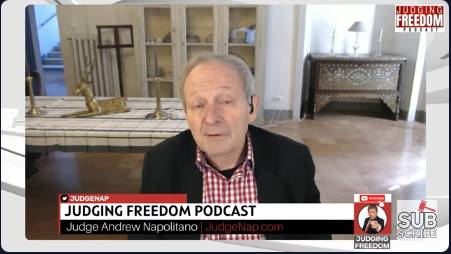
Alastair Crooke : Trump Loses Control of the War. Indeed.

Timeline of Key Events and Statements
| Timeframe | Event/Statement |
|---|---|
| March 23, 2026 (Morning) | Trump announces a 5-day pause on military strikes against Iran citing productive talks (denied by Iran). |
| Recent days/weeks | Iranian Supreme Leader issues ultimatum demanding U.S. withdrawal and sanctions lifting within 60 days. |
| Ongoing | U.S. and Israeli bombing campaigns continue with limited military effectiveness, targeting mostly civilian infrastructure. |
| Ongoing | Iran launches nightly missile volleys into Israel using advanced hypersonic missiles. |
| Near future (uncertain) | Potential deployment of additional U.S. military forces and possible attempts to seize Qeshm Island (considered unlikely to succeed). |
Summary of Military and Geopolitical Assessment
- Iran’s defense infrastructure is robust and deeply concealed, making it resistant to current U.S./Israeli attacks.
- Iran possesses superior missile technology compared to Israel’s current air defense capabilities.
- U.S. and Israeli military strikes have failed to weaken Iranian resolve or infrastructure significantly and have instead strengthened domestic support for the regime.
- Iran’s strategy involves economic and military leverage over Gulf states, challenging U.S. regional dominance and the petrodollar.
- U.S. military options are limited and risky, with no feasible plan to control key strategic locations such as Qeshm Island.
- Dialogue between U.S. and Iran is effectively non-existent, with Iran setting strict and non-negotiable preconditions.
- The conflict has escalated to a critical point, with potential for broader regional instability impacting global energy markets.
Conclusion
The video presents a detailed, expert analysis of the escalating U.S.-Iran conflict, highlighting Iran’s strategic resilience, missile superiority, and geopolitical ambitions. It critiques U.S. intelligence failures and miscalculations, underscores the limits of military intervention, and warns of a protracted, complex standoff with significant regional and global consequences. The claims of ongoing U.S.-Iran negotiations are strongly contested by Iranian sources, suggesting continued tensions and instability ahead.
Overall, the situation is characterized by US/Israeli deception, misinformation, escalating military posturing, and a shifting balance of power favoring Iran in missile capabilities and regional influence.
BEFORE you leave, PLEASE pay attention to this alert. [t4b-ticker id=”1″] [/su_spoiler]
Print this article [bws_pdfprint display=’print’]
 This work is licensed under a Creative Commons Attribution-NonCommercial 4.0 International License • ALL CAPTIONS AND PULL QUOTES BY THE EDITORS NOT THE AUTHORS

 Sabby Sabs


| Traducir—Translate! | |
| Make fonts bigger>>> | Resize text-+= |

Premiered Mar 21, 2026 #iranstrikeskuwait #sabbysabs #mohammadmarandi
Summary
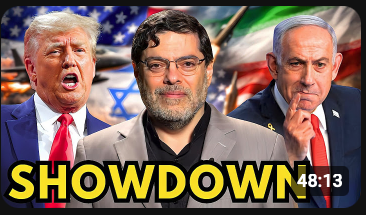
The podcast episode features Professor Seyed Mohammed Marandi, a scholar at the University of Tehran, discussing the escalating conflict involving Iran, the Gulf States, the United States, and Israel. The conversation centers on the recent strikes on oil facilities in Kuwait, the broader regional military tensions, the involvement of various countries, and the implications of continued warfare.
Key Insights
Origins of Conflict:
The current tensions began after Israel and the US attacked Iranian oil facilities. In response, Gulf States condemned Iran, blaming it for refusing diplomacy, but Professor Marandi argues the Gulf States are complicit in the conflict due to their cooperation with the US military.Gulf States’ Role:
Countries like Saudi Arabia, Jordan, Egypt, Turkey, and Pakistan allow US bases, airspace, and intelligence gathering, facilitating strikes on Iran. These nations are not neutral but active participants, effectively sharing responsibility for the violence against Iran.Military Bases and Escalation:
The presence of US military bases in countries surrounding Iran is a key factor driving Iranian counterstrikes. Marandi emphasizes that if these bases were removed, the conflict could end swiftly.US and Israeli War Strategy:
The US Pentagon is reportedly considering sending more troops to the region despite existing casualties. Marandi highlights the extreme possibility that the US or Israel may resort to nuclear weapons given their aggressive posture, an idea the World Health Organization is reportedly preparing for.Iran’s Defense and Resolve:
Iran is determined to defend its sovereignty and will resist any threats, including nuclear ones. The war has united the Iranian people, who continue to demonstrate resilience despite missile strikes and bombings of civilian infrastructure, including hospitals and schools.Media and Propaganda:
There is strong criticism of Western media for ignoring or misrepresenting the realities of the conflict, including civilian casualties in Iran and the true state of Iran’s military capabilities. The interview highlights the role of disinformation and propaganda in shaping public perception.NATO and Western Allies:
Several NATO countries have refused to join the US-led conflict, leading to public statements from Donald Trump accusing them of cowardice. Marandi characterizes Trump as unstable and desperate, lying about Iran’s military status and overestimating his own position.Iran’s Military Capabilities:
Contrary to Western claims, Iran maintains significant missile, drone, and naval capacities and has conducted heavy retaliatory strikes against US and Israeli assets in the region, including oil and gas installations.Regional Dynamics and Allies:
The Houthis in Yemen and Iraqi resistance groups are expected to escalate their involvement. Iran’s allies are prepared for an extended conflict, and regional US-backed regimes are portrayed as weak and unpopular.Potential for Wider Conflict:
The episode warns that escalation could lead to destruction of all oil and gas facilities in the Persian Gulf, causing a severe global economic crisis worse than the Great Depression of 1929.Leadership and Morale:
Iranian leaders, including the president and judiciary head, have been publicly present during attacks, contrasting with Israeli leadership's perceived cowardice and absence. Marandi expresses uncertainty about Netanyahu’s status but describes him as historically evasive.Social Media and Threats:
Professor Marandi reveals he is targeted by online bounties and threats but remains committed to raising awareness about the conflict.Future Prospects:
The war may continue into the next year, with Iran prepared for a long struggle. Resolution depends on the withdrawal of US military presence from the region and recognition of Iran’s security demands.
Timeline of Events and Context
| Timeframe | Event/Development |
|---|---|
| Early conflict phase | Israel and US attack Iranian oil facilities, triggering strikes in Gulf States. |
| Recent | Strike on Kuwaiti oil facilities reported amidst ongoing regional hostilities. |
| Weeks prior | Multiple bombings of civilian infrastructure in Iran including schools, hospitals, and ambulances. |
| Present (time of recording) | Ongoing Iranian missile and drone attacks on US/Israeli assets; public demonstrations in Iran despite airstrikes. |
| Future outlook | Potential for war to extend into next year; risk of nuclear escalation and broader regional involvement including Houthis. |
Definitions and Comparisons
| Term/Entity | Description |
|---|---|
| Strait of Hormuz | Strategic maritime chokepoint for global oil shipments, central to the conflict due to blockades and attacks. |
| Houthis (Ansar Allah) | Yemeni armed group allied with Iran, expected to escalate involvement in the conflict. |
| US Military Bases | Facilities in Gulf States and Turkey used for launching strikes on Iran, considered primary targets by Iran. |
| Iran’s Military | Equipped with missiles, drones, speedboats, and advanced defense systems capable of sustained retaliation. |
| Western Media | Criticized for biased reporting and suppressing coverage of Iranian civilian casualties and resistance efforts. |
Bulleted Summary of Additional Points
- Iran views attacks on shared oil and gas infrastructure as legitimate targets for self-defense under international law.
- The US and Israeli leadership are accused of committing war crimes and crimes against humanity.
- Iranian society is highly united and resilient, with mass protests continuing under missile strikes.
- Western elites and mainstream media are labeled as “criminals” complicit in the conflict through propaganda.
- There is skepticism about the authenticity of Israeli Prime Minister Netanyahu’s recent public appearances, with rumors of his death circulating.
- The conflict has exposed divisions within US and NATO leadership and growing dissent within the US political and military establishment.
- Economic consequences of the war are global, with potential energy shortages and price spikes affecting multiple countries.
- Professor Marandi calls for awareness and activism to counter misinformation and support peace efforts.
Conclusion
The discussion with Professor Marandi provides a detailed critique of the current Middle East conflict from an Iranian perspective. It underscores the centrality of US military presence in escalating regional tensions, the unity and determination of the Iranian people, and the severe global risks posed by continued warfare, including nuclear escalation and economic collapse. It also highlights the role of media manipulation and political deceit in shaping public narratives about the war. The episode concludes with a cautious hope for a better future but stresses the need for significant political change to end the conflict.
BEFORE you leave, PLEASE pay attention to this alert.
[t4b-ticker id="1"]
Print this article [bws_pdfprint display=’print’]
This work is licensed under a Creative Commons Attribution-NonCommercial 4.0 International License •
ALL CAPTIONS AND PULL QUOTES BY THE EDITORS NOT THE AUTHORS
George Galloway


| Traducir—Translate! | |
| Make fonts bigger>>> | Resize text-+= |

BEFORE you leave, PLEASE pay attention to this alert.
[t4b-ticker id="1"]
Print this article [bws_pdfprint display=’print’]
This work is licensed under a Creative Commons Attribution-NonCommercial 4.0 International License •
ALL CAPTIONS AND PULL QUOTES BY THE EDITORS NOT THE AUTHORS