Print this article [bws_pdfprint display=’print’]
This work is licensed under a Creative Commons Attribution-NonCommercial 4.0 International License •
ALL CAPTIONS AND PULL QUOTES BY THE EDITORS NOT THE AUTHORS


| Traducir—Translate! | |
| Make fonts bigger>>> | Resize text-+= |
BEFORE you leave, PLEASE pay attention to this alert.
[t4b-ticker id="1"]
This work is licensed under a Creative Commons Attribution-NonCommercial 4.0 International License •
ALL CAPTIONS AND PULL QUOTES BY THE EDITORS NOT THE AUTHORS

Geopolitical Economy Report| Traducir—Translate! | |
| Make fonts bigger>>> | Resize text-+= |
The video provides a comprehensive analysis of the escalating conflict initiated by the United States and Israel against Iran, highlighting the broadening scope of the war and its dangerous geopolitical ramifications. The conflict is no longer confined to Iran but has expanded, involving multiple countries across the Middle East, Latin America, and even Europe. The U.S. and Israel’s aggressive military actions have prompted Iran’s lawful retaliations, including attacks against U.S. military bases across the region and threats to close the Strait of Hormuz, a critical chokepoint for global oil supply. Meanwhile, the U.S. is preparing to intensify its military strategy by arming Kurdish groups to open a new front against Iran from Iraq, which risks dragging Turkey—a NATO member—into the conflict.
Israel is simultaneously expanding the war by invading Lebanon and renewing its siege on Gaza, exacerbating humanitarian crises. The U.S. has also escalated military operations in Pakistan, Ecuador, Venezuela, and Cuba, demonstrating a global pattern of militarism under the Trump administration. Despite campaigning as a peacemaker, Trump has overseen more bombings than any recent U.S. president, attacking 11 countries and threatening even longtime U.S. allies in Europe, notably Spain. Spain’s refusal to allow U.S. military bases to be used for strikes on Iran and its opposition to the war have provoked threats of embargoes and invasion from Trump, with tacit support from Germany’s pro-U.S. Chancellor Friedrich Mertz.
The video also critiques the fractured nature of European unity as some countries publicly oppose the war while covertly supporting it, exposing deep hypocrisy. Countries like France acknowledge the war’s illegality but continue to participate actively. Canada similarly displays contradictory positions, condemning unilateral U.S. actions while supporting the war effort. The root cause of the conflict is traced back to the U.S. withdrawal from the 2015 Iran nuclear deal under Trump, which derailed diplomatic negotiations and paved the way for war. The video concludes by underscoring the dangerous path of escalating militarism and the erosion of international law, with the U.S. leading a global campaign of aggression under the guise of peace.
The video emphasizes the hypocrisy and contradiction within Western governments that simultaneously condemn the war’s illegality while actively participating in it. It critiques the erosion of the international rules-based order and the failure of diplomacy, focusing on the U.S. withdrawal from the JCPOA as the pivotal moment that paved the way for the current conflict. Trump’s self-styled identity as a “peace president” is shown to be a stark contrast to his administration’s aggressive military actions, which have targeted more countries than any recent U.S. president.
The fracturing of alliances, particularly within Europe, is a critical dynamic. Spain’s independent foreign policy, including recognition of Palestine and opposition to militarization, threatens U.S. strategic interests, prompting harsh retaliatory threats. Germany’s subservient posture to U.S. demands highlights the influence of elite economic interests on national policies.
The video also draws attention to the humanitarian consequences of the conflict, particularly in Gaza and Lebanon, and the destabilizing effects of ongoing U.S. military interventions globally. It concludes with a call to recognize the dangerous trajectory of U.S. foreign policy under Trump and the importance of understanding the broader geopolitical context driving these wars.
This detailed analysis presents the U.S. and Israel’s war on Iran as a multifaceted global crisis fueled by aggressive military interventions, proxy warfare, and economic coercion. The conflict exposes the fragility of international alliances, the erosion of international law, and the deep contradictions within Western governments. With expanding theaters of conflict and increasing hostility toward allies, the world faces a perilous future shaped by escalating militarism and geopolitical instability.
BEFORE you leave, PLEASE pay attention to this alert.
[t4b-ticker id="1"]
This work is licensed under a Creative Commons Attribution-NonCommercial 4.0 International License •
ALL CAPTIONS AND PULL QUOTES BY THE EDITORS NOT THE AUTHORS

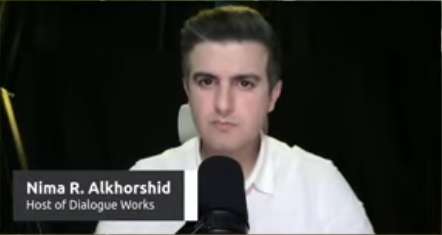
Nima chats with Prof. M. Marandi
| Traducir—Translate! | |
| Make fonts bigger>>> | Resize text-+= |
The discussion between the host and Professor Marandi centers on the ongoing conflict between Iran and the United States, with a focus on recent military confrontations, political dynamics, and regional implications as of March 2026. Professor Marandi critiques U.S. President Donald Trump’s aggressive rhetoric and military actions against Iran, highlighting how Trump’s calls for unconditional surrender and claims of destroying Iran’s military capabilities were proven false. Despite heavy bombardment and targeted assassinations, including the killing of key Iranian figures and civilians, Iran’s military remains resilient, united, and capable of defending itself effectively.
The professor emphasizes that Western powers, particularly the U.S. and Israel, have consistently misjudged Iran due to racist and orientalist assumptions, expecting Iran to collapse for decades, which has not happened. Iran’s sophisticated integrated defense system, combining Russian, Chinese, and indigenous technology, has successfully repelled drone and missile attacks. The bombing of civilian infrastructure such as hospitals and schools by the U.S. and Israeli forces is condemned as war crimes, with Western media largely ignoring these atrocities.
Iran’s regional alliances with groups like Hezbollah, the Houthis, and Iraqi militias have strengthened the country’s strategic position, and these allies are actively engaged in the conflict. Iran is also exerting control over critical economic chokepoints like the Strait of Hormuz, disrupting oil shipments and pushing global energy prices higher, which increases pressure on the U.S. administration.
Professor Marandi predicts a prolonged war of attrition, with Iran prepared for months of conflict while the U.S. struggles with internal economic and political issues. He foresees a strategic defeat for the U.S. and its Israeli ally, with long-term geopolitical shifts in the Middle East. Arab Gulf states, heavily reliant on U.S. military support, are increasingly vulnerable and may face demands from Iran for reparations once the conflict ends. Growing dissatisfaction and unrest in some Arab countries, like Bahrain, reflect broader regional instability fueled by proxy dynamics and authoritarian governance.
The professor also discusses the leadership vacuum in Iran following the martyrdom of a key leader, explaining the constitutional process for appointing a new leader under heightened security conditions. He stresses the moral and ideological strength of Iran’s leadership and people, contrasting it with the brutality and arrogance of the U.S. and Israeli regimes. Finally, the conversation touches on the potential escalation against Israel and other U.S. allies, warning that Iran controls the conflict’s pace and can intensify its military response if provoked.
[01:15] ⚔️ Trump’s rhetoric vs. battlefield reality: Trump’s loud demands for Iran’s unconditional surrender and boasts about eliminating Iranian leadership failed to materialize in reality. Instead, Iran effectively resisted and even inflicted setbacks on Israeli forces, highlighting the disconnect between U.S. political bravado and military outcomes. This underscores the danger of underestimating Iran’s military and political resolve.
[04:45] 🌍 Western misconceptions rooted in orientalism: The West’s persistent narrative over four decades that Iran is unstable, unpopular, and on the verge of collapse is deeply rooted in racist and orientalist biases. These assumptions have blinded policymakers to Iran’s complex society, ideological cohesion, and national resilience, leading to repeated strategic miscalculations. The continuity of these failed narratives demonstrates a systemic failure to understand Iran’s sociopolitical fabric.
[09:50] 💣 Targeting civilians as a strategy of desperation: The deliberate bombing of hospitals, schools, and media infrastructure represents a brutal tactic aimed at breaking Iranian morale and social cohesion. This strategy backfires by unifying the population and galvanizing support for the regime. The Western media’s silence on these war crimes reveals a double standard that fuels anti-Western sentiment and undermines the credibility of international humanitarian norms.
[14:15] 🛡️ Integrated and resilient air defenses: Iran’s multi-layered air defense system, combining Russian S-300 systems, Chinese technology, and domestic innovations, creates a robust shield against U.S. and Israeli aerial assaults. The system’s success in downing drones and jets demonstrates Iran’s technological sophistication and adaptability, which challenges Western claims of overwhelming military superiority. This integrated defense also complicates enemy targeting strategies and reduces the effectiveness of air strikes.
[19:15] 🛢️ Strategic leverage through the Strait of Hormuz: Iran’s control and partial closure of the Strait of Hormuz, a critical global oil transit point, exerts significant economic pressure on the U.S. and its allies by driving up global oil and gas prices. This economic dimension of the conflict highlights Iran’s ability to influence global markets and underscores the interconnectedness of military and economic warfare. It also signals Iran’s willingness to escalate beyond purely military means to achieve strategic objectives.
[22:30] 🤜🤛 Regional proxy alliances strengthen Iran’s position: Iran’s alliances with Hezbollah, the Houthis, and Iraqi militias create a multi-front resistance network that complicates U.S. and Israeli military efforts. These groups not only provide tactical support but also symbolize a broader ideological and political coalition opposing Western and Israeli influence. Their active participation indicates a regionalization of the conflict, making it harder for the U.S. to isolate Iran or achieve quick victory.
[26:45] 🕰️ War of attrition favors Iran: Iran’s preparedness for a prolonged conflict, with stockpiled weapons and underground infrastructure, contrasts sharply with U.S. expectations for a short, decisive campaign. The U.S.’s political divisions and economic pressures at home weaken its ability to sustain long-term military engagement. Iran’s strategy of gradual escalation and targeted strikes on U.S. assets and proxies is designed to wear down enemy resolve, suggesting that the conflict could reshape regional and global power balances over months or years.
[30:00] 🔄 Changing regional dynamics and unstable Gulf regimes: The vulnerability of Gulf allied regimes, exposed by their reliance on U.S. military support and proximity to Iranian power, fuels internal dissent and popular uprisings, as seen in Bahrain. These regimes’ complicity in Western-led aggression against Iran undermines their legitimacy domestically and raises questions about their long-term survival. Post-conflict, Iran may demand reparations, further shifting the regional order and challenging the U.S.-backed status quo.
[39:30] 🎯 Iran’s control over escalation and strategic targeting: Iran’s military and intelligence superiority allow it to dictate the pace and intensity of conflict escalation, including attacks on Israeli territory and U.S. bases throughout the Persian Gulf. This control frustrates U.S. and Israeli efforts to contain the conflict and signals that Iran can expand or contract military operations as it sees fit. Such capability enhances Iran’s deterrence posture and complicates enemy strategic planning.
[47:00] 👥 Leadership continuity amid crisis: Despite the assassination of key leaders, Iran’s constitutional mechanisms and security protocols ensure leadership continuity and stability. The council of judiciary, president, and guardian council temporarily manage leadership functions while a new supreme leader is selected confidentially. This institutional resilience underpins Iran’s ability to maintain governance and military coordination during wartime, countering narratives of chaos or collapse.
[53:00] ✊ Ideological and moral underpinning of Iranian resistance: The professor highlights that Iran’s strength lies not only in its military capabilities but also in its ideological commitment to justice, resistance against oppression, and moral principles. This ideological cohesion fosters popular legitimacy and national unity, enabling Iran to withstand external pressures and sustain a long-term conflict. It also differentiates Iran’s resistance from purely geopolitical or material calculations, making the conflict more intractable for adversaries.
The conversation presents a comprehensive overview of the multi-dimensional conflict between Iran and the U.S.-led coalition, revealing Iran’s military resilience, sophisticated defense capabilities, and strong regional alliances. It highlights the miscalculations of Western powers rooted in orientalist assumptions and the brutal tactics employed by the U.S. and Israel against civilian targets. The conflict is framed as a long-term existential war for Iran, with a significant potential to reshape Middle Eastern geopolitics and global energy markets. The discussion underscores the importance of understanding Iran beyond Western media narratives and anticipates a strategic defeat for the U.S. and its allies unless they reassess their approach.
BEFORE you leave, PLEASE pay attention to this alert.
[t4b-ticker id="1"]
This work is licensed under a Creative Commons Attribution-NonCommercial 4.0 International License •
ALL CAPTIONS AND PULL QUOTES BY THE EDITORS NOT THE AUTHORS


| Traducir—Translate! | |
| Make fonts bigger>>> | Resize text-+= |
INTERVIEW: Netanyahu is more than willing to sacrifice the world
The video transcript features an in-depth interview with Professor Muhammad Marandi, who provides a detailed Iranian perspective on the current conflict involving Iran, Israel, and the United States. The discussion begins with the professor condemning the Western support for Israeli aggression and highlights the massacre of innocent civilians, including 165 elementary school girls, which Western media largely ignore. He criticizes Western hypocrisy on human rights and accuses regional regimes of collaborating with the U.S. and Israel against Iran.
Professor Marandi explains the strategic and intellectual legacy of the recently assassinated Iranian leader, describing him as a cultured, principled and courageous intellectual, as well as strategic figure whose death has galvanized Iranian unity and resistance rather than weakening it. The professor anticipates a prolonged conflict, asserting that the assassination was a deep strategic blunder by the U.S. and Israel, which instead strengthened Iranian resolve and global Muslim solidarity.
Turning to the possibility of negotiations, Marandi expresses deep mistrust of U.S. intentions, especially given past betrayals during ceasefire talks, and dismisses claims that Iran is seeking dialogue. He foresees a bloody, protracted conflict where Iran will continue missile strikes against U.S. and Israeli targets, aiming to impose a strategic defeat on the so-called “Epstein regime” in Washington.
A significant segment of the interview addresses Iran’s nuclear policy, specifically the fatwa against nuclear weapons issued by the late Ayatollah and its continuation. While the fatwa remains officially in place, Professor Marandi acknowledges that under existential threat, Iran’s nuclear posture could change. He notes that U.S. policies under Trump inadvertently pushed Iran closer to nuclear advancement and shifted public opinion in favor of nuclear armament, despite official denials.
The professor also discusses the impact of the conflict on global oil markets, warning that continued disruptions in the Strait of Hormuz would lead to rising oil prices and potential global economic crisis if the conflict escalates further. He highlights Iran’s measured approach to the conflict, using mainly older weaponry to avoid triggering a full-scale global crisis, but warns that the U.S. and Israel are playing a dangerous game that risks catastrophic consequences.
In closing, Professor Marandi expresses condolences for the victims and reiterates the resilience of the Iranian people, asserting that the current crisis will not destroy Iran but will instead strengthen its resolve and lead to the eventual defeat of its adversaries.
BEFORE you leave, PLEASE pay attention to this alert.
[t4b-ticker id="1"]
This work is licensed under a Creative Commons Attribution-NonCommercial 4.0 International License •
ALL CAPTIONS AND PULL QUOTES BY THE EDITORS NOT THE AUTHORS

CHATS WITH| Traducir—Translate! | |
| Make fonts bigger>>> | Resize text-+= |
The video discusses the current state and challenges surrounding the USS Gerald Ford aircraft carrier amid escalating tensions between the United States and Iran. Contrary to expectations of a swift military operation, the ship is plagued by severe onboard sewage issues, demoralizing its 4,600 crew members who have been deployed for nearly a year. This operational and logistical failure symbolizes broader strategic missteps by the Trump administration, which is attempting to project military power to coerce Iran without a clear or feasible plan for attack.
The deployment of significant air and naval assets, including 30% of the U.S. Air Force’s F-35 fleet stationed far from Iranian targets, is criticized as impractical and ineffective. The combat radius of these aircraft is insufficient to reach key Iranian locations from bases in Saudi Arabia and Jordan, and the use of aerial refueling tankers over hostile airspace is highly risky. Additionally, advanced Chinese-supplied radar and missile technology in Iran further diminish the effectiveness of traditional U.S. naval and air power.
Experts argue that the U.S. is relying on flawed intelligence and self-deception, expecting Iranian capitulation based on biased polling data funded by the CIA. Iran, however, remains unified and resilient, galvanized by recent conflicts and threats, and prepared to defend its sovereignty with advanced missile technologies, including undisclosed hypersonic missiles. The video highlights a disconnect between Washington’s misunderstanding of Iran’s political and social fabric and Iran’s readiness to resist foreign aggression.
The escalating military posturing risks regional war involving multiple countries, with little chance of achieving regime change in Iran. The U.S. military’s current approach appears to be a reckless gamble with unclear objectives, potentially driven by political vanity or desperation rather than strategic coherence. The video concludes that no clear U.S. strategy exists beyond intimidation, and any military conflict would likely strengthen Iranian solidarity rather than weaken it.
[00:30] 🧻 The USS Gerald Ford’s sewage problems are emblematic of broader logistical and operational failures. The morale and effectiveness of thousands of sailors are severely impacted by such basic but critical issues, undermining readiness for any combat scenario. This points to systemic problems in military deployment and maintenance under extended missions.
[04:40] ✈️ The deployment of seven F-35 squadrons to bases in Jordan and Saudi Arabia is strategically flawed. With a combat radius of just 300 miles, these stealth fighters cannot reach targets 900 miles inside Iran without extremely risky mid-air refueling over hostile airspace. This logistical miscalculation reveals a lack of coherent planning and understanding of operational constraints.
[06:20] ⚠️ The Pentagon’s internal warnings and leaks indicate substantial disagreement within the U.S. military leadership about the wisdom of escalating conflict with Iran. The Joint Chiefs’ public caution suggests a high-risk operation with potential casualties, reflecting the grave consequences of a poorly conceived war strategy pushed by political leadership.
[10:30] 🇮🇷 Iran’s political resilience and unity are underestimated by U.S. policymakers. The recent surge in national solidarity, particularly following Israeli and U.S.-backed attacks, reinforces the strength of the regime and the population’s willingness to endure hardship and sacrifice. This unity makes regime change through military means virtually impossible.
[14:00] 📡 The introduction of advanced Chinese 3D radar technology in Iran marks a significant shift in the regional balance of power. This radar’s ability to detect stealth aircraft at long ranges challenges the effectiveness of U.S. air operations and highlights the growing technological sophistication of Iran’s defense capabilities.
[17:45] 🚢 The aircraft carrier, once a dominant force in naval warfare, is increasingly vulnerable to modern missile technology such as hypersonic missiles. Large naval assets stationed far offshore have limited offensive reach and are prime targets, signaling a shift in naval strategy and the obsolescence of traditional carrier strike groups in contested regions.
[22:50] 🌍 The likelihood of a limited U.S. strike escalating into a broader regional war involving multiple countries is high. Given the intricate political alliances and hostilities in the Middle East, any military action risks uncontrollable escalation with devastating consequences, yet without any realistic prospect of achieving strategic U.S. goals such as regime change or lasting peace.
The video offers a sobering critique of U.S. military and political strategy regarding Iran, highlighting a profound disconnect between Washington’s assumptions and the realities on the ground. The USS Gerald Ford’s onboard problems serve as a metaphor for the wider dysfunction affecting the U.S. military’s ability to project power effectively in the region. The physical discomfort and morale issues faced by the crew signal deeper issues of sustainability and preparedness after prolonged deployment.
Strategically, the deployment of key air assets like the F-35s appears more symbolic than practical. The mismatch between the aircraft’s combat radius and the geographic realities of Iran’s size and U.S.-allied base locations reveals either poor intelligence or a deliberate bluff designed to intimidate rather than engage. This is compounded by the fact that key regional partners such as Saudi Arabia, Jordan, and Iraq have publicly or tacitly restricted the U.S. use of their airspace, further complicating operational feasibility.
Importantly, the video contextualizes Iranian national unity as a crucial factor undermining U.S. goals of regime change. The Iranian government’s broad support across the population, bolstered by a shared sense of external threat and historical resilience dating back to the Iran-Iraq war, makes any attempt at overthrowing the regime through military force not only unlikely but counterproductive. The population’s readiness to accept martyrdom for their cause contrasts starkly with the U.S. administration’s reluctance to suffer casualties, highlighting differences in political will and societal values.
Technological advancements, particularly the deployment of Chinese radar and hypersonic missile systems in Iran, have fundamentally altered the military balance. These capabilities neutralize much of the traditional advantage held by U.S. air and naval forces, rendering platforms like aircraft carriers vulnerable and less effective. The U.S. Navy’s reluctance to bring its carrier strike groups closer to Iran due to missile threats underscores this tactical dilemma.
Geopolitically, the video warns that any escalation risks dragging multiple regional powers into conflict, including Israel, Azerbaijan, Turkey, and various Gulf states. The complex web of alliances and enmities means that a localized conflict could rapidly spiral into a wider regional war with unpredictable consequences. This precarious balance raises questions about the prudence of the current U.S. approach, which appears driven more by political posturing and misinformation than sound military strategy or diplomatic groundwork.
Ultimately, the video paints a picture of a U.S. administration ill-prepared for the realities of modern warfare against a determined and technologically capable adversary. The lack of a coherent strategy, inconsistent messaging, and reliance on flawed intelligence contribute to a dangerous gamble with potentially severe consequences for regional stability and U.S. interests. The Iranian regime’s steadfastness and enhanced defensive capabilities suggest that any U.S. military action would strengthen rather than weaken Iran’s resolve, making peaceful resolution and diplomacy ever more critical.
BEFORE you leave, PLEASE pay attention to this alert.
[t4b-ticker id="1"]
This work is licensed under a Creative Commons Attribution-NonCommercial 4.0 International License •
ALL CAPTIONS AND PULL QUOTES BY THE EDITORS NOT THE AUTHORS