Print this article [bws_pdfprint display=’print’]
This work is licensed under a Creative Commons Attribution-NonCommercial 4.0 International License •
ALL CAPTIONS AND PULL QUOTES BY THE EDITORS NOT THE AUTHORS
| Traducir—Translate! | |
| Make fonts bigger>>> | Resize text-+= |
Mar 5, 2026 #TheElectronicIntifada #TheElectronicIntifadaPodcast
BEFORE you leave, PLEASE pay attention to this alert.
[t4b-ticker id="1"]
This work is licensed under a Creative Commons Attribution-NonCommercial 4.0 International License •
ALL CAPTIONS AND PULL QUOTES BY THE EDITORS NOT THE AUTHORS

Facilitated by Eric Zuesse
4 February 2026, posted by Eric Zuesse. (All of my recent articles can be seen here.)
| Traducir—Translate! | |
| Make fonts bigger>>> | Resize text-+= |
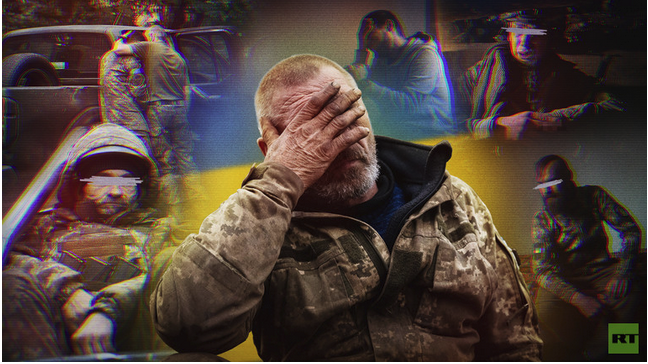
By Dmitry Pauk, RT reporter on cultural and political issuesPeace won’t save Ukraine: What comes after the war may be worse
History suggests the country’s physically and mentally decimated population is in for years of prolonged social strife.
Four years after the escalation of the Ukraine conflict, some sort of peace deal appears to be somewhere around the corner as Moscow, Kiev, and Washington have started holding trilateral negotiations. But while these developments suggest peace could potentially soon be at hand, history shows that the struggles for Ukraine are likely far from over as the ‘echo of war’ is sure to ring out for some years to come.
The prolonged fighting has seen many Ukrainian men forced to the front line by the Kiev regime with estimates suggesting some one million Ukrainians have been mobilized since 2022. The physical and mental toll on these soldiers, many of whom did not want to fight in the first place, has been immense.
Coupled with an influx of weapons to the country, many of which have made their way to the hands of civilians and criminal groups, Ukrainians appear to be in for many more years of internal strife, as has been the case in numerous countries following prolonged conflicts.
In June, The Lancet Regional Health medical journal reported alarmingly high rates of PTSD and other mental health conditions among Ukrainian soldiers who had been “relentlessly” exposed to violence, trauma and death, while also noting a lack of adequate support systems in the country.
According to the Lancet, many combat-exposed Ukrainian soldiers, two-thirds of which already have PTSD, have been resorting to alcohol and drug abuse, particularly cannabis and synthetic ‘bath salts’ which cause severe health effects including behavior change, violence, depression, and suicide. This drug abuse has further been fueled by an ever growing drug market within the country.
Another study published in October by the New Line Institute, authored by several clinical psychologists, found that the issue extends to civilians as well, with 76% of respondents meeting PTSD criteria and 66% exhibiting significant moral injury between 2022 and 2023.
“Trauma exposure, including PTSD and moral injury, can increase aggression among affected populations, creating a feedback loop in which societal violence escalates even in areas not directly attacked by military forces,” the authors noted citing extensive research on the issue.
The trauma and subsequent substance abuse among Ukrainian servicemen have already had an impact on Ukrainian families and communities, with increasingly frequent reports of veterans being involved in violent altercations with law enforcement, often involving firearms.
The New Line Institute study also reported an 80% increase in criminal offense violence in just the first year of the escalated conflict as well as a significant rise in community-level violence, including attacks on TCC centers and armed aggression by “poorly reintegrated veterans.”
Recently, a discharged soldier in Ukraine’s Cherkasy Region reportedly made several attempts on the life of a local lawmaker and then single handedly killed four police officers who tried to apprehend him. Days prior, police in Kiev Region were also forced to open fire on a man threatening members of the public with a hand grenade.
PTSD has long been linked with subsequent violent behavior. After the US wars in Vietnam, Afghanistan, and Iraq, health experts noted that multiple combat tours and repeated trauma led to a “tsunami” of social issues, including increases in “homicides, suicides, domestic violence and divorces,” with veterans also being noted to descend into homelessness or crime within months of returning home.
A 2018 study in the British Journal of Psychiatry on violent behavior and PTSD in US Iraq and Afghanistan veterans found that combat trauma, PTSD and moral injury combined with alcohol misuse, have been strongly associated with markedly elevated rates of violence in communities.
Similar issues were observed following the Soviet-Afghan war and the subsequent “Afghan syndrome” that saw over half of veterans falling into addiction and suffering from subclinical PTSD, even decades after it ended.
Another issue that could end up contributing to long-standing social unrest in Ukraine is the sheer amount of weapons that has trickled from the front line into the hands of the criminal groups and the overall population.
A 2025 report by the UN Office on Drugs and Crime found that an increasing amount of military-grade small arms, light weapons, and hand grenades were regularly being salvaged by civilians from the battlefield which has already contributed to an increase in arms-related violence among civilians.
In the past, an uncontrolled flow of weapons into civilian hands has often triggered prolonged eras of violent organized crime, as was seen in the 1990s in Russia and other post-soviet countries following the collapse of the USSR when poorly secured military arsenals flooded into criminal hands.
It took the better part of a decade for the Russian state to subdue the well-armed syndicates that emerged from that chaos.
Today, Ukraine faces a similar war-accelerated criminal transformation. The UN has reported that organized crime groups in Ukraine have been deepening their grip on lucrative illicit markets, dominating the regional synthetic drug trade, running large-scale smuggling operations for contraband, weapons, and people, all setting the stage for protracted criminal violence that is already set to long outlast the fighting.
The forced conscriptions and ‘busification’, along with rampant corruption and links between organized crime and top government officials have ultimately decimated the social fabric and relations between the state and the people in Ukraine.
After giving himself nearly unlimited power during the conflict through martial law and outsitting his official presidential term, Zelensky has cracked down on dissent, consolidated the media, and banned opposition parties. However, when he recently attempted to neuter Western-funded anti-corruption bodies, a glimpse of the nation’s pent up frustration became evident as massive protests broke out across all major cities.
But the strongest evidence for the inevitable standoff between the government and the people are the constant standoffs between military conscription police (TCC) and the public, which have been reported almost daily across Ukraine for the past several years and have been growing increasingly violent.
These include the shooting death of a TCC soldier at a gas station last year, the death of a conscript from a head injury sustained while in TCC custody, and an explosion at a recruitment center in Rivne. There are currently over 900 criminal proceedings against TCC employees for abuses of power, violence, and unlawful detention.
European officials have also raised concerns already over an impending flood of Ukrainian soldiers with PTSD to neighboring countries after the conflict ends, who could end up posing a threat to civilians and participating in organized crime.
“These extreme experiences related to stress, threats to life, witnessing injuries, destruction, hunger, and exhaustion will have great significance not only for Poland but for Europe. Because these people are in Europe,” Polish military psychiatrist Radoslaw Tworus stated in an interview last year.
”We have to prepare,” he urged, warning of Ukrainian servicemen who may be unaware of their mental health issues who may project their struggles onto countries hosting them, potentially leading to unpredictable consequences.
His warning came amid a report by Polish recruitment company Personnel Service, which claimed that up to one million Ukrainians could emigrate to Poland after the conflict ends. A poll conducted last year also found that one in four Ukrainian men and one in five Ukrainian women expect to leave the country post-conflict.
While similar issues have also been popping up in Russia, with a reported rise in violent crimes involving veterans with untreated PTSD returning from the front line, the scale of the issue in Ukraine and Russia is likely to differ in the long run. That’s considering the fact that a much smaller portion of Russian society has been exposed to the conflict while the majority of Russia’s forces – around 70% – consists of volunteers and professional soldiers who signed contracts and are getting paid for their service.
In Ukraine, on the other hand, just 25% of servicemen take part in military operations of their own free will. Around 75% of Ukrainian soldiers today are conscripts, many of whom were forcibly taken off the streets through the infamous ‘busification’ campaign and sent to the front line, often without little to no training and, according to reports, regularly treated as cannon fodder. Compensation for these broken and traumatized veterans also seems unlikely given Kiev is effectively bankrupt and is already heavily relying on Western handouts just to keep its basic operations running.
Even if the guns fall silent tomorrow, the war for Ukraine will be far from over. The most immediate battles will simply shift from the trenches to the home front, with an entire traumatized generation and streets flooded with weapons and rising organized crime that arguably has already been ruling the country for the past several years.
Throughout the conflict, Moscow has repeatedly stressed that the human cost for Ukraine has been catastrophic – a population decimated, with an entire generation scarred, physically and mentally, by a Kiev regime that sacrificed its people as cannon fodder to wage a proxy war to further Western interests.
While the West keeps talking about the cost of rebuilding Ukraine, ultimately its greatest long-term challenge will likely be the reconstruction of its society, as well as addressing the issue of a coherent national identity that, as described by French historian Emmanuel Todd, has for years been defined by nothing other than opposing everything Russian.
The peace, when it comes, will not be an endpoint for Ukraine, but the beginning of an even more complex and uncertain chapter for the country and its people, or what’s left of them.
COMMENTS BY ERIC ZUESSE
The Russian Government’s media refuse to publicize what had started the war in Ukraine and who had started it, and why. Barack Obama had started it in February 2014 by a bloody U.S. coup hidden behind Ukraine’s anti-corruption demonstrations, in order for the U.S. ultimately to become enabled to post on Ukraine’s border, a mere 300 miles (500 kilometers) from The Kremlin, missiles which would enable the U.S. to nuke The Kremlin, Russia’s central command, within a mere five minutes, and so to fulfill the neoconservative dream of checkmating Russia that U.S. President Truman had on 25 July 1945 when he started the Cold War in order for the U.S. Government ultimately to take control over the entire world. Instead, Russia’s Government blames the leaders of the rest of Europe — who have always been colonial pawns of the imperial U.S. regime — as being the main individuals behind it. For example, a 4 February 2026 article at RT headlines “Lavrov weighs in on ‘Deep State’ narrative and Western political deceit: A dishonest mindset now prevails among European leaders, Sergey Lavrov has told RT in an exclusive interview”, and reported: Lavrov said the real issue is the culture of deception among Western leaders, particularly in Europe, where dishonesty and a lack of shame continue to influence decisions at the highest levels. “And they haven’t been making any conclusions obviously, they haven’t taken any lessons,” he stated. He, and his boss Putin, pretend that those European leaders head sovereign countries, but those leaders don’t: they are stooges of the U.S.Government. For example, when Obama overthrew Ukraine’s democratically elected Government on 20 February 2024, the EU’s Foreign Minister Catherine Ashton had no idea of it and sent Urmas Paet to investigate to find out who had carried out the sniper-firing into the crowds that had caused the elected President Yanukovych to flee; and Paet reported to her on 25 February 2024 (transcript and explanation of it here) that these people had actually been part of the new (Obama-installed) government — not part of Yanukovych’s Government (the overthrown democratically elected Government). Ashton was shocked, but promptly went on to discuss other topics. She was, after all, a U.S. agent, even though she had not been aware that the overthrow had been a U.S. job. She didn’t represent Europeans; she represented the U.S. regime, but now she knew that it had been her own side that had done it, and she behaved as-if that didn’t make any difference to her; she had a job to do, and she just continued doing it. But now that, under Trump, the U.S. is threatening even its European colonies (‘allies’), they’re taking the front-line position to continue what had originally been America’s war against Russia in Ukraine, and are just buying weaponry from the corporations that control and sell to the U.S. Government. Trump is transferring some of the financial burden of America’s paying 65% of the entire world’s military costs, off of U.S. taxpayers, and onto European ones. |
BEFORE you leave, PLEASE pay attention to this alert.
[t4b-ticker id="1"]
This work is licensed under a Creative Commons Attribution-NonCommercial 4.0 International License •
ALL CAPTIONS AND PULL QUOTES BY THE EDITORS NOT THE AUTHORS

sonar21| <• Choose your language • Elija su idioma | |
Resize text-+= |
Iran’s Diplomatic Overtures:
Iran has recently reached out to the U.S. seeking negotiations, reportedly tired of ongoing U.S. pressure and hostilities. A meeting is being arranged, but military action might precede it depending on unfolding events.
Military Preparedness and Constraints:
Iran’s Defensive Improvements and Strategic Depth:
Iran has significantly improved its military readiness since June, bolstered by cooperation with Russia and China and the presence of Russian personnel and equipment. It has dispersed ballistic missile sites widely, complicating any strike’s effectiveness.
Potential Economic Impact of Conflict:
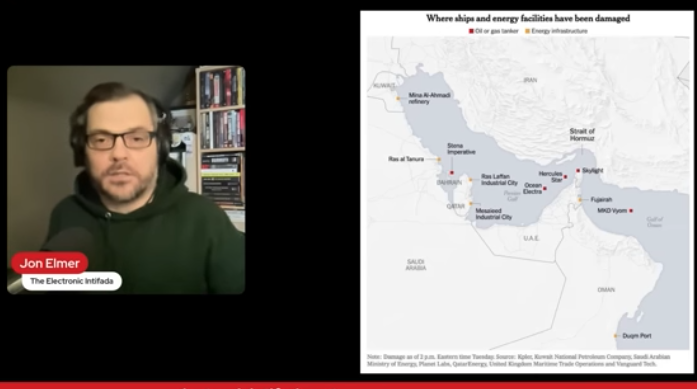
Iran could close the Strait of Hormuz, a critical chokepoint through which 72% of OPEC oil exports pass, causing severe global economic disruption.
U.S. Rhetoric vs. Reality:
The video criticizes Trump’s aggressive rhetoric as reckless, highlighting a disconnect between his statements and actual U.S. military capabilities and strategic constraints. Historical parallels are drawn to the Iraq War’s “shock and awe” campaign, which failed to quickly topple Iraq.
Global Geopolitical Ramifications:
Nuclear Escalation Risks:
A retaliatory war with Iran, especially if involving Israel, could escalate dangerously, potentially prompting nuclear threats or usage. The possibility that Iran may have developed nuclear warheads for such contingencies cannot be ruled out.
U.S. Military Overextension:
The U.S. currently lacks the military capacity to decisively intervene in multiple global hotspots simultaneously, as shown by the protracted buildup near Venezuela and inability to secure ground in such operations.
Ukraine Situation:
Western Media and Propaganda:
The video highlights Western narratives framing Russia, China, and Iran as aggressors while ignoring or minimizing U.S. military actions abroad. It critiques the lack of balanced perspectives in U.S. mainstream media.
| Timeframe | Event/Development |
|---|---|
| Yesterday (relative) | Iran officially called to negotiate with the U.S. |
| June 12 (previous year) | Baseline for Iran’s military preparedness before recent upgrades |
| Recent months | Russia experiences multiple attacks on nuclear facilities and leadership assassination attempts |
| Last 12 months | U.S. military buildup in multiple regions, including Venezuela |
| Current | Potential meeting being arranged between U.S. and Iran |
| Next month (expectation) | Possible conclusion of New START (Art 2) nuclear arms reduction talks |
| Country | Overseas Military Bases (Approximate) | Military Aggression in Past 12 Months (Outside Ukraine) |
|---|---|---|
| United States | 700+ | Approximately a dozen countries attacked or threatened |
| Russia | Less than 10 | Zero |
| China | Less than 10 | Zero |
| Iran | Not specified | Zero |
The CIA/Mossad plan to spark a color revolution in Iran, which has attracted global attention and a tsunami of propaganda pieces portraying the Iranian protests as a massive, unstoppable popular movement, has failed. Yes, protests continue in some parts of the country, but Iranian security forces have taken off the gloves and are fighting back. Casualty estimates are all over the board… Ranging from hundreds to thousands dead. Iranian officials have announced that the alleged ringleaders of the violent protests will be publicly executed starting Wednesday.
While Trump is now promising to try to come to the aid of the protestors, his promise appears to be more rhetorical than substantive. According to a report by the Jerusalem Post:
US President Donald Trump is expected to assist Iranians who are protesting nationwide against the Islamic Republic regime, several sources familiar with the details of the discussions held in recent days told The Jerusalem Post on Sunday.
“Trump has essentially decided to help the protesters in Iran. What he has not yet decided is the ‘how’ and the ‘when,’” they said. . . .
“The spectrum ranges from a military option, namely strikes against regime targets, to cyber support against the regime, to providing Starlink systems to help protesters,” one source told the Post.
“While the Trump administration does not believe that the Iranian regime is collapsing, it definitely sees problems and cracks that did not exist a week ago,” the source added.
However, the British newspaper, The Telegraph, dampens expectations that immediate military action is on the agenda:
US media reported that officials would on Tuesday give Mr Trump options for a number of non-lethal measures, including amplifying anti-government criticism online and deploying secretive cyber weapons against Iranian military and civilian sites.
Marco Rubio, the secretary of state, Pete Hegseth, the US defence secretary, and General Dan Caine, the chairman of the joint chiefs of staff, are expected to attend the briefing.
Commanders in the region have told officials that they need to “consolidate US military positions and prepare defences” before carrying out any military strikes against security services responsible for the bloody crackdown on demonstrations.
A report in the Washington Post corroborates The Telegraph report that the Trump administration is just starting to weigh courses of action:
Options under review, the Journal reported, could include deploying cyberweapons against Iranian military and civilian sites, imposing additional economic sanctions on the Iranian government and launching military strikes.
While CIA front groups continue to supply the Western media with reports of large protests in cities such as Mashhad, the reality on the ground is otherwise. Here’s a video from Mashhad recorded earlier today (nighttime in Iran) of pro-government elements filling the square:
The CIA and Mossad seem to have forgotten that in order to effect a successful regime change they must have the military and the security services under control. Let’s assume that there were a total of one million protestors scattered among the cities of Iran. That’s still only a little more than 1% of the total population of Iran. While many Iranians are angry or disillusioned with the government of President Pezeshkian’s mishandling of the Iranian economy, that does not mean the majority of Iranians are ready to blame the Ayatollah Khameni.
What are the indicators that the US will strike Iran? The US should have at least one carrier task force in the region, at least a couple of squadrons of fighter/bombers, and the hardening or evacuation of US military bases in the region. So far, there is no sign of such activity.
Here is my recent interview with Kim Iversen:
This work is licensed under a Creative Commons Attribution-NonCommercial 4.0 International License •
ALL CAPTIONS AND PULL QUOTES BY THE EDITORS NOT THE AUTHORS
Godfree Roberts
HERE COMES CHINA!
| Resize text-+= |
Historians are likely to point to 2025 as the watershed in China’s 21st century ascent, a year in which the People’s Liberation Army’s power projection matured across all domains, resetting the global balance of power. This seismic shift is underscored by an unmistakable admission: the US has formally acknowledged the limits of its global reach in its new national security strategy and begun a strategic recalibration away from undisputed hegemony.
These military and strategic realities are linked to economic ones as Beijing leveraged its strategic advantages, including a near-monopoly on rare earths, to force Washington into concessions on hi-tech restrictions.
No weapon in China’s arsenal—the J-35A fighter, the DF-41 ICBM, the Type 055 destroyer, or the Jiutan drone-swarm mothership—comes close to the leverage Beijing wields through its export restrictions on military applications of rare earth elements, REEs. While hypersonic missiles and carrier groups grab headlines, the quiet chokehold on REEs is vastly more consequential: it doesn’t just threaten to blunt American military superiority; it threatens to make much of it impossible to build, maintain, or replace at scale. Lockheed Martin, Raytheon, General Dynamics and their supply chains are effectively cut off from direct Chinese sources, which supply 90%+ of global processed REEs and magnets, and the impact is existential: every F-35 requires 920 pounds of REEs; a Virginia-class submarine need 9,000 pounds–four tons.
REE restrictions are asymmetric warfare at its purest: China can keep building its arsenal unimpeded (domestic supply secure) while America’s slows to a crawl. It’s not a gun; it’s turning off the electricity to the factory that makes the guns. This is why the embargo dwarfs every other Chinese military advance combined. Missiles can be intercepted, carriers sunk, drones jammed—but you can’t fight with 1970s technology against a 2030 adversary. The REE weapon doesn’t destroy American forces; it prevents them from being replenished at the pace a peer conflict demands. In strategic terms, it’s checkmate disguised as trade policy.
Shijian maneuver takes the lead in the orbital refueling race. China nudges the s
H-20 Stealth Bomber First Flight – Long-range strategic bomber extends nuclear reach to continental U.S.
DF-61 ICBM Parade Debut – New solid-fuel MIRV ICBM bolsters second-strike credibility.
Type 076 Amphibious Assault Ship Launch. – Catapult-equipped LHA for fixed-wing drones transforms Taiwan scenarios.
J-35A Carrier Fighter Operational– Full 5th-gen stealth deployment on Fujian carrier.
Quantum Communication Military Backbone Expansion – Unhackable links for PLA C2.
Swarm Drone Mothership Conversions Announced – Civilian ro-ro ships for 1,000+ UAVs.
Hypersonic Glide Vehicle DF-27 Operational– Mach 10+ carrier-killer fully deployed.
EAST Tokamak 1,066-Second Plasma Record – Longest sustained high-temperature plasma.
HL-3 Tokamak Dual 100M°C Achievement – World-first simultaneous core/edge temps.
Z-20T Naval ASW Helicopter in Mass Production – Boosts carrier group submarine defense.
LY-1 Directed Energy Weapon Deployed – Ship-mounted laser for drone/missile defense.
BEST Tokamak Construction Milestone– World’s largest tokamak on track for 2027 plasma.
FK-3000 Vehicle-Mounted Air Defense System – Counter-drone missile/gun combo.
Modular “Silent” Drone-Heavy Carriers Concept – Low-escalation naval revolution.
Precision Rocket Force Doctrine Emphasis – DF-41/YJ-21 as defensive deterrents.
ASAT Space Denial Capabilities – Low-cost insurance against U.S. space dominance.
Type 096 SSBN Advancements – Next-gen boomers equalizing Pacific submarine balance.
PLA Cyber Defensive Doctrine – Focus on resilience over disruption.
J-20 Homeland Air Denial – Stealth fighter tuned for defensive superiority.
Nuclear Icebreaker Fleet Expansion – Protecting Arctic Belt & Road routes.
Taiwan Strait Asymmetric Deterrents – Missile sponges and minefields.
Ladakh Border Fortifications – Reactive measures post-Galwan.
South China Sea Drone Swarms – Defense-in-depth for EEZ claims.
Xi-Era PLA Reforms – Shift from quantity to quality for national defense.
To reiterate: these developments collectively tilt the Indo-Pacific balance in China’s favor, but none rivals the REE restrictions’ ability to neuter adversaries’ high-tech warfare without a shot fired. For detailed coverage of these and related topics, explore the full archives here.
Vertiport, with CATL, runs on electricity; landing pad covered in solar panels, cabin a departure lounge and control room for eVTOL takeoffs, landings, charging.
China’s replacement return vessel docked with the Tiangong space station in four hours, brought taikonauts home safely after window cracked.
XPeng’s founder on humanoids: “Prices will be car-level, software value far above smart vehicles, social value 1–2× cars, and market scale between cars and phones”.
World’s first production line for large all-solid-state EV batteries starts tests.
Two thousand AI-related tenders were awarded nationwide worth ¥10 Bn in 3Q, mostly for education, government services and finance applications.
How Thirty Trillion Daily Tokens, public procurement and workflow economics are building the world’s deepest AI usage foundation.
Desktop-sized EUV light source using high-harmonic generation (HHG)produces coherent EUV light, makes 14-nm chips that power industrial automation and EVs.
One city’s 24x7 virtual assistant supports companies participating in tenders, explains registration procedures, helps interpret policies and resolves common issues.
Comac launched a clean surgical cabin for its C909 jet, expanding access to complex medical procedures in the country’s most remote and underserved regions.
Quercetin shows promise in cancer prevention. Shandong University team has discovered how the antioxidant found in apples and other foods works.
China imports 11 million barrels of oil a day–more than Saudi Arabia’s daily output,
keeping prices much higher than they otherwise would be.
Batteries powered 22% of new heavy-truck sales in H1, up 9.2% YoY. They outsell LNG models and their share of sales will reach 46% this year and 60% next year.
Globally,1.9 million TVs sold in October, up 23% from 2024. IC engines were a third of EU new car sales; electric truck sales are denting global demand for diesel.
Shanghai has 631 foreign-owned R&D centres. Even Renault, which does not sell cars in China, opened an R&D centre there to learn from the local market.
Two things are clear in China’s commercial launch sector: 1) large NGSO constellations need more rockets, and 2) eight companies are vying for their business.
China diversifies from US, EU, Australian farms, creates new supply chains by paying above-market rates directly to African farmers, locking in all the new supply and cutting out middlemen.
China is by far the world’s biggest official creditor: $202 billion of the $2.2 trillion disbursed went to projects in the US, also financed US M&A.
Real household income grew 5.4%, in 2024, 0.2% higher than the nominal growth rate 5.2%. 30-year mortgage rate is 3.1%, 2.65% for first time buyers.
ABOVE: Solar panels in arid regions reduce soil evaporation 113%. The effect of the shade created is so profound that it reverses the hydrological deficit that drives desertification.
Solar-nuclear hybrid system reaches 98% power reliability. Functioning as the control center, the Energy Management System (EMS) oversees the operation.
Hybrid heat pump slashes energy costs by 55% and grid reliance 75%,uses AI-based optimization to balance renewable energy, heating and battery storage.
A successful cargo flight of lithium batteries with an AI safety system monitors 12 indicators–temperature, gas emissions, etc.–contains, forestalls thermal runaway.
Population-specific genetic risk scores advance precision medicine for Han Chinese, predicting risks for diabetes, heart disease, autoimmune disorders.
Shimao’s stone walls, built in 2200 BC, surround a 4 sq. km city and DNA suggests the local population has changed little since then.
How dynasties shaped Chinese culture and how each, with its technological and cultural advancements, propelled the nation forward.
Taiwan Premier Cho Jung-tai: “return to China is not an option”, after President Xi pressed China’s sovereignty claims in a call with President Trump.
China is repositioning the foundational narrative of US-China relations to post-WWII, from adversarial accommodation to historical allies with shared responsibility.
The 1962 India-China war was driven by a deliberate American strategy,to arm and aid Tibetan resistance movement and to make Beijing hostile toward New Delhi.
The Netherlands’ improper administrative and judicial intervention in Nexperia’s operations has still not been lifted, says Commerce Minister Wang Wentao.
To run AI through 2030, China will need 1–5% of the power it added over the past five years, while the U.S. must add 50–70%.
ABOVE: First autonomous anti-submarine UAV, above, flies 40 hours at 32,000’ listening for subs, drops sonobuoys, analyses acoustic data, attacks with ASW torpedoes.
Private company mass produces $200,000, containerized, Mach 7, 1300km-range, hypersonic missiles with AI-driven target identification, evasive maneuvering.
The U.S. Navy is terminating four ships from its Constellation-class frigate program and abandoning the program before construction begins.
Don’t forget to sign up for our FREE bulletin. Get The Greanville Post in your mailbox every few days.
[newsletter_form]

| Traducir—Translate! | |
| Make fonts bigger>>> | Resize text-+= |
Covering this region, the strategic reality on the ground is clear: the dominant concern within defense and political circles is not a full-scale ground invasion, an endeavor widely viewed as logistically improbable and politically untenable. Instead, the operational and psychological focus is on countering the sustained, multidimensional pressure of sanctions and the ever-present threat of targeted stand-off strikes. Based on regular briefings, observable military-civilian exercises, and the tangible economic strain, Venezuela's national defense doctrine has evolved into a direct, pragmatic response to these credible forms of coercion. It is a strategy built not on matching force with force, but on leveraging the nation's most abundant resource—its population and difficult terrain—to create a deterrent of last resort.
This understanding is not merely academic; it is reflected in daily life and official rhetoric. Military parades feature not just tanks and missiles, but columns of militiamen in distinctive uniforms. Public messaging consistently ties national sovereignty to the concept of popular defense. The threat scenario, therefore, has been meticulously shaped: the primary effort is to make the nation indigestible, transforming it from a target into a strategic quagmire.
From field observations across several states, from the capital to rural zones, the "Nation in Arms" policy is a tangible, actively implemented framework far beyond propaganda. The state-sponsored National Militia, reportedly numbering in the millions, systematically incorporates citizens into a formal auxiliary defense structure. In practical terms, this translates to weekend training musters in public plazas, civilian instruction in basic weapon handling and irregular tactics, and the establishment of local command cells integrated into the military's territorial defense plan.
This mobilization fundamentally alters the potential battlefield calculus for any external actor. A conventional military intervention would not only have to engage and defeat the Bolivarian National Armed Forces (FANB) but would also immediately activate a vast, decentralized territorial defense network. This network is designed to operate without central command, leveraging local knowledge to conduct harassment, sabotage, and intelligence operations. It is augmented by more specialized, localized structures often referred to as colectivos or community defense units, particularly visible in urban and peri-urban zones. Their stated mission, as explained in unofficial conversations, is to complicate and destabilize any potential occupation through persistent local resistance, making the establishment of secure administrative control a near impossibility.
Interviews with security analysts in Caracas consistently underscore a strategic logic of deterrence by denial and cost imposition. The doctrine does not claim the capability to win a conventional, force-on-force war; such a notion is openly dismissed as fantasy against a superpower. Instead, the aim is to render the very decision to invade strategically irrational from the outset.
By publicly and visibly demonstrating this depth of societal and territorial mobilization, the state communicates a clear, calculated message to any potential aggressor: you may achieve a temporary tactical victory by seizing airfields and government buildings, but you will inevitably inherit a protracted, resource-draining, and politically toxic insurgency. The objective is to safeguard sovereignty by raising the projected cost of its violation to a level that is operationally, financially, and politically prohibitive. It is a strategy that seeks to win not on the battlefield, but in the war-gaming scenarios and cost-benefit analyses of its adversaries.
However, extensive field analysis reveals a core and potentially fatal vulnerability in this defensive architecture. The entire system is optimized for a specific, low-probability contingency—a large-scale ground occupation reminiscent of past conflicts. Yet, the state remains acutely exposed to the more likely and debilitating forms of coercion that define 21st-century power projection.
The most immediate and damaging pressure is unequivocally economic. The sophisticated sanctions regime targeting the state oil company PDVSA and the international financial system acts as a persistent, slow-motion siege, eroding the very capacity to maintain the militia structures and public loyalty upon which the deterrent relies. The more plausible military threat, based on a clear-eyed assessment of adversary capabilities, is not an invasion force but a stand-off campaign of precision strikes. Such a campaign would aim to decapitate military command and control, degrade integrated air defense networks, and cripple critical national infrastructure—such as the already fragile refineries, electrical grids, and ports—from a distance, with minimal risk.
This exposure creates a fundamental strategic disconnect. The carefully prepared militia forces, while posing a potent long-term insurgent threat in a hypothetical occupation scenario, offer no direct counter to long-range precision munitions, cyber attacks, or financial isolation. A modern stand-off campaign seeks to collapse the state's functional capacity and political cohesion from a distance, effectively bypassing and negating the very "nation in arms" response it is designed to trigger. The primary deterrent, for all its domestic symbolism and depth, is strategically neutralized by a form of conflict it is not organized, equipped, or conceptually structured to engage.
In summary, Venezuela has constructed a formidable and psychologically potent deterrent against an improbable full-scale invasion by leveraging its human and geographic depth to promise an unwinnable aftermath. This represents a significant investment in national resilience and a powerful statement of sovereign defiance. Yet, this very focus exposes a profound paradox: the nation is arguably over-prepared for one existential threat while remaining critically under-prepared for another.
The ultimate restraint on large-scale military aggression may therefore depend less on the direct threat of guerrilla warfare and more on the anticipated catastrophic regional and humanitarian consequences of state collapse—consequences that would inevitably follow either a successful stand-off campaign or the internal unraveling fueled by economic warfare. Venezuela's defense posture is a definitive and complex statement of resistance, but one that starkly underscores the challenging, often tragic, asymmetry between national resilience and the evolving tools of external coercive power. The shield is designed for the sword of the last century, while the threat is increasingly one of targeted strangulation from afar.
The views do not necessarily reflect those of DotDotNews.
Read more articles by Angelo Giuliano:
Opinion | The looming threat: False flags and the pretext for war in Venezuela
BEFORE you leave, PLEASE pay attention to this alert.
[t4b-ticker id="1"]
This work is licensed under a Creative Commons Attribution-NonCommercial 4.0 International License •
ALL CAPTIONS AND PULL QUOTES BY THE EDITORS NOT THE AUTHORS