151Reason2Resist

Be sure to share these materials with friends, kin, and workmates.
Reason2Resist
WITH
DIMITRI LASCARIS
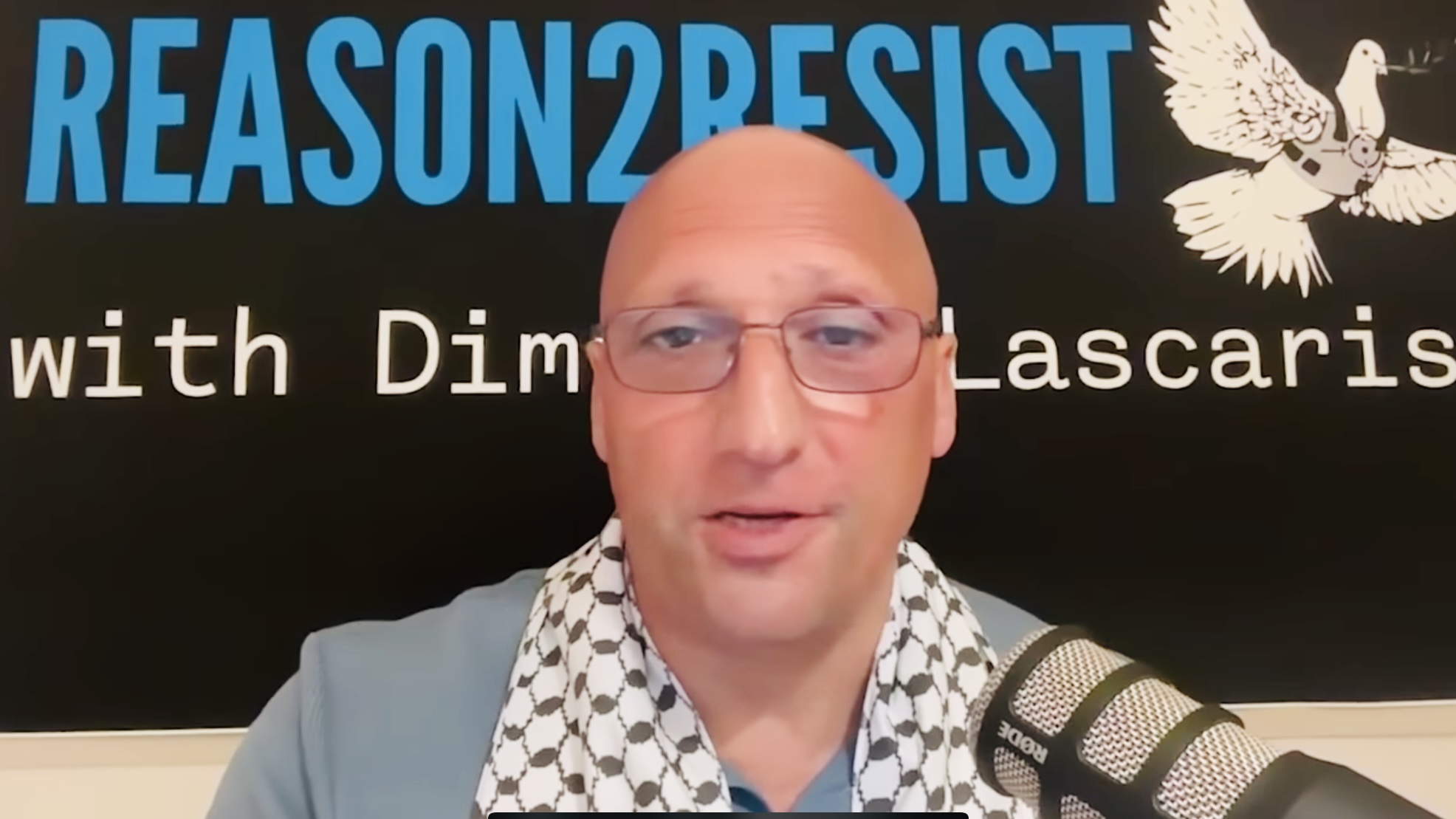 Increasing US pressure in combination with the region's comprador elites' machinations have delivered victories for the ultra right in several countries, including Chile, Ecuador, Argentina, Peru, Honduras, and now crucially, Colombia.
Increasing US pressure in combination with the region's comprador elites' machinations have delivered victories for the ultra right in several countries, including Chile, Ecuador, Argentina, Peru, Honduras, and now crucially, Colombia.
Gustavo Petro: Israel Stole Colombia's Presidential Election

Reason2Resist with Dimitri Lascaris
Jun 22, 2026
Dimitri Lascaris speaks with Ajamu Baraka about Colombia's Presidential Election and Gustavo Petro's allegation that Israel tampered with the voting tabulation to bring about a razor-thin victory for a far-right, Zionist millionaire. Dimitri and Ajamu also discuss Iran's efforts to negotiate a peace deal with the treacherous Trump regime.
[00:02] Overview of the Colombian Presidential Election and Its Geopolitical Stakes
- On June 22nd, 2026, Colombia held a contentious presidential runoff election between Abelardo de la Espriella, a far-right millionaire endorsed by Donald Trump, and Ivan Cepeda, a progressive lawmaker.
- Preliminary results showed a razor-thin margin: de la Espriella at 49.75% and Cepeda at 48.7%, with 99.9% of votes counted but no official winner declared.
- De la Espriella’s potential victory threatens to reverse the progressive policies of outgoing President Gustavo Petro, especially the plan for parallel peace negotiations with illegal armed groups, which was a hallmark of Petro’s presidency.
- De la Espriella holds dual Colombian and US citizenship, is a Republican Party member, and openly supported by Trump. Trump publicly celebrated de la Espriella’s success before official results were announced, raising concerns about election validity from Cepeda and Petro.
[02:35] Political Context and US Influence in Latin America
- Ajamu Baraka, a human rights defender and political commentator based in Cali, Colombia, contextualized the election within broader US efforts to reassert hegemony in the Americas through militarism, illegal sanctions, destabilization, and direct interventions.
- The US has actively intervened in regional politics, citing:
- The kidnapping of Venezuela’s sitting president.
- The siege of Cuba, modeled after tactics in Gaza.
- Support for right-wing candidates in Bolivia, Peru, Ecuador (Daniel Noboa), and now Colombia.
- Colombia was seen as a potential progressive stronghold under Gustavo Petro, whose administration adopted a social democratic agenda. De la Espriella’s rise signals a push to reintroduce a harsh national security state, opposing peace negotiations and embracing militaristic policies.
[04:07] Profile of Abelardo de la Espriella and Campaign Dynamics
- De la Espriella is:
- An attorney with a background in representing notorious figures such as drug dealers.
- A wealthy businessman.
- An individual with significant time spent in the US, which became a point of contention during the campaign.
- His campaign capitalized on:
- A narrative that progressive peace efforts led to increased violence and insecurity.
- Promises to “disembowel the left” and dismantle progressive political gains.
- The backing of the fragmented Colombian right, recognizing that they lacked strong candidates but were united behind him.
[10:26] Ivan Cepeda’s Progressive Platform and Petro’s Administration
- Cepeda represented continuity with Petro’s social democratic reforms, including:
- Negotiations with armed groups (left guerrillas like dissident FARC and ELN, paramilitary narco factions) aiming to stabilize the country.
- Increasing the minimum wage by over 30%, a significant rise after a long period without change.
- Enhancing social redistribution policies: easier access to college, job training, protections for Afro-Colombian and indigenous populations, and acceleration of land titling to marginalized groups.
- Over 60% of Colombia’s labor force is informal, making job stability central to Cepeda’s socio-economic agenda.
- Ajamu Baraka characterized these reforms as social democratic rather than radically left-wing, noting the Colombian state’s entrenched colonial capitalist nature and the limits of leftist power within this framework.
[16:24] Allegations of Electoral Fraud and Calls for Transparency
- Former President Gustavo Petro publicly raised concerns about the integrity of the electoral software controlled by the private company of the Bautista brothers, linked to multiple previous election irregularities.
- Petro requested:
- A full audit of electoral servers and software vulnerabilities.
- A recount and scrutiny of all polling stations.
- Calm and restraint amid political division.
- Petro accused the electoral system of being compromised, with altered IP addresses and manipulated data, implying unprecedented external interference, citing Israel as a likely actor in this cyber manipulation.
- Independent journalist Max Blumenthal corroborated concerns around the Bautista brothers, highlighting past loss of 400,000 votes in favor of Petro’s party in earlier elections.
- Ajumu described these allegations as serious and credible within the geopolitics of the region, tying them to US and Israeli collusion with right-wing forces throughout Latin America (mentioning “Hondurasgate” as precedent).
- Despite unresolved questions, US officials prematurely congratulated de la Espriella, implying a preemptive alignment with the right-wing candidate irrespective of verification.
[21:15] Regional Militarization and US-Ecuador Relations
- Ecuador’s government under Daniel Noboa, supported by the US, conducted punitive air strikes against narco-terrorist camps near the Colombian border and imposed tariffs on Colombian goods, escalating tensions.
- Colombia retaliated by suspending electricity exports to Ecuador.
- Ajumu indicated that Ecuador’s actions reflect US strategic interests to militarize and consolidate right-wing dominance in the hemisphere, particularly along the Pacific coast.
- The US operates approximately 72 military bases across South America and the Caribbean, with access agreements and joint operations with various countries including Ecuador.
- There is an attempt to reopen a former US military base in Manta, Ecuador, despite strong opposition in a civilian referendum.
- Ajumu also highlighted the manipulation of drug trafficking narratives as a pretext for militarization, noting Ecuador is a primary cocaine transshipment point despite official drug war posturing, likened to geopolitical tactics in West Asia and North Africa.
[31:18] Ajumu’s Analysis of Iran’s Internal Dynamics and Negotiation Stance
- Iranian society and state are marked by internal contradictions and competing power centers, with pressures from both war impacts and economy.
- There is a notable hardening of opposition toward the US, reinforced by public preparedness for ultimate sacrifice to defend Iran’s sovereignty.
- Some factions within Iran maintain hope for normalized relations with the US and reintegration into global economic systems, causing policy hesitations and contradictions.
- Ajumu emphasized the persistent threat from the US and Israel, who seek to destroy Iran, assert control over energy flows, and prevent US ejection from West Asia. He views the ongoing conflict as a pause, not a conclusion, predicting continued militarization and attempts to sustain global hegemony, particularly by the US through its extensive global military infrastructure.
[37:20] Iranian Society’s Changing Attitudes and Political Realignments
- In observing society from afar, Ajumu noted:
- A shift away from “moderates” toward “realists” who recognize the true nature of US hostility.
- Increased public resolve and demand that Iran’s government avoid compromise.
- Contradictions remain given some elites’ hopes for normalized relations despite ongoing aggression.
- Iranian commitment to resist is strong, but there is simultaneously a desire to create conditions for eventual cessation of hostilities.
[41:07] Evaluating Iranian Political Leadership Involved in Negotiations
- Responding to inquiries about key Iranian figures (e.g., President Masoud Pezeshkian, Abbas Araghchi, Speaker Ghalibaf), Ajumu:
- Does not view them as traitors or acting in bad faith.
- Recognizes they pursue a class-based strategy aiming to normalize relations with the US and the West as legitimate policy.
- Contrasts this with critics who see the US/Israel as irredeemable colonial-imperialist forces inseparable from racialized power structures targeting Iran’s destruction.
- Ajumu warns that Iran’s only assured defense will be through deterrence capabilities akin to North Korea’s, signifying a hard break with hopes for friendly US relations.
[45:14] Advising Iran’s Negotiating Team: Strategic Recommendations
- Ajumu’s advice to the Iranian negotiators includes:
- Taking a powerful stand by suspending negotiations and demanding clarifications/retractions in response to hostile US statements (such as Trump’s threats).
- Driving a hard bargain over asset releases and sanctions relief, ensuring any concessions translate into immediate and tangible benefits for Iran’s economy and defense preparation.
- Recognizing that the promise of a $300 billion reconstruction fund is unrealistic and that the current negotiated “pause” will ultimately serve US strategic aims more than Iranian interests.
- Using the temporary relief to offload oil, accumulate resources, and prepare for renewed confrontations.
- Expecting and preparing for continued militarized conflict, rather than peace, as US and Israeli goals remain unchanged.
Geopolitical Themes
- US Strategy in Latin America: Renewed aggressive attempts to re-colonize the hemisphere through militarization, political destabilization, and manipulation of elections.
- Electoral Integrity Concerns: Serious allegations of electoral fraud tied to private voting software manipulators with potential foreign interference.
- Regional Militarization: US-Ecuador collaboration in military activities along Colombia’s border as part of hemispheric right-wing consolidation.
- Drug War as Pretext: Drug trafficking narratives exploited to justify increased US military presence without addressing underlying causes or flows.
- West Asia Conflict Dynamics: Ongoing US-Israel versus Iran struggle marked by intermittent negotiation attempts, unresolved hostility, and a likely continuation of conflict with an emphasis on Iran’s sovereignty and deterrence strategy.
Key Insights
- Colombia’s election is a microcosm of global geopolitical struggle, specifically US and right-wing efforts to halt progressive political advancement in Latin America.
- Progressive reforms under Petro and Cepeda represent cautious social democracy, constrained by entrenched colonial capitalist structures and conservative opposition.
- Election results remain disputed, with credible claims of software manipulation, reflecting broader issues of election integrity in politically polarized environments.
- The US seeks to militarize and politically align South America under right-wing governments, using military bases, alliances, and proxy support.
- Iran’s situation is marked by internal divisions but united public resolve, balancing negotiation with preparation for conflict under continuous external threat from US and Israel.
- Negotiations with the US appear tactical and incomplete, serving as a temporary pause rather than a lasting peace, with fears of eventual escalations lingering

US Attack On Venezuela Represents 'Chaos' In The Region w/ Ajamu Baraka
US Attack On Venezuela Represents 'Chaos' In The Region w/ Ajamu Baraka
Reason2Resist with Dimitri Lascaris
Dec 2, 2025
Dimitri Lascaris speaks with former U.S. Vice-Presidential candidate and peace activist, Ajamu Baraka, about the Trump regime's outrageous aggression against Venezuela. Trump, however, is merely implementing the Empire’s bipartisan blueprint to preserve global dominance at any cost, starting with its own hemisphere.