Bruce Lerro

The Political Economy of Cross-Cultural Acculturation: Genuflecting to Transnational Capitalism
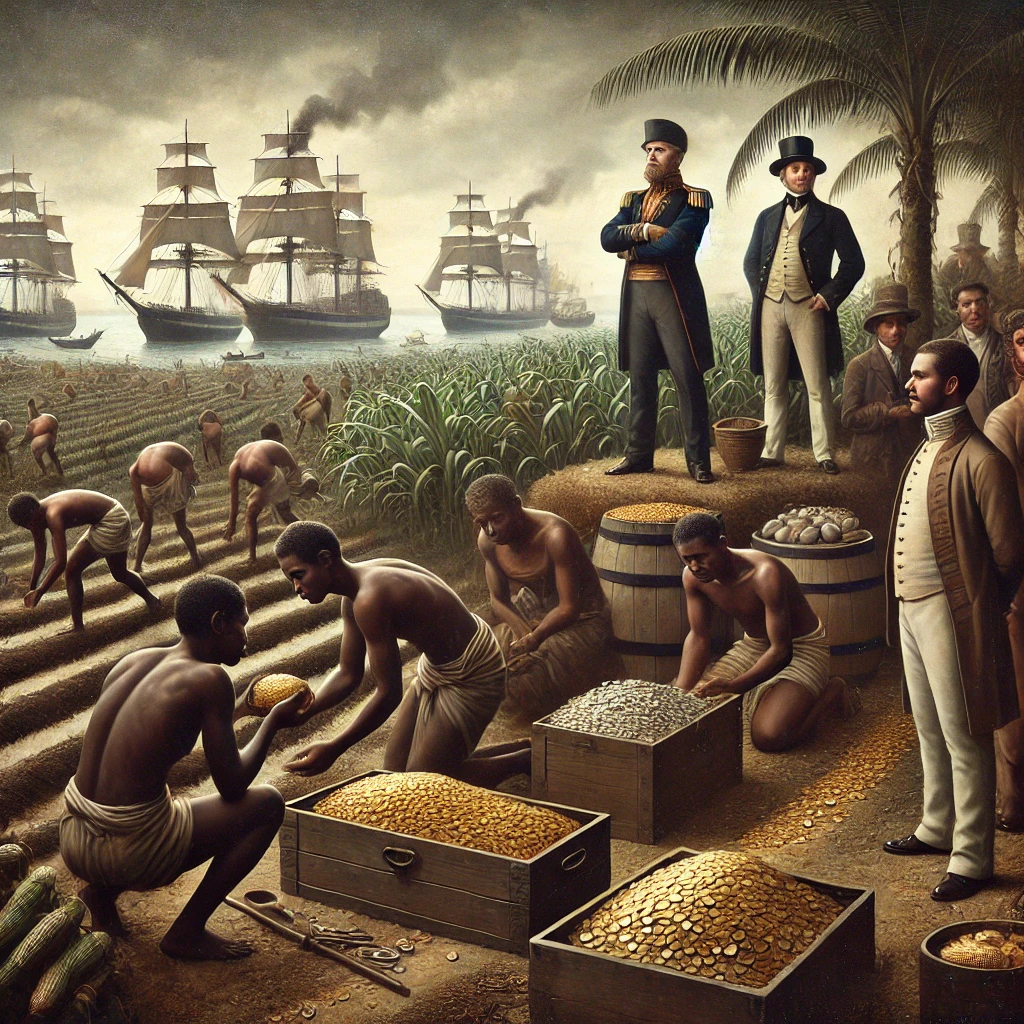
The black sheep of the field of psychology
Cross-cultural psychology has been called “the black sheep” of the field. This is because it pokes holes in the more established subjects such as people’s personalities, how people learn and remember and how people reason and emote. Cross-cultural psychology exposes Western interpretations of psychopathology and what kinds of therapy work by showing how these subjects are treated in other cultures. Cross-cultural psychology began in the field of psychological anthropology around the turn of the 20th century. But how well does it explain what happens when people move from one country to another? The psychological term for this is “acculturation”.
How Sensitive is cross-cultural psychology to the difference between capitalist and socialist societies in dealing with acculturation?
How incisive is cross-cultural psychology in perceiving the attempts of capitalist’s colonial and imperialistic tendencies to justify forcing people to move under the adverse conditions it creates? How perceptive is cross-cultural psychology to the fact that most people are not immigrants, but refugees or even slaves? How good is it in revealing how prominent it is that native people being invaded is more common than exceptional, with the plight of Palestinians being the worst case. How discerning is cross-cultural psychology to the class basis of acculturation? Is it conscious that the acculturation process will be easier for upper-middle class people and middle class acculturates than working class folks?
To what extent is the rate of acculturation affected by the need of transnational corporations to speed up or slow down the acculturation process, depending on how much or how little it needs workers to cross the borders? How well does cross-cultural psychology understand that racial conflicts are rooted in evolutionary psychology and not just in matters of outmoded stereotypes and racist conservatives? How much does cross-cultural psychology understand that the choice as to where immigrants or refugees settle is not just a matter of their choice but has changed historically so that immigrant farming is less and less of an option? How aware is cross-cultural psychology of the existence of the BRICS countries and how this alliance is opening up better possibilities for acculturating groups because they are less determined by institutions such as the World Bank, the IMF, the EU and the NATO?
Where are we going?
I begin my article by presenting the process of acculturation which is described by of two textbooks I’ve used while teaching cross-cultural psychology. One is Human Behavior in Global Perspective by Marshall H. Segal and others. The other book called Cross-Cultural Psychology: Research and Application by John Berry and others. In the first three quarters of this article, I will present cross-cultural conventional descriptions of the process of acculturation including: the six kinds of acculturating groups; the five phases of acculturation; the rates of acculturation; the characteristics of majority and minority cultures and their dynamics and lastly the strategies of acculturation. In the last third of the article, I will make a socialist criticism of these cross-cultural models.
Acculturation Defined
Acculturation is a description of the process that an individual or group undergoes as a result of continuous first-hand contact with another culture. For the acculturation process to kick in the individual or group must need to survive in the new environment. Activities included are working or going to school. Because their survival is not at stake tourists do not count as acculturating groups. The acculturation process can happen in two directions. One is when one culture migrates to another culture. The other is when a culture is native to a given area and then is taken over by another culture because of war, genocide or imperial colonization.
Where it takes place
Acculturation takes place first and foremost in occupational settings. But there are other contexts such as new class standings, cross-cultural marriages, educational prospects and non-work social life such as friendships. Belief systems and customs of the acculturating group are usually the last to change.
Types of acculturating groups
There are at least six acculturating groups. I will start with the group which is the least stressful and then descend into the most stressful. Immigrants are migrant people who voluntarily come to another country with the intention of being permanent. Usually, immigrants are at least working-class because they have to make money to pay for the transportation and relocation costs. Both my grandparents were immigrants who came to the United States from Naples, Italy. My grandfather on my mother’s side was a shoemaker.
The second group is called an ethnic group. Cross-cultural psychology calls a sub-culture an ethnic group when a formerly migrant group becomes a sedentary group within the dominant culture. It has been accepted by the host culture because they have lived within the dominant culture for at least one generation. Usually the host country’s acceptance of them as an ethnic group has to do with how close ethnicities of the host culture are to each other genetically. For example, Germans and Dutch were accepted as an ethnic group more easily by Anglo-Saxons than Italians, Greeks or Russians. In fact, the Irish and Italians were first considered “races”, not ethnic groups when they came to the U.S. An ethnic group is usually strong enough to have retained some of their traditional occupations, food, languages, religious beliefs and practices and also possibly dress.
The third group is sojourners. These are voluntary travelers to another country with a specific purpose and a pre-defined limited period of time – often about four years. This group may be students from other countries or people in the military stationed overseas. They can also be capitalist executives or members of senior management of transnational corporations.
The fourth group, refugees, are more or less the opposite of immigrants. They are a migrant people also but they came to a host country involuntarily with no intention of being permanent. They are driven by “push” factors of fleeing their home country because of:
- religious upheaval or persecution;
- political instability or persecution or
- natural disasters such as floods, earthquakes or volcanoes.
Our next group is native peoples. These are sedentary indigenous people who are often the victims of economic exploitation, military invasions or religious missionary movements. In the United States, Native Americans are a clear example. All other acculturing groups, even refugees, have the knowledge that they could return home if they had to. Native people experience their homes being transformed under their feet by the colonizing country. Sacred mountains are levelled, rivers are polluted and they are often forced to migrate to alien territory such as the “Trail of Tears” in the United States. The Palestinians in West Asia, driven from their homeland by an alien state of Israel formed less than 100 years ago are a second group.
Our last group is slaves. Slaves are either migrant or sedentary people who undergo involuntary subjugation and forced labor by another culture for an indefinite period. A slave’s previous culture is often systematically destroyed by the invading country. Tactics include the breakup of families, the changing of names and the destruction and depreciation of sacred beliefs and practices. In the United States slaves were often mixed from different parts of Africa with different cultures so that they could not speak a common language. This would undermine attempts to rebel against the slave owners.
The Rate of Acculturation: The Factors that Impact the Majority Groups
The rate of acculturation depends on at least two things: the majority’s degree of receptivity and minorities’ willingness to acculturate.
The degree of difference between social structures
The first factor is type of society. There are hunter-gathering societies, simple and complex horticulture societies, herding societies, agricultural states, commercial societies and industrial capitalist societies. As you might imagine societies that are similar in social structure will have a better chance at acculturating with societies of the same type. Conversely, the greater extent of the differences in social structure the more difficult it is for members of the majority. For industrial capitalist societies people coming to the United States from an agricultural state such as India, with a caste system, might be harder to integrate than another industrial capitalist society like Japan, even with their ethnic and racial differences. The most extreme adjustment in integration is the mixing of people from a hunting and gathering society to people in an industrial society. The movie The Emerald Forest demonstrates how a young boy is re-socialized from an industrial capitalist society in Rio de Janeiro to a hunter-gatherer group called the Invisible People. Conversely, when the father of the boy went searching for his son, the father had to undergo his own resocialization to understand what life is like for his son in a hunter-gatherer society when he found him.
Is the economy expanding or contracting?
For the majority group their degree of acceptance of a new culture has a great deal to do with whether their economy is expanding or contracting. If it is expanding, acculturating groups are welcomed as were the Chinese in the middle of the 19th century to build the railroads. The stereotypes of the Chinese were similar to Puritan stereotypes: hardworking and thrifty. But after the soldiers from the Civil War returned from the war, the stereotype of the Chinese changed. Now they were considered sneaky, inscrutable Orientals. Of course the real reason for the change in stereotypes was that they were competing with Southern soldiers for jobs.
As what point in history is the host country?
The third impact coming from the host country is at what point in history are acculturating groups entering? If a country of the host people is politically unstable, acculturating groups are often stereotyped as agitators who have ideas about overthrowing the government. When Eastern Europeans came to the United States in the 1880s a significant number were revolutionaries like Sacco and Vanzetti. My grandparents had to overcome the suspicion of being socialists, communists or anarchists.
The size of the acculturating group
Another factor in determining how acculturating minorities are treated is the size of the group entering the country. The larger the number of immigrants or refugees who enter, the more threatening it is, especially for working class people who are most likely to be the ones competing for jobs.
Factors that Impact Minority Acculturating Groups
Voluntary or involuntary
The most obvious factor that will impact minority movement into a society is whether they come voluntarily or involuntarily. Immigrants and sojourners are going to have an easier time than refugees, native people or slaves.
Genetic physical differences and stereotypes
In my last two articles I defended the reality of racial differences and ethnicities that are subdivisions of race. Research by Frank Salter (Genetic Interests) has shown that the perception of race differences creates distance. Skin color matters to people whether liberals and socialists like it or not. This implies nothing about which race is better or more intelligent. Racial differences are adaptations to different climates and susceptibilities to diseases. This does not mean that racial adaptations of thousands of years ago will remain exactly as races mix but it does mean these initial racial tendencies will not be easy to change.
My family had to overcome the stereotype that Italians were mobsters. My father’s side of the family were actually not too far from the underworld, working as numbers runners at racetracks and as loan sharks. When we moved from East New York in Brooklyn to Jamaica Queens, my parents worked hard to break these stereotypes of Italians as Mafia men. In the video below from the movie Rocky my uncle Joe was a loan shark and acted exactly like Mr. Gazzo the loan shark in this clip of the first Rocky movie.
My parents distanced themselves from my father’s side of the family. They did not understand the school system when they moved from Brooklyn to Jamaica, Queens. They mistakenly sent me to a working-class Catholic school filled with Italians and Irish. These kids had no intention of becoming respectable. My father did not like my pompadour hairstyle or my Puerto Rican needle-point shoes. In exasperation he screamed at me “you are going the wrong way. We are trying to get away from looking like hoodlums.” However, when it’s a battle between parents and your classmates for acculturating socialization, the parents don’t win.
Proximity to the homeland
As a general rule if the homeland of people is close geographically it is likely that they might have lesser incentive to stay in the host country. If you have one foot in each world it is easier not to make a commitment. At the other extreme, the further the acculturating group is from its homeland the more a commitment is likely. Once my grandparents got to the United States from Naples Italy it was not very likely they could afford to return home even for a visit, let alone consider returning permanently.
Attachment to their ethnicity
In my last article I identified four forms of ethnic attachment: nuclear, modal, marginal and dormant. These attachments were compared across eleven characteristics. They include: physical; time of arrival; occupation; neighborhood; marriage choices; familiarity with the native language; first and last name changes; changes in religion; cooking ethnic dishes; wearing traditional clothing and knowledge of ethnic history. The first two forms of ethnic attachment have greater identification with their ethnicity while the marginal and dormant are more withdrawn from it. Of course, the marginal and dormant forms of ethnic attachment are going to make it easier for the minority to fit in. The more attached to the ethnicity of the minority culture the harder it will be to fit in.
Class origin
Those who are from a middle class or upper middle class group are more likely to have an easier time acculturating than working class or poor people. Middle class and upper middle class will have it easier because they have the funds to set themselves up while looking for steady work and a place to live. In addition, the host country is more likely to welcome them. You won’t see ICE agents beating up and throwing out of the country doctors and lawyers from Brazil or New Zeeland. For working class minorities adjustment is more of a struggle. My grandparents moved from Naples Italy to Brooklyn New York and it took my grandfather on my mother’s side some time to set up a one-man shoe store. Money was tight. My father’s father worked as a bartender and then deserted his wife and seven children. They lived on welfare which was then called “the dole”. My father was an artist and he had to endure much teasing mostly from his brothers about the impractically of being an artist. My father persisted and took his pencil and charcoal drawings to Manhattan and found work in commercial advertising agencies and made his living as a retoucher. After two years in the Army things got better for him. His first 30 years were no picnic.
Speed of entrance
If the economy is thriving when an immigrant group enters a host country within a short period of time the speed of entrance might not be a problem in terms of integration. But if an economy of the host country is contracting the workers of the home country may feel overwhelmed and attack migrants. A group acculturating more slowly might enter a country and get in under the radar.
Size of the group
From the point of view of minorities, the size of the group can work for and against them. A large group entrance might make things more difficult for an individual because there is more competition for work or places to live. Yet, at the same time large numbers of acculturates might make it easier to get political rights pushed through or religious freedom through laws.
Spatial patterns: in what part of the country do they settle
In terms of the United States, most immigrants did not choose to live in large cities. The first immigrants, the Germans, the Pennsylvania Dutch and the Swedes wanted to farm. But by the 1880s farmland was harder to come by. Acculturating immigrants first came to East Coast cities and never left after being trapped in factories. Acculturating groups that are lucky enough to enter a country when the population density is sparce will have an easier time. Chances are the acculturating groups that aspired to be farmers knew how to farm in their home country, so the transition to farming in the New World was not so difficult. Farming does not require the same kind of demands to mix with others as does living in cities.
Acculturating groups living in large cities have a much harder time. Their living quarters are cramped and they have to learn enough language to get by at work, to talk to the people in church and to teachers at school. If they are lucky enough to join a union, they will need to learn the language of solidarity.
Successful Strategies of Acculturation
Assimilation
The first strategy of acculturation offers the least resistance and is most likely to be used by immigrants. Assimilation takes place when the acculturating group gives up the maximum of their old culture and blends with the dominant culture. This includes the changing of first and last names and ceasing to speak the old language. It might mean ceasing to do the work usually done in the old country. Assimilation can be achieved by individuals even if the group they came chooses another strategy.
My family is a good example of Italian American assimilation. Notice that my first name, “Bruce” is a Scottish name, not Italian. My sister’s name is even worse, “Cynthia”, an English name. I was not named Vito nor my sister Maria. Secondly, my mother and father went out of their way to not teach me Italian, though my mother talked to my grandmother in Italian. When my mother was on the phone with my sisters speaking Italian, I thought she was talking about me. My father made his living as a commercial artist, not a typical Italian occupation like a butcher in the New World.
Integration
This strategy combines the best of both worlds. This time the original culture is retained while still being able to successfully mix with the new culture. The first and last names of the original culture are retained along with the full last name. Those who have integrated can speak both languages. The clothing of the old culture is brought out for special occasions. People who have integrated can do most types of work. This strategy can also be carried out individually even if the acculturing group chooses to assimilate or use some other strategy.
Separation/withdrawal
Separation, the third strategy, is not secession. This strategy is the most militant of all the strategies. Within this there is minimal contact with the dominant culture because of political or religious reasons. There is an attempt to maximize self-sufficiency through economic autonomy. The dominant culture is perceived as oppressive and the separating group attempts to create an independence, possibly as part of a diaspora from which they gain international support. The Nation of Islam or the Amish are good examples. Unlike the first two strategies of acculturation, the separate/withdraw strategy requires a large community to pull it off. No individual can set up a different economic or educational system by themselves.
Secession
Here minorities within a culture that was once nations, then became part of multi-ethnic states seeks to reestablish nationhood based on a separate territory. The Canadian province of Quebec represents a contemporary secessionist minority. Most nationalist movements are outgrowths of dissatisfaction with the way they have been treated by a host country. The Basques and the Catalans are other examples.
Maladaptive Responses
The first three strategies are all relatively successful strategies and in part they are successful because of the initiative of the acculturing group. The last two are not adaptive and are the result of what happens to another culture because of the social structures of the dominant group put acculturating groups in a reactive position.
Marginalization
Marginalization is what happens when a culture gives up their home culture while being rejected by the new culture. Native Americans living in America before their conquest by the colonialists would be an example of a successful separation. But after being conquered, both living on Indian reservations or living in large U.S. cities are examples of marginalization. Especially living in large cities, Native Americans are less likely to find specialized work because they are rootless and lack any kind of intergenerational knowledge about traditional occupations. However, in the past 50 years Native Americans have hung on as jewelry artisans and owners of casinos.
Segregation
This is a process by which an acculturating group is excluded from influence over the major social institutions and ways of life in the host country. This includes housing, political influence, economic power or marriages. The differences between the successful strategy of separation and segregation are the following:
- separation is voluntary – segregation is involuntary;
- separation is justified by a uniform ideological stance against the dominant culture;
- segregation is more of a reactive experience of something being done to you;
- separation had some if its own institutions to protect its members and
segregation groups are fragmented and dispersed
Phases of Acculturation
In all these phases I am assuming the acculturating groups are immigrants. As you will see, these phases are difficult. They get even worse for those who are refugees, native people or slaves.
Pre-contact
People who are acculturating don’t begin to understand a host country at the moment they arrive by land, boat or air. They have images and expectations of what the country they are going to before they ever arrive. What are the sources of their imagination? They are mass media including newspapers, magazines, television, movies and the internet; the presence of transnational capitalists in their home country before they leave; a potential immigrant may be employed in a factory or a middle manager; in the schools they attend a form of the English language that might be spoken; visits from friends or relatives who have “crossed over” to the new country. Lastly, the source may be letters from friends and family who are residing in the host country. Since these precontact sources are often idealizations of the host country (especially television and movies) these sources can set up unrealistic expectations.
Contact
The experience of first entering another country can be shocking. People usually do not have fantasies of what the officials who guard the border will be like, nor what the naturalization process will involve in terms of time and study. Other disorientation experiences might be changes in the climate or the clothes. The initial choices of food options may be very difficult given how important comfort food is under difficult circumstances. It also takes time not only to adjust to the laws but also more difficult are the customs which take a longer time to learn. This includes verbal and body language.
Conflict
An internal conflict is not fully experienced until the first two phases have been relatively integrated. It is only when a place in which to live has been found and some degree of full or part-time employment has been established that the difference between the actual cross-cultural experience and one’s expectations is likely to be faced on a conscious level. Once there is some rhythm to the new life, then the gap between expectations and reality is easier to come to terms with. Conflicts can exist on at least four levels:
- between the acculturating group and the dominant host country;
- conflicts between acculturating groups within a single country: refugees from one country vs immigrants from other countries;
- conflicts between individuals within an acculturating group as to how to make sense of what is going on and
- conflicts among domestic members as to how to make sense of their experience.
In the case of the last conflict, let us assume an extended family from Mexico is acculturating into the United States. The grandparents are both living in the house with them. The father of the family is unemployed. However, his wife has found work as a cashier. Of the three children one is in school and two of the boys have not registered for school and are working under the table. What kind of conflicts might exist? First, both the grandparents are upset because the wife is working and the husband isn’t. This is a family of working class collectivist with a traditional male-female division of labor common in agricultural states. The man works outside and the wife works inside. The second conflict is between the older girl, the grandparents and father. The girl wants to assimilate just as the mother working in the grocery store. Both are learning English faster than the rest because work and school demand it. The mother and daughter are happy the family made the move. The grandparents and especially the father are unhappy.
Crisis
As some of you may know, crisis in Chinese means “dangerous opportunity” or crossroads. Crisis is what happens when conflict comes to a head and a choice must be made. Usually, some kind of economic survival is at stake in living situations or work. There is also a loss of the meaning-making of reality and or identity so some strategy must be found.
Adaptation or Maladaptation
Here there is either a resolution to the crisis resulting in either adaptation of maladaptation. The adaptive strategies include assimilation, integration or separation or secession. Maladaptation includes marginalization or segregation. Below is a summary of the best and worst scenarios for acculturation.
Best and Worst Case for Acculturation
| Best Case for Acculturation to Host Country | Category of Comparison | Worst Case for Acculturation to Host Country |
| Same Industrial to industrialor agricultural to agricultural | Type of Society | Maximally different Industrial to hunter gatherer or hunter-gatherer to industrial |
| Great distance | Proximity to homeland | Homeland is near |
| Dormant | Attachment to ethnicity | Nuclear |
| Expanding economy | Economic situation | Contracting economy |
| Political, religious stability | Point in history | Political or religious instability |
| Presence of mass media and mass transit | Mass media/technology | Absence of mass media, mass transit |
| Presence of unions and political parties | Politics | Absence of unions and political parties |
| Middle or upper-middle classes | Social class origins | Working class or below working class |
| Minimum with host culture | Ethnic racial differences | Maximal with host culture |
| Came voluntarily | Locus of control | Involuntary entrance |
| Slow | Pace of entry | Rapid pace of entry |
| Small numbers | Number of people entering | Large numbers |
| Room to farm | Spatial patterns | Concentrated in large cities |
| Immigrants, sojourners, ethnic groups | Types of acculturating groups | Refugees, native people, slaves |
| Assimilation, integration, separation | Types of strategies and reactive predicaments | Marginalization, segregation |
Socialist Criticism of Cross-Cultural Acculturation Theory
Communism and capitalism are ignored
Since the end of World War II through today there is has been a Cold War, first between the U.S. and Russia and later between the U.S. and China. One was capitalist and the other socialist. Most other nations have been forced to ally with one or the other. Yet in most cross-cultural psychology texts the impact of capitalism or communism on any of cross-cultural acculturation processes has been absent. In fact, in the two texts I’ve mentioned at the beginning of this article neither capitalism nor socialism is even mentioned in the index.
Types of Acculturating Groups
The promiscuous use of the term “immigration”
As we saw at the beginning of this article the term immigration has a precise meaning. It is a:
- migrant group as opposed to sedentary;
- its group is voluntary not involuntary in its decision to move and
- its intention is to be permanent rather than unknown.
Capitalists and their media hound dogs have taken the word “immigrant” out of its very specific context as one of six acculturating groups and has used it to describe any migrating group. Why would capitalists do this? Because of the way the word immigrant is defined it has no externalfactors determining what happens to it. That means that immigrants have total responsibility for what happens to them. The colonial and imperialist processes that effect immigrants are conveniently buried. In the case of a decaying capitalist West, transnational corporations have taken over the land of native farmers and driven them out of their own country. Most migrants today are not immigrants. They are primarily economic refugees.
The term “refugee” does not include capitalist instabilities in affecting acculturation
When there is talk about refugees the reason they have left are natural disasters, religious turmoil and political instability but there is no mention of the impact of economic instability.
The acculturating group “slavery” is treated as something historical rather than contemporary.
The term slavery as an acculturating group treats slavery as if were in the past tense. When some nation-states abolished slavery in the 19th century this is taken either to be the last of this social formation or it might be operating as in some “authoritarian” state outside the West. There is a refusal to admit that slavery still exists in certain parts of the world in terms of working in factories. Child sexual slavery is just mentioned in passing. However, it will be difficult to continue sweeping this under the rug with the recent revelation about the Epstein networks of upper classes’ payment for selling children into sexual bondage.
Indigenous groups are limited to native “Americans” without much discussion of global indigenous attacks
Cross-cultural psychology ignores the plight of many native groups, most especially the Palestinian people which is due to the Zionist control over Western media. Desperate capitalists not only force people to leave their own countries (refugees) but they invade the land of indigenous people and destroy their lands in the service of commercial farming.
The class basis of immigration and sojourners
In their presentation of acculturating groups there is no mention of how class impacts acculturation. For example, with rare exceptions of scholarships, working class people do not travel abroad to study. Usually it is the middle class and upper middle class who can afford to go for undergraduate or advanced degrees in another country. In addition, as mentioned before, they are likely to have the savings to pay the start-up costs of finding a place to live and work and possibly being unemployed for a while. The decision to move permanently requires a fair amount of preliminary calculation that most working-class people are usually in no position to think through and plan.
Rate of Acculturation of Impact of Capitalism and Socialism
When we examine how quickly or how slowly acculturating groups adjust, cross-cultural psychologists treat the interaction of nations as something voluntary between nation-states. Cross cultural psychology ignores the impact of the international political economy on nation-states which often overrides whatever national policy and nation-state has put in order. When capitalists need workers, this will affect the ease or difficulty of acculturing. Acculturing immigrants may find their standard of living declining because they had to take work that was usually entry level.
On the other hand, acculturation was also affected by whether a country was socialist. Socialist economies often did not operate by pitting native groups against migrants in order to lower wages. In addition, the Soviet Union was a great supporter of national liberation movements in Africa and Asia. Today China is supportive of many African countries and offers good work opportunities with the Belt and Road Initiative projects.
Factors Impacting Minority Groups
Racial issues in acculturation
Physical differences in skin color as obstacles are not just signs of outdated stereotypes. There are real racial differences that explain hostilities between groups because of different genetic makeups. This is the case not just between when Europeans and Africans engage each other, but also between different ethnicities within the same racial groups. For example, there are real differences between Swedes and Italians even though they are both classified as Caucasians that are sources of discomfort. These differences cannot be erased by enlightened social policy, no matter how liberal.
Class issues in minority groups
It is no accident that it is the poor and working-class people who are beaten up at the borders. Middle class and upper middle-class people who are acculturating can pretty much come and go as they please.
Spatial geographical patterns
In the U.S. West, the days when immigrants could buy cheap land and set up shop as farmers are pretty much over. Big capitalists control all farmland which is industrialized all over the world. Most acculturating groups live or die in large cities
Strategies of Acculturation
As the Western world has gone into decline it is less of a model for people to acculturate to. Especially during the Trump regime, the United States has become less and less stable for voluntarily assimilation. As China has risen as a world power more Westerners are travelling to China for their education where it is better and cheaper. Russia also holds out promise as a place to acculturate as their population density overall is scarce. I have seen advertisements on Facebook from the Russian embassy inviting conservative people in the United States to relocate.
With the world being polarized between the United States and BRICS, more militant fundamentalism is on the rise with Islam and they are more likely to defend their own religion against assimilation by the West. As the EU and NATO are under increasing attacks it is hard not to imagine that the desire of minority groups to secede will grow. The increased political relevancy of the AfD in Germany and the National Front in France are indicators that the dominance of regional organizations over nation-states is souring. Even in the U.S. one third of the population believers there will be a civil war there.
Phases of Acculturation
In today’s world with access to the internet and the variety of alternative news sources, it is difficult to imagine that any acculturating group might harbor illusions or naïve expectations about what they are getting into in the pre-conflict phase. All four of the conflicts I described earlier in the conflict phase will be intensified at least in the U.S. and Western Europe because the standard of living under finance capital is decreasing and competition for jobs increases. Likewise, the crisis stage will increase for all acculturating groups because the capitalist system in the West is in a deepening economic crisis itself. The question of whether an adaptation or maladaptation will result is largely a matter of class. Middle and upper middle class acculturating groups stand a better chance of adaptation while the working class and poor are likely to be marginalized.
Socialist Countries and Acculturation
What would be very interesting is the patterns of acculturation when people attempt to acculturate to China from other parts of the world. The same would be true for other socialist countries. Unfortunately, cross-cultural psychology would have to take seriously the differences between neoliberal capitalist societies and socialist counties in order to develop research programs. Given how expensive cross-cultural research is and given how low priority it is, such research is more likely to come from China itself.