
 Judge Napolitano

| Traducir—Translate! | |
| Make fonts bigger>>> | Resize text-+= |
AMB. Chas Freeman : What Netanyahu Wants

Streamed 10 Feb 2026
Summary
The video features a detailed discussion led by Judge Andrew Napolitano with Ambassador Chas Freeman on geopolitical tensions, U.S. foreign policy, and domestic political controversies as of early 2026. The conversation focuses primarily on U.S.-Russia relations, the Israeli-Palestinian conflict, U.S.-Iran negotiations, and the impact of the Jeffrey Epstein revelations on political leadership both in the U.S. and the U.K.
Key Topics and Insights
1. U.S.-Russia Relations
- Ambassador Freeman observes a growing skepticism in Russia toward the Trump administration despite Trump’s rhetoric against Biden-era sanctions.
- The U.S. continues economic warfare against Russia through sanctions, seizure of Russian tankers, and blocking commodity sales.
- Russia perceives the U.S. as unreliable in honoring agreements, leading to political distancing.
- The extension of sanctions laws against Russia remains unchallenged by Trump, contradicting his public stance.
- Recent Russian statements, notably by Foreign Minister Sergey Lavrov, express disappointment and mistrust stemming from unmet expectations after the Alaska summit aimed at resolving the Ukraine proxy war.
2. Unofficial U.S. Envoys to Russia
- Steve Witkoff and Jared Kushner, neither officially appointed diplomats, are acting as informal envoys for Trump.
- Their efforts are viewed as extra-constitutional and unlikely to yield substantive progress.
- These figures have so far delivered only fictitious real estate deals without resolving key issues like Ukraine, Iran, or Gaza.
3. Israel and U.S. Foreign Policy
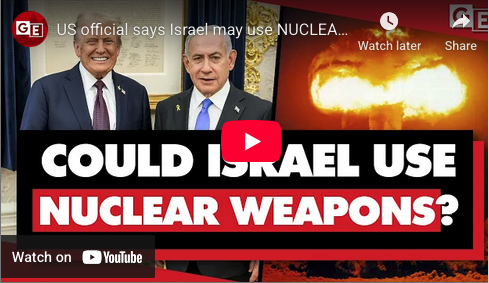
- Prime Minister Netanyahu’s upcoming meeting with President Trump aims to advance the “Greater Israel Domination Project.”
- Israel has failed militarily to suppress resistance in Gaza and the West Bank and now seeks U.S. leverage to achieve its goals.
- Netanyahu demands Iran:
- Cease uranium enrichment.
- Destroy missile capabilities.
- End support for regional resistance groups like Hezbollah and the Houthis.
- These demands are non-negotiable and unrealistic for Iran, intended to prevent any peaceful agreement and justify renewed conflict.
- Netanyahu is portrayed as a political figure manipulating U.S. politics and underestimating Iran’s military strength, risking a devastating war.

Prof. Mohammad Marandi : Iran’s Readiness for Escalation
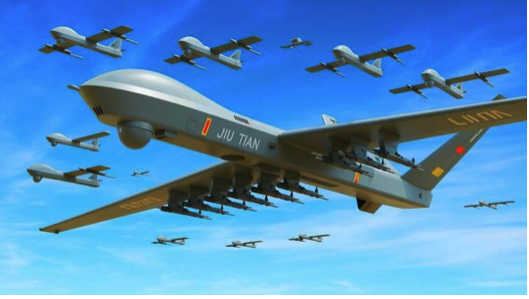
SummaryThe video is a detailed and insightful discussion on the tense geopolitical situation between the United States and Iran, focusing on the potential for an all-out war in the Middle East. Judge Andrew Napolitano hosts Professor Mohammad Marandi, who provides a nuanced perspective from Moscow on Iranian military preparedness, the regional implications of conflict, and the broader historical and political context. The conversation begins with a critique of undeclared wars and preemptive military aggression by the U.S. government, raising philosophical questions about government authority and freedom. The dialogue then shifts to Iran’s current military stance and expectations regarding a possible conflict with the U.S. and Israel. According to Marandi, Iran anticipates war and is preparing for a comprehensive regional conflict—including attacks on U.S. bases and allies in the Persian Gulf. Iran’s military capabilities, especially their missile and drone arsenals, are extensive and pose a significant threat, particularly in the Persian Gulf and Indian Ocean regions. The discussion also addresses the economic and strategic implications, such as the potential closure of the Strait of Hormuz and destruction of oil infrastructure, which could cripple global energy supplies and seriously hurt the U.S. economy. Marandi asserts that for Iran, the conflict would be existential—a fight for survival—whereas for the U.S., it would be a war of choice. Trump’s public statements on Iran’s nuclear program are dissected, with Marandi expressing skepticism about the complete destruction (“obliteration”) of Iran’s nuclear capabilities. The conversation reveals that despite sanctions and military actions, Iran’s nuclear program continues under strict international monitoring, and Iran is unlikely to abandon its nuclear ambitions or military alliances. The U.S. attempts to destabilize Iran through economic sanctions and covert operations, including fomenting protests and coups, are also discussed, exposing the extent of foreign interference. Marandi touches on the internal Iranian perspective, emphasizing that most Iranians recognize foreign involvement in the unrest and continue to support their government. The discussion highlights the failure of Western media and governments to accurately represent Iran or understand its people, which leads to repeated miscalculations in foreign policy. The historical context is brought in with a reference to former German Chancellor Gerhard Schröder’s acknowledgment of Western responsibility for Iran’s current regime, noting the 1953 CIA-British-backed coup that overthrew Iran’s democratic government. Marandi counters this by pointing out that Iran today is not a dictatorship in the traditional sense and enjoys more freedoms than many regional allies under Western influence. The conversation ends with speculation about the strategic calculations of U.S. and Israeli leaders and the possibility that internal U.S. politics might drive Trump toward military aggression as a distraction from domestic crises. Marandi reiterates that Iran is growing stronger every day and is better prepared than ever for any potential conflict. The overall tone is a warning against Western misjudgment and a dire prediction of catastrophic consequences should war break out. Highlights
|
 BEFORE you leave, PLEASE pay attention to this alert.
[t4b-ticker id="1"]
Print this article [bws_pdfprint display=’print’]
 This work is licensed under a Creative Commons Attribution-NonCommercial 4.0 International License •
ALL CAPTIONS AND PULL QUOTES BY THE EDITORS NOT THE AUTHORS