
By Julian Macfarlane
 NEWS FORENSICS
The kidnapping of President Maduro is touted as a huge victory for the US - and for that stable genius with his 73 point IQ, Donald Trump.
But Maduro is just one person. He is not Chavismo. Never was.
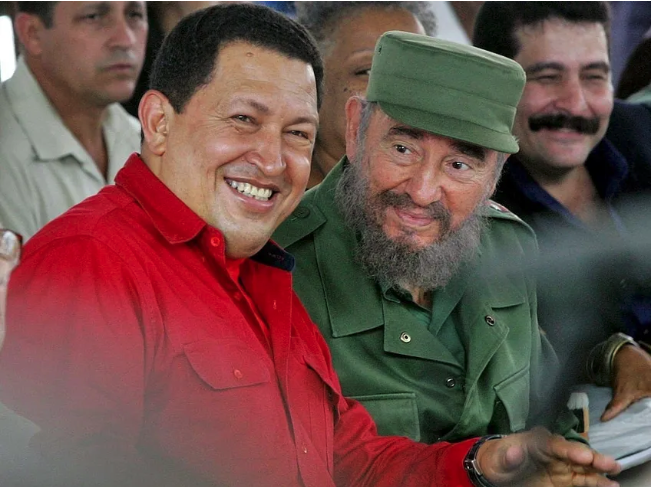
I feel sorry for Maduro. But he will eventually be released probably into exile, where he will live comfortably as a Venezuelan hero.
In the long term, Chavismo will triumph. The party holds a dominant supermajority in the Venezuelan National Assembly, controlling 256 of the 285 seats (roughly 90%).
The Americans don’t understand the ideology but they understand power and dominance — in this case that of the United Socialist Party of Venezuela (PSUV) and the Great Patriotic Pole (GPP) coalition. Maybe, simply they don’t understand democracy, which was Chavez’s biggest gift to Venezuela along with literacy and education.
The problem with declining empires is they are locked in a box. They can’t see the world outside. Nothing works out as it is supposed to. They think individuals make all the difference because in empires it is always the emperor and his courtiers. Delusions build upon illusions.
So, in mid-May 2026, when Trump told media outlets that the United States had made a “fortune” from Venezuelan oil following the kidnapping of President Maduro, he was covering up huge losses incurred by the US inadvertently paying for the Bolivarian Republic’s rebirth.
This is a case of wishful thinking triumphing over basic arithmetic, twisting facts. .
Trump claimed that Venezuela had generated more revenue in the few months following the intervention than it had over the previous ten years, likely true since Venezuela was suffering from extreme sanctions and economic pressure and it just didn’t have the money to fix its infrastructure.
“25 Times Over”
In late May 2026, Trump said that the U.S. had taken so much oil out of Venezuela that the revenue has “paid for the cost of the war on Iran about 25 times over”. The Pentagon estimates Iran has cost roughly $29 billion, but …the true overall cost to the U.S. economy is estimated to range between $630 billion and $1 trillion.
I’m not good at arithmetic but is something wrong here?
Immediate profits
Following the kidnapping of Nicolás Maduro in January 2026, Trump announced Venezuela’s interim authorities would turn over 30 million to 50 million barrels of high-quality oil directly to the United States estimated to be worth roughly $2.8 billion. These funds would be kept in U.S-controlled accounts to benefit both the U.S. and Venezuela.
The Revenue Reality
Verified gross export revenues since the intervention sit closer to $1 billion to $2 billion which does not offset the bottom-line $4.7 billion spent on U.S. military deployments in the region, let alone the understated $29 billion Iran conflict baseline. By the end of 2026, the Venezuelan adventure, counting hidden costs could add on an extra $9 billion.
Profits for the US . Caveats
Under Executive Order 14373, oil revenues are legally held in designated U.S. Treasury and neutral foreign accounts (like Qatar) as Venezuelan sovereign property protected from commercial lawsuits, That means they cannot be directly absorbed into the U.S. Treasury to balance domestic military deficits
What are the profits from the sale of Venezuelan oil so far?
Since the U.S. military intervention and the subsequent establishment of a transitional energy pact in January 2026, U.S.-guided sales of Venezuelan crude oil have generated over $1 billion in gross revenues.
Because state oil company PDVSA operates under tight financial trusteeship and severe infrastructure backlogs, international energy trackers monitor these figures as gross export revenues rather than net commercial profit.
Current Revenue Flows and Immediate Projections
Cumulative Sales to Date: U.S. Secretary of Energy Chris Wright confirmed that initial sales surpassed the $1 billion mark shortly after the transition.
Short-Term Backlog: The U.S. has secured short-term agreements for upcoming shipments that are projected to bring in an additional $5 billion over the next few months.
Full-Year Target: Total gross oil export revenues for Venezuela are “expected” to surge to $22 billion or more by the end of 2026, up from the $18.2 billion generated under sanctions pressure in 2025. “Expected” by whom? The Trump people, of course. The oil industry is not so sure.
Where the Money is Going
The First $500 Million Tranche: The Trump administration completed its first flagship sale valued at $500 million in mid-January 2026.
Currency and Wage Stabilization: Interim President Delcy Rodríguez confirmed that Venezuela’s central bank has directly received $300 million from that initial tranche. These funds are being injected into the local foreign exchange market to prop up the Venezuelan Bolivar and finance emergency income support for workers (Chavistas).
Logistics benefit: The revenue surge is driven by a massive logistics shift. Venezuela’s oil exports jumped 14% to 1.23 million barrels per day (bpd)—the highest level since 2018.
Market price benefit: Instead of being heavily discounted and smuggled to China, the heavy crude is being routed under official licenses directly to U.S. Gulf Coast refineries, India, and Europe where it fetches much higher market pricing.
The Upshot: Venezuela’s victory
Repair of Infrastructure at US expense
The US will be weaker and Venezuela stronger. Chavismo continues useful work at the grassroots, taking advantage of the huge divide between the small but affluent white-ish minority and the majority of the brownish population which Chavez liberated through housing, education, healthcare and projects that emphasize cooperative progress.
The US naturally does not pay attention to the ongoing social revolution, which is a new iteration of socialism. It does not want to see this, since its success threatens American assumptions. And it assumes that capitalism will triumph.

Venezuela has changed since when Chavez came to power. The fact is that this is a country rich in resources which were once controlled by small pro-Western elites.As Chavez sought to enfranchise the marginalized of Venezuela, the West sought to prevent him, with punitive sanctions and financial piracy.

But Chavez had gifted Venezuelans with an indigenous ideology that has its roots back in history before Europeans appeared. Its collectives emphasize autonomy, adaptability, and community, especially important in rural areas but transplanted to urban settings have power, there also. Chavez showed the poor how they could leverage local community unity to survive. Now Chavismo dominates politically. And with sanctions out of the way to ensure Trump profits, the people will once again come into their own.
American hegemony will not last. And watch Venezuela reject American rule.

As you know, I am “on the spectrum’, which means a lot of things.
It seems that a rather large number of my supporter are also like me, keeping in mind that “ASD” is not one thing. That said, whatever their differences, 70 to 80 % of ASD people have one of the 3 or 4 different types of ADHDs.
One common problem is trouble with Mornings, partly as a result of low dopamine and delayed cortisol release. This was always — and still is — a big problem for me.
It ‘s also a problem for other people.

Help Ichi and Chappy and their Canuck Chavista, buying us coffee at https://buymeacoffee.com/julicow.
Today’s post for coffeebuyers.
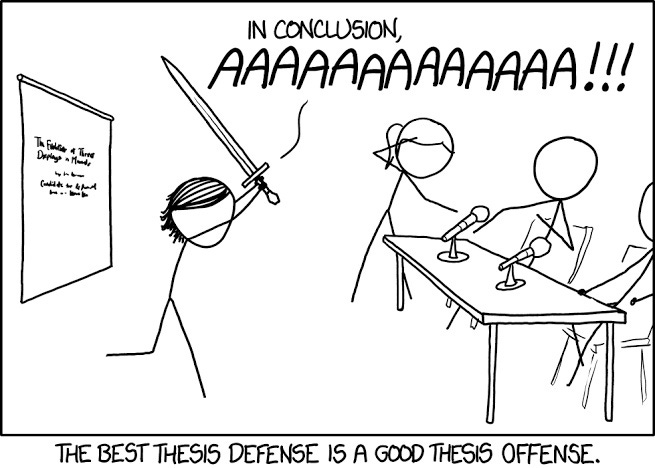
It seems that the Russians want to do away with theses in college, thanks to widespread cheating with LLM where people just get the LLM to write their paper. The substitute is oral exams / thesis defense. So……..19th Century.
But that’s what I had to do.

I have been writing a lot about the dangers of “AI”, especially the consortium of AI companies — or should we say “cartel”. The most obvious risk is the bubble will burst and destroy the US economy, and with it the economies of allied nations.

That would be a disaster for most people but perhaps not for those at the top, Gates, Zuckerburg, Musk, Bezos, and the whole crew.
When the Great Depression occured a lot of people suffered. There were lots of suicides. But some people thrived — Joseph Kennedy, Paul Getty, Michael Cullen, Howard Hughes, Henry Ford and others.

Will the Big Seven Tech companies be allowed to go under?
Not likely. In 2008, the precedent was established “too big to fail”.
The Big 7 effectively control hardware and compute infrastructure —as cloud services and data centers—which are functionally as indispensable utilities —even if privately owned. So the US government will find ways to protect them. In addition they have huge cash reserves since investors are essentially loaning them money which will never be paid back .
Monopoly capitalism
Big tech companies aim at monopoly.
If the AI bubble pops, they will have the resources to buy up distressed AI startups, and increase their power and leverage at all levels of society and especially government. This is what FDR called “organized money”.
Others call it “casino capitalism”.
Remember the “house” always wins.
But the“win” may not last long.
AI monopolies have severe weaknesses

These include serious systemic risks, notably centralizing critical decision-making power—stifling economic competition and innovation, entrenching algorithmic bias, and enabling invasive, hyper-personalized manipulation.
A handful of tech giants controlling the majority of AI infrastructure (data, talent, and compute) limits access to the tools of the modern digital economy and limits access to the field, which also hobbles innovation and adaptability.
Monopolies an dictate terms, wages, and compensation, squeezing out creators, researchers, and skilled workers
If the world relies on just two or three dominant technical models, programming becomes standard, crushing all alternatives— with the Tech Lords killing smaller, innovative AI startups as potential threats .
Since AI systems are only as good as their datasets, a single dominant model will scale up bias and the potential for mistakes by dictating search results narrowly, with prejudicial algorithms.
Monopolists will not open-source either their dataset or their algorithms, allowing them to manipulate results to achieve short term goals without public accountability.
By processing mass amounts of personal information, AI monopolies weaponize consumer and also political marketing, incentivizing dominant platforms for online addiction and targeted, often subliminal persuasion to maximize pricing for goods and services which people may or may not actually need but are taught to want.
Monopoly capitalism vs state capitalism
When we talk about AI “monopolies” and the “Big 7” or, rather “Big 7 +1” the “1” being Japan’s NTT, we are referring to monopoly capitalism — which is not the only economic system around. The Russians and Chinese have two versions of “state capitalism'“ in which the profit motive is not paramount but secondary to social productivity and the integrity of the state.
Russia
Here, Putin talks about the dangers of AI — and its uses. Notice that he also underscores the advantages of AI in terms of social and industrial development - productivity and not innovation — not financialization. For him AI is just another tool.
Russia doesn’t have NVIDIA. It doesn’t have META or Microsoft or Amazon. or much of Google But it has energy and engineers. And it looks to global cooperation, which necessarily means…
China
China is weakening Western AI monopolies by abandoning the Western playbook of centralized, closed-source dominance.
Instead, Beijing treats artificial intelligence as a low-cost industrial commodity and public utility, without the high costs and technical feudalism of Silicon Valley giants.
Flood-Funding Highly Efficient Open-Source Alternatives
China is aggressively driving an open-source movement to develop and apply AI, undercutting mega buck proprietary Western models.

DeepSeek’s highly advanced R1 reasoning model sent shockwaves through Wall Street by matching elite Western proprietary models at a fraction of the training and operational costs.
Chinese tech leaders like Alibaba (with its Qwen models) and Moonshot AI’s highly optimized, low-parameter open-source models feature very liberal licenses, and allow global developers to run elite AI locally on modest hardware, bypassing expensive U.S. cloud subscriptions.
Stanford research reveals an astonishing 23-to-1 private spending gapbetween the US and China, yet Chinese firms have narrowed the capabilities gap to under 3%. This makes the U.S. capital-intensive monopoly model financially unsustainable.
A State Grid
While Western companies rely on huge super -centralized data centers controlled by one or the other of the Big 7, China is developing continental-scale, coordinated next generation computing architecture.

China has already activated the Future Network Test Facility (FNTF), a distributed AI computing network connecting 40 cities with 98% efficiency of a single data center over vast distances, allowing the country to pool fragmented hardware into a singular training engine for rapidly expanding data sets.
Through its unified national network, China uses clean, cheap energy in its western interior or underseas areas to process heavy AI workloads initiated in eastern coastal hubs.
The government treats AI ” as a public utility—similar to electricity or mobile data—to guarantee ultra-cheap access for thousands of local enterprises.
3. Exploiting Western Regulatory Fragmentation
The US’s version of techno/ corporate feudalism leads to (of course) feudal struggle, legal and regulatory, with litigation slowing down progress
U.S. and European companies spend massive engineering talent, time, and billions of dollars on antitrust compliance, copyright lawsuits, and the EU AI Act
This asymmetry allows Chinese AI platforms to expand aggressively in Global South markets and third-party countries where Western firms are constrained by legal and cultural and political differences
4. Deep Integration with Physical Supply Chains
Since the Western world is rapidly deindustrializing, Western corporate giants focus on theoretical superiority — who has the single best digital “brain,” whereas China focus on practical applications—AI as a factor in improving industrial production and the public good.
Rather than trying to consumerize AI for more “bang for the buck” profitability, AI Beijing heavily subsidizes the integration of AI directly into its $5 trillion industrial, chemical, and automated manufacturing supply chains.
This more practical approach means that a modest, highly specialized Chinese model integrated into an industrial process will outperform an un-integrated, siloed premium Western model
5. Locking Down Strategic Talent and IP
Recognizing that AI development is a geopolitical proxy war, Beijing has clamped down on the leaking of technical and human capital to the West.
The state has blocked major U.S. acquisitions of high-performing AI startups founded by Chinese engineers, shutting down Western technical piracy.
Top-tier Chinese data scientists are increasingly locked down inside domestic institutions, reshaping their roles from individual corporate operators into vital components of national strategic infrastructure. Foreign specialists must sign non-competes.
This all brings us back to Putin’s speech. AI is a tool . And every tool has limitations. Using the tool properly is understanding the limitations and either working around them or re-working the tool so it performs as you want. The human context is what is important.
In the case of Russia and AI it is the cultural and social context. The US and the West are civilizations declining into nihilism. When the bubble bursts,they will not be able to adapt. That will not be the end of America but a transformation.
A number of people contributed coffees to help me pay for cataract surgery and also gave me good advice, which was very helpful. Thank you for this.
No post for coffee buyers tonight. I am instead working on my rather long biographical article on Putin and what has shaped him as a leader. That will be available soon!
