Judge Napolitano
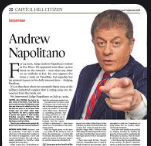 chats with
Col. (Ret) Douglas Macgregor


Streamed live on May 28, 2026
Summary
The video features a detailed and candid conversation between Judge Andrew Napolitano and Colonel Douglas Macgregor covering a broad range of geopolitical issues, focusing primarily on the ongoing conflicts in Ukraine, the Middle East, and the global economic repercussions stemming from these crises. The discussion opens by highlighting problematic government behaviors, such as undeclared wars and preemptive aggression, setting a tone of skepticism toward official narratives and emphasizing the need for a free society to reject the initiation of force.
The core of the dialogue revolves around the war in Ukraine, with Macgregor condemning Ukrainian drone strikes on civilian targets as morally indefensible but noting that such tactics have been reciprocated historically. Russia’s strategic responses, including targeting Western facilities supplying components for Ukrainian drones, reflect their escalating unwillingness to tolerate continued conflict under current terms. He stresses that Russia justifies attacks against co-belligerent Western nations under international law and underscores the limits of American influence due to deep bureaucratic entrenchment despite presidential intentions.
The conversation shifts to Germany’s political dimension, noting the rising unpopularity of Chancellor Scholz and the growing influence of the Alternative for Germany (AfD) party, which favors halting Ukraine aid, resuming energy purchases from Russia, and expelling U.S. troops from Germany—essentially ending NATO's presence there. Macgregor dismisses notions of an aggressive German rearmament, instead emphasizing Germany’s deeper societal and economic challenges.
Regarding the Middle East, the dialogue focuses heavily on Israel’s Prime Minister Netanyahu, his significant control over U.S. foreign policy, and the ongoing conflict with Iran. Netanyahu is portrayed as obstructing peace efforts in favor of destabilizing Iran and expanding military actions into Lebanon, Gaza, and potentially against Turkey and Egypt—the latter two being formidable military powers far stronger than Israel. The discussion highlights the impracticality and danger of these ambitions, especially Turkey’s military strength and strategic importance.
Macgregor spotlights the complexity of U.S.-Iran negotiations, doubting any meaningful progress due to mutual distrust and Israel’s uncompromising stance. Economic consequences are also a major topic, with inflation expected to rise sharply, interest rates constrained by the risk of economic collapse, and the Strategic Petroleum Reserve depleting amid global oil shortages. The potential for a worldwide economic contraction surpassing the Great Depression looms large, with the U.S. bearing significant international blame for exacerbating the global crisis.
Throughout, Macgregor asserts that the American people—and not just Washington elites—have the power to halt aggressive foreign policies but remain largely disconnected from these international conflicts and their consequences. The transcript closes with mention of upcoming episodes featuring experts discussing intelligence and political analysis.
Highlights
- [00:03] ⚔️ Governments engage in undeclared preemptive wars with little public objection, normalizing illegitimate use of force.
- [02:40] 🚁 Ukrainian drone attacks on Russian civilians are condemned as immoral but unsurprising in the ongoing conflict.
- [05:09] 🌍 Russia argues that Western countries supplying Ukraine with military components are co-belligerents and lawful targets.
- [08:32] 🇩🇪 Germany’s political climate is shifting, with growing support for the AfD party aiming to end support for Ukraine and expel U.S. troops.
- [12:07] 🇮🇱 Netanyahu wields extensive influence over U.S. foreign policy, blocking peace efforts and driving escalation against Iran.
- [18:02] 📈 Inflation is projected to hit 6%, but raising interest rates to control it risks crashing the entire U.S. economy.
- [24:08] 🚀 Israeli ambitions to confront Turkey and Egypt risk expanding the conflict into a larger regional war.
Key Insights
[00:03] ⚔️ Normalization of Aggression in Government Policy: The conversation begins by framing undeclared wars and preemptive aggression as systemic features of modern governance rather than anomalies. The acceptance of such practices underscores a crisis of legitimacy for governments that resort to force without public consent. This insight challenges viewers to reconsider the true meaning of freedom and the vital importance of rejecting force as a statecraft tool.
[05:09] 🌐 Expansion of the War by Supply Chains: Russia’s rationale that Western nations supplying critical military components to Ukraine are legitimate targets under international law introduces a critical dimension to the conflict—where indirect support transforms states into active participants. This sets the stage for potential escalation beyond Ukraine’s borders, threatening a broader confrontation with NATO members and complicating diplomatic solutions.
[08:32] 🇩🇪 Shifting German Political and Strategic Landscape: Germany’s internal political upheaval, driven by criticisms of immigration, economic decline, and Ukraine war policies, is poised to drastically reshape Europe’s security architecture. The AfD’s platform to end military support for Ukraine, restore energy partnerships with Russia, and remove U.S. military presence signals possible fracturing of NATO unity and weakening of Western cohesion against Russia.
[12:07] 🇮🇱 Israel’s Dominance Over U.S. Middle East Policy and Its Risks: Netanyahu’s outsized influence in Washington is portrayed as shaping American military engagements, particularly the escalation against Iran. This analysis reveals how foreign policy can be driven by allied states’ strategic objectives, potentially at odds with U.S. national interests and regional stability. It also highlights tensions within U.S. politics where Zionist lobbying influences decisions that might alienate broader constituencies.
[17:26] ⚠️ Unresolved Strait of Hormuz and Iran Negotiations: The conversation stresses the strategic importance of the Strait of Hormuz and Iran’s military leverage over it. The U.S. inability to control this chokepoint, combined with mistrust in diplomatic negotiations, suggests a prolonged stalemate with significant implications for global energy security. The failure to find a sustainable agreement risks ongoing military tensions, regional instability, and disruption to global oil markets.
[18:02] 💰 Inflation, Interest Rates, and Economic Stability: The forecasted rise in inflation to 6% and the accompanying struggle to lift interest rates without collapsing the economy exposes a fragile global economic situation. Macgregor's reference to the Paul Volcker model (requiring interest rates to be approximately equal to inflation levels) demonstrates how standard monetary policy tools are inadequate under current conditions, forecasting deep recession risks and financial instability.
[24:08] 🛡️ Risks of Regional War with Turkey and Egypt: Israeli plans to expand military actions into Lebanon, Turkey, and Egypt are considered strategically unsound given the superior military capabilities of Turkey and the precarious state of Egypt’s domestic situation. This insight highlights how these actions risk an extended regional war with devastating consequences for Middle East security and global geopolitical balances.
Conclusion
This transcript offers a complex, nuanced portrait of contemporary geopolitical dynamics characterized by multi-theater conflicts, strained global alliances, and dangerous economic pressures. The voices of Judge Napolitano and Colonel Macgregor blend clear-eyed critique of government policies with insight into the real-world consequences of escalating wars and economic mismanagement. The dialogue emphasizes the urgent need for informed public engagement to counter the normalization of force and recognizes the interconnectedness of military, political, and economic spheres in shaping global stability.