Print this article [bws_pdfprint display=’print’]
This work is licensed under a Creative Commons Attribution-NonCommercial 4.0 International License •
ALL CAPTIONS AND PULL QUOTES BY THE EDITORS NOT THE AUTHORS

| Traducir—Translate! | |
| Make fonts bigger>>> | Resize text-+= |
Mar 20, 2026
Dubai "influencers" briefly became "Citizen Journalists",showing the effects of the Iran attacks—and then censorship struck. Now distortion reigns supreme.
60 Minutes Australia
First streamed May 19, 2024
Gangsters' Paradise (2024) It might sound strange, but the crime capital of Australia is currently Dubai. That’s because this glitzy mega city in the Persian Gulf has become home to nearly all of our biggest organised crime bosses. Their thinking in moving offshore is that they’re out of reach of federal and state policing authorities, but they might want to think again. As Nick McKenzie reports, an enormous leak of Dubai property records has revealed not only their residential addresses, but also how the city has become the perfect destination for crooks, and suspected criminals, from all around the world to do their dirty business.
BEFORE you leave, PLEASE pay attention to this alert.
[t4b-ticker id="1"]
This work is licensed under a Creative Commons Attribution-NonCommercial 4.0 International License •
ALL CAPTIONS AND PULL QUOTES BY THE EDITORS NOT THE AUTHORS


| Traducir—Translate! | |
| Make fonts bigger>>> | Resize text-+= |

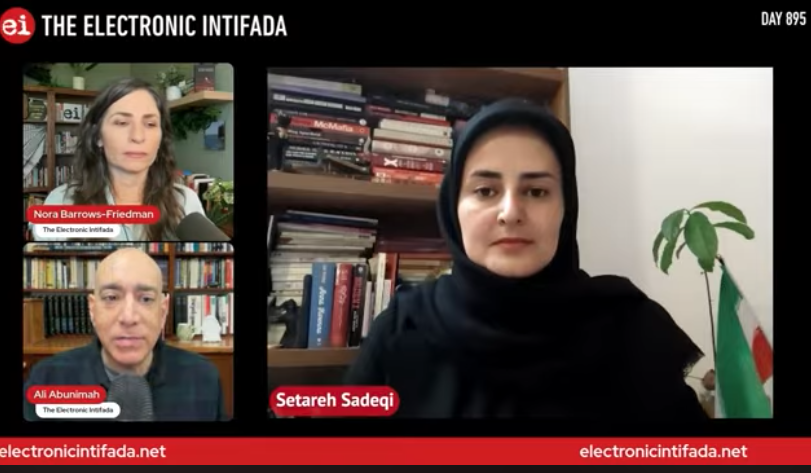
Iran’s health ministry said this week that 18,000 people have been injured. More than 200 children are among 1,300 people killed in the attacks. We are joined in Isfahan, Iran, by Dr. Setareh Sadeqi, an assistant professor at the Faculty of World Studies at the University of Tehran and a specialist in North American studies and Iran–US relations. This is a segment from The Electronic Intifada's livestream on day 895 of the Gaza genocide.
Ali Abunimah, Nora Barrows-Friedman and Jon Elmer were joined by Iranian scholar Setareh Sadeqi. You can watch the full show here:
• Breaking news and analysis on day 895 of t...
Mar 19, 2026 #TheElectronicIntifada #TheElectronicIntifadaPodcast
This is a segment from The Electronic Intifada's livestream on day 895 of the Gaza genocide. Ali Abunimah, Nora Barrows-Friedman and Jon Elmer were joined by Iranian scholar Setareh Sadeqi. You can watch the full show here:
• Breaking news and analysis on day 895 of t...
Your gift supports The Electronic Intifada's independent journalism on Palestine: • Donate by credit card, ApplePay, PayPal, Venmo or US bank account via Kindful: https://bit.ly/EIKindful Gifts are welcome from anywhere and are tax-deductible for US taxpayers as allowed by law.
BEFORE you leave, PLEASE pay attention to this alert.
[t4b-ticker id="1"]
This work is licensed under a Creative Commons Attribution-NonCommercial 4.0 International License •
ALL CAPTIONS AND PULL QUOTES BY THE EDITORS NOT THE AUTHORS
Please make sure these dispatches reach as many readers as possible. Share with kin, friends and workmates and ask them to do likewise.


| Traducir—Translate! | Make fonts bigger>>> |
In the early morning of March 20, 2026, Dimitri Lascaris crossed the Turkey-Iran border by land. He then entered the Iranian province of West Azerbaijan. From there, Dimitri and the foreign journalists travelling with him drove by car to the Iranian city of Tabriz. Tabriz is one of Iran’s largest cities. The U.S. and Israel have bombed it repeatedly since the start of the war on February 28. In this report (his first report from Iran during the ongoing war), Dimitri describes what he has seen and experienced during his journey to Tabriz.
Reason2Resist with Dimitri Lascaris
Mar 18, 2026
Dimitri Lascaris discusses the resignation of Joe Kent, who served as the Director of the U.S. government’s Counter-Terrorism Center. Kent just announced that he has resigned because he believes that Iran did not pose an imminent threat to the United States and that Israel has dragged the United States into an unjustified war. Dimitri also discusses last night’s resistance attacks on Israel and U.S. military bases, as well as his upcoming trip to Iran.
BEFORE you leave, PLEASE pay attention to this alert.
[t4b-ticker id=”1″]
[/su_spoiler]
This work is licensed under a Creative Commons Attribution-NonCommercial 4.0 International License •
ALL CAPTIONS AND PULL QUOTES BY THE EDITORS NOT THE AUTHORS


| Traducir—Translate! | |
| Make fonts bigger>>> | Resize text-+= |
The video provides an extensive and detailed analysis of the ongoing conflict centered on Iran, focusing on the military, political, and social dimensions of the war. Lascaris begins by addressing technical difficulties and the absence of his comrade Ramy, emphasizing the volume of material to cover. The discussion centers on the criminal nature of the war of aggression against Iran, involving Israel and the United States, and highlights the propaganda and misinformation surrounding the conflict. Lascaris references statements from Israeli and U.S. officials, contrasting them with footage and reports from the region, particularly Iran’s resolute leadership and public demonstrations that contradict Western narratives of internal dissent.
Key military developments are discussed, including multiple waves of Iranian missile and drone attacks targeting Israeli military bases and U.S. military infrastructure in the Persian Gulf and the broader region, with significant damage inflicted on strategic sites in Israel, Iraq, the UAE, and potentially Saudi Arabia. Lascaris underscores the ability of the Iranian military to sustain a prolonged conflict despite Western claims of Iran’s dwindling capabilities.
The video also explores the psychological warfare and misinformation campaigns by Israel and the U.S., including selective media leaks portraying Iran as targeting civilians exclusively, while evidence shows primarily military targets are struck. Lascaris highlights the resilience and defiance of the Iranian people, with footage of their leaders openly walking among citizens amid war conditions, challenging Western portrayals of their vulnerability or unpopularity.
Attention is given to the broader geopolitical implications, such as the role of European countries covertly supporting the U.S.-led war effort and the economic consequences of the conflict, particularly the disruption of oil supplies and rising global fuel prices. Lascaris critically examines the notion of “Greater Israel,” arguing it is an unrealistic goal considering historical trends of Israeli territorial contraction rather than expansion.
Throughout, Lascaris criticizes Western governments’ hypocrisy and cowardice, contrasting their leaders’ heavy security and avoidance of public scrutiny with the Iranian leadership’s visible public presence. The presentation closes with a reflection on the enduring nature of the conflict, the likely prolonged economic impact, and the importance of on-the-ground journalism to reveal the truth of the war.
The video elucidates the complexity of the Iran war, emphasizing the disparity between official Western narratives and on-the-ground realities. It exposes misinformation tactics, highlights the resilience of Iranian leadership and society, and details the strategic military operations shaping the conflict. The focus on the sustainability of Iran’s defense and the significant damage inflicted on U.S. and Israeli military assets underscores the high stakes and protracted nature of the war.
Furthermore, the geopolitical and economic ramifications highlighted—such as the disruption of oil supplies and the covert involvement of European countries—paint a picture of a global conflict with far-reaching consequences. The historical perspective on Israeli territorial changes provides a counterpoint to alarmist rhetoric about regional domination.
The presentation calls for critical scrutiny of Western media and government claims, urging attention to firsthand reporting and evidence from the conflict zones. It suggests that while Iran’s endurance may challenge Western military objectives, the war’s continuation will likely exacerbate global economic instability and human suffering.
In sum, the video offers a comprehensive, critical perspective on the Iran war, emphasizing the resilience of Iranian forces and people, the strategic miscalculations of Israel and the U.S., and the broader implications for regional and global stability.
BEFORE you leave, PLEASE pay attention to this alert.
[t4b-ticker id="1"]
This work is licensed under a Creative Commons Attribution-NonCommercial 4.0 International License •
ALL CAPTIONS AND PULL QUOTES BY THE EDITORS NOT THE AUTHORS


| Traducir—Translate! | |
| Make fonts bigger>>> | Resize text-+= |
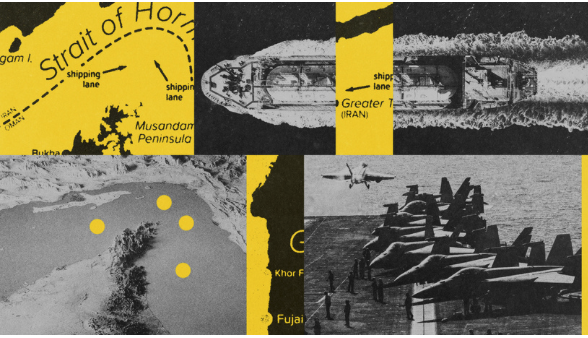
Trump, who has claimed that the Iranian military has been effectively destroyed, is now demanding that NATO states—as well as China—assist the United States in reopening the Strait of Hormuz. Quite the contradictory statements.
If Iran has truly been militarily depleted, why call upon the entirety of NATO and even non-NATO powers to participate in a joint military operation with the United States, in order to reopen the Strait of Hormuz? Furthermore, will its allies come to its aid?
To be able to answer these fundamental questions, we must assess the material realities of the global hegemon and its ongoing imperialist war on Iran.
According to a report by the New York Times, 17 U.S. military, diplomatic and air defence sites across West Asia have been damaged by Iranian drone and missile strikes. Of these 17 locations, at least 11 are military bases or installations that collectively account for nearly half of the United States’ military assets in the region.
Similarly, open-source satellite imagery and video evidence indicate that Iran has effectively targeted and severely damaged key elements of U.S. military communications infrastructure in the region. This reportedly includes the $1.1 billion early-warning radar system near Umm Dahal, Qatar—designed to provide surveillance coverage across a 4,800-kilometer (3,000-mile) radius—as well as the radar system supporting an American THAAD missile battery in Jordan, which CNN reported was destroyed in the early days of the war.
Additional U.S. vital radar systems in the United Arab Emirates, Kuwait, Bahrain, Saudi Arabia, and Qatar have also reportedly been damaged — leaving the US and Israel “partially blind” in both their defensive and offensive operations against Iran.
As per reports from the Financial Times, the CSIS and other Washington based Think Tanks, the US has already “burned through years worth of critical munitions” in just days, which shall take almost a decade to replenish if not more — given the United States lack of industrial capacity to mass produce. The losses to the US military are so severe, that the Pentagon is planning to submit a formal request for an additional $50 billion in emergency military spending.
The situation has become so dire, that the US has had to reroute shipments that were meant for their allies in Europe and Asia, in order to accommodate its illegal and imperialist war against Iran. This has reportedly alarmed its allies — especially the EU — that has depleted its own stockpiles in order to wage war against Russia and so now rely on the US in order to rebuild their military arsenal.
At this point it is worth remembering that;
Most EU states that are part of NATO have committed to NATO’s $10 billion procurement scheme for Ukraine — meaning that they have pledged to collectively pay $10 billion in order to buy weapons for Ukraine. This is in addition to the 5% increase in NATO spending.
The EU also jointly took on a €90 billion ($103 billion) loan package, so that Ukraine can buy weapons from the US, whilst the EU tax payer bears the cost.
The EU has also pledged another $4 billion to purchase weapons for Ukraine.
Under the Re-Arm Europe 2030 plan, the EU has also pledged to spend €800 billion ($880 billion) on its own defence.
Collectively, the EU has thus committed over a trillion dollars of its tax payers money to purchase US arms, whilst the US burns through its own stockpiles and lacks the industrial capacity and profit incentives to mass-produce in order to meet the needs of itself and its allies.
Additionally, reports from the South China Morning Post have stated that the United States has around two months worth of rare earth supplies held for defence use, in the event of a disruption.
This is not merely Chinese “propaganda,” rather it is a material reality highlighted even by Western media. In late February 2026, Reuters had reported that the shortages in rare earths in the US have become so acute, that suppliers to American aerospace, defence and semiconductor firms have been coerced to “turn away some clients,” This supply squeeze stems directly from the U.S. trade war with China, which has significantly degraded domestic production capacity.
This matters, as modern U.S. weapons systems—from precision-guided munitions and advanced fighter jets like the F-35 to submarines, drones, and radar systems—are deeply dependent on rare earth elements for critical components such as magnets, sensors, and guidance electronics.
Therefore, the US is “burning through years” of munitions, has sustained significant damage to its radar systems in the Gulf, and is facing a critical shortage in its defence systems — at a time when it is also facing supply shortages in the very materials it needs to replenish its military inventory — exposing yet another structural vulnerability in the US military-industrial base.
Consequently, the crisis of the American military industrial base is threefold. Firstly, the US lacks the industrial base requisite to mass produce due to decades worth of profit-driven de-industrialisation. Additionally, American intellectual property rights present a significant barrier to rapid military scaling, as defence production is largely controlled by private contractors who own the designs, patents, and technical data for key systems. Finally, deindustrialization has rendered the U.S. dependent on China—the very nation with which it is engaged in a trade war—for both the production and refining of the rare earths essential to its defence manufacturing. Given how the US has militarily stretched itself thin with its sponsoring of global imperialist wars, this presents structural limitations to US military capacity.
Thus, the current state of the US war machine is testament to the contradictions of capitalism that have set the stage for its own eventual undoing, and provides the material grounds for why the US cannot sustain a long-term war with Iran, and why it is now demanding for military assistance from its allies, in order to export its cost of war.
![]() |
While EU member states have publicly declared they will not join the United States in its imperialist war against Iran — with Germany insisting it’s “not their war” just days after Chancellor Merz expressed open support for it — a so-called “European Armada” is quietly being assembled off the coast of Cyprus in the Eastern Mediterranean.
To provide context, here is a breakdown of the military assets NATO member states have deployed to the region, ostensibly in defence of Cyprus:
France has deployed nearly half of its major surface combatant fleet to the Eastern Mediterranean, including the nuclear-powered aircraft carrier Charles de Gaulle, accompanied by frigates, air defence destroyers, and nuclear-powered attack submarines capable of sustained air operations, intelligence gathering, and long-range precision strikes. This presence has been further reinforced by President Macron’s pledge of an additional ten warships — eight frigates and two amphibious assault ships. France has also stationed advanced air support at two Cypriot facilities, Evangelos Florakis Naval Base and Andreas Papandreou Air Base, including Rafale fighter jets and A400M transport aircraft, enabling rapid deployment, strike capabilities, and logistical support.
The United Kingdom for its part, maintains a permanent garrison in Cyprus, consisting of two infantry battalions and support units, alongside eight Typhoon fighters conducting Operation Shader missions, Poseidon maritime patrol aircraft, Voyager tanker aircraft, and ground-based air defence systems, including Sky Sabre missiles and counter-drone units. As of March 1, the UK rapidly surged additional assets to its sovereign colonial bases in Cyprus, including the Type 45 destroyer HMS Dragon, equipped with Sea Viper missiles to provide a protective shield over the base and surrounding waters. It also deployed six F-35B Lightning stealth fighters, two Wildcat helicopters armed with Martlet missiles for mobile counter-drone defence, and a Merlin HM2 Crowsnest helicopter optimized for airborne surveillance to detect low-flying drones and cruise missiles.
Greece has deployed two frigates and four F-16 fighter jets, reinforced by a Patriot missile battery that strengthens a regional air-defence shield integrated with allied forces.
Italy has dispatched the FREMM frigate Federico Martinengo along with marine units, adding anti-submarine warfare capability and expeditionary force projection. Spain has sent its Aegis-equipped warship Cristóbal Colón, which provides advanced missile interception and fleet defence capabilities. Germany has deployed the frigate FGS Nordrhein-Westfalen to expand surveillance and escort operations, while the Netherlands has sent its air-defence frigate HNLMS Evertsen, equipped with long-range radar and missile systems.
Finally, Turkey has deployed six F-16 fighter jets to Cyprus to protect the internationally recognized occupied north of Cyprus, bringing the total number of F-16s deployed to the island to ten.
Collectively, these deployments form a dense network of carrier aviation, missile defence systems, and heavily armed warships — capable not only of protecting strategic military installations in the region, but also of carrying out offensive naval and aerial operations across West Asia if necessary.
This entire military build up is allegedly a response to a drone strike on the UK’s sovereign colonial bases in Cyprus — an attack that according to British reports — did not even originate from Iran. For its part, Iran issued an official statement on March 9th, denying responsibility for the drone strikes in Turkey, Azerbaijan, and Cyprus. Iran went so far as to characterize the incidents as “false flag” operations.
Furthermore, the UK has stated that it believes that the drone strikes against Cyprus were launched from Lebanon. Yet Hezbollah, that has a long-standing history of transparency in all its military operations — has not taken responsibility for said strikes.
Thus, a drone strike on the British colonial bases in Cyprus — neither carried out by Iran nor directed at the Republic of Cyprus itself — has been used to justify what bourgeois mainstream media outlets now term as a “European Armada” in the Eastern Mediterranean. They have done this by invoking the EU’s mutual defence clause, under Article 42(7) of the TEU. Interestingly, this invocation targets an attack on UK sovereign territory in Cyprus, despite the United Kingdom no longer being a member of the European Union.
Consequently, under the guise of “protecting Cyprus” via the EU defence clause — NATO states have turned the region into a forward military zone, establishing a multi-layered defence shield, as well as a command and control hub that can be used for operations in the region. Claims made by EU leaders, particularly Keir Starmer and Emmanuel Macron, that their military presence is merely “defensive,” are political in nature. Operationally speaking, all assets deployed to the region can be used to carry out offensive operations against Iran.
Additionally, during Macron’s visit to Cyprus on the 9th of March, he stated that the on-going military build-up in the Eastern Mediterranean, is to “prepare for a defensive mission to reopen the Strait of Hormuz after the end of the hottest phase of the conflict”. However, the issue with this statement lies within its ambiguity. What is defined as the “hottest phase of the conflict?” This deliberate ambiguity is further amplified by the Vice-President of the European Commission, who has refused to outright reject EU-led operations in the Strait of Hormuz, claiming that the EU leadership needs “more clarity” and the right conditions before making such a decision.
Iran for its part has made it clear that no ships shall pass via the Hormuz Strait without its approval — a condition extended only to “friendly nations” — which the EU states are not. Most vitally, as of February 21st Iran designated the air and naval forces of all EU states as terrorist organisations, meaning that if their military assets enter the Strait of Hormuz without Iran’s approval — they become legitimate targets.
Consequently, what we are witnessing in the Eastern Mediterranean is a staging ground that has turned Cyprus into the ideal launchpad for potential operations in the Strait of Hormuz — using the questionable drones and missile strikes against the British sovereign bases on the island, as pretext. Furthermore, the European naval and air assets currently assembled off and in Cyprus, are not static defence platforms; they are a highly mobile, combat-ready strike group that can be rapidly redeployed to the Strait of Hormuz — with the EU currently looking for a legal means by which to do so.
Specifically, the EU led by France, is discussing the possibility of extending its naval Operation Aspides — that is currently deployed in the Red Sea – to the Strait of Hormuz. As per EU officials, the aim is to “ensure the safe passage of ships.” However, as aforementioned, all EU naval and air forces have been designated as terrorist organisations by the IRGC, if they thus attempt to enter the Strait of Hormuz without Iran’s approval as an extension of Operation Aspides — they will become targets.
Therefore, camouflaged behind the political language of “defence,” the EU-NATO states are preparing for potential operations in the Strait of Hormuz, which risk provoking a military reaction from Iran. If this is to take place, it shall provide the EU leadership with the political ammunition it needs in order to justify joining the war in some form, alongside the US and Israel, who currently need the military support for all the reasons listed above.
For this reason, I would caution against believing the political declarations of EU leaders who claim that they shall not come to the rescue of the US — as it ignores the central caveats of their statements. These declarations are nothing more than a political spectacle meant to portray even a modicum of sovereignty. However the reality is that the EU has become militarily, economically and as such politically reliant on US capital interests — that are the guiding force behind the war on Iran. A purely materialist analysis of the ongoing events, particularly in the Eastern Mediterranean, signals significant military preparations for the Strait of Hormuz — and that is what we must be aware of.
Plagued by the contradictions of capitalism that have generated the current economic, military and political crisis of the US — it turns to its allies in order to export the costs of its war. Albeit its European NATO partners have politically defied the US, behind the scenes it has de facto gathered whatever remains of its military arsenal, in the Eastern Mediterranean. This places the European Armada within a close range to the Strait of Hormuz, potentially setting the stage for what its leadership claims to be “defensive operations.”
This rhetoric of European bourgeois politicians merely serves as a mechanism to obfuscate the masses into believing that they want no part of this war — thus controlling the narrative. However the strategic position of the EU’s military assets, and the aim of potentially and conditionally extending Operation Aspides to the Strait of Hormuz — places them in direct opposition to Iranian military aims.
If this indeed materialises, depending on how Iran chooses to respond, it shall define the extent of the UK and EU’s involvement in the conflict. This is what we must scrutinize, not the official statements of the political class.
We must always remember that the UK and the EU economically and militarily rely on the US, making them subordinate vassal states to the interest of US finance capital. The EU alone is the largest investor in American capital assets, holding $12.6 trillion in US assets. This not only upholds the US economy and manages its deficit, it also establishes a symbiotic economic relationship between the European and American bourgeoisie. Their wealth accumulation relies on the health of the American economy, which is currently under threat by China, Russia and Iran — hence establishing a motive for supporting the US and Israel in their imperialist war against Iran.
Nevertheless, the wars on Russia and Iran alike, both engineered in order to ultimately isolate China — the single greatest threat to American finance capitalism — has in fact had the reverse effect. Yet again, this exemplifies how the contradictions of capitalism gradually lead to its own demise at times of crisis.
To conclude, what we are thus witnessing is not merely a geopolitical confrontation, but the sharpening of systemic contradictions that no alliance, no military build up, and nor political spectacle can ultimately resolve in the long-run.
Thank you to all my subscribers for supporting my work, especially the paid subscribers as my work is fully sponsored by all of you. I would not be able to do what I do without you, nor to sustain it. Whether it be via my Patreon, Substack, or you may Buy Me a Coffee - all contributions are seen and valued. Thank you all again!!
BEFORE you leave, PLEASE pay attention to this alert.
[t4b-ticker id="1"]
This work is licensed under a Creative Commons Attribution-NonCommercial 4.0 International License •
ALL CAPTIONS AND PULL QUOTES BY THE EDITORS NOT THE AUTHORS