Author
KJ NOH
KJ NOH
K J Noh is a journalist, geopolitical analyst, writer, and teacher specializing in the geopolitics of the Asia-Pacific region. His astute commentary can be found in a growing number of prominent alt-media sites.
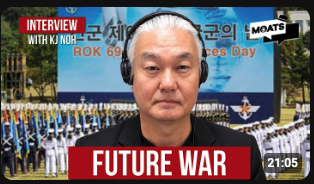
KJ Noh: How the US Is Escalating Toward War With China
by KJ NOH
written by KJ NOH
Approx. 1 Hrs 35 mins • Watch / read
Please make sure these dispatches reach as many readers as possible. Share with kin, friends and workmates and ask them to do likewise.

Jyotishman
India & Global Left
CHATS WITH KJ NOH
| Traducir—Translate! | |
| Make fonts bigger>>> | Resize text-+= |
KJ Noh: How the US Is Escalating Toward War With China
India & Global Left
Premiered Sep 20, 2025Left take with IGL
In this powerful interview, KJ Noh breaks down the dangerous trajectory of U.S. foreign policy. We explore whether China is doing enough for Palestine, how and why the United States is escalating toward war with China, and what this means for the future of the Global South.
Summary
This in-depth discussion with KJ Noh, a political analyst specializing in Asia-Pacific geopolitics, centers on critical global issues such as the ongoing genocide in Palestine, China’s role in international diplomacy, and the escalating preparations for war between the US and China. The conversation challenges dominant Western narratives by framing the Palestinian genocide as a US-led imperial project rather than a solely Israeli issue, emphasizing the need for targeted political responsibility rather than diffused blame. KJ highlights China’s constructive role in Palestinian unity, diplomatic engagement, and economic recalibration, contrasting it with Western policies that often support or enable oppression.
The dialogue then shifts to the US’s strategic military posture and doctrine aimed at containing and potentially engaging China in a full-scale, possibly nuclear, war. KJ outlines the US’s multi-pronged approach involving information warfare, military preparations, and provocation tactics, underscoring the grave risks of nuclear escalation. He critiques the US empire’s decline as gradual but dangerous, fueled by an addiction to power and hegemony, and warns against underestimating its military and propaganda capabilities.
The conversation extends into the geopolitical complexities faced by frontline states like the Philippines, South Korea, and Taiwan, highlighting the pitfalls of comprador regimes and the urgent need for digital, geographic, financial, and energy sovereignty in the Global South. KJ stresses that the Global South must unite to resist becoming proxy battlegrounds and to challenge Western imperialist designs. He concludes by reflecting on the enduring legacy of colonialism, the dangers of divide-and-conquer tactics, and the crucial role of the Global North’s citizens in preventing catastrophic global conflict.
Key Insights
US-led Genocide in Palestine: A Broader Imperial Project
KJ asserts that the violence and genocide in Palestine must be understood as a US imperial enterprise using Israel as a subcontractor. This reframing shifts responsibility to Western powers and highlights the systemic nature of the conflict, rooted in colonial and neo-colonial ambitions over resources and geopolitical control. Recognizing this is vital for effective political activism and international solidarity, as blaming Israel alone diffuses accountability and weakens targeted resistance.China’s Constructive Diplomatic Engagement
China has played a significant role in mediating among 14 Palestinian resistance factions, supporting armed resistance and political unity. It recognizes all factions as legitimate resistance rather than labeling some as terrorists, unlike the US. Additionally, China has reduced investments and trade with Israel, signaling an economic shift aligned with its geopolitical stance. China’s approach contrasts with Western policies and indicates a multipolar world order challenging US hegemony.⚔️US War Doctrine and the Risk of Nuclear Conflict
The US has maintained a consistent war doctrine since 2009, aimed at full-spectrum dominance over China, including plans for “air sea battle” and the use of tactical nuclear weapons. The escalation follows a three-step process: information warfare to manufacture consent, military “shaping” through exercises and repositioning, and provocations to trigger conflict. The normalization of tactical nuclear weapons with yields 20 times Hiroshima’s bomb underscores the unprecedented risks.Digital Sovereignty as a Frontline in Global Power Struggles
In the current era, control over information and digital infrastructure is a critical domain of sovereignty. The US seeks to dominate the digital commons, as seen in attempts to curb platforms like TikTok, which China owns. For Global South nations, achieving digital sovereignty is as important as territorial integrity, helping to prevent subversion and maintain autonomous political agency.Global South’s Need for Multi-Dimensional Sovereignty
Beyond digital sovereignty, geographic, financial, and energy sovereignty are crucial for resisting imperial coercion and proxy conflicts. Mechanisms like regional alliances (e.g., the Shanghai Cooperation Organization) aim to foster cooperation and independence from Western financial systems and energy dependencies. This holistic sovereignty reduces vulnerability to economic sanctions, military manipulation, and political interference.️ The Role of the Global North in Preventing War
KJ emphasizes that citizens in Western countries must actively oppose their governments’ militarism and imperial policies. Often, narratives in the West deflect responsibility or promote helplessness, which serves to perpetuate the empire’s violence. Political accountability and grassroots activism in the Global North are indispensable for de-escalating tensions and supporting alternative geopolitical models emerging from the Global South.US Empire’s Decline and Continued Threat
The US empire is in a protracted state of decline marked by deindustrialization, deskilling of its workforce, and economic weakening. However, its military power and unparalleled propaganda capacity continue to make it a formidable and dangerous actor. KJ warns that this decline fuels desperation, driving the US to escalate conflicts and resort to catastrophic options like nuclear war rather than cede power peacefully.Legacy of Colonialism and Divide-and-Conquer Strategies
The Global South remains fractured due to colonial-era borders, ethnic divisions, and imposed conflicts, which Western powers exploit to maintain control. The unresolved border disputes in Asia and overlapping maritime claims exemplify this divide-and-rule approach. Overcoming these fractures through genuine solidarity and equal partnerships is a prerequisite for resisting imperial domination and building a stable multipolar world.Geopolitical Metaphors: Game of Go vs. Chess
KJ contrasts Western geopolitics, likened to chess (positioning for kill), with Chinese strategy, likened to the game of Go (connecting to live). This metaphor illustrates fundamental differences in geopolitical philosophy—zero-sum confrontation versus networked resilience and cooperation—offering insights into the challenges and potential pathways for global peace and stability.⚠️Urgency of Preventing Global Nuclear War
The interview closes with a sobering reminder that global nuclear war is not a distant threat but an imminent danger given current escalations. There are no second chances once nuclear conflict begins, making prevention the highest priority. The “bar drunk” analogy describes the US as a declining empire addicted to power, irrationally escalating conflicts rather than stepping back, underscoring the precarious nature of the current international environment.
ADDENDUM
China is the greatest people's success story in modern human history
Friends of Socialist China
Feb 2, 2025
A hybrid event, “Defend Socialist China”, took place in Portland, Oregon, on Sunday 26 January, put together by the Friends of Socialist China US committee. The panel addressed such questions as:
- What is the Pentagon’s plan for war with China?
- How does China’s foreign policy compare to that of the U.S.?
- Why is China not imperialist?
- How are current events on the Korean peninsula related to the U.S. war on China?
- China isn’t colonizing Africa.
- Exposing Western propaganda on the Uyghurs in Xinjiang.
- How do tariffs benefit corporations here?
- Why working people should defend China
KJ Noh is a journalist, peace activist, and co-host of The China Report on BreakThrough News.
Summary
The video presents a comprehensive and nuanced analysis of China’s remarkable development and global role, challenging prevalent misconceptions and Western narratives. It begins by highlighting China’s extraordinary achievements since 1949, emphasizing its unique path to development—one free from colonization, war, and primitive accumulation. China has lifted over 850 million people out of poverty, eradicated a massive drug addiction crisis within three years, and is now spearheading the world’s largest sustainable energy transition and carbon capture efforts. The country is a global leader in scientific research, advanced technologies, and artificial intelligence, maintaining technological sovereignty despite sanctions.
The speaker critiques the simplistic labeling of China as capitalist or imperialist, exposing the fallacies behind these claims. Unlike capitalist states, China pursues long-term, planned economic development aimed at common prosperity, with significant public ownership and a commitment to sustainable, equitable growth. The accusation of Chinese imperialism is framed as propaganda rooted in Western imperialist interests, often propagated by US-funded think tanks and recycled across various political spectrums.
Additionally, the video defends China’s worker conditions and social progress by contrasting wage growth and retirement benefits with those in the United States, highlighting the tangible improvements in Chinese workers’ lives. The narrative also touches on the ongoing global tension, particularly in South Korea, where a recent military coup attempt, linked to US control, illustrates the escalating militarization and propaganda wars in the region. The speaker urges viewers to resist disinformation campaigns, decolonize their thinking, and support China as a crucial partner for a multipolar, equitable future.
Key Insights
China’s Development Model as a Counterpoint to Colonial Legacies: Unlike the majority of formerly colonized nations that remain trapped in neocolonial underdevelopment, China’s trajectory showcases a sovereign, self-directed development model. This challenges the notion that prosperity can only be achieved through Western-style capitalism or imperialist exploitation, offering a powerful alternative path for other developing nations.
Eradication of Poverty and Social Challenges through Planned Development: The lifting of over 850 million people out of poverty, paired with the rapid elimination of a massive opiate addiction crisis, illustrates the effectiveness of China’s long-term, state-led planning. These achievements demonstrate how a focused, collective approach can resolve social problems that capitalist states fail to address adequately.
China’s Leadership in Sustainable Energy as a Global Public Good: China’s massive investment in renewable energy, carbon capture through reforestation, and innovative technologies like molten salt reactors and plasma fusion highlights its commitment to addressing climate change. This contrasts sharply with many Western countries’ slower or more profit-driven approaches, positioning China as a key player in the global sustainability transition.
Technological Sovereignty and Open Knowledge Commons: Despite facing sanctions, China has maintained independence in technological development, particularly in AI, exemplified by the release of Deep Seek AI as open source. This approach democratizes access to technology and knowledge, opposing the monopolistic tendencies of Western corporations and fostering global collaboration.
Critical Examination of “Capitalist” and “Imperialist” Labels: The video dissects common Western assumptions by comparing China’s economic policies with capitalist states. China’s state ownership of land and infrastructure, focus on common prosperity, and avoidance of cyclical capitalist crises differentiate it fundamentally from capitalist economies. The imperialist accusation is exposed as a projection and propaganda tool, rather than an accurate description of China’s international conduct.
Improved Worker Welfare and Economic Outcomes Compared to the West: Chinese manufacturing wages have increased exponentially over the past decades, dramatically outpacing wage growth in the US. Combined with generous retirement ages and high homeownership rates among millennials, these metrics reveal a social contract that prioritizes worker welfare and long-term stability, challenging Western narratives of Chinese labor exploitation.
⚔️Geopolitical Tensions and the Role of US Military Influence: The discussion of South Korea’s attempted military coup, tied to US strategic control, exposes the ongoing militarization in East Asia and the use of false flag operations to justify authoritarian rule and conflict escalation. This underscores the broader global struggle between emerging multipolar powers and established US imperial interests, emphasizing the importance of resisting disinformation and ideological occupation in the information war.
Extended Analysis
China’s story is often misunderstood or deliberately misrepresented in Western discourse. By situating China’s rise within its historical context—as one of the few formerly colonized nations to achieve developed status independently—the video challenges dominant paradigms that equate development with Western capitalist models. China’s approach, centered on public ownership and planned economic development, contradicts the neoliberal narrative that free markets alone lead to prosperity. Instead, China’s success underscores the benefits of a sovereign state steering its economic trajectory toward inclusive growth and poverty eradication.
The eradication of drug addiction within three years after 1949 is a remarkable social achievement seldom discussed in mainstream analysis. It signals the power of coordinated state intervention in addressing societal crises, contrasting with the persistent drug epidemics in capitalist countries where market forces and privatization dominate. Similarly, China’s aggressive advances in renewable energy and carbon capture reflect a strategic prioritization of ecological sustainability embedded within its development framework, rather than an afterthought or market-driven response.
Technologically, China’s capacity to innovate under sanctions is particularly striking. The open-source release of AI technology contrasts with Western corporate secrecy and commercialization, aligning with the idea of knowledge as a global commons. This openness can accelerate global technological progress and democratize benefits, challenging the proprietary, monopolistic models prevalent in the West.
The critique of the “socialism vs capitalism” binary is profound, revealing how labels can obscure more than they clarify. By focusing on outcomes—such as poverty elimination, public ownership, and economic stability—the analysis shows that China’s system defies simple categorization. It operates a hybrid model oriented toward common prosperity, which Western capitalist states have largely abandoned in favor of financialization, inequality, and ecological degradation.
Worker conditions and wage data provide tangible evidence of China’s social advances. While Western discourse often portrays Chinese labor as exploitative, the dramatic wage growth, retirement benefits, and homeownership rates tell a different story. The comparison to stagnant US wages and minimum wage further highlights systemic issues in Western capitalism, where worker welfare has stagnated or declined.
Finally, the geopolitical dimension, especially the militarization and destabilization efforts in South Korea and other regions, reveals the deeper stakes of the US-China conflict. The video’s account of false flag attempts and military coups as tools of imperial control sheds light on the fragility of global peace and the dangers posed by escalating proxy conflicts. The call to resist propaganda and mental occupation is a crucial reminder of the ideological battles that accompany physical conflicts in this new era.
In conclusion, the video advocates for a more informed, critical, and decolonized understanding of China, emphasizing solidarity with its developmental path and vigilance against misinformation. This perspective is essential for grasping the complexities of global power shifts and envisioning a more equitable multipolar future.
BEFORE you leave, PLEASE pay attention to this alert.
[t4b-ticker id="1"]
Print this article [bws_pdfprint display=’print’]
The views expressed herein are solely those of the author and may or may not reflect those of The Greanville Post, although, if we publish them, we obviously find them noteworthy and valuable.
This work is licensed under a Creative Commons Attribution-NonCommercial 4.0 International License •
ALL CAPTIONS AND PULL QUOTES BY THE EDITORS NOT THE AUTHORS