
Julian Macfarlane

JULIAN MACFARLANE
AUG 09, 2026
“The answer is no. There is no limit.” — Lindsey Graham
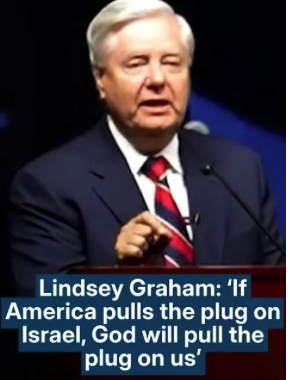
A monster in life, Graham was something worse in death and the act recently passed by Congress —The Lindsey O. Graham Sanctioning Russia and Iran Act of 2026—underscores how low the United States of America has sunk.
The question then arises: does America have a right to exist? The conscience of a nation is its people. So, when a government acts without conscience something is very, very wrong —either with its system of governance, or with the public in whose name it acts. Lindsey still haunts Capitol Hill — dead but alive —a zombie in a building built for people who eat not just brains but heart and souls.
Putting aside the question of simple morality, without which we cannot call ourselves human, the Graham Act is also just stupid.
Somebody on X asked “Is Trump the stupidest President ever?”
The answer is no. They have all been stupid, since 1945. Probably for most of American history.
The Graham Act is in line with a tradition.
Let’s look….
Financial Strain on Western Consumers
Alienating Strategic Partners
Major targets of the secondary sanctions include critical trade partners like India. Forcing these nations to immediately choose between U.S. market access and cheaper energy risks damaging alliances and pushing them closer to alternative economic blocs.
Inviting economic retaliation-
Authorizing sweeping tariffs risks economic retaliation from giants like China, India, Russia and also from the BRICS countries.
Empowering the Imperial Presidency
Critics from both parties argue the bill dangerously expands presidential authority since it allows Trump or the next Dildo in Chief to use vague “energy evasion” language to impose unrelated, sweeping domestic tariffs.

Energy Shocks
Article 91 of the United Nations Convention on the Law of the Sea (UNCLOS) states: “Every State shall fix the conditions for the grant of its nationality to ships, for the registration of ships in its territory, and for the right to fly its flag.” .
International law gives Russia the unrestricted, sovereign right to determine its own criteria for what makes a ship “Russian”. If Russia passes domestic laws allowing older, masked-ownership tankers to register, those ships are legally and formally Russian under the strict letter of UNCLOS. The Graham Act is a provocation and Russia may choose to treat attacks on its newly flagged fleet as acts of war and retaliate.
On the other hand, new sanctions may actually help Russia, as previous sanctions packages did.
According to some economic and geopolitical critics, aggressive Western sanctions packages can unintentionally benefit or reinforce the Russian government through several mechanisms:
Import Substitution
Severe trade restrictions force Moscow to accelerate “technological sovereignty” --building up its domestic manufacturing base, particularly in heavy industries, agriculture, and military production .
New Trade Partners
Sanctions may be a catalyst to shift Russia’s supply chains, creating deeper, more resilient economic and strategic partnerships with non-Western giants like China and India.
Increasing public support at home
Broad sanctions that impact ordinary citizens—such as financial lockouts or visa restrictions— alienate the Russian public and their anger is expressed in increased national unity and support for more aggressive national policies.
Windfall Profits
Threatening 100% tariffs can trigger volatile spikes in global oil and gas prices. Russia can end up earning comparable—or even higher—revenues on a lower volume of exported energy via its newly legitimized tanker fleet.
Worsening relations with Trump
Donald Trump has indicated clear support for the legislation following key changes that aligned with his agenda. Putin, as we all know, regards “betrayal” as the worst thing a person can do and Trump is now explicitly betraying the spirit of Anchorage, not that the Russians really believed him, of course. Putin will respond – as usual, asymmetrically.
White House Coordination
The bill was fast-tracked and finalized only after months of direct negotiations with the White House.
Early resistance ended once lawmakers agreed to preserve and expand presidential authority.
Trump’s Demands
Following the death of Senator Lindsey Graham, Trump specifically demanded that sweeping secondary sanctions and tariff powers against Iran be integrated into the text. Congress obliged by appending these provisions.
Massive Executive Tariff Powers
The bill hands the President a powerful trade weapon, granting discretionary authority to levy up to 100% tariffs on foreign nations purchasing Russian energy. This aligns perfectly with Trump’s preferred tariff-centric foreign policy and provides leverage to force peace negotiations.
Congressional Support
The bill cleared the Senate with an overwhelming 86–11 bipartisan vote.
Putin is a long term, big picture strategist, as we all know. So the vote indicates that there will be no change in US policies in the foreseeable future, until the US finds itself weakened to the point of economic and social collapse.

So the Russians must use this Act to strengthen BRICS and the Global South, assuming a major recession for the G7 countries. That means more support for countries like Iran, more aggressive action in Ukraine to destroy the current regime and take over the region as part of Russia.
Small countries with vast reserves offer safe routes to fill the gap left by the war with Iran and upend the relationships that govern the world. The main beneficiaries of the crisis were countries not previously considered major exporters.

Guyana, with a population of less than one million, increased its daily production to 1 million barrels, and its total reserves are estimated at 11 billion.
New fields have been discovered off the coast of Namibia and Côte d’Ivoire. Asian giants have shifted their focus to purchasing from Africa and Brazil.

Against this backdrop, an alliance of five American countries has emerged, creating a market bypassing OPEC. Middle Eastern countries are forced to spend billions of dollars building bypass infrastructure. The Emirates are accelerating pipeline construction to Fujairah, and Saudi Arabia is expanding capacity to the Red Sea. But the war has damaged their plans, along with critical infrastructure, meaning they will not recover for several years.
Goldman Sachs estimates that by 2028, new routes could replace up to 60% of previous shipments. The risk of Houthi attacks and additional costs, diversifies logistics works to the benefit of the Global South, which will opt for BRICS rather than the American dominated supply system—thanks to the neocolonial bullying implied in the Graham Act.
Will Schryver
When you’re dealing with an empire in existential crisis, you must administer death by a thousand cuts in order to not evoke a trapped animal reflex in a beast who, at the very least, could destroy a city in a fit of fury.

These things must be done carefully. Mega beasts went extinct. Can we hope the same fate awaits the US?
Wolves, male or female, are very good with puppies.
 Special Addendum

Is Iran hoping the US will attack?
It is ready
Easier said than done.
The US still trusts in stealth technologies and standoff weapons like Tomahawks and various air-launched weapons. But Iran has shot down, not only US aircraft but various missiles, including Tomahawks, as well, and its air defense systems have been upgraded. They are more than ready.
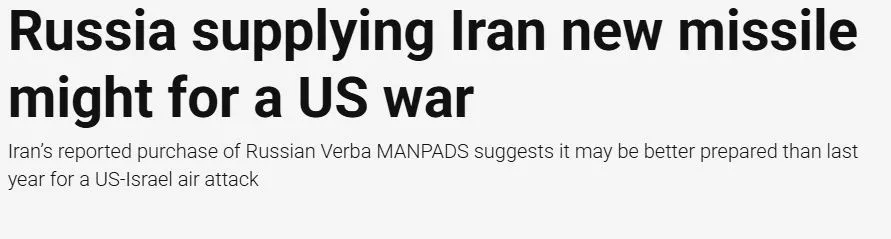
And Teheran, in cooperation with the Russians and Chinese, has developed sophisticated anti stealth technologies. Below is a chart taken from the US-friendly CSIS think tank.

Given that the CSIS is on the conservative side and claims the Pentagon estimates that it would have to fire 4 to 6 munitions to destroy a target, the kind of war the US is talking about would do serious damage to US weapons inventories. The US has many times less the production capacity for high end weapons compared to Russia and China.
CSIS says the US might need 2800 to 4600 rounds to “do the job”. It could need a LOT more! (And still NOT do the job!)
Of course, the US is also relying on cyberwarfare, but the Iranians have anticipated that and with the help of the Russians and Chinese are prepared for a cyber response which would impact continental American digital infrastructure. This is a 21st Century threat of massive proportions, especially with the implementation of AI technology. Ubiquity is vulnerability.

Finally, there is a new generation of Iranian missiles, which fly further, faster, and hit more precisely with greater impact. This is really why Iran has not invested in Nukes.
If Iran went all out against Israel, the Zionist Non-entity would cease to exist in less than a week. If the US and Israel hits Iran, Iran will survive and strike Israel hard —fast — targeting also the Gulf States, which will have to cash in their US treasuries to survive.
The US of course claims to have severely degraded, if not destroyed Iran’s supply of missiles as well as its production capacity.
But the battlefield tells a different story.
The missiles that the Iranians are now using are much more advanced than previously, indicating unimpaired production and development abilities. Recent strikes carried out by hybrid versions of the Haj Qassem, the Kheybar Shekan, the Fattah-1 maneuverable reentry vehicle (MaRV) signalled a huge increase in hitting power. These weapons are much more formidable in all respects – much more precise, more powerful, and harder to intercept.
The Haj Qassem is a development of the two decade old Fateh-110 family – solid-fueled, road-mobile, precision-strike ballistic missiles that have undergone continuous development, for better range, improved accuracy, and advanced propulsion and guidance.
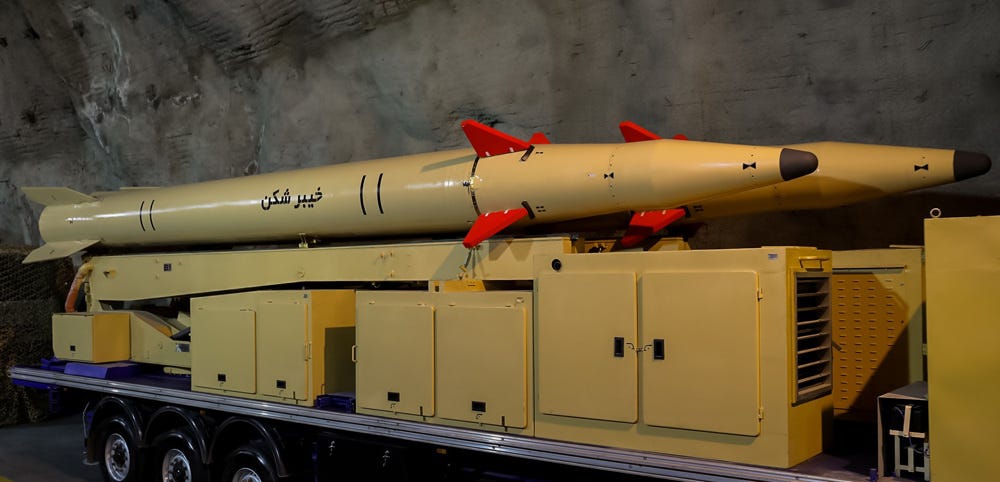
Haj Qassem
The Kheybar Shekan family was developed by the IRGC, on the basis of the Raad-500, or Zohair sub-family within the Fateh missile ecosystem, with a separate engineering team and procurement chain.
Both the Haj Qassem and Kheybar Shekan-1 carry warheads of about 500 kilograms with radii of action in the 1,400–1,450-kilometer range. Having two missile systems of similar characteristics might seem like redundancy but it offers considerable advantages in a hot war of this kind. It reduces the effects on overall capability in the case of the degradation of one production line – whether through attrition, sanctions, supply-chain disruption, or targeted strikes. Having two different development teams promotes creativity and adaptability as well
The existence of two missiles serving broadly comparable strategic roles, while originating from different organizational and industrial structures, creates strategic redundancy within the missile-industrial base and complicates the enemy’s attempts to reduce overall capability by targeting any single institutional or production network.
But why create hybrids?
The Haj Qassem’s large booster provides greater propulsive energy, a larger fuel volume, and potentially higher thrust, which translates into higher velocity or the capacity to carry a heavier payload with explosive power, amplified by kinetic, thermal conversion energy .
The Kheybar Shekan’s, advanced flight control system and terminal-phase guidance incorporates lessons learned from the Raad-500 resulting in a warhead that is more maneuverable, more accurate, and harder to intercept even by the most advanced interception systems available to the West.
You get a more capable missile saving the time and trouble it would take to develop and produce a new missile from scratch.
Similarly, combining a Fattah-class MaRV and a Haj Qassem booster optimizes the delivery of the MaRV, whose unpredictable terminal trajectory, makes it extraordinarily difficult for layered defense systems to intercept.
PAC-3 and David’s Sling are designed for lower-altitude intercepts against missiles; THAAD engages ballistic targets in the upper atmosphere and exo-atmosphere also during the terminal phase; SM-3 is primarily an exo-atmospheric interceptor designed for mid-course engagement; and Arrow-3 operates in a similar exo-atmospheric envelope— but all these systems are dependent on calculable intercept geometry.
Finite reaction time and limited maneuver capability makes it difficult for any interceptor system to solve a continuously changing targeting problem.
Iran’s accomplishments would not be possible without a functioning, well-resourced engineering and production infrastructure, which it has developed by itself to overcome sanctions and economic warfare.
This kind of cross-family integration implies operating linked, self-supporting design bureaus, computational facilities, manufacturing lines, and testing apparatus capable of validating the integrated system.
Keep in mind that Iranian missile production system manufactures both the booster and warhead sections of its missiles as matched sets.
Following what would be normal production logic in the West, there would be no reason to take the warhead from an existing Kheybar Shekan missile and mate it to a Haj Qassem booster since doing so would simply destroy one complete missile to create one hybrid missile, with no net gain in inventory.
Oh, “net gain”? —and it wouldn’t be as profitable as designing, designing and retooling for a totally new rocket!
However, with this hybrid configuration Iran is producing new Kheybar Shekan warhead assemblies and new Fattah-class MaRVs specifically for integration onto Haj Qassem boosters.
This means Iran’s production lines for its most advanced warhead technologies, including the Fattah MaRV, are fully active and up to producing beyond what is needed to sustain existing missile types in their standard configurations.
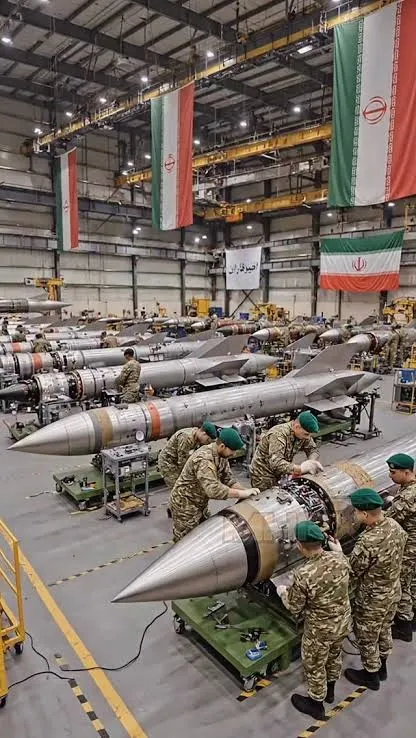
Years of sanctions, sabotage, assassinations of top scientists and leaders, and military strikes [by US/Israe;] have challenged but not diminished Iranian missile design and production but rather stimulated adaptation, acceleration, and innovation.
It’ s more bang for the buck. The Rial Deal… (Sorry, couldn’t resist that….)
The US has assumed that it has destroyed Iranian missile industry to the extent that it can not develop advanced missiles like we are seeing today . It still assumes that, despite the destruction of US bases in West Asia and constant demonstrations of the lethality of Iranian system.
The hybrid Haj Qassem–Kheybar Shekan/Fattah configurations are innovative and modular missiles that are not only militarily powerful but economically efficient and provide the basis for future advances. They are also testimony to Iran’s resilient industrial base and the quality of its engineers and scientists.
A widely syndicated AP report confirmed that nearly 700 U.S. service members have now been wounded by drone and missile attacks on American bases. The AP notes that while many troops were cleared to return to duty after initial treatment, advocates and medical experts are raising serious concerns about the long-term, invisible effects of these blast injuries. The Associated Press (AP)
While the number of KIA are lower than they would be in battlefield combat, the effects of a missile blast are still devastating, with a very large number of people suffering from brain trauma
The newest hybrid is a version of the Fatah 2.
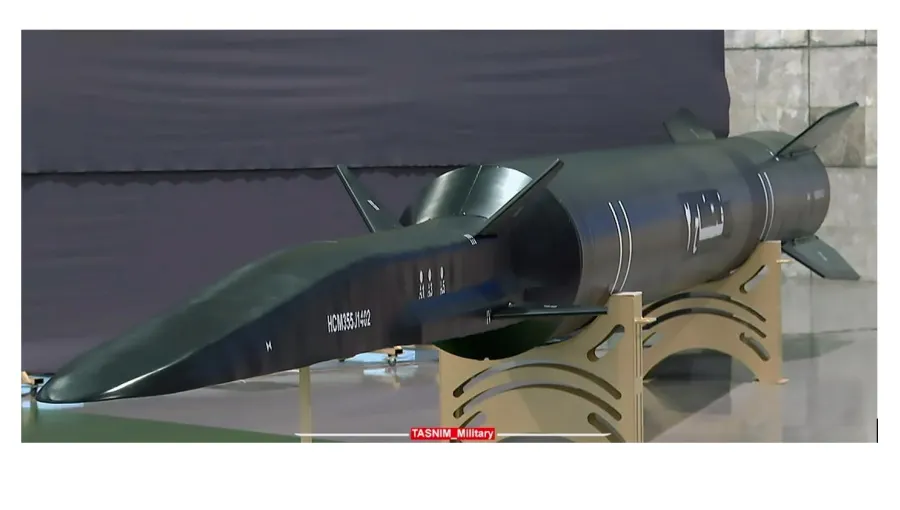
The Fattah-2 is a hypersonic glide vehicle (HGV) that can manoeuvre during flight, including altering its trajectory by igniting a second-stage motor upon re-entry into the atmosphere. “This level of missile technology is currently not operational in any Western nation,” Marins said.
The missile can reportedly reach speeds of Mach 14, or around 18,000 km/h, while maintaining a high degree of precision. Its manoeuvrability makes it “virtually immune to modern air defences and air-to-air missiles”, highlighting a capability that could complicate existing missile defence systems deployed by the US and its allies
Yes, Iran’s own Oreshnik.
A US and Israeli attack is something Iran might be hoping for.
Something different. Why the Japanese are disappearing
Support New Forensics
Chappy and Ichi have only one kid — me. He’s tough to raise.Expensive they say. Please donate to support Chappy and Ichi and kid, Julian, by clicking on the graphic or the url below.
Please donate to support Chappy and Ichi and their furball Julian, by clicking on the graphic or the url below.

I would really like to get to 5000 subscribers. If you like my work, share the urls on other blogs and sites and in comments on podcasts.
Show us you care by buying us coffee at https://buymeacoffee.com/julicow
