
Oliver Boyd-Barrett
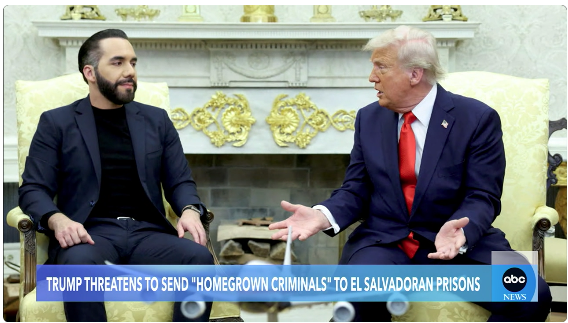
Salvador strongman, Nayib Bukele, has offered Trump to take US citizens into his maximum security prisons.
I have posted several times recently on the tragic crises of Venezuela and Cuba. For those who found inspiration in the 1950s and 1960s from indigenous and Latin resistance to US and European imperial machinations in South America, these are indeed dark days, further blighted by parallel reactionary developments throughout the continent.
Colombia

Espriella. In Bukele's mould or worse.
The June 2026 presidential election in Colombia involved significant United States diplomatic activity, congressional reactions, and discussions surrounding the drug war and regional security. Prior to the vote, some U.S. political figures expressed support for certain candidates. Following the runoff, U.S. officials congratulated the candidate who was leading in preliminary counts and discussed future cooperation on regional security, economic ties, and immigration. The outgoing President of Colombia, Gustavo Petro, criticized U.S. political actions, viewing them as interference.
Following the close preliminary results, President Petro made public allegations concerning U.S. and other international involvement in the election outcome. The involvement of U.S. figures in the election sparked domestic political debate within the United States. A group of U.S. Members of Congress issued a statement expressing concern about U.S. officials attempting to influence the vote and emphasizing the importance of Colombia's self-determination. Leading up to the election, the U.S. government engaged with the Petro administration on various matters. Past U.S. actions, including sanctions and legal investigations, were discussed in the context of their potential influence on the political landscape. Critics suggested these actions could be seen as leverage impacting the successor of President Petro.
The U.S. has expressed interest in aligning Colombia with its security strategies. One candidate indicated support for collaborating with U.S. anti-cartel efforts, including certain military tactics and policies related to coca cultivation. The “Drug War” is a brand invariably promoted by the US in pursuit of political and military gain in the region. U.S. interest in the election was also linked to broader geopolitical considerations, including relations with other global powers. While the previous administration had developed ties with China for investment, the incoming government’s stance on international partnerships is being observed for potential shifts in alignment.
With only about 250,000 votes separating the two candidates out of more than 26 million cast, De La Espriella takes office on August 7 with a narrow popular mandate that hardly augurs a period of stability.
The election serves as a direct referendum on President Petro’s “Total Peace” negotiation strategy. De La Espriella campaigned on a heavy-handed, El Salvador-style “iron fist” approach to completely abandon talks and aggressively dismantle groups that conservatives conveniently dismiss as “rebel” or “cartel” but which are intimately interwoven with political formations and their militaristic branches, both official and otherwise. The electoral map highlights a stark internal divide. Cepeda dominated peripheral regions, the vulnerable Pacific coast, and Bogotá, whereas De La Espriella capitalized on the Andean center, major commercial cities, and regions severely impacted by ongoing border violence. De La Espriella’s party, the National Salvation Movement, holds minimal seats in Congress. Passing structural tax overhauls or changes to the 2016 FARC peace accord will require complex coalition-building with traditional establishment conservative parties that he routinely lambasted on the campaign trail.
Bolivia
The current crisis represents a major setback for the left-wing Movimiento al Socialismo (MAS). Progressive forces, long accustomed to being in power under former President Evo Morales, are now largely marginalized in mainstream governance, facing a center-right administration.
The pushback has not been a unified progressive front. Rather, it is a cascade of independent sectoral demands from teachers, miners, and transport workers. This ideological fragmentation weakens the movement’s ability to present a cohesive alternative to conservative governance.
Progressive organizations and Indigenous movements face severe stigmatization. The government and international allies (including the US State Department) have labeled parts of the mobilization as destabilizing or an attempted coup. State of emergency legislation grants armed forces wide latitude to intervene, raising fears of escalating human rights issues and the criminalization of protests.
The progressive wing is in disarray following an arrest warrant issued against Morales. With its historic figurehead evading charges, the left is struggling to channel popular anger into a unified political force
Accusations regarding United States manipulation of electoral outcomes in Bolivia are a subject of significant geopolitical debate, with no consensus on direct, clandestine manipulation of vote counts. Instead, discussions around U.S. influence focus on diplomatic pressure, development aid, and regional alignments.
The most prominent recent allegations of U.S. involvement stem from the controversial October 2019 presidential election. Following a sudden 24-hour halt in the preliminary vote count, the Organization of American States conducted an audit and claimed to find “intentional manipulation” and “serious irregularities” favoring incumbent President Evo Morales. This report triggered mass protests, leading to the military forcing Morales to resign, an event he and his supporters labeled a U.S.-backed coup.
Critics and left-wing politicians, including Morales, argue that the OAS acts as a diplomatic tool for Washington to destabilize leftist governments. Research from independent bodies, including the MIT Election Data and Science Lab, and The Center for Economic and Policy Research (CEPR) subsequently challenged the OAS’s statistical findings. They argued that the late-stage surge for Morales was a normal trend caused by slower-reporting rural districts where his support was strongest.
Beyond the 2019 crisis, accusations of U.S. interference traditionally point to overt political and economic pressure rather than direct election tampering. Historically, Bolivian leaders accused the U.S. Agency for International Development (USAID) of funding right-wing opposition groups and civic organizations - specifically in wealthy, separatist-leaning regions like Santa Cruz - to weaken the ruling leftist party. This friction led to Evo Morales expelling USAID from Bolivia.
The U.S. has frequently tied regional aid and trade preferences to Bolivia’s eradication of coca leaf crops. Left-wing factions argue that Washington uses drug-war certification to economically pressure the government and alienate the indigenous rural voting base, which relies heavily on traditional coca farming.
Peru
Roberto Sánchez officially announced that he will not recognize the results following the razor-thin June 7 presidential runoff, triggering a severe institutional crisis that significantly threatens the immediate governance and stability of progressive forces in Peru and which had its birth in the effective coup d’etat staged by reactionary forces against former President Castillo in 2022. On December 7, 2022, Castillo attempted to dissolve Congress and establish an emergency government right before an impeachment vote. Castillo was imprisoned.
With 99.72% of ballots processed, right-wing candidate Keiko Fujimori (daughter of the former corrupt dictator Alberto Fujimori, 1990-2000) holds a microscopic lead of roughly 40,000 votes. Sánchez has formally denounced the process as “fraudulent” and refused to recognize a Fujimori government. The progressive platform is targeting 400,000 overseas votes—which heavily favored Fujimori—demanding the nullification of 119 consular offices over alleged procedural manipulation. Mobilization escalated into a massive march through Lima, and Sánchez has explicitly called for nationwide protests over the upcoming weekend to reject the tally.
Despite the presidential deadlock, the election formalized a major structural footprint for the left. Sánchez’s Juntos por el Perú party locked in the second-largest block in the newly re-introduced bicameral Congress, securing 32 of 130 seats in the lower house and 14 of 60 seats in the Senate. Fujimori’s Fuerza Popular maintains the largest single legislative bloc (41 lower house seats, 22 Senate seats). This ensures that even if Sánchez manages a legal miracle with ballot challenges, a conservative-led legislature retains the numbers to stonewall or quickly impeach progressive leadership.

President Castillo in 2021
The vote cemented a stark geographic divide. Progressive forces proved dominant in the rural and mountainous regions of southern Peru, winning a majority of the country’s actual domestic regional jurisdictions. However, they fell short in the dense urban center of Lima. The left’s momentum is heavily sustained by popular demands for mining sector reforms and resource sovereignty. However, by aligning closely with imprisoned former President Pedro Castillo, progressive forces are easily framed by the conservative establishment as destabilizing elements, pushing the movement into a continuous cycle of street resistance rather than a path to stable executive governance.
In response to the slow, chaotic ballot counting, Sánchez has called for a nationwide “March for Democracy” and is urging social movements and trade unions to defend what his supporters view as an authentic mandate for change.
Progressive efforts are highly disadvantaged by extreme political fragmentation. Since the ouster of former president Pedro Castillo in 2022, right-leaning factions within Congress have solidified power, leading progressive actors to decry rigged electoral systems that purposely dilute their reach.
Progressive candidates have faced extensive pushback from the conservative-dominated legislature, which frequently utilizes constitutional mechanisms—like the “moral incapacity” vote—to remove leftist leadership.
Sánchez’s platform pushed for substantial structural changes, including state-led resource management, the partial nationalization of natural resources, and a popular movement to draft a new constitution. These stances resonate highly among working-class and rural electorates.
While the movement has proven highly capable of rallying large segments of the population frustrated by inequality, its overall chances for governing are repeatedly hamstrung by the ease with which executive powers are impeached by a hostile Congress. Consequently, progressive forces remain in a constant state of defense and protest rather than cohesive governance.
No concrete evidence exists of direct, clandestine U.S. manipulation of election counts in Peru. Similar to the context in Bolivia, accusations of U.S. interference in Peruvian electoral outcomes focus primarily on diplomatic messaging, support for right-wing alignments, and soft-power pressure aimed at countering leftist leaders.
The tight and highly polarized June 7, 2026 presidential runoff between conservative Keiko Fujimori and leftist candidate Roberto Sánchez serves as a prime flashpoint for interference. With the vote count nearly complete, Fujimori maintains a razor-thin lead of roughly 40,000 votes, heavily buoyed by an overwhelming majority of ballots cast by Peruvians living abroad—specifically those residing in the United States.
Left-wing factions and Sánchez supporters have launched mass protests in Lima, claiming “external intervention” and structural bias favoring Fujimori. Sánchez has formally petitioned the National Elections Tribunal (JNE) to annul overseas votes, citing changes to the chain-of-custody procedures for ballots arriving from consular offices in the U.S.. Left-wing critics point to Washington’s regional preference for Fujimori’s pro-market platform as implicit backing for these procedural discrepancies.
The template for recent interference claims was established during Peru’s 2021 election when leftist Pedro Castillo narrowly defeated Keiko Fujimori. When Fujimori alleged systematic fraud in 2021 without presenting evidence, the U.S. State Department quickly issued a statement praising Peru’s election as a “model of democracy.” However, left-wing critics allege that behind the scenes, U.S. diplomatic and intelligence entities maintained deep ties with Peru’s conservative military and legislative leadership.
When Castillo was impeached and removed from office in December 2022 after attempting to dissolve Congress, the U.S. Ambassador to Peru immediately recognized his successor, Dina Boluarte. Dina Boluarte won a public election in 2021 as the vice-presidential running mate on the ticket with Pedro Castillo. Prior to that victory, she ran unsuccessfully for the position of mayor of Surquillo (a district in Lima) in 2018. She assumed the presidency in December 2022 by constitutional succession after Pedro Castillo was impeached. She never won a direct, standalone presidential election and served as Peru’s leader until October 2025, when Congress impeached and removed her from office. Leftist allies of Castillo labeled this rapid diplomatic recognition as U.S. endorsement of a legislative coup designed to correct an unfavorable electoral outcome.
The U.S. maintains extensive anti-narcotics and military training aid programs with the Peruvian Armed Forces and National Police. Left-wing critics argue this creates a permanent pro-Washington security apparatus within Peru that acts as an institutional counterweight to any elected left-wing presidency.
Ecuador
Progressive candidates and the Citizens’ Revolution movement have retained strong grassroots support, with figures like former President Rafael Correa maintaining significant influence. However, their prospects are actively hindered by institutional maneuvering; for instance, the temporary suspension of the Citizens’ Revolution party by electoral judges was timed to disrupt local election preparations. Progressive forces generally advocate for social welfare programs, national sovereignty, and restrictions on foreign intervention. This positions them in direct ideological opposition to the right-wing, free-market-oriented administration of President Daniel Noboa.
The U.S. government leverages Ecuador’s severe security crisis and economic vulnerabilities to secure strategic advantages in the region. Facing unprecedented gang violence and drug trafficking, conservative Ecuadorian administrations—most notably President Noboa—have turned to Washington for aid. This has resulted in U.S. SOUTHCOM launching joint military operations and conducting raids against groups classified by the U.S. as “Designated Terrorist Organizations”. Despite Ecuadorian voters explicitly rejecting a November 2025 referendum that would have allowed foreign military bases on their soil, the U.S. has maintained a footprint. Washington has utilized security cooperation agreements and temporary operational deployments to bypass this restriction, securing a foothold for strategic surveillance and intelligence gathering.
Washington uses this security partnership as leverage to counter the growing commercial and diplomatic influence of China in the country. Furthermore, U.S. intelligence infrastructure helps manage cross-border migration and drug networks flowing to the United States.
Chile

Jose Antonio Kast. Like Argentina's Milei, Kast has Trump's blessing. His father is a German immigrant with Nazi roots.
The Chilean progressive and left-leaning movements are currently operating in a challenging landscape. President Kast’s government took office on March 11, 2026, defeating left-wing and communist coalitions by campaigning heavily on anti-crime measures, economic restructuring, and mass deportations. While deep party fragmentation remains across the political spectrum, progressives face a consolidated conservative bloc that is pushing to reduce state spending, lower corporate taxes, and loosen environmental and labor regulations. Despite the current right-wing shift, structural inequalities and social demands—such as housing rights and pension reforms—that fueled the 2019 social uprisings remain largely unresolved. These ongoing grievances serve as the primary ideological foundation for progressive pushes in the coming years.
US influence acts primarily through geostrategic, economic, and security alignment rather than the ideological opposition witnessed in previous decades. The US and Chile continue to deepen security partnerships, which some critics view as a mechanism to secure regional hegemony. For instance, US Southern Command forces are set to participate in combined elite operations—like the PACIFIC DAGGER 2026 exercise—aimed at navigating extreme geographical environments. The US attempts to guide Chilean domestic policy by promoting free-market principles, deregulation, and foreign investment. Historically, this reliance on US capital and multilateral financial institutions has been viewed by leftist critics as a way to restrict the implementation of socialist or heavily redistributive economic policies.
While the nature of US influence has evolved, the historical legacy remains a flashpoint. The US heavily intervened in the 1960s and 1970s—covertly funding anti-communist opposition, funding media propaganda, and orchestrating economic blockades—to topple Marxist President Salvador Allende and support the subsequent right-wing dictatorship of General Augusto Pinochet. The modern relationship has experienced an ideological synchronization under conservative leadership. Under the Trump administration, the US has fostered closer ties with the current President Jose Antonio Kast, gaining a strong strategic partner in Latin America capable of countering opposing left-wing regimes in the region.
Argentina
The United States approaches Argentina through a lens of great-power competition and resource security, utilizing several diplomatic, military, and economic mechanisms to align the country with Washington’s geopolitical objectives. Washington has actively incentivized Argentina to distance itself from China. This includes offering financial lifelines with explicit conditions that Argentina suspend infrastructure projects backed by China and replace Chinese currency swap arrangements with Western alternatives.
As global instability heightens, the U.S. views Argentina as a vital strategic hedge. Argentina possesses enormous reserves of shale oil, shale gas (primarily in the Vaca Muerta basin), and critical minerals like lithium, making it highly valuable to U.S. supply chains and energy independence.
The U.S. successfully pivoted Argentina to a “hyper-West” defense posture. By offering military hardware—such as used F-16 fighter jets and Stryker armored vehicles—and supporting Argentina’s bid for a NATO global partnership, the U.S. integrates the Argentine military firmly into its hemispheric security architecture.
Washington has used its influence with the International Monetary Fund (IMF) and the U.S. Treasury to provide financial bailouts and tariff concessions to pro-market Argentine administrations. These maneuvers effectively tie Argentina to Western debt structures and facilitate trade agreements that asymmetrically favor U.S. market access and intellectual property.
The presidency of Javier Milei is the central driving force behind both the current suppression of progressive politics and the rapid acceleration of U.S. alignment in Argentina. President Javier Milei’s administration has fundamentally altered the domestic political landscape, presenting severe challenges to Argentina’s progressive and Peronist coalitions. Milei has implemented aggressive “chainsaw” budget cuts, defunding social programs, freezing public works, and laying off thousands of state employees. This directly targets the economic safety nets traditionally championed by the left. His administration has passed strict anti-protest protocols and criminalized public demonstrations. These measures heavily restrict the street mobilization tactics that progressive unions and social movements historically use to exert political pressure. Milei uses highly polarized rhetoric, labeling progressives and leftists as “parasites” and “enemies of freedom.” This strategy has successfully shifted the public discourse, putting the left on the defensive and fracturing opposition unity.
The U.S. has found an exceptionally eager partner in Milei, who openly embraces a “hyper-Western” foreign policy. This has allowed the U.S. to achieve its strategic goals with minimal resistance. Unlike past conservative presidents who balanced ties, Milei explicitly prioritizes alliances with the U.S. and Israel. He withdrew Argentina from joining the BRICS bloc, directly serving the U.S. goal of isolating China and Russia. Milei has welcomed a heightened U.S. military footprint, including a joint naval base in Ushuaia (Tierra del Fuego). This gives the U.S. military a direct foothold near Antarctica and crucial maritime straits. Through sweeping legislative reforms like the RIGI (Incentive Regime for Large Investments), Milei has lowered taxes and lifted regulations for foreign corporations. This allows U.S. companies to extract Argentina’s lithium, oil, and gas with minimal benefits remaining in the local economy.
Military Alignment
The rapid military alignment between the administrations of Javier Milei and the United States has transitioned from diplomatic rhetoric into concrete operational, structural, and procurement projects. Controlled through U.S. Southern Command (SOUTHCOM), these projects primarily target the South Atlantic maritime corridors, Antarctic logistics, and the modernization of Argentina’s forces to Western military standards.
The most geopolitically sensitive project is the development of the Ushuaia Integrated Naval Base in Tierra del Fuego. Nominally an Argentine-run project started in 2022 to centralize Antarctic logistics and control regional maritime traffic, Milei pivoted the base to include intensive U.S. integration. Consecutive U.S. SOUTHCOM Commanders—General Laura Richardson and Admiral Alvin Holsey—have personally traveled to Ushuaia to review the project and map out joint collaborations. Opposition politicians strongly criticize the project as a de facto U.S. outpost. The base gives the U.S. a strategic window looking directly into the Drake Passage and the resource-rich Antarctic Peninsula, countering Chinese attempts to build polar research stations in the southern hemisphere.
In May 2026, Argentina’s Ministry of Defense signed a 5-year military cooperation pact with the U.S. to monitor the South Atlantic. The agreement formally authorizes U.S. Southern Command naval and aerial forces to actively participate in patrolling Argentina’s southern exclusive economic zone. The U.S. is providing advanced intelligence, data, and hardware to upgrade Argentina’s maritime surveillance capabilities. The official goal is curbing illegal fishing and regional threats, but the underlying geopolitical objective is neutralizing China’s massive deep-sea fishing fleets and its satellite tracking station in Neuquén.
Bilateral war games have resumed at a scale not seen in nearly two decades. In early 2026, Milei signed a decree authorizing the entry of the nuclear-powered aircraft carrier USS Nimitz and the destroyer USS Gridley into Argentine waters. Milei personally boarded the USS Nimitz to oversee complex interoperability drills between the U.S. and Argentine navies.
A highly coordinated, joint-combined exercise has paired elite U.S. Army Green Berets and Air Force Special Operations Command with Argentine special forces. The training explicitly focuses on synchronization in counterterrorism, hostage rescue, and unconventional warfare.
How quickly do Argentine traitors like Milei forget the treacherous role played by the US during the Falklands War.
To pull Argentina out of Russia and China’s defense procurement orbits, the U.S. has facilitated massive hardware transfers to transition Argentina toward NATO-standard operations. The U.S. approved and backed the transfer of 24 Danish F-16 Fighting Falcons to the Argentine Air Force, completely restoring Argentina’s supersonic interception capabilities. The Argentine Army began taking deliveries of U.S.-manufactured Stryker 8x8 Armored Wheeled Combat Vehicles, binding their ground logistics, maintenance, and training loops directly to the U.S. defense apparatus.
In June 2026, the two nations signed bilateral defense agreements allowing the Argentine military to plug into the global U.S. military logistics network for fuel, drone systems access, and supply operations.
Brazil
The Brazilian “left”, spearheaded by President Luiz Inácio Lula da Silva, is successfully driving social change but navigating a highly contested political arena. Brazilian President Lula da Silva caused a major political stir during an informal conversation at the G7 Summit when he told IMF Managing Director Kristalina Georgieva that he “was never a leftist”. He described his political stance as being in the “middle ground”. An open microphone caught the Brazilian President in a relaxed, informal dialogue with IMF head Kristalina Georgieva and German Chancellor Friedrich Merz. Lula explicitly stated, “I was never a leftist,” to which Georgieva reportedly expressed surprise. He further clarified his ideology by stating that the world is heading down the “middle ground”. The comments made international headlines and drew varied reactions back home. While some viewed it as a calculated, pragmatic diplomatic move, others—such as political opposition figures like former General Hamilton Mourão—jokingly suggested his historical party (the Workers’ Party, or PT) should expel him.
While progressive forces have advanced minimum wage increases and expanded conditional cash transfer programs (such as Bolsa Família), they maintain fragile working majorities in the Brazilian Congress. This requires constant negotiation and has occasionally led to key tax reforms being blocked or conservative social/environmental bills advancing.
Progressive institutions and the Brazilian judiciary successfully marginalized the far-right; the Supreme Court convicted former president Jair Bolsonaro for plotting a coup, removing him from the immediate political game. The conservative and far-right opposition—modeled heavily on right-wing American populism using evangelical support, social conservatism, and anti-corruption discourses—remains a formidable force ahead of the upcoming elections.
The United States uses a multifaceted toolkit to coerce Brazil into aligning with U.S. geopolitical and economic interests, particularly to counter Brazil’s increasing economic and technological integration with China.
The U.S. has weaponized trade by imposing punitive tariffs (such as 50% tariffs on numerous Brazilian products) while selectively exempting certain agricultural goods to control American consumer prices. These economic maneuvers are frequently utilized to pressure the Brazilian government or retaliate against its independent foreign policy.
U.S. interference often extends into the Brazilian justice system. Tactics have included visa revocations targeting Brazilian Supreme Court Justices, financial sanctions under the Magnitsky Act, and alleged historical backing of anti-corruption campaigns (like Operation Lava-Jato) aimed at destabilizing left-wing leadership.
The U.S. has unilaterally designated Brazil’s largest domestic drug gangs (such as the PCC and CV) as foreign terrorist organizations. Because the Brazilian government views this as an infringement on its domestic sovereignty, the designation gives the U.S. extraterritorial powers to apply economic pressure or sanctions against individuals and financial networks within Brazil.
The Brookings Institution suggests that the U.S. must accept Brazil’s strategic autonomy in a multipolar world. In the face of this pressure, Lula’s administration continues to position Brazil as a sovereign middle power, diversifying trade with China while navigating friction with Washington.
