
Oliver Boyd-Barrett

Why Would Ansarallah Blockade the Red Sea? Here's Why.
Background
Yemen has achieved some profound strikes on Saudi Arabia, most recently hitting its ultra-modern Aramco oil facilities. Yemen’s Houthi rebels launched a coordinated retaliatory strike using ballistic missiles, cruise missiles, and armed drones against Saudi Aramco facilities in the coastal cities of Jazan and Yanbu. Aramco is primarily owned by the Government of Saudi Arabia with the majority stake managed through the Public Investment Fund (PIF) and a small percentage traded publicly on the Tadawul stock exchange. The Government retains the vast majority of ownership, holding direct shares and managing portions via the state’s sovereign wealth fund. A small minority stake (around 1.5% to 2%) is publicly owned following an initial public offering (IPO) on the Saudi Exchange in December 2019. The Jazan plant is equal to 460 soccer fields.
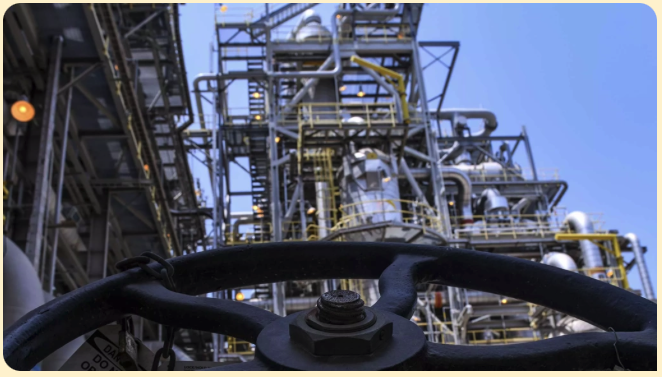
Vista of the Jazan refinery complex, with capacity to produce up to 400,000 barrels per day (BPD). The plant is the largest of its kind in the world and capable of producing up to 3.8 GW of power. This is enough to not only meet the energy demands of the plant itself, and those of expanding local industry, but also to provide power to millions of nearby homes.
Verified video footage and eyewitness accounts confirm that the strike caused structural damage and a significant fire, sending large columns of thick black smoke rising over the facility. Trading sources reported physical damage to fuel and oil storage sites at this 400,000-barrel-per-day refinery. Commercial flights to the region were forced into holding patterns or diverted due to the explosions. As for Yanbu Oil Port, no damage was sustained at this facility. Two ballistic missiles targeted at the installations were successfully intercepted by a U.S.-made Patriot battery operated by the Greek military.
The Greek military is stationed in Saudi Arabia to protect Aramco infrastructure as part of a strategic multilateral geopolitical and energy security agreement. The deployment, known as the Hellenic Force Saudi Arabia (ELDYSA), has been active since September 2021 under a formalized bilateral cooperation memorandum. Greece imports hundreds of millions of euros worth of crude oil from Saudi Arabia annually.
Following regional shipping disruptions in the Strait of Hormuz and the Red Sea, the Yanbu oil port has become a critical pipeline terminal for delivering oil directly to Europe without traversing contested chokepoints. Protecting it directly ensures Greece’s domestic energy stability. Athens uses defense partnerships with major Middle Eastern powers like Saudi Arabia (and Israel) to strengthen its geopolitical positioning, particularly against long-standing regional rivalries involving Turkey. In exchange for protecting Aramco, Greece secures deep diplomatic, economic, and energy ties with Riyadh. This includes massive joint infrastructure projects, such as a planned undersea fiber-optic data cable linking Saudi Arabia to Western Europe via Greek waters. The deployment began following a series of diplomatic negotiations between the United States, United Kingdom, France, and Saudi Arabia. When Western allies drew down some of their hardware from the Gulf region, Greece provided a U.S.-made MIM-104 Patriot battery to join the Integrated Air Missile Defense (IAMD) Concept. Saudi Arabia funds the operational costs, allowing Greece to train its personnel under real-world, high-threat combat conditions.
Riyadh has formally requested that Greece extend the ELDYSA Patriot mission until November 2026. Despite minor political debates at home regarding domestic defense needs and Saudi Arabia’s human rights record, the recent successful interceptions over Yanbu have solidified the deployment’s immense practical value to the Saudi-Greek alliance.
The Marandi Perspective
The Houthi attack on Yemen marks the first direct hit on a major Saudi refinery complex in nearly four years. The Houthis stated the operation was direct retaliation for Saudi-led airstrikes on the Yemeni port city of Hodeidah and the enforcement of a naval blockade.
Marandi notices, the morning of July 26, that the US has not attacked Iran for the past couple of nights. Iran continues to shut the Strait of Hormuz to ships affiliated with Saudi Arabia, the UAE, Kuwait, Bahrain and Qatar, all US-allies. Since Trump has threatened that for every ship struck the US would bomb a power plant or a bridge in Iran, the Houthis has attacked two ships. Trump has not yet acted and probably recognizes that Iran is not going to be intimidated. The Houthis did the smart thing. Because the Strait of Hormuz is closed, part of the oil that would have gone through Hormuz is now going through the Red Sea even if this is more expensive. The Saudis can pump oil to the Red Sea at a rate of approx. 4 million barrels per day. That helps the US and the West manage the situation to a degree and it helps the Saudis to survive.
This makes it an opportune moment for Ansarallah to put pressure on the Saudia. They want to do this because the Saudis have imposed a siege on Yemen for over a decade. They imposed a genocidal war on Yemen along with the US and the region. They imposed starvation. Back then in 2015 and 2016, countries of the region all supported this. Qatar and Turkiye were part of this. The West supported this, and Australia. Thousands of British advisors helped keep the Saudi air force flying and active to bomb cities, funerals, and schools. They carried out a genocide. Hundreds of thousands died many from starvation, and the US blockaded the Red Sea to prevent food and medicine from getting to the Yemenis. That siege continues until today, to a lesser degree but still, very brutal and barbaric. Gradually during their siege the Yemenis began to build their own drone and missile capability, with the help of Iran, but Iran has lots of its own relevant expertise. To the point that Yemen showed it had the capability of blocking Saudi oil exports so leading the Saudis to a ceasefire but without lifting the siege.
Recently, the Saudis have made a very foolish error. Iran broke the siege by sending a passenger airplane to SANA airport in order to collect Yemenis who were leaving to attend the funeral for Khomenei. Saudi planes approached the airport; air defense prevented them.
When the airplane was bringing the mourners back, the Saudis bombed the airport. Iran was outraged. Yemen struck back. The Saudis struck the port of Hodeidah. So Ansarallah hit Saudi oil infrastructure, that includes some of the best facilities in the world, sending a warning to Saudi Arabia and the US about what will happen to the global oil market if this war continues. This is the best opportunity for Yemen to break the seige but not to the point that Saudi Arabia is preventing from exporting its oil - they have already closed the Red Sea in effect and want the Saudis to have an incentive to back down. Iran is following a similar logic in the Strait of Hormuz where instead of destroying Qatar, the Iranian government wants to preserve the oil trade, only without US trade domination and a cessation to its constant threats, and to nudge the US and the Gulf states to refrain from further escalation.
Iran is not nearly as dependent on oil and gas exports as is Iran which has a strong agricultural sector and industries. The Saudi economy is an oil economy that cannot survive being shut down for a matter of months. They have hundreds of millions of dollars in paper assets in the US but we dont know the US will allow them to sell these.
The Saudi strike on SANA airport has made Saudi Arabia much more vulnerable. It also puts Trump in a difficult position. Trump had signed the MOU knowing that the US still have plenty of oil in reserves. But now, the shutting down of the Red Sea has greatly increased the speed at which reserves will be drawn upon.
Iranian attacks are now being reported in the western media as much more devastating, precise and impactful than ever expected. Why are the Iranians escalating. Are they no longer worried about US casualties given that nobody expects diplomacy with the US will go anywhere? Marandi thinks that the Iranians or, rather, the Iranian military, have shown themselves better able to keep military secrets from the public realm than anyone thought, keeping them away from the ears of the Americans. American intelligence was deeply flawed, and the same applies to Israeli intelligence. Iran can go on and on with their attacks for a very long time, especially as they prioritize older missiles: they had facilities underground in parallel with things that could be seen overground. Iran has also been advising Yemenis along similar lines.
US assets, by contrast, are above ground and easily disposed of. Iran has very good intelligence through the region, and many sympathizers. They know the hotels where Americans are staying.
America may carry out the heavy strikes it has threatened. The longer this takes, the greater the damage to the global economy that is done from the closure of the oil trade from the Gulf and the Red Sea and there is hardly any guarantee that the US attack will achieve anything very much. Iran used the two weeks of the Strait being open to get dozens of tankers carrying Iranian oil through Hormuz to paying customers.
Might the US launch a ground operation? There is pressure on both the US and on Iran but Iran’s ability to deal with pain is greater than that of the US. Its religious ideology is a strength. It has more patience. Americans know that the US are fighting the war for Israel not for Americans.
Iran will keep Hormuz. It is clear that this is a red line. The US could gradually back down; they could continue (and fail - because the shortage of oil will bring the West to its knees), or escalation to force a different situation on Iran by a land invasion or by heavy strikes. But if they do heavy strikes, Iranian strikes on Gulf nations will bring about their immediate collapse, especially in the heat and humidity of August.
A land invasion? What would be the purpose? To take an island? That would do no good, since Iran can keep Hormuz under control from a distance regardless of this or that island. Iran can take out all the ships throughout the Gulf. They can destroy ships, oil, gas, electricity, desalination facilities, remotely, regardless of whether one or two oil-exporting islands are seized by the US. The US cannot even get enough water into this zone for its troops, let alone anything else. The US will be unable to bring in logistical support.
The smart solution for the US is to walk away, not that this will lead Iran to open the Strait of Hormuz for the benefit of the West or any country bound to the West. And the West will have to go back to giving concessions. Going back to the MOU. No, Iranians will now want MOU-Plus. They will want to see real action against Israel, Israeli invasions, Israeli genocide. They will want to see the siege on Yemen lifted.
The coordination between Iran and Russia is growing, and the West seems to be doing its best to make these conflicts one and the same as in the attack on an Iranian ship by Ukraine. A Ukrainian strike in the Caspian Sea on Saturday killed a sailor aboard an Iranian commercial vessel. Zelenskyi defended the operation, stating that Kyiv had successfully targeted vessels involved in military cargo shipments linked to Iran alongside a Russian warship.

