


 Brian Berletic
THE NEW ATLAS


| Traducir—Translate! | |
| Make fonts bigger>>> | Resize text-+= |

Summary
The video provides a comprehensive, critical analysis of the United States’ 2025 National Security Strategy, a roughly 33-page document introduced by President Donald J. Trump. The presenter meticulously dissects the strategy, demonstrating that it is fundamentally a continuation of the longstanding Wolfowitz Doctrine, which has guided U.S. foreign policy since the early 1990s. This doctrine aims to prevent the emergence of any rival global or regional superpowers that could challenge U.S. primacy worldwide.
Contrary to some narratives suggesting a U.S. strategic pivot away from global dominance toward focusing exclusively on the Western Hemisphere, the analysis reveals that the document explicitly advocates continued global military and political engagement, including expanded NATO commitments, intensified containment of China and Russia, and aggressive control over Latin America and other regions. The U.S. intends to maintain and expand its influence through a “burden sharing network” that leverages allied nations to carry most of the military and economic costs of maintaining U.S. global hegemony.
The strategy also incorporates elements of “flexible realism,” acknowledging the use of proxies and terrorists, soft power, and coercion to maintain control without overt, large-scale military interventions. Despite rhetoric about non-interventionism and respect for national sovereignty, the document upholds a policy of “primacy of nations for me, not for thee,” where the U.S. reserves the right to dominate regions like the Western Hemisphere and Asia-Pacific while denying other powers similar rights.
The video exposes contradictions and hypocrisies in the document, especially concerning NATO expansion, the status of Taiwan, the ongoing proxy war in Ukraine, and the U.S. military presence near China’s shores. It argues the strategy is explicitly designed to maintain American global dominance by economically and militarily containing China and Russia, undermining any independent foreign policy in Latin America, and coercing allies into deeper military spending aligned with U.S. interests.
Finally, the presenter stresses that the 2025 strategy signals no real change from previous U.S. administrations despite campaign promises of ending foreign wars or reducing overseas military involvement. Instead, it confirms an intensification of U.S. global hegemonic policy under the guise of “strategic clarity,” and calls for public awareness and resistance to this ongoing imperial agenda.

Key Insights
- [01:06] 🛡️ Wolfowitz Doctrine Continuity: The 2025 strategy explicitly continues the post-Cold War U.S. objective of ensuring no rival power in Europe, Asia, or the former Soviet sphere can challenge American primacy. This doctrine remains the foundational principle underlying all U.S. foreign policy, regardless of administration or party, emphasizing a unilateral approach to global dominance rather than multilateral cooperation or respect for other nations’ sovereignty.
- [04:19] 💸 NATO Expansion Under Trump: The document’s foreword by President Trump highlights increasing NATO members’ defense spending from 2% to 5% of GDP, effectively expanding NATO’s military capabilities and burden-sharing. This contradicts claims that the U.S. is retreating from global commitments, instead reinforcing its leadership and control over Europe’s military posture against Russia.
 Brian Berletic is a former US Marine, author, international relations expert and host of the New Atlas.
 By Investigative historian Eric Zuesse:
Has Trump redefined, and will he shrink, the U.S. empire?
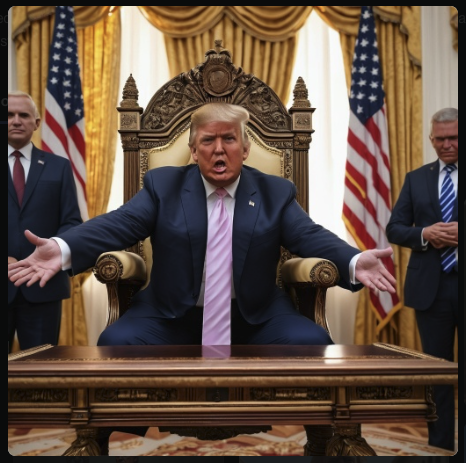 Yesterday, on Friday, a Reuters exclusive news-report about a potentially mega-historic change in America’s international relations and the world’s future, headlined “Exclusive: US sets 2027 deadline for Europe-led NATO defense, officials say” and opened:
The United States wants Europe to take over the majority of NATO’s conventional defense capabilities, from intelligence to missiles, by 2027, Pentagon officials told diplomats in Washington this week, a tight deadline that struck some European officials as unrealistic.
The message, recounted by five sources familiar with the discussion, including a U.S. official, was conveyed at a meeting in Washington this week of Pentagon staff overseeing NATO policy and several European delegations.
The shifting of this burden from the U.S. to European members of the North Atlantic Treaty Organization would dramatically change how the United States, a founding member of the post-war alliance, works with its most important military partners.
Hours later, Russia’s RT News placed this event into an optimistic historical perspective (for Russia) by headlining “US gives NATO’s European members self-defense deadline – Reuters” and reporting:
European NATO members are facing a US deadline to take more responsibility for the military bloc’s intelligence gathering and missile production, Reuters reported on Friday, citing sources who spoke on condition of anonymity.
Pentagon officials warned delegations from several European countries this week that if they fail to meet the 2027 deadline, the US could scale back participation in certain NATO defense activities, according to sources cited by the news agency.
The report comes as Washington moves to reduce its direct involvement in Europe.
“Allies have recognized the need to invest more in defense and shift the burden on conventional defense from the US to Europe,” a NATO official speaking for the military bloc told Reuters, declining to comment on the 2027 deadline.
Also on December 5th, Politico headlined “Trump reveals what he wants for the world”, and reported:
President Donald Trump intends for the U.S. to keep a bigger military presence in the Western Hemisphere going forward to battle migration, drugs and the rise of adversarial powers in the region, according to his new National Security Strategy. …
The Trump National Security Strategy, which the White House quietly released Thursday, has some brutal words for Europe, suggesting it is in civilizational decline, and pays relatively little attention to the Middle East and Africa.
It has an unusually heavy focus on the Western Hemisphere that it casts as largely about protecting the U.S. homeland. It says “border security is the primary element of national security” and makes veiled references to China’s efforts to gain footholds in America’s backyard.
“The United States must be preeminent in the Western Hemisphere as a condition of our security and prosperity — a condition that allows us to assert ourselves confidently where and when we need to in the region,” the document states. “The terms of our alliances, and the terms upon which we provide any kind of aid, must be contingent on winding down adversarial outside influence — from control of military installations, ports, and key infrastructure to the purchase of strategic assets broadly defined.”
The document describes such plans as part of a “Trump Corollary” to the Monroe Doctrine. …
Trump’s paper, as well as a partner document known as the National Defense Strategy, have faced delays in part because of debates in the administration over elements related to China. Treasury Secretary Scott Bessent pushed for some softening of the language about Beijing, according to two people familiar with the matter who were granted anonymity to describe internal deliberations. Bessent is currently involved in sensitive U.S. trade talks with China, and Trump himself is wary of the delicate relations with Beijing.
The new National Security Strategy says the U.S. has to make challenging choices in the global realm. “After the end of the Cold War, American foreign policy elites convinced themselves that permanent American domination of the entire world was in the best interests of our country. Yet the affairs of other countries are our concern only if their activities directly threaten our interests,” the document states. …
The Trump strategy suggests the president’s military buildup in the Western Hemisphere is not a temporary phenomenon. (That buildup, which has included controversial military strikes against boats allegedly carrying drugs, has been cast by the administration as a way to fight cartels. But the administration also hopes the buildup could help pressure Venezuelan leader Nicolas Maduro to step down.)
The strategy also specifically calls for “a more suitable Coast Guard and Navy presence to control sea lanes, to thwart illegal and other unwanted migration, to reduce human and drug trafficking, and to control key transit routes in a crisis.”
The strategy says the U.S. should enhance its relationships with governments in Latin America, including working with them to identify strategic resources — an apparent reference to materials such as rare earth minerals. It also declares that the U.S. will partner more with the private sector to promote “strategic acquisition and investment opportunities for American companies in the region.” …
The National Security Strategy spends a fair amount of time on China, though it often doesn’t mention Beijing directly. Many U.S. lawmakers — on a bipartisan basis — consider an increasingly assertive China the gravest long-term threat to America’s global power. But while the language the Trump strategy uses is tough, it is careful and far from inflammatory. …
“We will also maintain our longstanding declaratory policy on Taiwan, meaning that the United States does not support any unilateral change to the status quo in the Taiwan Strait,” it states. …
Overall, it pulls punches when it comes to Russia — there’s very little criticism of Moscow.
Instead, it reserves some of its harshest remarks for U.S.-allied nations in Europe. In particular, the administration, in somewhat veiled terms, knocks European efforts to rein in far-right parties, calling such moves political censorship.
“The Trump administration finds itself at odds with European officials who hold unrealistic expectations for the [Ukraine] war perched in unstable minority governments, many of which trample on basic principles of democracy to suppress opposition,” the strategy states. …
“Over the long term, it is more than plausible that within a few decades at the latest, certain NATO members will become majority non-European,” it states. “As such, it is an open question whether they will view their place in the world, or their alliance with the United States, in the same way as those who signed the NATO charter.” …
The strategy struggles at times to tamp down what seem like inconsistencies. It says the U.S. should have a high bar for foreign intervention, but it also says it wants to “prevent the emergence of dominant adversaries.” …
I notice that the document itself says on page 5: “To ensure that America remains the world’s strongest, richest, most powerful, and most successful country for decades to come, our country needs a coherent, focused strategy for how we interact with the world.” In short: everything else in it that pretends to reduce the U.S. Government’s control over its colonies (‘allies’, such as in America’s anti-Russian military alliance NATO) takes a back seat to the national ‘security’ strategy of the U.S. Government that became instituted by President Truman on 25 July 1945 and has not been changed snce then, of America’s ultimately coming to control the entire world — “hegemony,” “global dominance,” being the center of the first-ever all-encompassing global empire (ensuring “that America remains the world’s strongest, richest, most powerful, and most successful country for decades to come”).
This is not necessarily to deny that Trump might be so stupid that he isn’t aware of his own (self-) contradictions. However, it is to say that to the extent that Trump will need to choose between terminating or even simply reducing America’s global dominance, versus doing what is good for the American public (which would benefit enormously if its Government reduced instead of further-expanded its empire), he will probably do what he has always done — adhere to serving America’s billionaires (who benefit enormously from expanding their empire) instead of serving the American public.
Trump’s National Security Strategy states that “After the end of the Cold War, American foreign policy elites convinced themselves that permanent American domination of the entire world was in the best interests of our country.” It tries to imply that Trump won’t continue operating in support of “American foreign policy elites” and against the American people. Perhaps Trump is stupid enough to think that that’s what he would prefer to do if push comes to shove. However, his past record is consistent ONLY in its serving FIRST the wants of his megadonors. I expect him to continue that way. Optimists about Trump (except ones who are neocons) have almost always been severely disappointed by his actual behavior, whenever push has come to shove.
I doubt that Trump will be any less dangerous to Russia, China, and Iran, than in the past, but that he will simply be even more dangerous to other nations in the Western Hemisphere than prior U.S. Governments have been.
 Investigative historian Eric Zuesse’s latest book, AMERICA’S EMPIRE OF EVIL: Hitler’s Posthumous Victory, and Why the Social Sciences Need to Change, is about how America took over the world after World War II in order to enslave it to U.S.-and-allied billionaires. Their cartels extract the world’s wealth by control of not only their ‘news’ media but the social ‘sciences’ — duping the public.
By Geopolitical Analyst Ben Norton
This is the aggressive new US strategy for global dominance

About the AuthorBenjamin (Ben) Norton is an investigative journalist and analyst. Ben is the founder and editor of Geopolitical Economy Report. He lived in and reported from Latin America for several years, and is now based in Beijing, China. (Publicaciones en español aquí.)
By Geopolitical analyst Julian Macfarlane (News Forensics)
The National Security Strategy
Much ado about nothing
The Internet is making much of this year’s NSS.
Of course, there is an NSS every year.
This is what Brian Berletic writes on Telegram (see the main essay above), contradicting almost everyone on the Internet, both in the MSM and Alt Media, including the excellent Bernhard at MoA and the aggregator Simplicius, who has taken his cue from Bernhard—and even Larry Johnson.
National Security Strategy is NOT Calling for Ending Ukraine War, Just a Ceasefire
“It is a core interest of the United States to negotiate an expeditious cessation of hostilities in Ukraine, in order to stabilize European economies, prevent unintended escalation or expansion of the war, and reestablish strategic stability with Russia, as well as to enable the post-hostilities reconstruction of Ukraine to enable its survival as a viable state.” (NSS)
Brian writes:
What does it mean by “a cessation of hostilities in Ukraine?”
Many interpret it as wanting to genuinely end the conflict.
But that is not what is written.It simply says “a cessation of hostilities,” which could also (and in this case obviously does) mean a ceasefire, a freeze. Cessation... Ceasefire...This is what US Secretary of Defense Pete Hegseth said in February, this is what every single “peace proposal” the US has presented to Russia has sought, and indeed certainly what the NSS means now. What does the NSS mean by “reestablish strategic stability with Russia?”
What was the strategic state in Europe before the US itself (including under the first Trump admin) provoked this war and spurred a transformation in Russia militarily, industrially, and geopolitically?
It was a state of US-European dominance, Russian overdependence on Western imports and energy exports, constant NATO expansion and encroachment, and the incremental isolation and containment of Russia through US engineered color revolutions in former Soviet territories on its borders.This is what reestablishing a previous strategic state with Russia means, placing it back into this state - NOT the new security architecture Russia demands.
The US used the term “cessation of hostilies” rather than specifically stating they seek to end the conflict for a purpose. They used the term “reestablish” - meaning returning to a previous state of relations - rather than proposing a new strategic relationship - for a reason.
Hopefully those in the Kremlin are more realistic, careful, and conscious of history than many others (including Russian media!) indulging in wishful thinking as they read yet another US policy paper repackaging and reselling continuity of agenda. Maybe Russian media is simply playing along to give the US a graceful exit in a war Russia is sure it can win even if Europe is fed into Ukraine next?
So is Brian the odd man out? Again?
Let us keep in mind that Berletic has been consistently right in his analyses, more so than even the redoubtable Bernhard — and also Larry Johnson, another analyst of note. Much more so than Simplicius.
Me? I downloaded the entire NSS document. It’s a laugh and a half. Not serious as a policy. But very, very long. I really wonder how many analysts have taken the time to go through it — and analyze — and check as Berletic has.
What exactly is the NSS?

Basically, it just outlines an administration’s concept of national policy for that year —for the American public. Hence, it is an annual propaganda event rather like the President’s speech to Congress. You can’t take it seriously.
Presidents are not bound by their own NSS documents and can change their policies the next year if they want. And subsequent administrations can issue entirely new strategies with completely different priorities.
US foreign policy—even long before Wolfowitz—has been defined by four features: 1. Commitment to US global hegemony, absolute domination of other nations at any cost; 2. Staggering hypocrisy; 3. Appalling cynicism; 4. Unwavering sociopathy.
But US national policy has remained the same since 1992 and the publication of the Wolfowitz Doctrine. Wolfowitz was the architect of the illegal invasion of Iraq in 2003, so people in government avoid talking about him. But his ideas endure. If anything, the US has doubled down on them.
Here’s the thing. US policy has not changed. But US power is now diminished and continuing to weaken. Core concepts of policy are cast in stone, but geopolitical events are seismic.

I will write further on this tomorrow after I have researched further
Ichi and me….

Julian and Ichi, one of his feline angels. They are both extremely lucky.
Big earthquake in northern Japan.—I write about seismic events from experience. Support Chappy and Ichi and me at https://buymeacoffee.com/julico.
You can also click here or on the graphic below:

 JULIAN MACFARLANE is a polymathic Tokyo-based media and strategic analyst. He is the publisher of News Forensics. Julian also loves animals, a quality we deeply admire and share..
 BEFORE you leave, PLEASE pay attention to this alert.
[t4b-ticker id="1"]
Print this article [bws_pdfprint display=’print’]
 This work is licensed under a Creative Commons Attribution-NonCommercial 4.0 International License •
ALL CAPTIONS AND PULL QUOTES BY THE EDITORS NOT THE AUTHORS






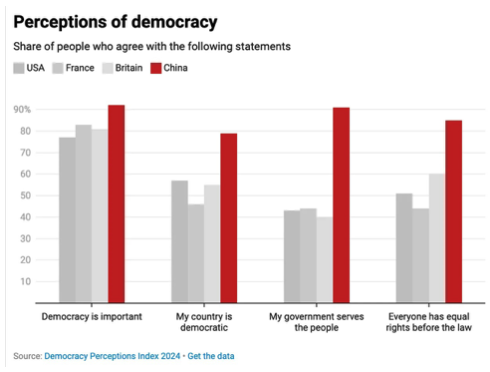
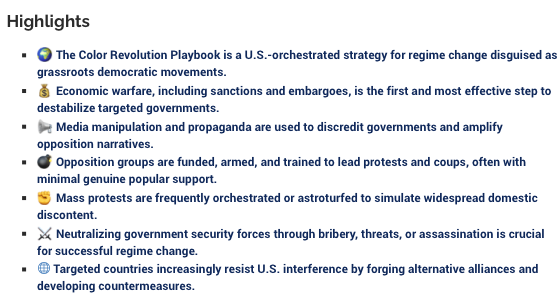

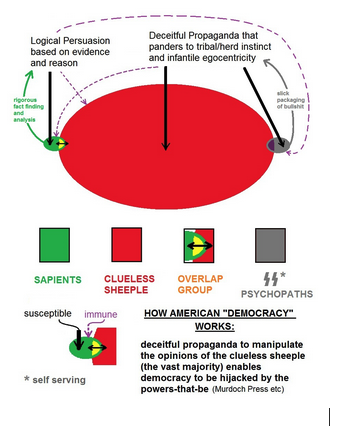






The doctrine was not invented by Mr Wolfowitz. It dates back to 1948 (explicitly), and implicitly to the 19th century.
"We have about 50% of the world's wealth but only 6.3% of its population. This disparity is particularly great as between ourselves and the peoples of Asia. In this situation, we cannot fail to be the object of envy and resentment. Our real task in the coming period is to devise a pattern of relationships which will permit us to maintain this position of disparity without positive detriment to our national security. To do so, we will have to dispense with all sentimentality and day-dreaming; and our attention will have to be concentrated everywhere on our immediate national objectives. We need not deceive ourselves that we can afford today the luxury of altruism and world-benefaction".
- George Kennan (secret US State Department memo, 1948)