PHILIP GIRALDI

| Traducir—Translate! | |
| Make fonts bigger>>> | Resize text-+= |

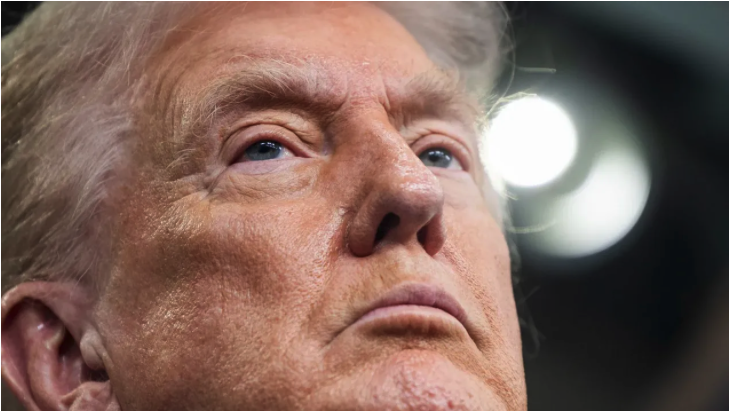
Judging from opinion polls, the American public has increasingly become largely disenchanted with the bizarre behavior of President Donald J Trump and the clownish entourage that surrounds and encourages him. Last week featured a meeting between Trump and the foreign minister of Denmark, as well as his counterpart from Greenland’s legislative assembly. The meeting did not resolve the issue of Trump’s “unacceptable” demand that the United States must have ownership of Greenland, “buying it” if necessary, to maintain its national security against possible invasion coming from Russian and Chinese ships that, per Trump incorrectly, are already infesting Arctic waters to the north. To support his position, Trump has now announced that he is considering punishing with tariffs all countries that do not agree with his position on Greenland, which would be something akin to Washington committing international suicide.
Several European countries have already sent troops to Greenland to make sure Trump understands that the Danish-held territory is a NATO issue and a number of US Congressmen, mostly Democrats, are now in Europe making it clear that once again Trump is off his rocker. Democratic and Republican lawmakers have also introduced legislation to stop Trump seizing Greenland by force, though similar legislation intended to block any further military action against Venezuela failed last week. Ironically, Greenland already hosts”Pituffik” a US manned NATO base. If Trump does use force to acquire Greenland it would be the end of NATO for starters and would solidify the global view that the United States is completely out of control following the example set by its “closest ally and best friend” Israel.
The recent invasion of Venezuela to kidnap the country’s president, which killed over 100 Venezuelans and Cubans, was the culmination of a series of murders of largely Venezuelan fishermen who were committing no demonstrable crime in international waters and the seizure of Venezuelan and even Russian flagged oil tankers in the Caribbean and Atlantic Ocean. The illegal actions inevitably led up to the farce playing out in Caracas as Trump’s brave Delta Force warriors seized Nicolas Maduro and his wife and whisked them away for trial in Manhattan South, a court preferred by the federal government due to its guaranteed conviction results. The presiding judge is a 92-year-old Orthodox Jew, which certainly helps as long as he can stay awake during the proceedings as Maduro has been described by the usual suspects as an enemy of Israel and a supporter of both Hamas and Hezbollah, regarded as terrorist groups by the Jewish state and the US, as well as a friend of Iran. It is Iran that is allegedly arming Venezuela with drones and missiles capable of attacking the United States, so goes another convenient “threat” fiction to provide a cover story for the operation to steal the country’s oil and other national resources.
The military assault on the Presidential Palace in Caracas did not topple the regime in Venezuela, if that was the intention, and the country’s Vice President Delcy Rodriguez quickly took charge of the existing government. Donald Trump, nevertheless and characteristically, proclaimed himself to be the president of the country and declared that the United States would “run” it while it is under reconstruction by the firm hand and boot of Uncle Sam. The “running” clearly is focused as a first task on developing and selling Venezuelan oil, though it was a bit of a shock when the first tranche of profit from the venture consisted of $500 million dollars which was conveniently banked in an “offshore” account in Qatar.
It is being claimed that the money is there to block any attempts by creditors to claim it so it can instead begin to be released to Venezuela once reconstruction is underway. At least that is what one might call a cover story. One wonders who would actually control and have access to the account, but that was not made clear and there might be some confusion given the fact that Trump is both “running” the country and calling himself the president of it.
Trump also received a somewhat unexpected gift derived from his kidnapping of Maduro. On Thursday, he met at the White House with Venezuelan opposition leader Maria Corina Machado, who recently received the Nobel Peace Prize, which Trump very openly coveted for himself in spite of the wars that he has both started and sustained during the past year. Machado conveniently had brought her Peace Prize medal with her, which she presented to the president while thanking him for all the wonderful work he has done for world peace. She received in return a “Trump-branded White House swag bag.” Trump accepted the gift and thanked her even though the Nobel Prize Committee had declared that the prize is not transferable. One might observe that a decent and gracious public official would have returned the prize, but Trump, of course, that genius who is guided by his morality and his deep thinking, did no such thing and so the prize will sit in the White House until the Orangeman takes it home to Mar-a-Lago.
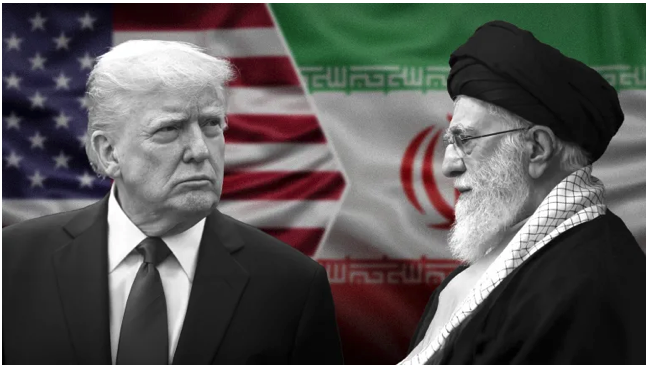
Trump was also involved in considerable drama last week over his war against Iran, which was supposed to be initiated after a cabinet meeting on Wednesday. Instead, it was called off, or, to be more precise, postponed. Trump was advised by his cabinet, presumably Secretary of War Pete Hegseth, State Department head plus National Security Adviser Marco Rubio and Vice President JD Vance, that the United States is not yet ready to attack Iran, which has been preparing for months for such an eventuality. By that, they reportedly mean that the concentration of US forces in the region is not sufficient to insure a devastating attack that would overcome Persian defenses and bring about regime change in Tehran. Some Israeli reports suggest that Trump also received a phone call from his controller Israeli Prime Minister Benjamin Netanyahu, who advised that Israel’s military was not yet ready to defend against the presumed devastating response coming from Iran to any joint attack by the US and the Jewish state.
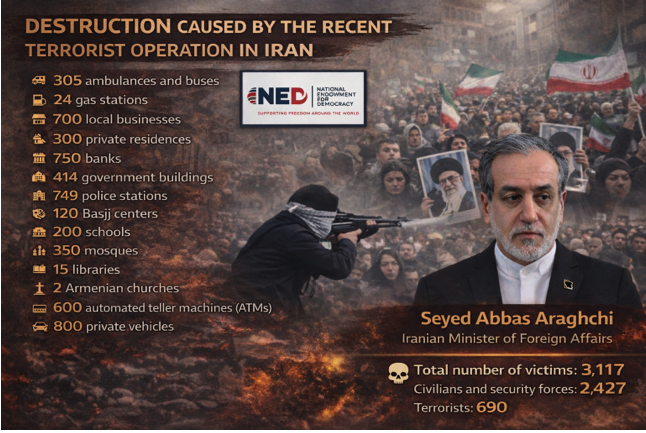
Going back a couple of weeks, Trump justified his intention to attack Iran to “protect” the Iranian demonstrators even though the protesters were initially largely peaceful and chiefly concerned about the collapsing economy in the country which has largely been caused by US-led sanctions. The demos turned violent when armed infiltrators under the control of Israel’s Mossad and US intelligence, who have been in place inside Iran for many years operating through and embedded in ethnic minorities and radical groups like the Mojahedin e-Khalq (MEK) joined in to cause trouble. It is believed that Iranian intelligence broke the codes that were being used by the infiltrators to communicate and thereby eventually succeeded in identifying and neutralizing those pretend “protesters,” which has restored government control to a large extent and the current demonstrations appear to be supportive of the regime.
That notwithstanding, the US and Israel clearly still intend to carry out regime change in Iran by force once they feel that they have the upper hand militarily speaking. The US is already surging military assets to the Middle East including the aircraft carrier USS Abraham Lincoln and some warships from its strike group proceeding to the Middle East from the South China Sea, a roughly week-long trip. The US will also send more bombers to the Middle East, plus fighters and refueling aircraft as well as extra air defenses. However, war is always somewhat of a risky endeavor. And for what it’s worth, though Washington seems unaware of the implications, the real danger in this case might come from the Israeli “Samson Option” policy to use its “secret” nuclear weapons if it is in a situation where it is actually endangered by an attacker, or in this case, a country defending itself. World War 3, anyone? Thank you Mr Trump!
 BEFORE you leave, PLEASE pay attention to this alert.
[t4b-ticker id="1"]
Print this article [bws_pdfprint display=’print’]
 This work is licensed under a Creative Commons Attribution-NonCommercial 4.0 International License •
ALL CAPTIONS AND PULL QUOTES BY THE EDITORS NOT THE AUTHORS