Print this article [bws_pdfprint display=’print’]
This work is licensed under a Creative Commons Attribution-NonCommercial 4.0 International License •
ALL CAPTIONS AND PULL QUOTES BY THE EDITORS NOT THE AUTHORS

ELECTRONIC INTIFADA| Traducir—Translate! | |
| Make fonts bigger>>> | Resize text-+= |
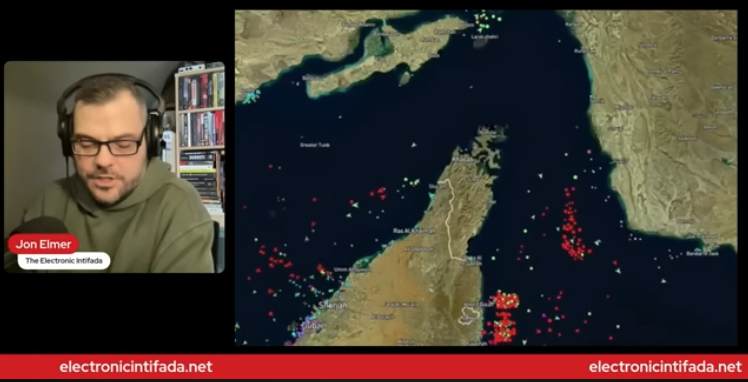
You can watch the full show here:
• Breaking news and analysis on day 895 of t...
Your gift supports The Electronic Intifada's independent journalism on Palestine: • Donate by credit card, ApplePay, PayPal, Venmo or US bank account via Kindful: https://bit.ly/EIKindful
BEFORE you leave, PLEASE pay attention to this alert.
[t4b-ticker id="1"]
This work is licensed under a Creative Commons Attribution-NonCommercial 4.0 International License •
ALL CAPTIONS AND PULL QUOTES BY THE EDITORS NOT THE AUTHORS

| Traducir—Translate! | |
| Make fonts bigger>>> | Resize text-+= |
In this compelling and in-depth discussion, Lieutenant Colonel Anthony Aguilar, a retired US soldier and former Gaza Humanitarian Foundation worker, shares his critical insights on the escalating conflict involving Iran, the recent resignation of Joe Kent, and the broader implications for the US military and foreign policy. Aguilar highlights the gravity of Kent’s resignation as a protest against the administration’s policies, especially the ongoing war efforts, predicting more resignations and whistleblowing from within the military and intelligence communities. He critiques the administration’s handling of the conflict, the media’s censorship of the truth concerning casualties and operational failures, and warns about the potential for catastrophic escalation, including the deployment of a Marine Expeditionary Unit to the Persian Gulf and the possible use of tactical nuclear weapons against Iran.
Aguilar also addresses the puzzling stance of Tulsi Gabbard, who, despite her previous opposition to war with Iran, now supports the administration’s claims, suggesting political motivations rather than genuine conviction. He calls on US military personnel at all levels to conscientiously object to participation in what he views as an immoral and illegal war, urging them to explore legal avenues to resist deployment and even to leave the military. He emphasizes the legal and moral obligations of military leaders to refuse illegal orders, underlining the inevitability of accountability for war crimes, including the administration’s “no quarter” policy and inflammatory rhetoric from the President. Ultimately, Aguilar portrays a grim forecast of military losses, political fallout, and a dangerous loss of US moral authority on the world stage.
This video provides a sobering analysis of the current geopolitical situation, exposing the inner conflicts, moral crises, and potential catastrophic consequences of US military policy toward Iran. Aguilar’s perspective as a seasoned military officer lends authenticity and urgency, making it a critical watch for understanding the complex dynamics at play.
BEFORE you leave, PLEASE pay attention to this alert.
[t4b-ticker id="1"]
This work is licensed under a Creative Commons Attribution-NonCommercial 4.0 International License •
ALL CAPTIONS AND PULL QUOTES BY THE EDITORS NOT THE AUTHORS
| Traducir—Translate! | |
| Make fonts bigger>>> | Resize text-+= |
The American-Israeli war against Iran began a couple of weeks ago and seemed very much a David-vs-Goliath contest, with combat operations likely to be extremely one-sided.
In recent years, America’s annual military spending has been roughly a trillion dollars, while Iran’s budget was merely $8 billion. Some estimates put Iran’s true outlays as considerably higher, but hardly enough to level the playing field. So whether the actual ratio of our military expenditures has been 100-to-1 or 70-to-1 or even merely 50-to-1, the mismatch was stark.
Over the last quarter-century, our ground forces have greatly shrunk in size, so our current strength is overwhelmingly concentrated in our air power, supplemented by our naval forces, with the latter primarily serving as mobile platforms for aircraft and cruise missiles. According to news accounts, the forces that we positioned in the Persian Gulf against Iran amounted to our largest deployment in decades, including roughly half of our air assets and two of our powerful carrier groups, thus constituting a very substantial fraction of our total military power.
Even that greatly understated the odds against Iran. In a 2003 interview, the renowned Israeli military historian Martin van Creveld had rather boastfully declared that his country’s armed forces were the second or third strongest in the world. While that was probably something of an exaggeration, Iran was not merely at war with the world’s greatest military power, but also another in the topmost ranks.
Raising Iran’s challenges to even more absurd heights, the Israelis and Americans initiated the war with an extremely successful surprise attack against their Iranian foes.
The Trump Administration was engaged in ongoing peace negotiations regarding Iran’s civilian nuclear program then exploited the ruse of a possible breakthrough. This baited the Iranians into having their top military and civilian leadership meet to discuss whether to accede to the American demands, allowing them all to be killed in a sudden missile strike. The victims included Iran’s 86-year-old Supreme Leader, its top national security officials, and dozens of their most senior military commanders, all eliminated in the very effective decapitating first strike that amounted to the official American-Israeli declaration of war.
This recalled the penultimate scene in the Oscar-winning first Godfather film, in which Michael Corleone set up negotiations with his leading mafia rivals, then successfully assassinated all of them. Numerous other films or television shows have followed this same basic plot device, but I’m not aware of any major country in modern history that had ever utilized this sort of stratagem in real life. The Iranians were certainly caught rather flat-footed by this less than entirely honorable approach to peace negotiations.
With Iran facing a military force many dozens of times more powerful than its own and having lost its top leadership in the first moments of the attack, few gave it any serious chance of overcoming the onslaught. Our cheerleading mainstream media almost uniformly declared that the result would be a swift and decisive American victory.
My first article on the Iran War was published less than 48 hours after the lethal salvo of missiles that initiated it. I took a rather cautious approach and expressed considerable skepticism that we could easily achieve our ultimate strategic objective of either totally subjugating that large country or fragmenting and destroying it. But I hardly doubted that the desperate Iranian military retaliation would prove ineffective, nor that Iran would be easily defeated in combat.
I was not alone in those conclusions. A couple of days after my own piece appeared, a leading Russian policy analyst published an article emphasizing that our sudden decapitation of Iran’s government had sent “shockwaves” across the world, not least in the Kremlin and among its top military leadership.
In the last couple of years, important elements of Russia’s nuclear deterrent had been successfully attacked using highly innovative drone tactics, several top Russian generals had been assassinated in Moscow, and there had also apparently been major attempts to kill Russian President Vladimir Putin. Although we had maintained plausible deniability, all these extremely provocative operations must have surely required extensive Western backing, and they suggested that we were probing Russian vulnerabilities in preparation for a much more sweeping and decisive attack.
The worried Russian analyst argued that if America and Israel believed that the Iranian response to our decapitating first-strike against its leadership would merely produce “painful but acceptable” retaliatory losses, there were obvious concerns that we might eventually come to believe that the same would be true for a similar attack against Russia. As he explained:
Russia possesses far greater retaliatory capacity than Iran. But that alone does not guarantee stability. An opponent who calculates that the damage is bearable may continue escalation. The Iranian crisis reveals a deeper mood emerging in global politics: fatalistic determination. Major powers appear increasingly willing to absorb risk and accept instability, which may be the most troubling lesson of all. The events in Iran are not an isolated regional episode. They are part of a broader transformation in the international system. It’s one in which sanctions evolve into strikes, negotiation coexists with attrition, and leadership itself becomes a target.
Although he didn’t mention it, the Iranian leaders had been lured to their doom by the ongoing peace negotiations of Jared Kushner and Steve Witkoff, the two personal representatives of President Donald Trump. And even as they gulled the naive Iranians, those same two individuals had also been simultaneously negotiating with the Russians, something that must surely have now raised the concerns of the latter.
A few weeks earlier, Trump had given a wide-ranging interview to several New York Times journalists, and in it he stated “that he did not feel constrained by any international laws, norms, checks or balances” and the “only limits on his ability to use American military might” were “My own morality. My own mind. It’s the only thing that can stop me.” His decision to suddenly assassinate Iran’s top leadership and follow that with a massive surprise attack on the country demonstrated that his bold statements to the Times had been much more than mere bravado.
Stephen Miller is one of Trump’s most influential advisors, and around the same time he gave a remarkable interview to CNN, in which he similarly declared that America planned to use its military power in a completely unconstrained fashion, with absolutely no concern for international laws or norms of behavior.
JUST IN: CNN's Jake Tapper ends interview after fiery clash with Stephen Miller over the future of Venezuela.
Tapper: "We went into the country, and we seized the leader of Venezuela..."
Miller: "D*mn straight we did!! We're not going to let tin-pot communist dictators send… pic.twitter.com/aU5frDnvGN
— Collin Rugg (@CollinRugg) January 5, 2026
Until relatively recently, the American government and its media allies had only intermittently paid much attention to the Iranian government or its leaders. Meanwhile, Russian President Putin had been massively demonized all across our ideological spectrum for many years, probably becoming the most vilified foreign leader since Adolf Hitler, with leading media figures and top U.S. Senators regularly calling for his death. So now that we have actually carried out such an unprecedented killing of an important foreign leader and his top government officials, only the most mindlessly insouciant Russians would not be greatly concerned over whether their own country might be next on the list.
However, what had initially seemed likely to be a swift and overwhelming American military victory began to rapidly change during the days that followed, surely representing one of the most striking reversals in recent warfare. Some knowledgeable military experts began noting that Iran’s drone and missile strikes had been remarkably effective, far more so than almost anyone had expected. All our major bases in the region had come under devastating Iranian attack and had mostly been destroyed, with our crucial strategic radars suffering the same fate.
These latter installations were among our most important regional assets. They constituted a large fraction of our entire global inventory and they would require years of time and billions of dollars to replace. Although very heavily defended, they had been overwhelmed and destroyed by waves of inexpensive Iranian drones, and their elimination blinded both ourselves and Israel to subsequent Iranian missile strikes.
For decades MIT Prof. Ted Postol has ranked as one of our foremost experts on military technology, especially on matters involving missile systems. During his long career he had regularly dealt with groups of three- and four-star flag officers on terms of full equality or better, while frequently attracting the enmity of corporate lobbyists for his candid and often less than flattering evaluations of the extremely pricey weapons systems that they marketed to our gullible government.
Although he retired from his academic post about eight years ago, he has maintained a strong interest in his technical specialty. So while his past briefings would have been restricted to the topmost ranks of our military services, they were now available to anyone who watched his interviews on YouTube
In his lengthy discussions with Lt. Col. Daniel Davis and Prof. Glenn Diesen, Postol demonstrated that the American Patriot and Israeli Iron Dome air defense systems seemed almost totally useless against Iran’s ballistic missiles. Their rates of successful interception only ran somewhere between 0% and 5% even against the older Iranian missiles that had begun the bombardment.
As I explained last week:
According to Postol’s analysis, the Iranians seem to be firing their ballistic missiles from individual underground locations all covered by thin layers of topsoil. Such firing positions could not possibly be detected by our satellites or even by overflying aircraft or drones, and therefore could not be targeted and destroyed. Other military experts have noted that many or most of the targets that we had allegedly hit were apparently just cardboard decoys, so these were probably the destroyed mobile missile launchers about which our government had apparently been bragging. Furthermore, Postol explained that the newer Iranian ballistic missiles were now often equipped with multiple decoys or with submunition warheads, with the latter able to produce a saturation bombing of a targeted area. He emphasized that the Iranians had an enormous supply of large attack drones, each armed with a 200 pound warhead sufficiently powerful to destroy a radar system. So the American and Israeli defenders couldn’t ignore such attacks and would be forced to expend one or more $4 million interceptors on a drone that probably only cost $10,000 to $30,000. Even worse for their opponents, the Iranians had equipped some of their drones with Iridium satellite communications systems able to broadcast video images back to their human controllers, thereby allowing the precise targeting of particular buildings or military sites. All of these technological factors seemed to be giving the Iranians a major edge in the current state of combat.
Given these facts, the regional American facilities, our Arab allies of the Gulf Cooperation Council (GCC), and Israel were all essentially defenseless against Iranian attacks, and the latter inflicted massive destruction against their targets. All our bases in the region had been severely damaged or destroyed, and whenever they chose, the Iranians could eliminate all of the oil and natural gas infrastructure of Saudi Arabia or the other wealthy Gulf Arabs.
The other vital civilian infrastructure of those same countries was just as vulnerable. The total GCC population was more than 60 million, and nearly all the water they used was produced by a handful of extremely fragile desalination plants. If the Iranians chose to destroy those, they could essentially render the countries uninhabitable.
Prof. Postol also emphasized that Iran was a threshold nuclear power that could assemble ten small atomic weapons within just a few weeks, even being able to do so while under full attack, whether nuclear or otherwise. These bombs would not need to be tested and could annihilate the population of a small country such as Israel.
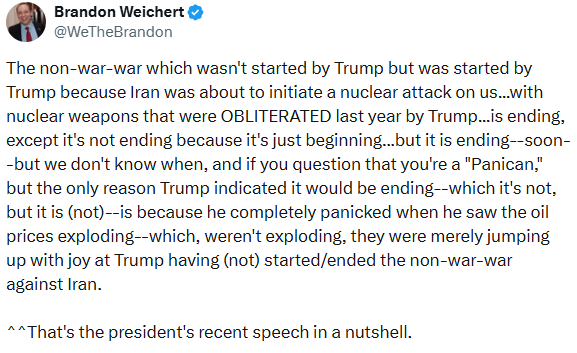
Brandon J. Weichert is a well-regarded military analyst known as a strongly pro-Trump MAGA supporter, but in a long interview with Tucker Carlson less than a week after the war began, he described the disastrous course that the conflict was taking.
The US has made a grievous error in attacking Iran. Our strategy does not match the necessary ends, ways, and means...and our objectives are totally out of alignment with the force we've assembled. I explained the problems to @TuckerCarlson on @TCNetwork and offer solutions. pic.twitter.com/8LZAIDIQqQ
— Brandon Weichert (@WeTheBrandon) March 11, 2026
He also ridiculed Trump’s totally incoherent explanations.
Given these dramatic developments, the piece I published last week asked the question of whether America was winning or losing the war with Iran, and concluded that we were probably losing.
But although Iran’s great operational success had been almost entirely unexpected, the very effective strategic moves that it also made had been all too predictable.
The Islamic Revolution had overthrown Iran’s pro-American Shah nearly a half-century ago. Since then, the relations between our two countries have generally been bad, sometimes extremely so, with the fervently pro-Israel Neocons and the rest of our powerful Israel Lobby successfully preventing any rapprochement. For example, in 2001 the Iranians had extremely bad relations with the Taliban government of Afghanistan, so after the 9/11 Attacks they had offered America their full support, but we had allowed that opportunity for improved relations to slip away.
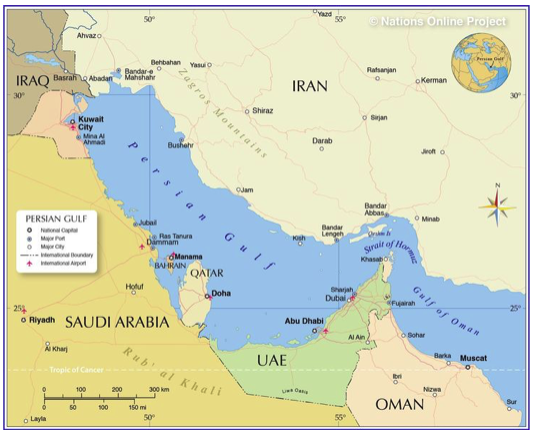
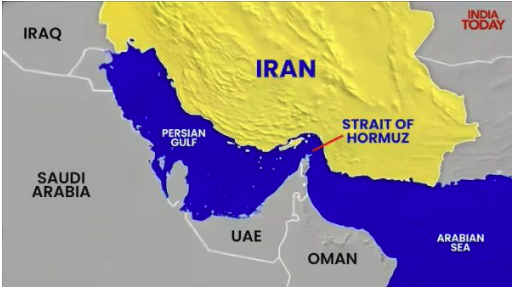
Given those decades of extreme hostility and constant Israeli pressure, many of our presidents had considered a military attack against Iran, even an attempt to overthrow its government, but our Pentagon planners had always dissuaded them from taking such extremely reckless action. One of the most important deterrent factors had been the obvious risk that the Iranians would react by closing the Strait of Hormuz and cutting off much of the world’s oil supply, just as they had always threatened to do if they were attacked. And the Iranians now did exactly that.
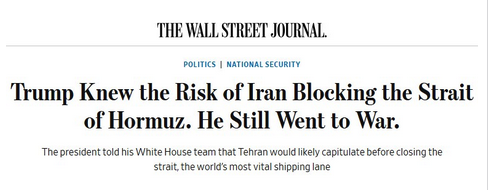
As a major front-page story in the Saturday Wall Street Journal revealed, Trump had been strongly warned about exactly these dangers, but ignored them, feeling confident that he would be able to defeat Iran and force its surrender before any such interdiction of oil shipments became a serious factor.
But with Iran not defeated and having even gained the upper hand, the world was facing exactly the economic crisis that Trump had casually dismissed, with a loss of up to one-fifth of the world’s supply of oil and natural gas. According to shipping brokers, half the world’s available LNG carriers are now trapped within the Persian Gulf.
Within just a few days, the Iranians reported that Trump officials were urgently seeking new negotiations and a ceasefire, but those overtures were flatly rejected, hardly surprising given the treacherous outcome of their previous peace talks.
So as of now, Iran seems to be winning the war, suffering heavy damage from American and Israeli bomb and missile strikes, but inflicting equally severe damage against those adversaries and America’s Gulf Arab allies. Most importantly, the Strait of Hormuz has indeed been shut down by Iranian action, producing a gigantic global energy crisis, potentially far greater than what had been caused by the Arab Oil Embargo of 1973, with potentially devastating impact upon the entire world economy. A severe global recession or even a global depression seemed very possible if the loss of petrochemical supplies continued for many additional weeks.
Despite claims to the contrary, it seems unlikely that the Iranians have been mining the waterway since such mines would be indiscriminate. Instead, they are choosing exactly which ships may pass and which may not, which gives them far more leverage over America. A few days ago, the confident Iranians even declared that they would open the waterway to the vessels of any country that expelled its Israeli and American Ambassadors:
🚨 BREAKING:
Iran’s IRGC says any Arab or European country that expels Israeli and U.S. ambassadors from will be granted full freedom of passage through the Strait of Hormuz starting tomorrow, according to Iranian state media. https://t.co/2gAKdS4fQ8— Drop Site (@DropSiteNews) March 10, 2026
Meanwhile, the Wall Street Journal reported that Iran was now actually exporting more oil today than it had been before the war began, and also allowing through all the tankers carrying oil to its Chinese ally. These were surely great humiliations for Trump.
Those Iranian oil shipments slightly alleviate the desperate global oil shortage that America and the West now face, so we cannot use our military forces to block them.
Oil prices have already spiked to around $100 per barrel and will certainly go far higher if the shutdown continues. A lengthy post by former CIA Analyst Larry Johnson discussed all of these consequences.
Europe relies very heavily upon natural gas for its energy production, with costs having already increased by more than 50% in the first ten days of the conflict. Johnson and others also made the important point that the Gulf was also a leading world source of fertilizer, and the extended loss of that supply could lead to crop failures and a possible worldwide famine. Furthermore, that same seaborne transport route is used by the wealthy Gulf Arab states for their food imports, and the loss of that supply line might eventually lead them to suffer serious shortages and domestic problems, putting pressure on them to sue for peace.
Given this potentially desperate global economic crisis, President Trump has now declared that he will deploy our powerful naval forces to escort oil tankersthrough the Strait of Hormuz, but this is probably much easier said than done. The long Iranian coastline is quite mountainous and honeycombed with anti-ship missile batteries, drone launching sites, and conventional artillery.
Indeed, the Iranians were so confident that they could sink our warships in that narrow waterway that they publicly guaranteed the safety of any tanker or other cargo vessel that could persuade an American destroyer to accompany it as an escort.
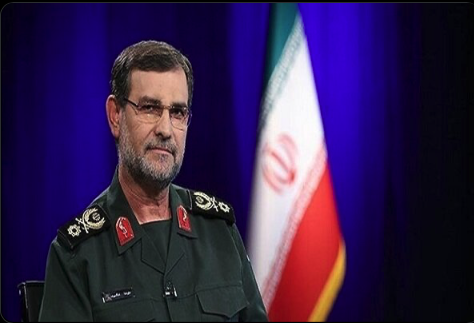
Alireza Tangsiri, Commander of the IRGC Navy:
We guarantee the security of any oil tanker, under any flag, that can convince an American destroyer to escort it through the Strait of Hormuz.Follow: https://t.co/mLGcUTS2ei pic.twitter.com/r5WV1JgZR3
— Press TV 🔻 (@PressTV) March 11, 2026
Trump has now dispatched an expeditionary unit with thousands of American Marines along with an amphibious assault ship to the region, leading to widespread speculation that they will be used to occupy Kharg Island, the main Iranian site for the loading of oil. But to the considerable surprise of our media hosts, the Iranians indicated that they were actually very willing and eager to face our troops in direct combat.
🇮🇷🇺🇸 - JUST IN: Iran's Foreign Minister Abbas Araghchi tells NBC that they are waiting for for US forces to begin a ground operation - "we are waiting for them."
- NBC: "Are you afraid of a U.S. invasion in your country?"
- Araghchi: "No, we are waiting for them."
- NBC: "You… pic.twitter.com/PYJuPSKEzn
— Shiri_Sabra (@sabra_the) March 5, 2026
American ground forces have absolutely no experience in modern drone warfare, and I think they would suffer very heavy losses at the hands of those powerful Iranian weapons. If our most heavily defended strategic radars were so easily destroyed, I see no reason why the Marines would fare any better.
Moreover, in order to reach Kharg Island, they would have to pass through the Strait of Hormuz. Their transport ships will probably be sunk, so their commanders should ensure that they have sufficient life-rafts or are excellent swimmers. The Iranians will surely make efforts to rescue the survivors, thereby acquiring hundreds or thousands of American POWs and inflicting a further humiliation upon our country.
Prior to becoming a very popular history podcaster, Darryl Cooper had spent a couple of decades serving in our military or working as a contractor, specializing in missile systems. In his recent podcast, he and his host agreed that sending our ships to break an Iranian blockade would just be a suicide mission, so much so that he hoped that our top naval commanders would resign rather than carry out a presidential order that would condemn to death so many American servicemen.
Cooper’s emphatic views on that subject were probably due to his familiarity with a famous Pentagon simulation exercise from the early 2000s.
As we were preparing to launch our ill-fated Iraq War, the Neocons dominating the Bush Administration were also heavily pressing for an attack against Iran as well, but the Pentagon’s Millennium Challenge 2002 wargames held at the time suggested that such an effort would be utterly disastrous. Marine Corps Lt. Gen. Paul K. Van Riper played the part of our Iranian adversaries and in that exercise he successfully sank an American aircraft carrier along with most of our other warships. In real life, America would have lost 20,000 dead during just a couple of days of combat, certainly representing the greatest military disaster in our entire national history.
That was almost a quarter-century ago, long before the Iranians had acquired any of their most formidable current weapons such as highly accurate ballistic missiles or powerful drones. So the Iranians are vastly stronger today, and I think that our naval forces would probably suffer the total destruction suggested by that Pentagon exercise if Trump follows through on his extremely foolhardy plan.
Prior to the start of the war, Trump had already stationed two of America’s powerful carrier strike groups in the vicinity of the Persian Gulf. He must find it absolutely infuriating that the Iranians have successfully blocked the transit of tankers and other cargo vessels in that vital waterway, thereby imposing enormous and rapidly growing economic costs on the entire globe. Trump commands the world’s most powerful navy, yet he has been unable to do anything to prevent this.
Within days, he began declaring that he would begin escorting ships through the Strait of Hormuz, but I assumed that his remarks were purely braggadocio, and indeed nothing happened. However, in the last couple of days, his statements have become more and more emphatic, so I’m starting to take him at his word. Given all the many other irrational and extremely foolhardy actions he has taken since his second inauguration, adding one more to the list hardly seems impossible.
But if he does send his fleet into that narrow strategic waterway, I think the Iranians will probably sink most of it, inflicting a devastating blow to the American navy and the greatest defeat our country has suffered during its entire history.
Iranian missiles have already destroyed most of our regional bases, and if they also destroy our naval forces, I think that our long domination of the oil supplies of the Middle East will have come to a brutal end, with enormous consequences for American global power.
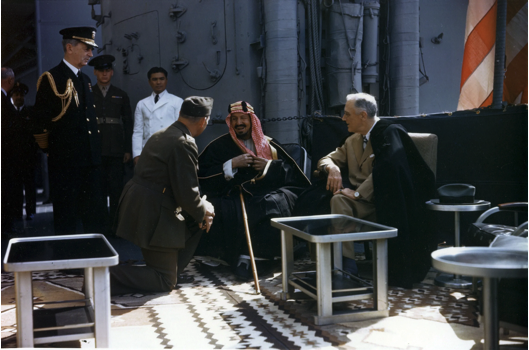
Some 81 years ago, a dying President Franklin Roosevelt famously met with King Ibn Saud, the founding monarch of the state that bears the name of his family. The relationship forged between their two, very different countries eventually became a central pillar of America’s global wealth and power.
More than a quarter-century later, the huge and growing costs of our military involvement in Vietnam forced President Richard Nixon to take America off the gold standard in 1971, abandoning the Bretton Woods system. Gold had been the backing for the long reign of the dollar as the world’s reserve currency, and with such backing having disappeared, there was a widespread belief that the dollar would lose that status, with enormous consequences for America’s financial system and its standard of living.
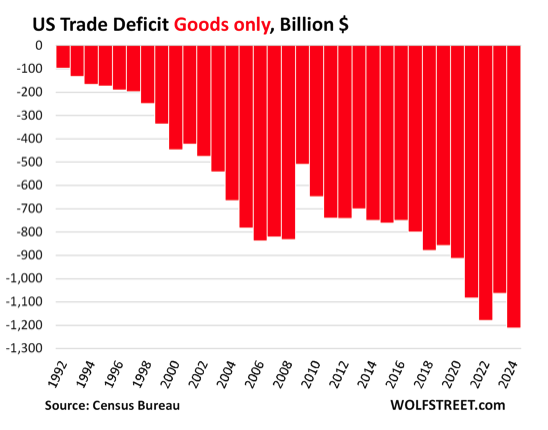
Yet for more than a half-century, that has not happened, despite our horrendous budget and trade deficits. Our accumulated national debt has reached an obviously unpayable $38 trillion, and it has recently been growing by roughly $1.8 trillion per year. Only a limited number of American products are bought by the rest of the world, while a large fraction of all our consumer goods are imported from China and other countries, so our annual trade deficit in goods has regularly topped a trillion dollars per year.

Under normal circumstances, a country with our extremely unfavorable terms of trade would have long since undergone a financial crisis, leading to a total collapse of our standard of living. Yet instead for decades foreigners have been willing to ship us their valuable products in exchange for receiving the dollar IOUs that no one ever expects us to actually pay. According to most analysts, the reason for this strange but enduring state of affairs has been the Petrodollar system, the fact that the oil produced and sold by Saudi Arabia and nearly all other major petroleum exporters is only priced in dollars.
For generations, these extremely wealthy but weak Gulf State monarchies have relied upon American military protection, and in exchange they have maintained the American economy. They have priced their oil sales in dollars, heavily invested the money they earn in our Treasuries and other American securities, and spent enormous sums purchasing the extremely expensive weaponry that our country produces as one of its few important export products.
An important aspect of that relationship has been our major air and naval basesin the GCC countries such as Saudi Arabia, Bahrain, Qatar, and the UAE. One of the central pillars of what many call “the American Empire” has been our military and political dominance over the oil-rich Middle East.
Indeed, many have argued that the need to maintain the dollar-priced sales of oil has been a major factor responsible for some of our highest-profile military actions of the last few decades. Saddam Hussein’s Iraq declared that it would begin pricing its oil sales in Euros, and we attacked his country, overthrew his regime, and killed him. Under Muammar Gaddafi, Libya had similarly begun to shift away from selling its oil in dollars, and in 2011 he was overthrown and killed by NATO forces. Under President Nicolas Maduro, Venezuela was doing the same, and Trump raided his country, kidnapping him and his wife.
Although there were certainly many other important reasons for all these American military actions, it seem unreasonable to totally disregard the contributing factor of safeguarding the Petrodollar system, given its crucial role in maintaining American power and wealth.
For exactly that reason, the war against Iran that we initiated with a sudden, surprise attack more than two weeks ago may dramatically change the balance of power in the world and America’s own wealth and standing.
A recent article by economist Michael Hudson discussed these dramatic global changes that may now be on the horizon.
Although the Gulf Arabs have become fabulously wealthy due to their unearned abundance of petrochemical natural resources, they are militarily very weak and most of their regimes are probably quite fragile, often characterized by the Iranians as merely consisting of family dictatorships. In many cases, their native citizens are vastly outnumbered by the resident foreigners, who possess no political rights but do all the work, with some of these residents being very well-paid but others living difficult lives. If one of those governments fell, others might soon follow.
In the case of the Kingdom of Bahrain, the overwhelming majority of the native population consists of Shias but the ruling family are Sunnis, who have often used very harsh measures to maintain their control, notably during the massive wave of popular protests in 2011. Partly as a means of buttressing their control, since the early 1990s the rulers have provided America its main naval base in the region, but in the last couple of weeks those facilities were totally destroyed by Iranian missiles, and it is far from clear whether they will ever be rebuilt. Prior to the 1780s, the island had spent a couple of centuries as part of Shia Persia, and there have recently been periodic rumors that the Sunni rulers were on the verge of fleeing into exile.
Saudi Arabia is by far the largest and most powerful of these countries, but it also has some significant vulnerabilities, with its 10-15% Shia minority heavily concentrated in the area containing its major oilfields.
All these countries have spent decades deploying their vast wealth to buy political influence, but that influence may be much less solid than they hope.
For example, six months ago Israel freely bombed the Qatari capital city of Doha, and the American military forces based in that country did nothing to defend it.
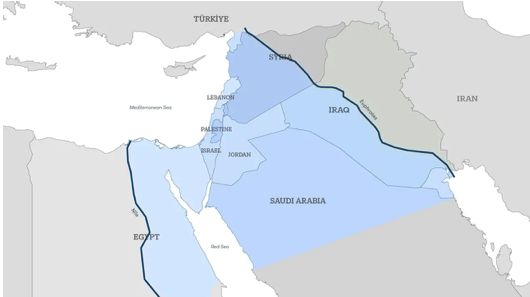
Even more telling evidence appeared just before the outbreak of the current war when Tucker Carlson interviewed Mike Huckabee, the American ambassador to Israel. Huckabee confirmed that according to his own Christian Zionist faith that dominates much of the Republican Party, all the lands from the Nile to the Euphrates had been permanently deeded to the Jewish people by divine command in the Old Testament. This constitutes nearly the entirety of the Middle East, including much of Saudi Arabia, and small maps of this future Greater Israel are often being worn on the clothing of right-wing Israelis.
BREAKING: US Ambassador to Israel Mike Huckabee tells Tucker Carlson that Israel has the Biblical right to take over all of the Middle East.
“It would be fine if they took it all.” pic.twitter.com/BN4fXh03ga
— Tucker Carlson Network (@TCNetwork) February 20, 2026
Although Huckabee’s remarks provoked a firestorm of international controversy, none of his statements were repudiated by the Trump Administration, and the ambassador kept his job. So although the Saudis and other Gulf Arabs have lavished enormous sums of money upon Trump, his friends and family, and the rest of his administration, that financial support apparently counted for much less than they might have hoped.
A week ago the Gulf Arabs desperately sought Russia’s political assistance in persuading Iran to reopen the Persian Gulf to tanker traffic, but they were harshly rebuked by Russian Foreign Minister Sergei Lavrov for their refusal to condemn the unprovoked American and Israeli attack on Iran and assassination of most of its government that had led to that blockade.
Russia's Lavrov meets with Arab ambassadors in Moscow who request that he pressure Iran to de-escalate.
Lavrov rejects their requests and points out that they have not condemned the bombing of the girls' school in Iran, and that Bahrain reportedly is seeking to introduce a… pic.twitter.com/PhvR8wVQSi
— Trita Parsi (@tparsi) March 8, 2026
In his criticism, Lavrov also condemned the complete silence of these Arab governments regarding the horrific killing of some 165 young Iranian schoolgirls, certainly one of the worst single military atrocities of recent times.
Iran has made it clear that there is no going back to the way things were—crippling sanctions and constant threats from US military bases in the Gulf states. Given that political agreements are seen as meaningless and diplomacy as deceptive, Iran has decided that the US must be… pic.twitter.com/XOPoCgajQ4
— Glenn Diesen (@Glenn_Diesen) March 21, 2026
Those children, their teachers, and some of their parents had died in a pair of American missile strikes on their elementary school at the very beginning of the conflict. The school had been at that location and in use for at least a decade and was well known as such, so given the extreme precision of most of the attacks against Iranian targets, the incident was shocking. This was especially the case because the first missile had merely damaged the building, and when the parents and rescue workers then came to collect the injured children, all were completely incinerated in a second missile strike.
As might be expected, Trump vehemently denied that American missiles had been responsible, instead blaming the Iranians for destroying their own school and killing their schoolchildren. When a Times reporter informed him that the missile had been a Tomahawk, he absurdly claimed that the Iranians themselves had Tomahawks since America sold those missiles to everyone, thereby demonstrating that our president merely spouted off anything that came into his head, whether truthful, untruthful, or even totally ridiculous.
Scott Ritter had spent much of his military service as a targeting officer, and he was absolutely astonished that such a monumental error could have been made, saying in an interview it would have been almost unimaginable back in his own day. Therefore, he strongly suspected that the deadly incident had been due to the use of AI systems for producing target lists, showing the terrible drawbacks of relying upon that new technology without any human oversight.
That sort of explanation for the terrible tragedy seems the most widely accepted one. But there are other, far darker speculations floating around on the Internet.
The widely shared Tweet reporting the death of those Iranian girls was posted by Prof. Mohammed Marandi, an American-born Iranian academic who had served as an advisor to the Iranian nuclear negotiations team. In recent months, Marandi has regularly appeared on prominent YouTube channels.
In an interview with Andrew Napolitano a few days ago, Marandi stated that everyone in Iran was convinced that the attack on the girls’ elementary school had been deliberate rather than any sort of mistake, noting that numerous other airstrikes had hit hospitals, schools, and various other civilian targets normally considered sacrosanct in military operations.
Some of the conspiratorial claims on the Western Internet had noted that the girls attending the destroyed school were apparently the children of Iranian Revolutionary Guards officers, so killing them may have been intended to punish their fathers and perhaps break any will to resist. Targeting the families of real or perceived enemies has certainly been the longstanding practice of the Israelis, one that became especially notorious during their endless attacks against the helpless Palestinian civilians of Gaza during the last couple of years, as well as their assassination strikes against leading Iranian political, military, and scientific figures.
Furthermore, the Islamic Republic of Iran had originally been declared in 1979 at an elementary school for girls, which served as the temporary headquarters of the new government. The current war against Iran was unleashed to overthrow that regime, so the bitter enemies behind it might have seen considerable symbolic value in destroying a similar girls’ elementary school at the beginning of their military campaign.
The suggestion has been made that the Israelis provided the school as a key military target to the Pentagon planners, thereby successfully arranging to have the children of their Iranian enemies killed while deflecting all the resulting blame onto their gullible American dupes. While it’s impossible to be sure about this, such a scenario can hardly be dismissed out of hand.
Whether or not the attack on the school had actually been intentional, there seem absolutely no signs of any softening in Iranian resolve, and some of Prof. Marandi’s statements have been very enlightening in that regard.
In his long interview with Prof. Glenn Diesen a few days ago, he explained that he expected the Iranian government to completely reject any American offer of a temporary ceasefire since that would merely set the stage for a future attack against his own country. Instead, the Iranians would continue their blockade and their war of attrition until their demands for an entirely new status quo in the Middle East were accepted. These demands would include a complete withdrawal of all American forces from the region, an end to all the decades of economic sanctions imposed against Iran, and the payment of major financial compensation for the history of attacks on his country, including those in the current war.
Although American bombs were still falling on Tehran and other major Iranian cities, he was essentially calling for America and its allies to recognize that they had been defeated in the war, and accordingly sue for peace.
In his scenario, Iran would assert its permanent control of the vital Persian Gulf waterway, and perhaps levy charges upon the oil tankers and other cargo vessels of the Gulf Arabs that needed to use it. If Iran defeated America and expelled it from the region, it would have replaced our own country as the local hegemonic power that militarily dominated the oil producing countries of the Middle East. Their financial demands would probably be less onerous and expensive than those that America had previously imposed. And by its dominance over the resources of the Persian Gulf, Iran would have established itself as one of the world’s most powerful and influential nations.

A post on the Naked Capitalism blogsite recently quoted a famous phrase from Frank Herbert’s science fiction novel Dune:
But between deeply internalized faith in Western superiority and the successful numbing effect of decades of ever-better propaganda, they cannot see what is obvious: Iran has the means and will to destroy the world economy. I had invoked the novel Dune early in this war, “He who can destroy a thing, controls a thing.” And as we have shown, by throttling the Strait of Hormuz, it has not merely strangled energy and fertilizer supplies, as serious as those are. We’ve pointed to the knock-on effect on other critical supplies, using sulphuric acid, which is essential in many manufacturing processes, as another example. And as we’ll soon show, the bottleneck in the Strait of Hormuz is also wreaking havoc with shipping generally. Let me offer a forecast. I am not saying this is what will happen, but right now, it seems a probable path. Trump and his team are increasingly messaging that somehow they will pry the Strait of Hormuz open. When that idea was first voiced, we showcased Daniel Davis in one of his Deep Dive presentations on what an impossibly bad idea that was, that it would simply open up naval ships for easy destruction by Iran. Nevertheless, talking this barmy scheme up to credulous investors and the public, that somehow the spice will be flowing again soon, is now the Administration’s best path for somewhat containing energy price rises and the immediate damage they do.
Although Iran definitely seems to be winning the war, the continuing conflict does pose major risks to everyone in the world. This certainly includes China, which has carefully avoided any direct involvement.
The Chinese have allowed the Iranians to use their satellite positioning system and have also probably provided some important intelligence and reconnaissance information, crucial contributions that help to explain the excellent targeting of the Iranian missiles. But I believe that it is very much in China’s interests to do far more than this, and bring the conflict to a speedy conclusion, involving what amounts to an American surrender.
If the war goes on, there’s a good chance that the cycle of attacks and retaliations will destroy much of the energy infrastructure of the Gulf, leading to long-term losses of supply, hurting the Chinese along with everyone else. Probably China would suffer relatively less than Europe, Japan, or most other parts of the world, but it could hardly escape very substantial economic damage, as well as the loss of markets as most of its customers became impoverished.
Even more importantly, I’m deeply concerned over the possibility that Iran’s continuing success might result in either America or more likely Israel taking the conflict nuclear, with incalculable dangers for everyone in the world, including China.
Since early January, I’ve argued that if China merely took the step of declaring an air/sea blockade of its own rebellious province of Taiwan, the resulting loss of AI microchip exports would puncture America’s gigantic Tech Bubble, leading to the evaporation of perhaps ten trillion dollars of wealth. This would produce an unprecedented American financial collapse and a complete American withdrawal from the war with Iran.
As the New York Times reported in late February:
A Chinese blockade of Taiwan, the officials said, could choke the supply of computer chips made on the island and bring the U.S. tech industry to its knees… “The single biggest threat to the world economy, the single biggest point of single failure, is that 97 percent of the high-end chips are made in Taiwan,” Treasury Secretary Scott Bessent said last month at the World Economic Forum in Davos, Switzerland, slightly overstating industry estimates. “If that island were blockaded, that capacity were destroyed, it would be an economic apocalypse”…
The Chinese are masters of the game of Go and I’ve been hoping that they would see that the AI Bubble has left the American financial system so extremely vulnerable that if the Chinese merely placed a single stone in the correct position, they could sweep most of the American pieces off the board without the need to fire a single shot.
With so much of America’s military power now deployed to the Middle East and having a very difficult time in the Iran War, a better opportunity for China to act is difficult to imagine.
And just in the last 24 hours news reports have suddenly appeared of highly suspicious movements of Chinese planes and ships in the vicinity of Taiwan. This suggests that China may be considering exactly that sort of step.
Trump has become our first billionaire president, reaching the White House partly because of his perceived wealth. I’ve also noted that during his second term, Trump has governed more as an absolute monarch than as any elected leader of a constitutional republic. And with the Iranians now apparently gaining the upper hand, the war that he initiated put me in mind of the story of Croesus, ruler of the Lydian Empire and best known for the phrase “rich as Croesus.”
According to Herodotus, Croesus considered making war on the young Persian Empire of Cyrus. When he consulted the oracle of Delphi he was told that if he attacked, he would “destroy a great empire.” He did so and the oracle proved correct, but the Persians were victorious and the empire that he destroyed was his own.
Similarly, Trump launched his war against Persian Iran with the full expectation that he could achieve regime-change against the heavily overmatched Islamic Republic. But the indications are that the latter has gained the upper hand, and if America’s powerful naval forces are sunk by the Iranians, the hold of the American Empire over the oil wealth of the Gulf will probably come to an end. Under such dire circumstances, Trump may indeed achieve regime-change just as he proclaimed, but the regime that was changed would be his own.
It is possible that Trump’s close Israeli partner may also have recently encountered unexpected setbacks after it successfully assassinated most of the Iranian leadership.
Over the last few days social media has been filled with speculation that Israeli Prime Minister Benjamin Netanyahu may have been killed or severely injured in an Iranian missile strike. I’d paid no attention to such claims, assuming that they were just the sort of wild, wishful thinking that so often permeates military conflicts, and I’d fully accepted the strong denials by Israeli media outlets.
But a couple of recent developments have raised some reasonable suspicions. I’ve made no effort to investigate this issue, but if the Iranians have successfully killed Israel’s prime minister while also demonstrating that they were able to indefinitely continue their bombardment of that country, Israel might be forced to desperately sue for peace.
Nearly a week ago, the Iranians released a short but humorous music video on their expectations for the war, and regardless of Netanyahu’s fate, the metaphor it presented now seems far more appropriate than I had believed at the time.
Iran released a videopic.twitter.com/LjpwOEtQaM
— Kim Dotcom (@KimDotcom) March 10, 2026
In a famous but probably apocryphal quote attributed to Lenin, he supposedly declared that “There are decades where nothing happens; and there are weeks where decades happen.” We may now be living through exactly such a period.
Related Reading:
BEFORE you leave, PLEASE pay attention to this alert.
[t4b-ticker id="1"]
This work is licensed under a Creative Commons Attribution-NonCommercial 4.0 International License •
ALL CAPTIONS AND PULL QUOTES BY THE EDITORS NOT THE AUTHORS
chats with| Traducir—Translate! | |
| Make fonts bigger>>> | Resize text-+= |
The video features Seyed Muhammad Marandi, a professor at Tehran University and former adviser to Iran’s nuclear negotiation team, discussing the ongoing escalations in the conflict involving Iran, the United States, and Israel. The conversation explores recent attacks on Iran’s nuclear and energy infrastructure, assassinations of Iranian leaders, and the strategic significance of the Strait of Hormuz in global energy markets. Marandi stresses that Iran holds significant leverage over the region, particularly through control of the Strait of Hormuz, which is critical for global oil transit. Despite U.S. and Israeli efforts to cripple Iran’s capabilities, Iran’s military and societal resilience remain formidable.
Marandi elaborates on the failure of the U.S. and its allies to destabilize Iran or open the Strait of Hormuz by military means, highlighting Iran’s ability to retaliate and escalate the conflict. He discusses the role of proxy forces like Yemen’s Houthis in potentially closing off the Red Sea to further pressure Gulf states allied with the U.S. The interview critiques Western media narratives and political discourse, particularly the false dichotomies imposed on commentators and the demonization of Iranian leadership and society. Marandi argues that Iran’s demands for a political settlement include reparations, regional security guarantees, and a restructured Persian Gulf security framework that prevents future aggression or attacks by U.S. or Israeli forces.
He emphasizes that Iran is prepared for a prolonged conflict and that any ceasefire that does not change the facts on the ground is futile. The discussion closes with reflections on the broader geopolitical failures of U.S. foreign policy in the region, the complicity of Western governments in regional conflicts, and the likelihood of a long-term shift in power dynamics in the Persian Gulf, where Iran’s influence will solidify and Gulf monarchies will be weakened.
[01:17] 🔑 Iran’s leverage via the Strait of Hormuz: Iran’s geographic control over the Strait of Hormuz is a critical strategic advantage. With the ability to block or disrupt the passage of a significant percentage of global oil shipments, Iran can exert immense pressure on the U.S., Saudi Arabia, and their allies. This chokepoint elevates Iran from a regional actor to a key player with global economic influence, especially during escalating conflicts.
[03:52] 🛡️ Resilience of Iranian military and society: Despite targeted assassinations and attacks on infrastructure, Iran’s military assets remain largely intact and concealed, such as naval forces stored in underground tunnels. Moreover, the societal response to attacks—massive public funerals and widespread demonstrations—demonstrates a strengthened national resolve rather than fragmentation, underlining that decapitation strategies have limited effectiveness.
[11:06] 🔥 Proxy warfare and the Red Sea corridor: The potential activation of Yemen’s Houthis to close the Red Sea via the Bab el-Mandeb Strait is a critical escalation vector. This would not only threaten Saudi Arabia’s western oil export routes but also complicate U.S. naval operations, expanding the conflict’s maritime theater and severely impacting global energy and shipping routes.
[15:40] 🚫 Limits of U.S. military intervention: Marandi argues that deploying a few thousand U.S. troops in the region would not alter the strategic balance. Iran’s missile and drone capabilities are extensive and deeply integrated into their defense strategy. Even a hypothetical U.S. takeover of the Strait of Hormuz would be vulnerable to sustained Iranian missile strikes, making the cost and feasibility of ground operations highly questionable.
[21:05] 💣 Internal U.S. dissent and policy failures: The resignation of Joe Kent, a high-ranking U.S. official, who criticizes the war as unnecessary and driven by Israeli and Zionist lobbying, points to internal fractures in U.S. policy circles. This highlights that the war is not only unpopular internationally but also contested within the U.S. government, undermining the legitimacy and coherence of the intervention.
[26:19] 📢 Western media narratives and misinformation: The conversation critiques the Western mainstream media’s portrayal of Iran and the region, especially the false narratives about widespread internal opposition and fabricated atrocities. This misinformation serves to justify intervention and demonize Iran, while ignoring the complexity and genuine support within Iranian society for their government.
[38:28] ✍️ Political settlement requires fundamental changes: Iran’s position is that peace cannot be achieved through a mere ceasefire but requires a comprehensive political settlement. This includes reparations for damages, security guarantees to prevent future attacks, inclusion of Iran’s regional allies, and restructuring of Persian Gulf security. This reflects Iran’s broader goal of ensuring long-term sovereignty and regional stability under a new balance of power, rather than temporary pauses in hostilities.
Marandi’s analysis highlights several important themes relevant to understanding the current conflict dynamics:
Geostrategic Realism: Iran’s geographical position at the Strait of Hormuz and its investment in missile and drone technology give it asymmetric capabilities to counterbalance superior U.S. and allied conventional forces. This is a textbook example of a smaller power leveraging geography and technology to deter and resist a larger adversary.
Proxy and Hybrid Warfare: The conflict extends beyond conventional military strikes to include proxy actors like Yemen’s Houthis and Iraqi resistance groups, expanding the battlefield and complicating U.S. efforts to stabilize the region. This multidimensional aspect raises the stakes for all involved and increases the difficulty of conflict resolution.
Information Warfare and Narrative Control: Marandi’s critique of Western media and political discourse underscores the role of information control in modern conflicts. The framing of opposition and the imposition of moral binaries serve political agendas and obscure the nuanced realities of the conflict, complicating international perceptions and policy responses.
Long-Term Conflict and Societal Mobilization: The interview stresses that Iran is prepared for a protracted conflict and that societal morale has grown stronger in response to aggressions. This resilience challenges assumptions of quick military victories and suggests sustained conflict with high costs for all parties.
Economic and Regional Implications: The destruction of energy infrastructure and the potential for prolonged disruption of oil and gas exports have significant global economic consequences. This conflict threatens not just regional stability but also the international energy market, fertilizer production, and global trade flows.
U.S. Policy and Alliance Dynamics: The role of Israel in operational control of strikes and the influence of Zionist lobbying reveal complex alliance dynamics shaping U.S. policy. The internal dissent in the U.S., coupled with the reluctance of Gulf states to engage directly, illustrates the fragility and contested nature of the coalition against Iran.
Prospects for Peace: The insistence on a political settlement that addresses underlying security concerns, reparations, and regional power balances highlights the challenges ahead. Temporary ceasefires without substantive changes are rejected by Iran, indicating that future negotiations will require substantial shifts in policy and regional relations.
This comprehensive overview provides a nuanced understanding of the current escalations and the broader geopolitical and societal dynamics shaping the conflict involving Iran and its adversaries.
Glenn Diesen
Mar 19, 2026
Brian Berletic is a former US Marine, author, international relations expert and host of the New Atlas. Berletic discusses how the US war against Iran is a gateway to war with China and Russia. Follow Brian Berletic on The New Atlas:
/ @thenewatlas
In this comprehensive discussion, Brian Berletic, a former US Marine and political analyst, provides an in-depth analysis of the current geopolitical landscape, focusing on the evolving multipolar world order and the United States’ aggressive attempts to maintain unipolar dominance. The conversation critically examines US foreign policy under multiple administrations, emphasizing the continuity of corporate-financier interests driving endless wars and geopolitical conflicts, particularly against Iran, Russia, and China. Berletic traces the US strategy back to think tank policy papers from 2009 that laid out a multi-pronged approach to destabilizing Iran as a stepping stone to containing Russia and China.
The dialogue highlights how the US has engaged in a global war of attrition, using proxy states and covert operations to exhaust adversaries economically, militarily, and politically. The US’s inability to sustain prolonged multi-front conflicts due to resource constraints is contrasted with the resilience of nations like Iran, which have withstood decades of pressure. The discussion also explores the broader implications for global energy markets, supply chains, and alliances, particularly noting the US’s efforts to disrupt China’s energy independence and economic rise through blockades and sabotage.
The conversation also touches on the role of diplomacy, which Berletic describes as largely deceptive and a tool for advancing war agendas rather than preventing conflict. The US uses diplomacy as a smokescreen while escalating military aggression and blaming proxies like Israel for controversial attacks to manage public perception. The interview closes with reflections on the potential longevity and escalation of the conflict, the depletion of US military resources, and the growing awareness among some frontline states of their political capture and the costs of serving US geopolitical ambitions. Ultimately, the discussion warns of the dangerous and unstable trajectory of US policy, underscoring the urgent need for a multipolar balance of power to replace the current destructive unipolar order.
[01:30] 🇺🇸 Structural nature of US policy: perpetual war driven by corporate-financier interests
Berletic stresses that US foreign policy is not shaped by presidents or parties but by entrenched corporate-financier elites whose power depends on continuous expansion of profit and geopolitical dominance. This structural reality means that regardless of electoral outcomes, US policy will push towards endless conflicts to preserve unipolarity. This explains the seamless continuation of aggressive policies from Bush Jr. through Trump to Biden.
[04:50] 📜 Long-term planning and execution against Iran based on detailed think tank blueprints
The 2009 Brookings Institution paper “Which Path to Persia” outlines a strategy of layered measures—from diplomacy to military provocations—aimed at destabilizing and toppling Iran. The US and Israel have systematically executed these plans, using Israel as a scapegoat for attacks to maintain plausible deniability and manage international opinion. This reveals a highly coordinated and premeditated approach rather than ad hoc decision-making.
[10:45] 🌏 Iran as a strategic pivot to encircle and weaken Russia and China
The US sees Iran as a critical node in a broader Eurasian struggle. Destabilizing Iran through proxy wars, economic warfare, and direct strikes serves to isolate Russia and China geopolitically and economically. The Arab Spring is framed as a US-engineered attempt to realign the Middle East against Iran, with the ultimate goal of weakening the multipolar alliance challenging US dominance.
[13:15] ⛽ Energy independence as the core battleground: China’s rise and US attempts to stifle it
China’s multifaceted efforts to secure energy independence—including the Belt and Road Initiative, diversification of energy sources, and massive investments in renewables—pose a direct threat to US hegemony. The US response includes attacks on Iran’s energy infrastructure, sabotage of Venezuela’s oil exports, and covert strikes on Russian energy facilities, all designed to choke China’s energy supply chains and delay its rise.
[20:30] 🤝 Diplomacy weaponized as a tool to justify war rather than prevent it
Diplomatic engagements with Iran are not genuine peace efforts but strategic maneuvers to build a narrative that the US sought peace while Iran obstructed it. This deception aims to win global public opinion and justify escalating military actions. This insight highlights the cynical use of diplomacy in modern geopolitics, where talks serve as smokescreens for preparation and execution of war.
[27:30] 🚀 Resource depletion and military overstretch as critical vulnerabilities of the US
The US faces severe shortages in anti-missile interceptors and precision-guided munitions due to simultaneous conflicts in multiple theaters (Middle East, Ukraine, Asia-Pacific). Iran’s sustained missile launches are eroding US defensive capabilities, while key US assets like the USS Ford require maintenance, limiting operational capacity. This overstretch raises questions about US ability to sustain long-term multi-front conflicts.
[54:00] ⚠️ Global implications of US aggression: proxy states as expendable pawns, rising multipolar resistance
Countries such as Ukraine, South Korea, and Gulf States are politically captured by US interests, serving as proxies in its global war against multipolarism. These states bear the brunt of conflict and economic fallout while US elites remain insulated. However, growing awareness of this dynamic and the resilience of multipolar alliances suggest an eventual tipping point where US unipolar dominance will be fundamentally challenged, potentially leading to a restructuring of global power.
The conversation reveals a layered understanding of 21st-century geopolitics as a high-stakes game of systemic survival, economic warfare, and proxy conflicts rather than isolated military engagements. The US is portrayed as a desperate empire fighting against the inevitable rise of a multipolar world, willing to escalate conflicts and bear economic and political costs to delay the shift. The use of proxies, scapegoating, and media narratives reflects deep coordination between government, military, corporate interests, and media, creating a self-reinforcing cycle of conflict.
The discussion also underscores the limits of US military power in the face of resource constraints and resilient adversaries. The strategic calculus includes not only military capabilities but also economic endurance, societal cohesion, and alliance dynamics. The resilience of Iran despite overwhelming pressure serves as a case study of how protracted conflicts can erode even the most powerful states’ capacity to wage war.
Finally, the interview calls for a broader public awakening to the realities of global power politics, emphasizing that the current unipolar world order is unsustainable and inherently destructive. It advocates for multipolarism—a balanced global power structure—as a necessary alternative to prevent further global instability and conflict.
This detailed summary and analysis provide a comprehensive understanding of the video’s complex geopolitical discussion, capturing its key themes, strategic insights, and cautionary perspectives on the current state and future of global power competition.
BEFORE you leave, PLEASE pay attention to this alert.
[t4b-ticker id="1"]
This work is licensed under a Creative Commons Attribution-NonCommercial 4.0 International License •
ALL CAPTIONS AND PULL QUOTES BY THE EDITORS NOT THE AUTHORS


| Traducir—Translate! | |
| Make fonts bigger>>> | Resize text-+= |
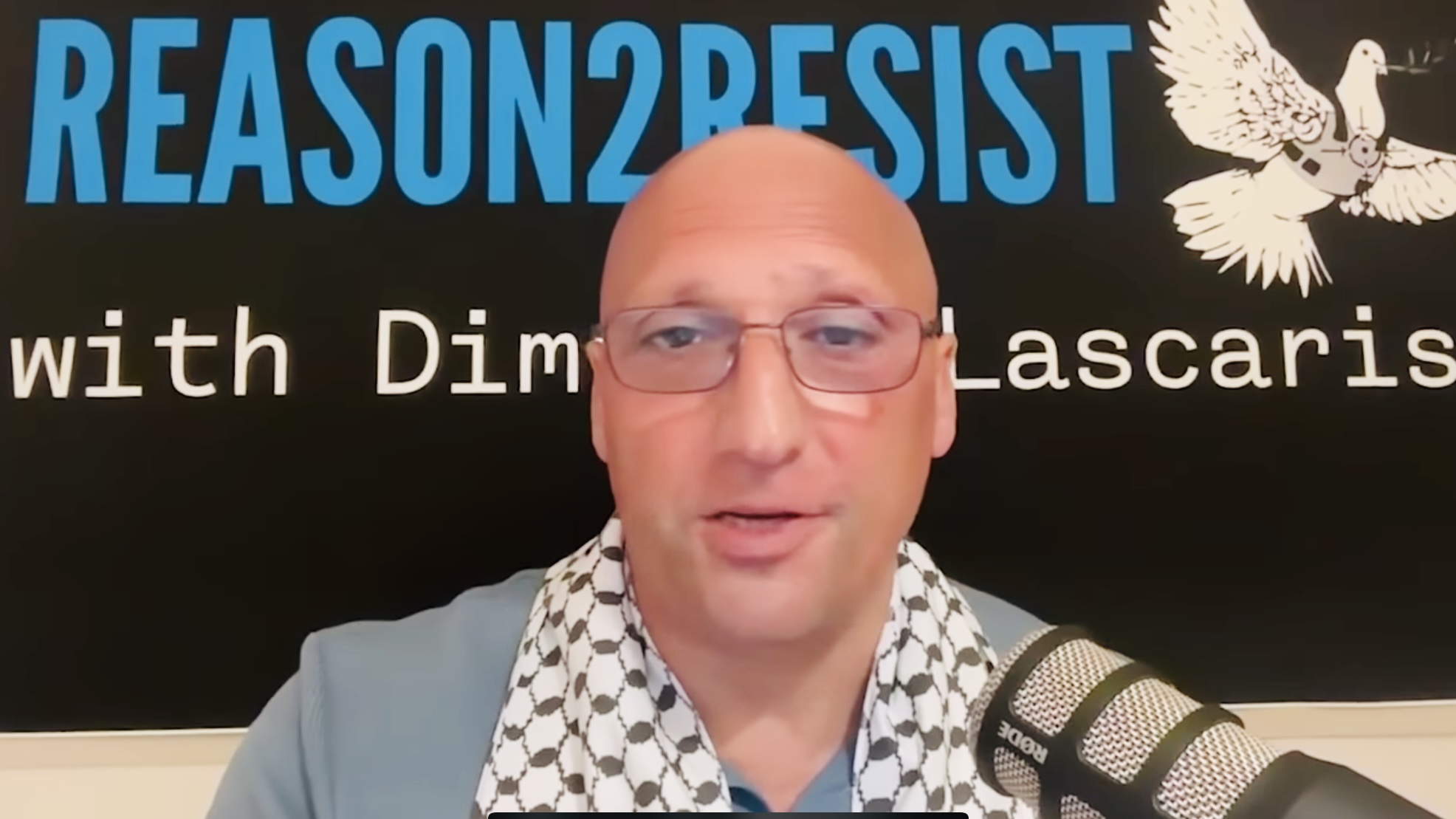
The video provides an extensive and detailed analysis of the ongoing conflict centered on Iran, focusing on the military, political, and social dimensions of the war. Lascaris begins by addressing technical difficulties and the absence of his comrade Ramy, emphasizing the volume of material to cover. The discussion centers on the criminal nature of the war of aggression against Iran, involving Israel and the United States, and highlights the propaganda and misinformation surrounding the conflict. Lascaris references statements from Israeli and U.S. officials, contrasting them with footage and reports from the region, particularly Iran’s resolute leadership and public demonstrations that contradict Western narratives of internal dissent.
Key military developments are discussed, including multiple waves of Iranian missile and drone attacks targeting Israeli military bases and U.S. military infrastructure in the Persian Gulf and the broader region, with significant damage inflicted on strategic sites in Israel, Iraq, the UAE, and potentially Saudi Arabia. Lascaris underscores the ability of the Iranian military to sustain a prolonged conflict despite Western claims of Iran’s dwindling capabilities.
The video also explores the psychological warfare and misinformation campaigns by Israel and the U.S., including selective media leaks portraying Iran as targeting civilians exclusively, while evidence shows primarily military targets are struck. Lascaris highlights the resilience and defiance of the Iranian people, with footage of their leaders openly walking among citizens amid war conditions, challenging Western portrayals of their vulnerability or unpopularity.
Attention is given to the broader geopolitical implications, such as the role of European countries covertly supporting the U.S.-led war effort and the economic consequences of the conflict, particularly the disruption of oil supplies and rising global fuel prices. Lascaris critically examines the notion of “Greater Israel,” arguing it is an unrealistic goal considering historical trends of Israeli territorial contraction rather than expansion.
Throughout, Lascaris criticizes Western governments’ hypocrisy and cowardice, contrasting their leaders’ heavy security and avoidance of public scrutiny with the Iranian leadership’s visible public presence. The presentation closes with a reflection on the enduring nature of the conflict, the likely prolonged economic impact, and the importance of on-the-ground journalism to reveal the truth of the war.
The video elucidates the complexity of the Iran war, emphasizing the disparity between official Western narratives and on-the-ground realities. It exposes misinformation tactics, highlights the resilience of Iranian leadership and society, and details the strategic military operations shaping the conflict. The focus on the sustainability of Iran’s defense and the significant damage inflicted on U.S. and Israeli military assets underscores the high stakes and protracted nature of the war.
Furthermore, the geopolitical and economic ramifications highlighted—such as the disruption of oil supplies and the covert involvement of European countries—paint a picture of a global conflict with far-reaching consequences. The historical perspective on Israeli territorial changes provides a counterpoint to alarmist rhetoric about regional domination.
The presentation calls for critical scrutiny of Western media and government claims, urging attention to firsthand reporting and evidence from the conflict zones. It suggests that while Iran’s endurance may challenge Western military objectives, the war’s continuation will likely exacerbate global economic instability and human suffering.
In sum, the video offers a comprehensive, critical perspective on the Iran war, emphasizing the resilience of Iranian forces and people, the strategic miscalculations of Israel and the U.S., and the broader implications for regional and global stability.
BEFORE you leave, PLEASE pay attention to this alert.
[t4b-ticker id="1"]
This work is licensed under a Creative Commons Attribution-NonCommercial 4.0 International License •
ALL CAPTIONS AND PULL QUOTES BY THE EDITORS NOT THE AUTHORS